
Brick Repair · Chicagoland, IL
Bowing & Bulging Brick Walls in Chicago: Causes and Repair
Why brick walls bow, bulge, and lean on Chicago-area homes, how to tell a cosmetic wave from a structural emergency, and the repair options from rebuilding to re-anchoring.
2026-06-23
Quick Answer
A bowing or bulging brick wall means the masonry has separated from the structure behind it or lost its bond, usually because water got in, ties or anchors corroded, or the wall is shifting. It can range from a cosmetic wave to a structural emergency, so it should be inspected promptly. Repairs range from re-anchoring to rebuilding the affected section. Paul Lally's Masonry Inc. has assessed and rebuilt Chicagoland brick walls since 1988 — free estimates at (708) 448-8866.
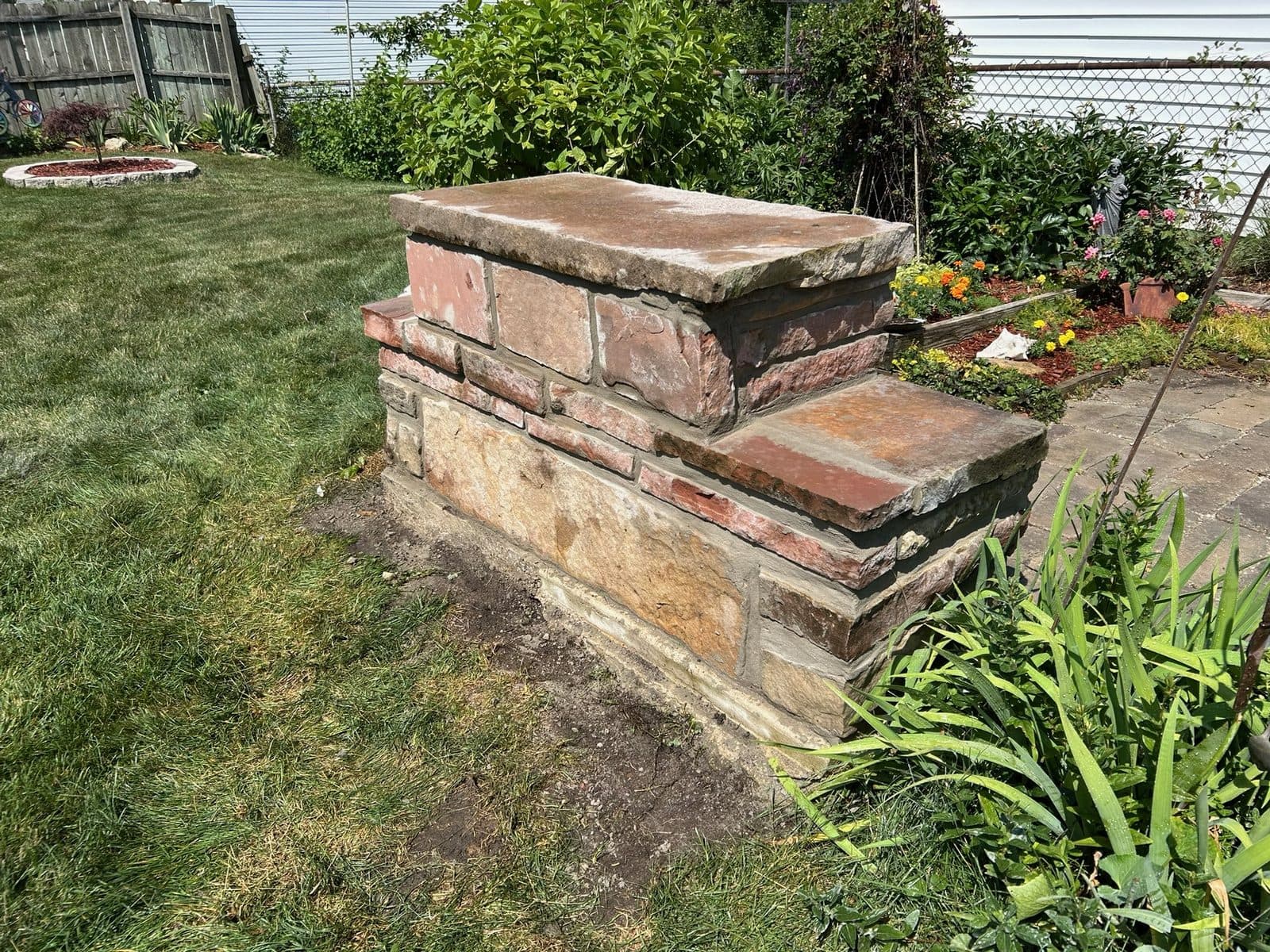
Bowing and bulging brick walls: what they mean and how they're fixed
A brick wall that bows, bulges, or leans has lost its grip on the structure behind it — and that is never purely cosmetic. It means the masonry has separated from its backup or lost its internal bond, almost always because water got into the wall and corroded the metal ties holding the brick in place, because freeze-thaw cycles pried it loose, or because something behind the wall has moved. Depending on severity it ranges from a stable wave you should monitor to a genuine structural problem where bricks can come loose. Either way, a bow or bulge is a sign to get the wall inspected — promptly. Paul Lally's Masonry Inc. has assessed and rebuilt brick walls across Chicago and the Chicagoland suburbs since 1988. For a free, straight assessment, call (708) 448-8866.
This article explains what is actually happening inside a bowing wall, the causes specific to our climate and housing stock, how to read the warning signs, and the real repair options.
How a brick wall is supposed to stay flat
On most Chicago-area homes built in the last century, the brick you see is brick veneer or a masonry wythe tied to a structural backup — wood framing, block, or an inner course of masonry. The brick carries its own weight down to the foundation, but it relies on metal ties or anchors embedded in the mortar to hold it flat against the structure and resist wind and movement. As long as those ties are sound and the wall stays dry, the brick stays plumb and flat.
A bow or bulge appears when that system breaks down — when the ties fail, the bond is lost, or the wall is pushed out of plane by forces behind or below it.
Why brick walls bow and bulge in Chicagoland
Water and corroded wall ties
This is the most common cause we see. Water enters through failed mortar joints, bad flashing, or a leaking parapet or sill, and it reaches the metal ties inside the wall. Steel ties rust, and rust swells — the same rust jacking that destroys lintels. The ties lose their grip on the brick, and with nothing holding it back, the brick begins to drift outward. Years of freeze-thaw accelerate it.
Freeze-thaw expansion
Water trapped in the wall freezes and expands through our many winter freeze-thaw cycles. Repeated expansion works the masonry loose, opens joints, and contributes to both spalling and movement out of plane.
Foundation or structural movement
If the foundation settles unevenly or framing shifts, the wall can be pushed, dropped, or rotated out of plumb. This often shows up first as stair-step cracks following the mortar joints, sometimes combined with a bulge.
Trapped moisture with no escape
Older walls were built to "breathe." When a previous repair sealed a wall with the wrong coating or a hard cement mortar, moisture gets trapped, pressure builds, and the face can be pushed outward.
Age and original construction
Chicago's brick bungalows, greystones, and two-flats — much of the region's century-old housing stock — were built with the materials and tie systems of their day. After 80 to 120 years, original ties corrode and mortar fatigues. It is one reason older neighborhoods see more of this.
Cosmetic wave or structural emergency? Reading the signs
Not every imperfection is a crisis, but some are. Look for:
- A visible bulge or "belly" in the wall when you sight along it from the corner.
- A lean out of plumb at the top of the wall.
- Stair-step cracks through the mortar joints.
- Horizontal cracks — often more serious, signaling outward movement.
- Gaps opening where the wall meets windows, the roof, or adjacent walls.
- Loose, drummy, or fallen bricks.
- Efflorescence, staining, or damp — evidence of the water driving it.
Take it seriously — and call for an assessment — if the bulge is pronounced or growing, the wall is leaning, you see horizontal cracking, or bricks are loose. Sudden changes, fresh cracks, or any sign of movement after a storm or a hard freeze warrant a prompt look. A slight, long-stable wave may be monitored, but only after someone qualified has confirmed it is stable and found the cause.
How professionals diagnose a bowing wall
A proper assessment looks past the symptom to the cause:
- Sight and measure the wall to gauge how far out of plane it is and whether it is still moving.
- Find the water source — joints, flashing, parapet, sills, downspouts.
- Evaluate the ties and backup — are the anchors corroded, is the bond gone?
- Check for structural movement — foundation settlement or framing shift behind the wall.
- Decide stabilize vs. rebuild based on severity and cause.
Skipping the diagnosis and just re-laying brick guarantees the wall bows again, because the water and the failed ties are still there.
Repair options, from least to most involved
| Situation | Typical repair |
|---|---|
| Minor, stable bulge; ties failing but brick sound | Install new masonry anchors/ties to re-secure the wall, fix the water source |
| Localized bulge with some damaged brick | Re-anchor, replace spalled brick, repoint, address water |
| Significant bow, cracking, or shifted brick | Dismantle and rebuild the affected section with new ties, matched brick, matched mortar |
| Movement driven from below | Address the foundation issue, then repair/rebuild the masonry |
In every case, two things are non-negotiable for a lasting fix: fix the water source, and address any structural movement behind the wall. The brick repair is the last step, not the only step.
Rebuilding done right
When a section must come down, good practice is to salvage and reuse sound original brick where possible, match any replacements in size, color, and texture, install new corrosion-resistant ties, and rebuild with color- and type-matched mortar appropriate to the brick. Tied back in correctly, the rebuilt section is often the soundest part of the wall.
What drives the cost
There is no flat rate for a bowing-wall repair. The factors:
- Size of the affected area.
- The cause — re-anchoring is far less involved than a structural fix.
- Stabilize vs. rebuild.
- Access and height — staging adds to the work.
- Brick matching on older homes.
The only honest number comes from a free on-site assessment — (708) 448-8866.
DIY vs. hiring a pro
A bowing wall is one of the clearest cases for hiring an experienced mason. The visible bulge is a symptom of hidden problems — corroded ties, water paths, possible structural movement — that a homeowner cannot safely diagnose. Re-laying brick over an uncorrected cause wastes the work and can leave a genuinely unsafe wall. This is structural masonry; it warrants a professional assessment.
The bottom line
A bow or bulge in your brick is the wall telling you its connection to the structure is failing. Whether it is a stabilization or a rebuild, the earlier it is caught, the smaller and cheaper the repair — and the safer the wall. Don't wait for a brick to fall to find out which category yours is in.
Paul Lally's Masonry Inc. is a family-owned, insured masonry contractor serving Chicago and the Chicagoland suburbs since 1988 — brick repair and replacement, brick wall rebuilding, tuckpointing, chimney repair, lintel replacement, foundation masonry repair, and restoration for residential and commercial properties. We diagnose the real cause, fix the water and movement behind it, and rebuild with matched brick and mortar. Built on Craftsmanship. Backed by Experience.
Noticing a bulge, lean, or cracking in your brick? Call Paul Lally's Masonry Inc. at (708) 448-8866 or request a free estimate.
Related reading & services
Frequently Asked Questions
Why is my brick wall bowing or bulging?
A bow or bulge means the brick has lost its bond with the structure behind it. The usual causes are water getting into the wall and corroding the metal ties or anchors that hold the brick to the backup, freeze-thaw expansion, or movement in the foundation or framing. Once the connection fails, the brick pushes outward.
Is a bowing brick wall dangerous?
It can be. A slight, stable wave may be cosmetic, but a pronounced or growing bulge means the wall is losing structural integrity and bricks can eventually come loose or fall. Any noticeable bow, lean, or sudden change should be inspected promptly — it is not a problem to wait on.
Can a bulging brick wall be repaired, or does it need rebuilding?
It depends on severity. A minor bulge caught early can sometimes be stabilized and re-anchored. A wall that has bowed significantly, cracked, or shifted usually needs the affected section taken down and rebuilt with new ties. An on-site assessment determines which is right.
What causes the metal ties in a brick wall to fail?
Water. Brick veneer is held to the structure behind it by metal ties or anchors. When water gets into the wall through failed mortar joints or flashing, those ties rust, swell, and lose their grip. Over years the brick is left with nothing holding it back and it begins to bow outward.
Are step cracks in brick related to bowing walls?
They can be. Stair-step cracks following the mortar joints often signal movement — settlement, foundation shifting, or a failing lintel — and that same movement can push a wall out of plane. Cracks combined with a bulge are a strong sign you need a professional assessment.
How do you fix a bowing brick wall?
After diagnosing the cause, options range from installing new masonry anchors or ties to stabilize a minor bulge, to carefully dismantling and rebuilding the affected section with new ties, matched brick, and matched mortar. Fixing the water source and any structural movement is part of any lasting repair.
How much does it cost to repair a bowing brick wall?
There is no flat rate — it depends on the size of the affected area, the cause, whether re-anchoring will hold or a rebuild is needed, and access. A small stabilized section is very different from rebuilding an elevation. The only accurate figure is a free on-site assessment.
Can I just ignore a slight bulge in my brick wall?
It is risky. Even a slight bulge means the wall's connection to the structure is compromised, and the cause — usually water and corroding ties — keeps working. What is minor now tends to grow, and a stabilization today is far less involved than a rebuild later. Have it looked at.