
Homeowner Education · Chicagoland, IL
Expansion Joints in Brick: Why Your Wall Needs Somewhere to Move — and What Happens When It Doesn't
Brick grows. Not much, and not quickly, but permanently and forever — and it never shrinks back. If a wall has nowhere soft to put that movement, it makes its own space by cracking, always in the same predictable places. That's why some cracks come back every time they're repaired.
2026-08-29
Quick Answer
Fired clay brick absorbs atmospheric moisture after it leaves the kiln and expands permanently and irreversibly, on top of expanding and contracting with temperature. Expansion joints are deliberate soft joints that give that movement somewhere to go; where they were overspaced, omitted, or later filled with hard mortar, the wall relieves the stress by cracking in the same place every time. Paul Lally's Masonry Inc. diagnoses and repairs movement-related cracking across Chicagoland. Family-owned since 1988, insured. Call (708) 448-8866.
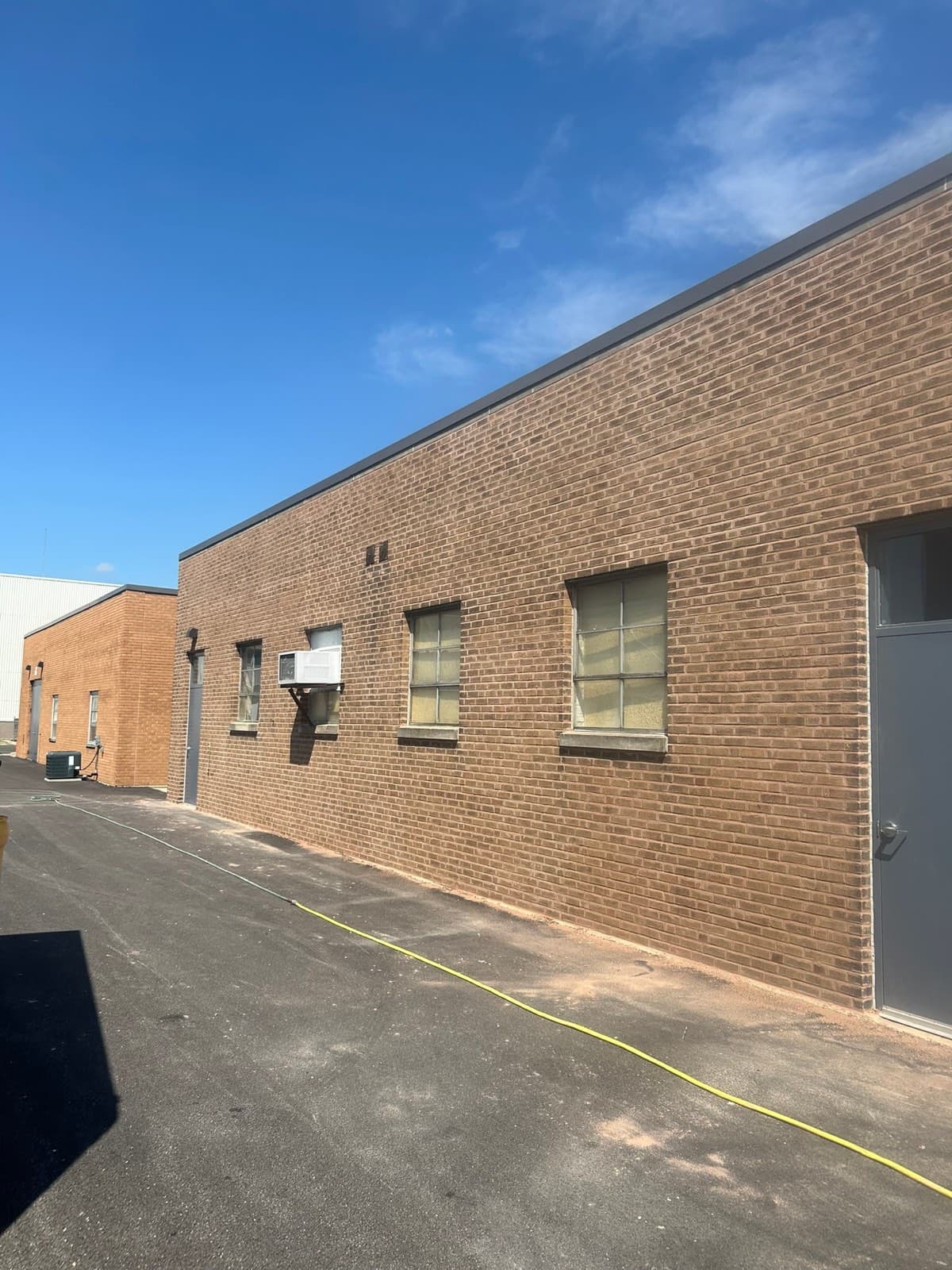
The Crack That Comes Back
There is a specific kind of frustrating that only masonry produces: a crack you have paid to repair, twice, that is open again.
It is not bad workmanship, at least not usually. It is a wall telling you something in the only language it has.
That crack is doing a job. It is where your wall is relieving movement it has nowhere else to put. Fill it with something rigid and you have not removed the movement — you have only removed the place it was going.
Paul Lally's Masonry Inc. diagnoses and repairs movement-related cracking on homes and commercial buildings throughout Chicago and the Chicagoland suburbs. Family-owned since 1988, insured, free on-site estimates. Call (708) 448-8866.
Brick Grows. Permanently.
This is the fact that surprises nearly everyone, including plenty of people in the trades.
Fired clay brick comes out of the kiln bone dry. From that moment it starts reabsorbing atmospheric moisture — and as it does, it expands. Not dramatically, but measurably, and here is the part that matters: irreversibly. It does not shrink back when it dries out again. Most of that growth happens in the brick's early life, but it continues at a decreasing rate essentially forever.
On top of that, brick expands and contracts with temperature, and Chicagoland gives it plenty of range. A south or west elevation can swing enormously between a January night and a July afternoon, and it does that every year.
Meanwhile the structure behind the brick is often doing the opposite. Concrete and steel frames shrink and creep slightly over time.
So the brick skin grows while the structure behind it does not. That difference has to go somewhere.
Expansion Joints Are Where It Goes
A movement joint — expansion joint, in brick — is a deliberate gap built into the wall and filled with a compressible backer rod and a flexible sealant rather than rigid mortar. It looks like a joint. It behaves like a hinge.
In a properly detailed wall you will find them:
- Vertically, near building corners, where movement concentrates
- Vertically at regular intervals along long runs of wall
- Horizontally beneath shelf angles at floor lines on taller buildings, where the veneer is carried on steel
- At changes in wall height, thickness or material
- Around large openings where stress concentrates
A mortar joint is meant to stay put. A movement joint is meant to move. They look similar and they are not interchangeable.
Expansion joints and control joints solve opposite problems
Worth separating, because the terms get used loosely.
| Expansion joint | Control joint | |
|---|---|---|
| Material it serves | Clay brick | Concrete block |
| The problem | The material expands | The material shrinks |
| What the joint does | Gives the wall room to grow into | Gives shrinkage a planned place to crack |
| Filled with | Backer rod and sealant | Sealant, or detailed per the wall |
| If it is omitted | The wall cracks from compression | The wall cracks randomly from shrinkage |
They look almost identical on a finished wall, which is exactly why they get confused — and why somebody eventually fills one with mortar.
The Three Ways It Goes Wrong
1. The joints were overspaced or omitted
A wall built with joints too far apart, or with none at the corners, has more movement than its joints can absorb. It relieves the excess by cracking — and it cracks at the point of highest stress, which is usually a few feet in from a corner or at the edge of an opening.
2. Somebody filled them with mortar
This is the one we undo most often, and it is nearly always well-intentioned. A soft joint looks like a failed mortar joint to an untrained eye — a gap where mortar "should" be. Someone repoints it solid, and the wall immediately loses the relief it was relying on.
The damage then shows up somewhere else, frequently as cracking through brick rather than through a joint, because the joints are no longer the path of least resistance. That is a considerably worse repair than the one it replaced.
3. The sealant aged out and nobody replaced it
Sealant is a wear item with a service life measured in years, not decades. When it hardens, cracks or pulls away, the joint stops keeping water out — even though it may still be moving fine. That is maintenance, not failure.
Reading Crack Patterns
Where a crack sits tells you far more than how wide it is.
| What you see | What it usually means |
|---|---|
| Vertical crack a few feet in from a corner | Missing or overspaced vertical movement joint |
| Vertical crack, fairly uniform width, seasonal | Movement doing its job at the wall's weak point |
| Horizontal crack at a consistent floor-line height | Shelf angle — corrosion, deflection, or a filled horizontal soft joint |
| Cracks angling out from window or door corners | Stress concentration at openings |
| Cracking through brick rather than through joints | Joints are too hard or have been filled — the wall found another path |
| Stepped diagonal cracking near the base | Settlement or foundation movement, not veneer movement |
| A crack that keeps widening over months | Active structural movement — get an engineer |
| Rust staining at a horizontal crack | Corroding steel expanding behind the wall |
| Efflorescence along a crack | Water is now moving through it |
The single most useful thing you can do costs nothing: mark both ends of the crack with a pencil, date it, and photograph it with a ruler in frame a few times a year. A crack that opens in winter and closes in summer is behaving like a movement joint. One that only ever gets longer is something else.
Risks of Leaving It
A movement crack is not usually a structural emergency, but it is an open path into the wall — and in Chicagoland that matters. Water gets in, freezes, expands, and levers the crack wider, dozens of times a winter. It reaches the wall ties holding brick veneer back to the structure and any shelf angle or lintel steel in the assembly, and corroding steel expands to several times its volume, cracking masonry from behind.
There is also a compounding cost: the longer a wall relieves stress at a crack, the more masonry gets damaged along it, so what could have been "cut in a proper joint and seal it" becomes "rebuild the cracked masonry, then cut in a joint."
How It's Actually Repaired
- Determine whether the movement has stabilised — marks, photographs and time. A crack still growing changes the plan.
- Rule structural in or out. Stepped diagonal cracking, displaced brick or openings out of square means a structural engineer looks first, and we will say so.
- Map the crack pattern against corners, openings, floor lines and existing joints. The pattern is the diagnosis.
- Find the existing joints — where they are, where they should be, and whether any have been filled with hard mortar.
- Address water paths — gutters, downspouts, flashing, sills — so the repaired wall is not being fed.
- Repair the damaged masonry: cut out cracked and spalled units and reset them in matched mortar, and repoint the joints damaged along the crack.
- Cut in a movement joint where the wall needs one it never had — cut cleanly through the masonry to the correct width and depth.
- Install backer rod to the correct depth so the sealant bead has the right width-to-depth ratio and cannot bond to the back of the joint.
- Prime where required, gun the sealant in a continuous void-free bead, and tool it to full contact with both faces.
- Document it, so the next owner or contractor knows the joint is deliberate and does not fill it in.
Step eight is where most sealant joints are won or lost. A bead with no backer rod bonds to three sides of the joint and tears itself apart on the first real movement cycle. That is why the last repair failed.
Materials and Technique
Sealant, not mortar, in any joint designed to move — selected for the joint's expected movement capability and for both substrates, and rated for the exposure.
Backer rod sized so the sealant bead is the right proportion: too deep and it cannot stretch, too thin and it tears.
Mortar for everything else, always softer than the brick it sits against — mortar is the sacrificial component, because a joint can be replaced and a brick face cannot. Type N suits most modern veneer; softer, lime-rich mixes belong on soft historic brick.
Matched replacement brick where units have cracked through, blended through the surrounding field rather than concentrated in a patch.
Related work: tuckpointing and repointing, caulking and joint sealant, brick repair and brick replacement, lintel replacement, commercial masonry restoration.
DIY vs. Hiring a Pro
Marking and photographing a crack is genuinely a homeowner job, and it is the most valuable thing you can do here.
Beyond that, two things make this poor DIY territory. Diagnosis — telling a movement crack from a settlement crack from a corroding-lintel crack decides everything that follows, and getting it wrong means repairing the wrong thing. And the temptation to fill it, which is exactly the instinct that causes most of the damage described above. A tube of mortar repair is easy to buy and it is the wrong material for this specific job.
If you take one rule away: never pack anything rigid into a joint or crack that opens and closes with the seasons.
Chicagoland Context
This region is hard on the whole mechanism.
Temperature range. Chicagoland asks masonry to swing through an enormous annual range, so thermal movement here is larger than in milder climates — and it happens on top of the brick's permanent moisture expansion, not instead of it.
Freeze-thaw frequency. Many cycles a winter rather than one long freeze, each one working on water that has found its way into an open crack.
The building stock. The region's post-1960 brick veneer — subdivision homes, apartment buildings, office and retail — is exactly the construction that depends on movement joints, and a great many of those joints are now decades past their sealant's service life. Meanwhile the older solid masonry stock of brick bungalows, greystones and two-flats predates modern joint practice entirely and relieves movement in its own, softer way through lime mortar.
And repointing history. Fifty-plus years of well-meaning repointing across the region has quietly filled a lot of soft joints with hard mortar.
Maintenance and Prevention
- Learn where your soft joints are and do not let anyone repoint them solid.
- Treat sealant as a wear item and replace it on schedule rather than after it fails.
- Mark and photograph any crack annually — it answers the only question that matters.
- Keep water out of open cracks while you decide what to do; a temporary seal beats a winter of freeze-thaw.
- Watch for rust staining, the earliest sign that steel behind the wall is involved.
- On association and commercial buildings, put sealant joints into the maintenance plan rather than the emergency budget.
The Bottom Line
Your brick wall is very slightly bigger than it was when it was built, and it will be slightly bigger again in ten years. That is normal, it is unavoidable, and a well-built wall has somewhere soft to put it.
When a crack keeps coming back in the same place, the wall is not failing at that point — it is working at that point, because nowhere else will take the movement. The repair is to give it a proper joint, not to keep filling the one it made for itself.
Paul Lally's Masonry Inc. is a family-owned, insured masonry contractor serving Chicago and the Chicagoland suburbs since 1988 — tuckpointing, brick repair and replacement, chimney repair and rebuilds, lintel replacement, masonry restoration, and waterproofing for residential and commercial properties. Built on Craftsmanship. Backed by Experience. Free on-site estimates — call (708) 448-8866 or request an estimate online.
Frequently Asked Questions
What is an expansion joint in a brick wall?
It is a deliberate soft, sealant-filled joint built into a brick wall so the masonry has somewhere to expand into. Unlike a mortar joint, which is rigid and meant to stay put, an expansion joint is designed to compress and open as the wall moves.
Does brick really expand permanently?
Yes. Fired clay brick leaves the kiln bone dry and immediately begins reabsorbing atmospheric moisture, and as it does it expands — irreversibly. Most of that movement happens early in the brick's life, but it continues at a decreasing rate and it never reverses.
Why does the same crack keep coming back after I repair it?
Because the crack is doing a job. If the wall has nowhere soft to put its movement, it relieves the stress at its weakest point, and packing rigid mortar into that point does not change the geometry concentrating the stress there. The crack reopens on the next real temperature swing.
What is the difference between an expansion joint and a control joint?
They solve opposite problems. An expansion joint gives clay brick room to grow; a control joint gives concrete block a planned place to crack as it shrinks. Brick expands and block shrinks, so the joints are placed and detailed differently even though they look similar.
Where should expansion joints be in a wall?
Typically as vertical joints near building corners and at regular spacing along long runs, and as horizontal soft joints beneath shelf angles at floor lines on taller buildings. Exact spacing depends on the wall, so what matters on an existing building is whether the joints that exist are still working.
Somebody filled my expansion joint with mortar. Is that a problem?
Yes, and it is a common one. Rigid mortar in a joint designed to move cannot compress, so the wall loses the relief the joint was providing and starts cracking elsewhere — often through brick rather than through a joint, which is harder to repair.
Can an expansion joint be added to an existing wall?
Yes. Cutting a movement joint into an existing wall is real work — the joint is cut through the masonry, prepared, fitted with backer rod and sealed — but on a building that keeps cracking in the same place it addresses the cause rather than the symptom.
How do I tell a movement crack from a structural crack?
Movement cracking tends to be vertical, fairly uniform in width, located near corners or openings, and it opens and closes with the seasons. Structural cracking is more often stepped and diagonal, wider at one end, and it keeps growing over time. Anything that keeps widening deserves a structural engineer's look.
Should the joint be filled with mortar or sealant?
Sealant, over proper backer rod. Mortar is rigid and belongs in joints that stay put; a sealant joint stretches and compresses while still keeping water out. It is a maintenance item with a service life, and it is meant to be replaced periodically.
How much does this kind of repair cost in Illinois?
It depends on whether existing joints are being cleaned out and rebuilt or new joints cut into the wall, the linear footage, height and access, and how much cracked masonry has to be repaired alongside. Paul Lally's Masonry Inc. looks at it on site and puts the estimate in writing — call (708) 448-8866.