
Brick Repair · Chicagoland, IL
Brick Repair vs. Replacement: Which Does Your Home Need?
Some damaged brick can be repaired; some has to come out and be replaced. Here's how a mason tells the difference — the warning signs, what each fix involves, and how to decide on your Chicagoland home.
2026-06-29
Quick Answer
Repair your brick when the units themselves are still sound and only the mortar joints or a thin surface have worn — tuckpointing and spot patching handle it. Replace brick when the faces have spalled through, cracked structurally, crumbled, or gone missing. Paul Lally's Masonry Inc. has repaired and replaced brick across Chicago and the Chicagoland suburbs since 1988 — free on-site estimates at (708) 448-8866.
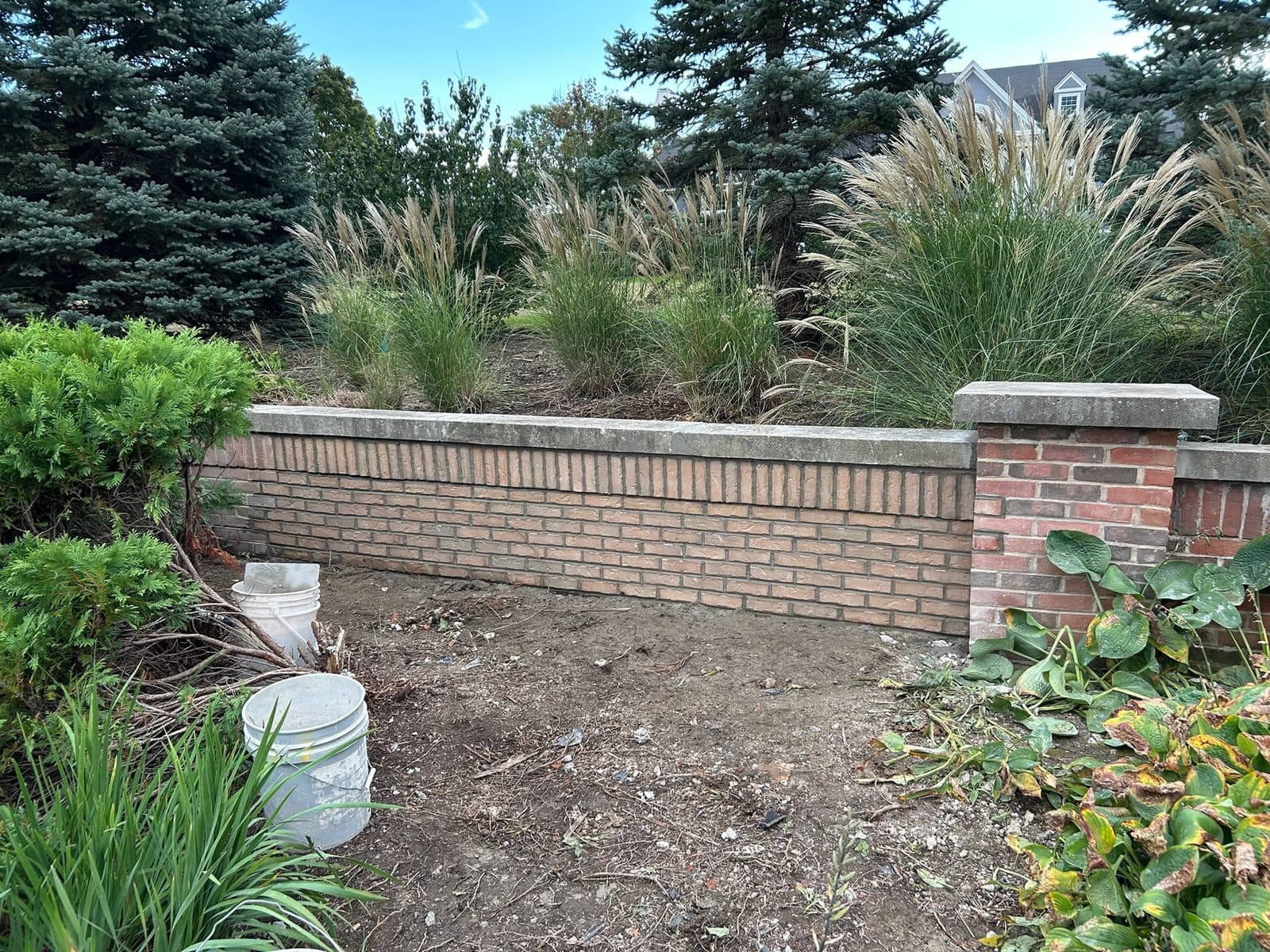
Brick repair or replacement? Here's the short answer
If the bricks on your home are still solid and only the mortar joints or a thin surface layer have worn down, you almost certainly need a repair — tuckpointing and some spot patching. If the brick faces have flaked off, cracked through, crumbled, or gone missing, those units need to be replaced. Most walls that have been neglected for a while need a bit of both. Paul Lally's Masonry Inc. has been making that call on Chicagoland homes since 1988, and we'll tell you honestly which one you're looking at — free on-site estimates at (708) 448-8866.
The reason this matters: replacing brick that only needed repointing wastes your money, and patching over brick that's actually failed just hides the problem until it spreads. Getting the diagnosis right is most of the job.
How brick actually fails
Brick is tough, but it's a system — hard-fired clay units held together by softer mortar, designed to shed water and let the wall breathe. When water gets in and can't get out, things start to come apart. Here's what that looks like.
Spalling (the face pops off)
Spalling is the classic Chicago failure: the smooth outer face of the brick flakes, crumbles, or pops off, leaving a rough, pitted surface behind. It happens when water soaks into the brick and then freezes — the ice expands and blows the face off from the inside. Once a brick has spalled, it can't be repaired; the weatherproof skin is gone and the soft core erodes fast.
Cracking
Cracks come in two flavors. A hairline crack through a single brick is usually cosmetic weathering. Stair-step cracks that travel diagonally through the mortar joints — or cracks that keep getting wider — can mean the wall is moving, often from settlement or a failed lintel above a window. The crack tells you where; only an inspection tells you why.
Crumbling and erosion
Older, softer brick (and the soft lime mortar around it) can simply erode over decades — joints recede, edges round off, and you can scrape grit out with a key. A little is normal on a century-old wall; a lot means it's time to act before water finds a path deeper in.
Loose, missing, or shifted brick
Bricks that wiggle, have fallen out, or have shifted out of plane are past the repair stage for those units. They get reset or replaced — and if a group of them has moved, that's a sign to check what's going on behind the wall.
When brick can be repaired
Repair is the answer when the brick itself is sound and the problem is the mortar or the surface. That covers a lot of real-world damage:
- Failing mortar joints — the most common issue by far. The fix is tuckpointing and repointing: grinding out the old, crumbling mortar and packing in fresh, color- and type-matched mortar.
- Surface wear on otherwise solid brick — cleaning, minor patching, and sealing sound brick to keep water out.
- A few isolated hairline cracks in stable brick.
- Open joints around windows, sills, and chimneys that are letting water in but haven't damaged the brick yet.
Repair keeps your original brick — which on an older Chicago home is often better, denser brick than anything sold today — and it's the right move whenever the units have life left in them.
When brick needs to be replaced
Replacement is the answer when the brick units are the thing that's failed:
- Spalled-through faces — the brick face is gone and the core is exposed and eroding.
- Structurally cracked brick — units split through, especially along a stair-step crack or under a failing steel lintel.
- Crumbling, soft, or "sugaring" brick that breaks apart when touched.
- Missing, loose, or shifted bricks that no longer do their job.
- A bulging or bowing section, where the wall has moved and needs to be taken down and rebuilt.
The key idea: you replace the bricks that have failed and keep the ones that haven't. A good mason removes only what's necessary and weaves the new brick into the sound wall around it.
Brick repair vs. replacement at a glance
| Brick repair | Brick replacement | |
|---|---|---|
| Best when | Brick is sound; mortar/surface has worn | Brick faces are spalled, cracked, crumbling, or missing |
| Typical methods | Tuckpointing, repointing, patching, sealing | Cut out damaged units, set matched brick, tool joints |
| Keeps original brick | Yes — renews around it | Swaps only the failed units |
| Common triggers | Crumbling mortar joints, surface wear | Freeze-thaw spalling, structural cracks, movement |
| What it solves | Stops water entry, restores joints | Restores the wall surface and integrity |
| Longevity when done right | Decades, when water stays out | Decades — matched brick blends in for good |
Most real projects land somewhere in the middle: replace the handful of bricks that have failed, then tuckpoint the surrounding joints so water can't undo the work.
The matching challenge — why a good replacement disappears
The hard part of brick replacement isn't pulling bricks out; it's making the new ones invisible. That means matching three things:
- The brick — size, color, and texture. Chicago's older brick (common brick, face brick on bungalows and greystones, hard-fired pavers) often isn't made anymore, so we source reclaimed or close-match units.
- The mortar color — old mortar weathered to a specific shade; new gray mortar next to it screams "patch."
- The mortar type — older walls were built with softer, lime-rich mortar. Using modern, hard Portland-cement mortar on soft historic brick can actually crack the brick over time. The mortar should be matched to the wall, not just grabbed off the shelf.
Get those right and the repair disappears. Get them wrong and you've got a permanent reminder of where the work was done.
How a professional brick replacement is done
- Inspect and diagnose. Identify which bricks have actually failed and why — and rule out a structural cause like a bad lintel or settlement.
- Cut out the damaged units. Carefully remove the failed brick and old mortar without disturbing the sound brick around them.
- Source matched brick. Match size, color, and texture to the existing wall.
- Set the new brick. Lay the replacements in color- and type-matched mortar, keeping coursing and alignment true.
- Tool and finish the joints. Match the joint profile (concave, struck, etc.) so the new mortar reads like the old.
- Clean and cure. Let the mortar cure properly and clean the area, then seal if appropriate to protect the repair.
What drives the cost
We never quote brick work over the phone, because two jobs that look similar can be very different once we're up close. What moves the number:
- How much brick is affected — a few spalled units versus a whole elevation.
- Access and height — ground-level work versus upper stories needing scaffolding.
- Matching difficulty — sourcing brick for an older or unusual wall takes more effort.
- The underlying cause — a simple swap versus rebuilding around a lintel or a moved section.
- Whether tuckpointing comes with it — usually the surrounding joints need attention too.
There's no price list and no one-size guess. The only honest figure is a free on-site estimate — call (708) 448-8866.
DIY vs. hiring a mason
Swapping a brick looks simple on a video. In practice, the failure points are exactly the things a homeowner can't easily judge: picking matched brick and the right mortar, getting joints to tool cleanly, and — most important — spotting why the brick failed. Seal or patch over a moisture problem or a structural crack and you've trapped the issue inside the wall, where it costs far more to fix later. Brick is also unforgiving: mismatched units and the wrong mortar are permanent and obvious. For anything beyond a single loose brick, it's worth having a mason look.
Why Chicagoland brick fails — and what it means for repair vs. replacement
Chicago is hard on masonry. Our freeze-thaw cycles run water into brick and joints and then freeze it, again and again, all winter — the single biggest cause of spalling here. Add lake-effect moisture, a century of housing stock (brick bungalows, greystones, two-flats, worker cottages), and a lot of older soft brick, and you get walls where the mortar fails first (repair) and, if it's left long enough, the brick faces start blowing off (replacement). That's why catching mortar problems early with tuckpointing is the best way to avoid the bigger expense of widespread brick replacement down the road.
How to decide: get it looked at
From the ground, surface staining, a few open joints, and serious structural damage can all look alike. The reliable way to know whether you need repair, replacement, or both is to have a mason look closely — check the joints, tap the brick, read the cracks, and find the water path. We'll show you what we see and tell you straight which bricks have life left and which have to go.
Paul Lally's Masonry Inc. is a family-owned, insured masonry contractor serving Chicago and the Chicagoland suburbs since 1988 — brick repair, brick replacement, tuckpointing, chimney repair and rebuilds, lintel replacement, foundation masonry repair, masonry restoration, and waterproofing for residential and commercial properties. Built on Craftsmanship. Backed by Experience. Free on-site estimates — call (708) 448-8866.
Related services
- Brick repair — renewing sound brick and the joints around it.
- Brick replacement — cutting out and matching failed units.
- Tuckpointing and repointing — the mortar-joint repair most walls need first.
- Foundation masonry repair — when cracks and movement go deeper than the face.
The bottom line
Repair keeps sound brick and renews the mortar and surface around it; replacement swaps out the units that have actually failed. Most Chicagoland homes that have gone a while between masonry work need a measured mix of the two — and the craft is in removing only what's necessary and matching the rest so you can't tell it was touched. Not sure which yours needs? Call Paul Lally's Masonry Inc. at (708) 448-8866 or request a free estimate, and we'll take a look.
Frequently Asked Questions
How do I know if my brick needs repair or replacement?
If the bricks themselves are solid and only the mortar joints or a thin surface layer have worn, the wall can usually be repaired with tuckpointing and patching. If the brick faces have flaked off (spalled), cracked through, crumbled, or fallen out, those units need to be replaced. An in-person look is the only way to be sure, because surface damage and structural damage can look similar from the sidewalk.
Can spalling brick be repaired, or does it have to be replaced?
Once a brick's face has spalled off, that brick can't be put back together — the protective outer skin is gone and the soft inside will keep eroding. Spalled bricks are cut out and replaced with matched units. The good news is that spalling is usually localized, so often only the affected bricks need swapping, not the whole wall.
Can you match the brick on an older Chicago home?
Usually, yes. We match replacement brick by size, color, and texture — sourcing reclaimed or close-match brick for older bungalows, greystones, and two-flats — and we match the mortar color and type so the repair blends in. On a century-old wall the goal is that you can't tell where the new brick starts.
Is brick replacement more expensive than brick repair?
Generally yes, because replacement involves cutting out units, sourcing matched brick, and rebuilding, while repair renews mortar and surfaces on brick that stays put. The bigger cost driver is usually how much area is affected and how hard it is to reach. We give you the real number in a free on-site estimate — no prices over the phone.
What causes brick to spall or crumble in Chicago?
Water plus freeze-thaw. Moisture gets into the brick through failed mortar joints or a bad sealer, then freezes and expands through our Chicago winters, popping the face off the brick. Older soft brick, north-facing walls, and areas below grade or under leaking gutters fail first.
How many damaged bricks is too many to just patch?
There's no fixed number — it depends on whether the damage is scattered or concentrated. A handful of spalled bricks across a wall is a straightforward replacement; a large cluster, a bulging section, or damage tied to a structural crack often means rebuilding that area. We assess the pattern, not just the count.
Will the replaced brick match the rest of my wall?
That's the whole job. A proper brick replacement matches unit size, color, and texture and uses color- and type-matched mortar, so the new work disappears into the old. Mismatched brick or the wrong mortar is the telltale sign of a rushed repair — and it's exactly what we work to avoid.
Is cracked brick a structural problem?
Sometimes. A single cracked brick is often just weathering, but stair-step cracks running through the mortar joints, cracks that keep widening, or cracks paired with a bulge can signal movement or settlement. Those should be looked at promptly, because the fix may involve more than swapping a brick.
Should I repair the brick or just seal it?
Sealing only helps sound brick with intact joints — it's prevention, not a repair. If joints are open or brick is spalling, sealing over the damage traps moisture and makes things worse. Repair or replace what's failing first, then seal to protect it.