
Brick Repair · Chicagoland, IL
Brick Wall Rebuilding in Chicago: When Repair Isn't Enough
Not every damaged brick wall needs to come down — but some do. Here's how to tell the difference between a wall that tuckpointing can save and one that needs a full rebuild, and how Paul Lally's Masonry Inc. handles both across Chicagoland.
2026-07-04
Quick Answer
A brick wall needs rebuilding — not just repair — when it's bowing, bulging, structurally cracked, shifted out of plane, or damaged across a large area rather than in a few spots. Paul Lally's Masonry Inc. rebuilds and repairs brick walls across Chicagoland, family-owned since 1988. Free estimates: (708) 448-8866.
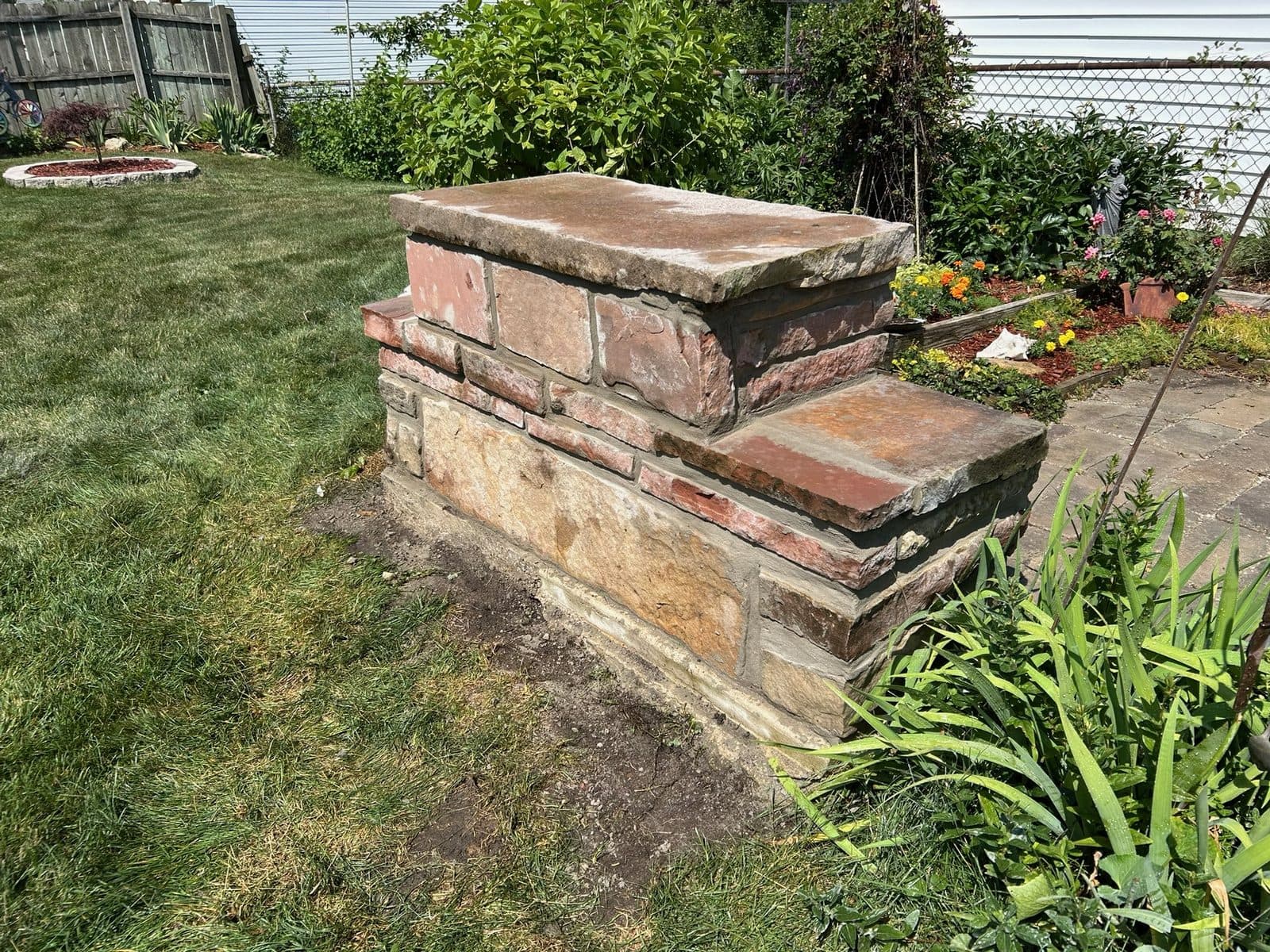
If your Chicago brick wall is bowing, cracking through the bricks, or shifting out of line, the honest answer is that patching probably won't fix it — that wall likely needs to be rebuilt. Paul Lally's Masonry Inc. has been rebuilding and repairing brick walls across Chicagoland since 1988, and the first thing we do is tell homeowners the truth about what their wall actually needs. Sometimes that's good news: a little tuckpointing and a few replacement bricks. Sometimes it's a rebuild. This guide walks you through how to tell the difference, why walls fail, and what a proper brick wall rebuilding job looks like. When you want a straight answer about your own wall, call us at (708) 448-8866 for a free estimate — no pressure, just an honest assessment.
Repair vs. Rebuild: The Plain Distinction
Here's the simplest way to think about it. Repair means the wall is fundamentally sound and you're fixing localized problems — deteriorated mortar joints, a cluster of spalling brick, a cracked lintel. The wall stays standing while you work. Rebuilding means the wall has lost structural integrity or is damaged so widely that fixing spots won't hold — you take a section down and build it back correctly.
The mistake we see most often is a well-meaning homeowner (or a cut-rate contractor) trying to repair their way out of a problem that's actually structural. You can tuckpoint a bowing wall all day long; it's still bowing. You can replace face brick over a rusted, expanding shelf angle; the new brick will crack too. Knowing which category you're in saves money and prevents a repair that fails in a season or two.
| Repair (tuckpointing + spot replacement) | Rebuild (section comes down) | |
|---|---|---|
| Wall condition | Sound, plumb, stable | Bowing, bulging, or leaning out of plane |
| Cracking | Cosmetic step cracks in mortar | Structural cracks through the brick |
| Damage extent | Localized — a few areas | Widespread across a large area |
| Brick alignment | In place | Displaced or shifted |
| Wall ties / veneer | Intact | Failed, corroded, or separating |
| Typical fix | Tuckpointing, spot brick replacement | Shore, teardown, rebuild with new ties + matched brick |
| Safety risk | Low | Can be high — possible collapse |
When a Wall Can Be Saved (and When It Can't)
A brick wall repair vs rebuild decision usually comes down to whether the wall's core structure is intact. If your brick is doing its job — carrying load, staying plumb, keeping water out — but the mortar has eroded, that's a classic tuckpointing job. We rake out the failed joints and repack them with fresh, matched mortar, and the wall is good for decades. Add in brick replacement for a handful of cracked or spalled units and you've fully restored the wall without touching its structure.
But once the wall itself has moved — bowed, bulged, separated from the building, or cracked straight through — mortar work alone can't put it back. At that point the responsible fix is to take the compromised section down and rebuild it with proper support, new wall ties, and correct mortar. Below are the warning signs that push a wall from "repairable" into "rebuild" territory.
Bowing or Bulging
A brick wall should be flat and plumb. When you sight down it from the corner and see a belly — a section pushing outward — that's bowing or bulging. It means the wall has lost its bond with the structure behind it, or the masonry is being pushed by trapped moisture, rusting wall ties, or a failing shelf angle. A bowing brick wall repair almost always means rebuilding the bulged section. You can't push a bulged wall back into place; the brick and mortar have already deformed.
Structural / Vertical Cracks vs. Cosmetic Step Cracks
Not all cracks are equal. A step crack — the diagonal, stair-step pattern that follows the mortar joints — is often cosmetic or the result of minor settling, and step crack repair by repointing frequently handles it. What worries a mason is a structural brick crack: a vertical crack running through the bricks themselves, a crack that's wide and growing, or cracking mirrored on both faces of the wall. Those signal real movement — foundation shift, overload, or expansion pressure — and typically call for rebuilding the affected area, not just filling the crack.
Displaced or Shifted Brick
When individual bricks have pushed out, dropped, or slid relative to their neighbors, the wall's bond is broken. Displaced brick you can wiggle by hand, courses that no longer line up, or a section that's visibly stepped forward all point to a wall that's coming apart. Once brick is displaced across an area, resetting a few units won't restore the wall — the section needs to be rebuilt as a unit.
Widespread Spalling
Spalling brick — where the face of the brick flakes, crumbles, or pops off — comes from water getting into the brick and then freezing. A few spalled bricks are a spot-replacement job. But when spalling is widespread across a wall, especially near grade or below a leaking sill, the brick has absorbed so much water and lost so much face that replacing it piecemeal is pointless. Widespread freeze-thaw damage usually means rebuilding.
Failed Wall Ties / Veneer Separation
Most Chicago brick walls built in the last century are brick veneer — a single wythe of brick tied back to a structural wall with metal wall ties. Those ties corrode over decades. When enough of them fail, the veneer loses its connection and starts to bow, lean, or pull away from the building. Wall tie failure is one of the most common reasons a veneer wall has to be rebuilt: the fix requires taking the brick down and re-tying it correctly to the backup structure.
Failed Lintels and Shelf Angles
Above windows, doors, and at floor lines, steel lintels and shelf angles carry the brick. When that steel rusts, it expands — sometimes to many times its original thickness — and lifts and cracks the brick above it. You'll see cracking and displacement in a horizontal band over an opening. Lintel replacement (and shelf-angle work) means removing the brick above, replacing the steel, and rebuilding the courses. Painting over rusting steel or repointing around it only buys a little time.
Why Brick Walls Fail Structurally
Understanding why walls fail helps you catch problems early. In Chicagoland, the usual culprits are:
- Water and freeze-thaw damage. Water is the number-one enemy of masonry. It gets in through failed joints, cracked caps, and leaking flashing, then freezes and expands in our hard winters. Repeated freeze-thaw cycling breaks down mortar and spalls brick.
- Wall-tie corrosion. The metal ties holding brick veneer to the structure rust and fail over time, letting the veneer bow and separate.
- Foundation movement. When the foundation masonry settles, heaves, or shifts, the brick above it cracks and racks. Structural cracks that start at the base often trace back here.
- Missing or failed expansion joints. Brick expands and contracts with temperature and moisture. Without working expansion joints, that movement has nowhere to go and cracks the wall.
- Rusting steel. Failing lintels and shelf angles expand and push brick out of alignment.
Usually it's not one thing — it's water plus tie corrosion plus a missing expansion joint, all working together over years. That's why an experienced eye matters: we diagnose the cause, not just the symptom, so the rebuild actually solves the problem.
The Brick Wall Rebuilding Process
A proper rebuild is methodical. Here's how Paul Lally's Masonry Inc. approaches a brick wall rebuilding job:
- Assessment. We inspect the wall inside and out, identify the failure mode (ties, lintel, foundation, freeze-thaw), and determine exactly how much needs to come down. We don't rebuild more than necessary, and we don't leave a hidden problem behind.
- Shoring and support. Before anything comes down, we support the loads above the work area with proper masonry shoring so the structure stays safe throughout. This is the step DIYers and cut-rate crews skip — and it's where things go wrong.
- Careful teardown. We take the compromised section down course by course, protecting the surrounding brick, the interior, and everything below.
- Salvage and match brick. We clean and set aside sound original brick for reuse. Where brick is too damaged to save, we source matched or reclaimed brick so the rebuild blends with the rest of the wall.
- Rebuild with proper ties and mortar. We rebuild the wall with new, correctly spaced wall ties, appropriate flashing and weeps where needed, new steel if a lintel or shelf angle was the cause, and the right mortar matching the original in strength and color.
- Repoint and blend. We tie the new work into the existing wall, repoint the transition, and tool the joints to match the original profile so the rebuilt section disappears into the wall.
Materials and Techniques That Matter
The details are what separate a rebuild that lasts from one that fails again.
Mortar type. Mortar should match the brick, not overpower it. Type N mortar is the workhorse for most above-grade residential brick — it's softer and flexes with the wall, which protects older, softer brick. Type S mortar is stronger and used where more structural strength or below-grade resistance is needed. Using mortar that's too hard for soft historic brick actually causes spalling, because the brick becomes the weak point. Getting this right is craftsmanship, not guesswork.
Matched and reclaimed brick. Chicago's brick has character — different eras, colors, and textures. We match new brick to yours, and on older homes we often use reclaimed brick so the rebuilt section reads as original.
Wall ties. A rebuilt veneer is only as good as its connection to the structure. We install proper corrosion-resistant ties at correct spacing so the wall stays bonded for the long haul.
Lintels and steel. Where rusted steel caused the failure, we replace it during the rebuild — otherwise the new brick will crack all over again.
What Drives the Cost of a Rebuild
Every wall is different, so we give a free estimate rather than a one-size-fits-all number. The factors that drive the scope of a brick wall rebuilding job include:
- Extent of the damage — a small bulged section vs. an entire wall.
- Height and access — upper stories, tight side yards, and hard-to-reach walls require staging and add labor.
- Shoring requirements — load-bearing masonry and walls carrying significant load above need more support work.
- Brick matching — sourcing matched or reclaimed brick for older or unusual brick takes more effort than standard stock.
- Underlying cause — replacing a rusted lintel or addressing foundation masonry repair adds to the scope beyond the brick itself.
We'll walk your property, explain what we find in plain English, and give you a clear written estimate at no cost. Call (708) 448-8866.
DIY vs. Pro: This One Isn't DIY
We're all for homeowners handling small jobs — but a structural brick rebuild is not one of them. The reason is simple: safety. Taking down a section of a bowing or load-bearing masonry wall without proper masonry shoring can cause a sudden, dangerous collapse. Getting the mortar type wrong can spall your brick. Skipping wall ties leaves the rebuild to bow again. This is skilled, hazardous work, and it's exactly why hiring a insured mason matters — not just for the quality of the finished wall, but for the safety of everyone during the teardown. Paul Lally's Masonry Inc. is insured, and rebuilding brick walls the right way is what we've done since 1988.
The Chicago Context
Chicagoland has some of the best brick housing stock in the country — century-old Chicago brick homes, greystones, workers' cottages, and classic two-flats, most of them brick veneer over structural masonry or frame. That age is a gift and a challenge. The brick is beautiful and the craftsmanship is often superb, but a hundred years of freeze-thaw cycling, corroding wall ties, and rusting lintels eventually catch up with any wall. Add Cook County's brutal winters and swampy summers, and Cook County masonry takes a real beating. The upside: these walls are absolutely worth saving, and a rebuild done with matched brick and correct mortar restores both the strength and the historic look.
How to Tell If It's Urgent
Some brick problems can wait for spring; some can't. Treat it as a brick wall safety inspection priority — and keep people clear of the area — if you see any of these:
- A wall that is actively leaning, bowing, or bulging and appears to be getting worse.
- Bricks you can move by hand, or brick actively falling.
- A structural crack that is wide, growing, and running through the brick.
- Any wall over an entry, walkway, or play area showing displacement.
When in doubt, don't guess. Call us and we'll come look. A free assessment now is a lot cheaper than an emergency later.
Related Services
Depending on what your wall needs, these may help:
- Brick replacement — full and partial rebuilds, matched and reclaimed brick.
- Brick repair — spot repairs, spalling brick, and localized fixes.
- Tuckpointing — restoring failed mortar joints on sound walls.
- Foundation masonry repair — addressing movement at the base.
- Lintel replacement — replacing rusted steel over openings.
The Bottom Line
Not every damaged wall needs to come down — and a good mason will tell you when yours doesn't. But when a wall is bowing, bulging, cracked through the brick, or damaged across a large area, repair isn't enough, and a proper rebuild is the only fix that lasts. The key is an honest, experienced assessment that finds the real cause and rebuilds it right, with matched brick, the correct mortar, and proper ties and support.
That's what Paul Lally's Masonry Inc. has done for Chicagoland families since 1988 — Built on Craftsmanship. Backed by Experience. We're family-owned, insured, and we'll give you a straight answer and a free estimate on your wall. Call (708) 448-8866, email info@paullallymason.com, or reach out here. We serve homeowners throughout Chicagoland from our base in Palos Heights, and we'd be glad to take a look at your wall.
Frequently Asked Questions
How do I know if my brick wall needs to be rebuilt or just repaired?
If the damage is limited to a few loose bricks, failing mortar joints, or surface cracks, repair with tuckpointing and spot brick replacement is usually enough. A rebuild is needed when the wall is bowing, bulging, leaning out of plane, cracked structurally, or damaged across a large area. A licensed mason can tell you which category you're in during a free on-site assessment.
Is a bowing or bulging brick wall dangerous?
It can be. A wall that visibly leans, bulges, or separates from the structure behind it has lost integrity and could shed brick or collapse under load. Keep people away from the affected area and have it inspected promptly. Paul Lally's Masonry Inc. offers free assessments at (708) 448-8866.
What's the difference between a step crack and a structural crack?
Step (stair-step) cracks that follow the mortar joints in a diagonal pattern are common and often cosmetic or tied to minor settling. Vertical cracks that run straight through the bricks themselves, or wide cracks that keep growing, point to structural movement and usually mean part of the wall needs rebuilding.
Can you save and reuse my original brick when you rebuild?
Often, yes. On older Chicago homes we carefully take down the affected section, clean and salvage sound bricks, and reuse them so the rebuild blends with the rest of the wall. Where brick can't be salvaged, we source matched or reclaimed brick to keep the look consistent.
Why do brick walls fail structurally in the first place?
The most common causes in Chicagoland are water infiltration and freeze-thaw cycling, corroded or failed wall ties, foundation movement, missing or failed expansion joints, and rusted lintels or shelf angles that push brick out of alignment. Usually more than one factor is at work.
Do I need to move out while you rebuild a brick wall?
For most residential rebuilds, no. We shore and support the structure as needed, work in sections, and keep the home safe and weather-protected throughout. We'll tell you upfront if any part of the job requires special precautions.
Will the rebuilt section match the rest of my house?
That's the goal. We match brick size, color, and texture, and we match mortar type and joint profile so the repaired area blends in rather than standing out. On century-old brick we take extra care with reclaimed brick and custom mortar coloring.
Is brick wall rebuilding something I can do myself?
No. Rebuilding structural or load-bearing masonry involves shoring, weight, and safety risks that make it a job for an insured mason. A wall that isn't properly supported during teardown can fail suddenly. This is one repair where hiring a professional is about safety, not just quality.