
Homeowner Education · Chicagoland, IL
Chimney Liners and Relining: What's Inside the Chimney, and When It Becomes a Masonry Job
The brick you can see is not what carries the smoke. Inside every masonry chimney there's a liner doing the actual work, and when it cracks or was never there at all, the damage starts on the inside and reaches the brick last. Here's how liners fail, what relining involves, and where the mason's work ends and the sweep's begins.
2026-08-27
Quick Answer
Every masonry chimney needs a liner — usually clay flue tile in older Chicagoland construction — and the liner, not the brick, is what actually contains combustion gases. Cracked, spalled or missing liners are a combustion-safety issue diagnosed by inspection, while the masonry around them is repaired or rebuilt by a mason. Paul Lally's Masonry Inc. repairs and rebuilds chimneys across Chicagoland. Family-owned since 1988, insured. Call (708) 448-8866.
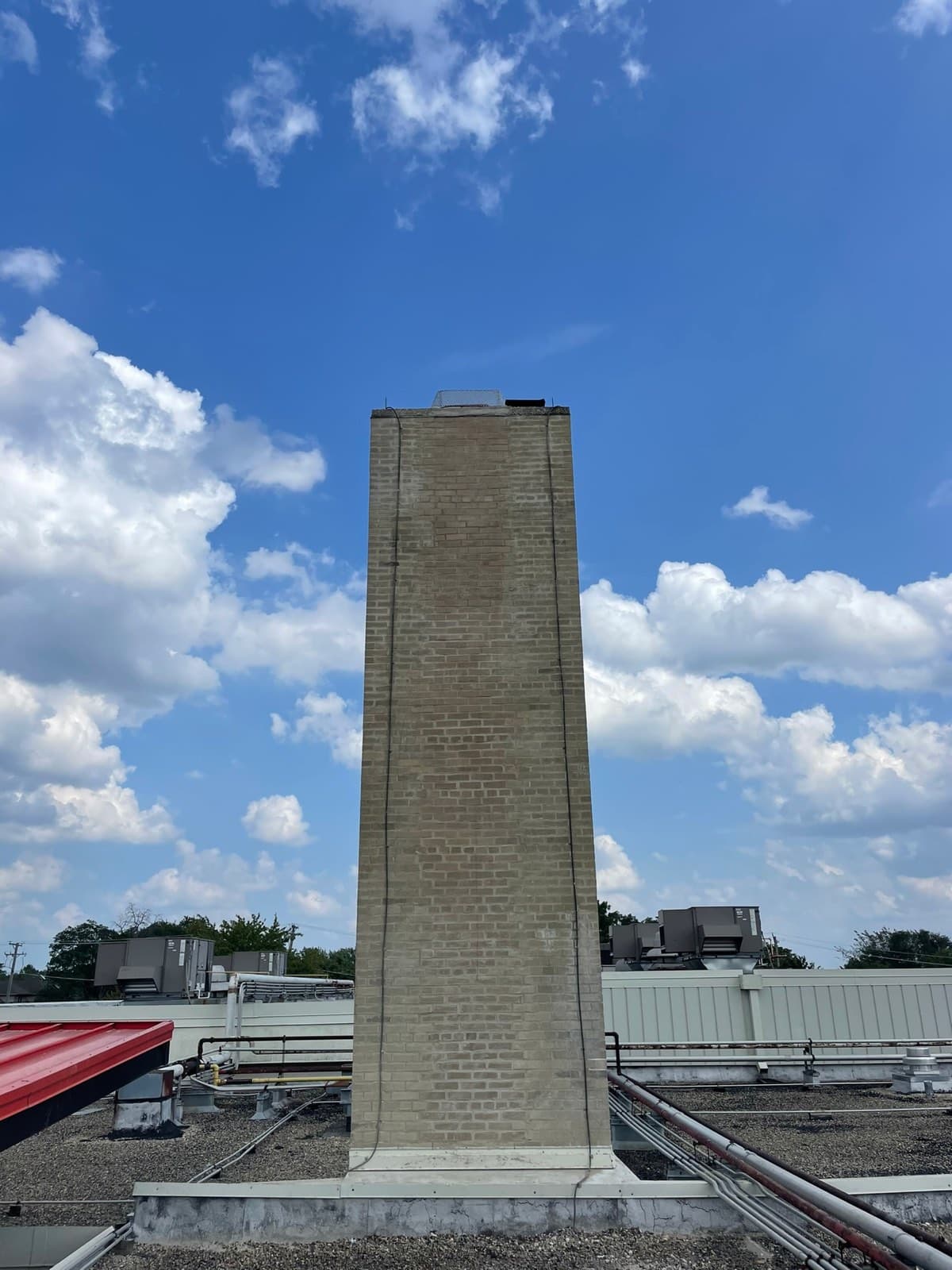
The Brick Isn't What Carries the Smoke
Most homeowners picture a chimney as a hollow brick tube. It is not.
Inside that masonry there is a liner — a separate lining doing the actual work of containing heat and combustion gases and keeping them off the surrounding brick and the framing near it. In most Chicagoland masonry chimneys, that liner is clay flue tile: square or round terracotta sections stacked one on top of another, mortared at the joints, running the height of the flue.
The brick is the weather shell and the structure. The liner is the part doing the dangerous job.
That distinction changes how you read chimney problems, because liner damage starts on the inside — where you cannot see it — and often reaches the brick last.
Paul Lally's Masonry Inc. repairs and rebuilds chimneys throughout Chicago and the Chicagoland suburbs. Family-owned since 1988, insured, free on-site estimates. Call (708) 448-8866.
What a Liner Does
Three jobs, all of them consequential.
It contains combustion gases. Everything venting into a chimney — a fireplace, a furnace, a water heater — produces gases that must go up and out. The liner is the sealed path that keeps them from reaching the masonry, the framing, or the inside of your house.
It protects the masonry from heat and acid. Flue gases are hot and, in many appliances, acidic. Unlined masonry exposed to them deteriorates from the inside out.
It maintains draft. A correctly sized, smooth-walled flue draws properly. An oversized, rough or partially blocked one does not, which is where smoking fireplaces and backdrafting appliances come from.
How Liners Fail
Age and thermal cycling
Clay tile is durable but brittle. Decades of heating and cooling work on the mortar joints between tiles first — they open, and once they do the flue is no longer a sealed path. Tiles themselves crack and spall over time.
A chimney fire
A rapid, intense temperature spike can crack tile outright. Any chimney that has had a fire should be inspected before use.
Water
The single most underrated cause. Water entering through a cracked crown, a missing cap, or open mortar joints in the stack runs down inside the chimney, soaks the tile and the joints between them, and in a Chicagoland winter freezes there. That is freeze-thaw damage happening inside your chimney.
The modern one: orphaned and oversized flues
This is the mechanism behind an enormous amount of what we see, and almost nobody explains it to homeowners.
A great many Chicagoland chimneys were built for a coal or early gas furnace — a hot, high-volume, fast-moving exhaust that kept the whole flue warm and dry. Then a high-efficiency furnace was installed and vented out a sidewall, leaving the water heater alone in a flue built for something far larger.
Now the exhaust is cooler, wetter and nowhere near enough to warm that volume. It condenses on the flue walls on its way up, and that condensate — often acidic — soaks into the tile, attacks the mortar joints, and works outward into the masonry.
An under-used chimney frequently deteriorates faster than a hard-working one. If you changed furnaces and never had the flue looked at, that is worth doing.
Never lined at all
Some genuinely old chimneys were built without any liner. On Chicago's older housing stock this turns up more often than people expect, and it is one of the clearer cases for relining.
Warning Signs
You cannot see most liner damage, which is exactly why inspection matters. But these point at it:
- Debris in the firebox — sand, mortar crumbs, or pieces of terracotta tile
- Draft problems — smoke spilling into the room, or an appliance backdrafting
- Staining on the chimney breast or the wall around it
- A strong odour from the fireplace, particularly in humid weather
- White efflorescence on the interior chimney wall
- Rapid creosote accumulation reported by whoever cleans the flue
- Rusting on a damper or an appliance connector — a sign of condensation
- Anything following a chimney fire, a severe storm, or a change of heating appliance
And from outside, the water paths that cause internal damage:
- A cracked, spalled or missing crown, or a thin mortar wash instead of a proper sloped crown
- A missing, rusted or dislodged cap
- Open mortar joints and spalling brick in the stack
- Clay flue tile visible and cracked at the top, or sitting proud of a broken crown
- Dark saturation staining on the masonry
The Relining Options
| Approach | What it is | Typically suits |
|---|---|---|
| Stainless steel liner | A metal liner run down the flue and sized to the appliance | Orphaned or oversized flues; venting a single appliance correctly |
| Cast-in-place liner | A cementitious lining formed inside the existing flue | Chimneys where the flue path is sound but the lining is not |
| New clay tile | Installed as the chimney is rebuilt | When the stack is coming down anyway |
| Cap and seal | Properly closing an abandoned flue | A chimney genuinely out of service |
| Removal | Taking the chimney down below the roofline | Fully abandoned chimneys where rebuilding is not worth it |
Which one is right depends on what the flue actually vents, the flue's condition and dimensions, and whether the masonry around it is sound. That is a diagnosis, not a preference.
Where the Mason's Work Starts and Stops
Homeowners get bounced between trades on this subject, so here is the honest division.
Chimney sweeps and chimney service companies clean flues, run camera inspections, evaluate liner condition against the relevant standards, and install liners. That inspection is genuinely valuable and it is where this should start.
Masons repair and rebuild the masonry: repointing the stack, rebuilding deteriorated courses down to sound material, forming a proper crown, repairing the smoke chamber and firebox, addressing flashing, and rebuilding a chimney with new tile where it is coming down anyway.
Many chimneys need both. The sequence that saves money is: inspect first, then do the masonry, then reline — because if the stack is being rebuilt, that is the natural moment to get the tile, the crown and the cap right together instead of paying for access twice.
Why the Crown and Cap Matter More Than People Think
If you take one practical thing from this article, take this: most internal chimney deterioration is a water problem that started at the top.
The crown is the sloped slab across the top of the masonry that sheds water off the chimney. A proper one is formed, sloped, has a bond break at the flue tile, and overhangs the brick with a drip edge so runoff drips clear. What is on a great many Chicagoland chimneys instead is a thin mortar wash troweled flush with the brick — which cracks within a few seasons and then holds water rather than shedding it.
The cap is the cover over the flue opening. It keeps rain, snow, animals and debris out of the flue. It is the cheapest protection available on a chimney and it is missing on a startling number of them.
Together, those two items are a small share of a chimney's cost and most of its service life.
How the Masonry Side Is Done
- Inspect from the roof, not the driveway, and get the flue inspected properly.
- Sound the masonry to find where sound material actually begins — deterioration grades downward from the top.
- Establish the rebuild depth and confirm it before demolition.
- Set up access and protection — staging or roof jacks, roof membrane and ground protection.
- Take down the deteriorated section, salvaging brick worth reusing.
- Install new flue tile as the rebuild goes up, where that is the chosen approach, with properly mortared joints.
- Rebuild in matched brick and compatible mortar, holding original coursing, bond and any corbelled detailing.
- Form a proper crown with a bond break at the tile and an overhang with a drip edge.
- Repoint the sound masonry below, address flashing and counterflashing.
- Fit a cap sized to the flue, and walk the finished work with you.
Materials
Clay flue tile for rebuilds; stainless where a metal liner is the right answer, sized to the appliance rather than to the flue.
Mortar must be softer than the brick it sits against — Type N for most twentieth-century chimney brick, and lime-rich softer mixes for the soft brick on pre-1900 greystones, Victorians and older two-flats, where a Portland-heavy mix would spall the faces.
A formed concrete crown, not a mortar wash. Salvaged original brick wherever it is sound.
Related services: chimney repair and rebuilds, tuckpointing, brick repair and brick replacement, masonry restoration.
DIY vs. Hiring a Pro
There is very little homeowner territory here, and the reason is not gatekeeping.
You cannot see the problem. Liner condition is assessed by camera up the flue, against recognised inspection standards. Guessing is not an option.
The failure mode is combustion gases. This is the one masonry system where getting it wrong is a carbon monoxide question rather than a water-damage question.
Sizing matters. A liner has to match what it vents. Too large and it will not draft or stay dry; too small and it cannot carry the volume.
What a homeowner should do: look at the chimney from the ground each spring with binoculars, check the attic where it passes through, keep a cap on it, and book an inspection before the heating season — especially after changing a furnace.
Chicagoland Context
Two regional realities drive this.
Freeze-thaw frequency. This region cycles above and below freezing many times each winter rather than freezing once, and every cycle works on water sitting in a crown, in open joints, or inside a flue. A chimney has four exposed faces plus the top, no roof above and no heated interior behind — it is the most weather-loaded masonry on any house here.
The heating transition. Chicago's brick bungalows, greystones, two-flats and three-flats, and the post-war ranches and Georgians across Cook, DuPage and Will County were overwhelmingly built with masonry chimneys sized for heating equipment nobody uses any more. The region is full of oversized and orphaned flues quietly condensing every winter, and that is a liner problem long before it is a brick problem.
Maintenance and Prevention
- Get the flue inspected annually if you burn, before the season.
- Have it inspected after changing heating appliances — this is the one people skip.
- Keep a cap on the flue. Cheapest protection available.
- Treat the crown as a maintenance item, addressing hairline cracks before they become a rebuild.
- Look at the stack each spring with binoculars, after the freeze-thaw season.
- Burn seasoned wood — wet wood means more creosote and more moisture in the flue.
- Check the flashing whenever the roof is worked on.
- Never seal a chimney with a film-forming coating. Masonry has to breathe, and trapping moisture inside accelerates exactly what you are trying to prevent.
The Bottom Line
The liner is the part of your chimney doing the dangerous work, and it fails where you cannot see it — from water coming in at the top, from decades of thermal cycling, and increasingly from a modern appliance condensing inside a flue built for something much bigger.
So the order is: get it inspected, fix the water at the top, do the masonry, then reline. And if you replaced your furnace at some point and never had the flue looked at afterward, that is the phone call worth making before the next heating season.
Paul Lally's Masonry Inc. is a family-owned, insured masonry contractor serving Chicago and the Chicagoland suburbs since 1988 — tuckpointing, brick repair and replacement, chimney repair and rebuilds, lintel replacement, masonry restoration, and waterproofing for residential and commercial properties. Built on Craftsmanship. Backed by Experience. Free on-site estimates — call (708) 448-8866 or request an estimate online.
Frequently Asked Questions
What is a chimney liner and does my chimney have one?
It is the lining inside the chimney that actually contains the heat and combustion gases and keeps them away from the surrounding masonry and framing. Most Chicagoland masonry chimneys are lined with clay flue tile, though some very old chimneys were built unlined, which is why an inspection matters before you assume.
How do I know if my flue tiles are cracked?
You generally cannot tell from the ground or from inside the firebox — it takes an inspection, usually with a camera run up the flue. Debris in the firebox such as tile fragments or sand is a warning sign, as are draft problems and staining on the chimney breast.
Why would a chimney need relining if it was fine for decades?
Usually because what it vents has changed. A flue sized for a coal or early gas furnace that now serves only a water heater — or nothing at all — runs cooler and wetter, so exhaust condenses inside it and attacks the tile and mortar from within.
Is a cracked flue dangerous?
It should be treated as a safety matter rather than a maintenance one, because the liner is what keeps combustion gases inside the chimney. Anything venting into a compromised flue warrants a qualified inspection before the next heating season.
What are the relining options?
The common approaches are a stainless steel liner sized to the appliance, a cast-in-place liner formed inside the existing flue, or rebuilding the chimney with new clay tile where the masonry is coming down anyway. Which is appropriate depends on the appliance, the flue and the condition of the chimney.
Is relining a mason's job or a chimney sweep's?
It overlaps. Inspection and liner installation are typically sweep and chimney-service work; taking a chimney down and rebuilding it with new tile, repairing the crown, repointing and rebuilding the stack are masonry work. Many homeowners need both, and the order matters.
Can you reline a chimney that is also crumbling on the outside?
You can, but sequence it properly. If the stack above the roof needs rebuilding, doing the masonry first makes sense, because a rebuild is the natural moment to install new tile and get the crown and cap right at the same time.
My fireplace is never used — do I still need to worry about the liner?
If nothing vents into it, the liner is less of a combustion concern, but the chimney is still masonry standing above your roof taking weather. Unused chimneys often deteriorate faster without hot fires drying them, so the decision is whether to maintain it, cap and seal it, or remove it.
How much does chimney relining or rebuilding cost in Illinois?
It depends on flue height and size, the liner approach, whether the masonry above the roofline also needs rebuilding, roof access, and crown and cap work. Paul Lally's Masonry Inc. inspects from the roof and puts the masonry estimate in writing — call (708) 448-8866.
How often should a chimney be inspected?
Annually if you burn, and before the heating season rather than during it. An inspection is also worth doing after any change of heating appliance, after a chimney fire or severe storm, and before buying a house with a masonry chimney.