
Chimneys · Chicagoland, IL
Chimney Repair vs. Rebuild: How to Know Which One You Need
When can a Chicago chimney be repaired, and when does it need a full rebuild above the roofline? A clear decision guide to the warning signs, the cost difference, and how to choose.
2026-06-22
Quick Answer
A chimney can usually be repaired — tuckpointed, crown-sealed, re-flashed — when the brick and structure are sound and only the mortar, crown, or flashing have failed. It needs a rebuild when bricks are spalling or loose, the chimney is leaning, or the structure above the roofline is deteriorated. Paul Lally's Masonry Inc. has repaired and rebuilt Chicagoland chimneys since 1988 — free inspections and estimates at (708) 448-8866.
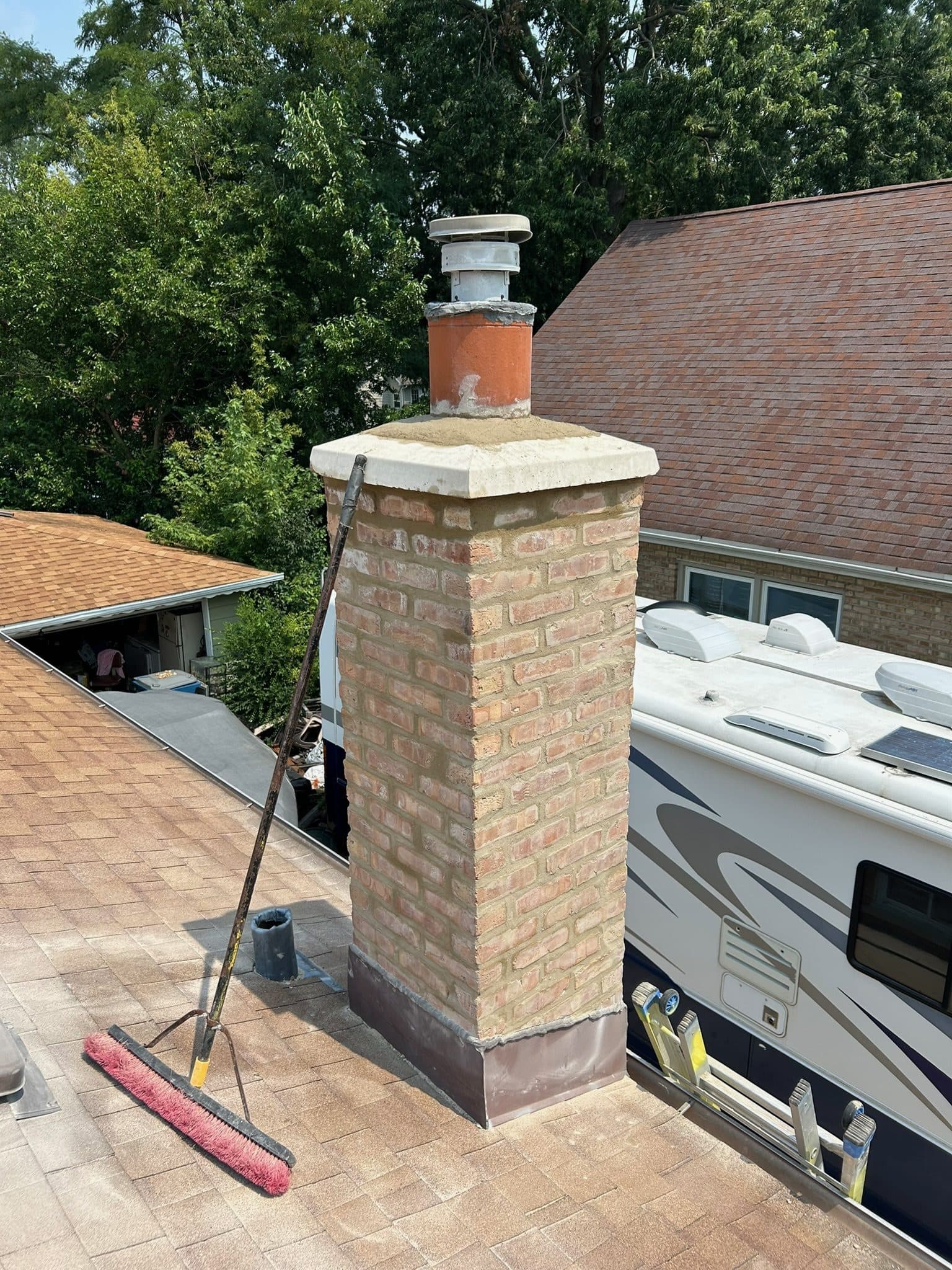
Your chimney is the hardest-working masonry on your house — it sticks up above the roof, fully exposed to wind, rain, sun, and Chicago's brutal freeze-thaw cycle on every side. So it's no surprise that the chimney is usually the first thing to fail on a brick home. The question almost every homeowner eventually faces is: can my chimney be repaired, or does it need a full rebuild?
Here's the short answer: if the brick and structure are sound and only the mortar, crown, or flashing have failed, it's a repair. If bricks are spalling or loose, the chimney is leaning, or the masonry above the roofline is badly deteriorated, it's a rebuild. This guide walks you through how to tell the difference, what each option involves, and how to choose — drawing on what Paul Lally's Masonry Inc. has learned rebuilding and repairing Chicagoland chimneys since 1988.
First, understand how a chimney fails
A masonry chimney is a stack of brick held together by mortar joints, topped by a crown (the sloped slab that sheds water), sealed where it meets the roof by flashing, and ideally protected by a cap. Water is the enemy of all of it.
When the crown cracks, water pours down inside the stack. When the mortar joints erode, water gets into the wall. When flashing fails, water runs in where the chimney meets the roof. Then freeze-thaw takes over: that trapped water freezes, expands, and tears the masonry apart from the inside — which is why the section above the roofline almost always deteriorates first and worst.
Knowing this helps you read your own chimney: most problems start as a water-entry problem (repairable) and only become a structural problem (rebuild) if the water is ignored long enough.
When a chimney can be repaired
Choose repair when the structure is fundamentally sound and the failures are limited to the wear parts. Common repairs include:
- Chimney tuckpointing — grinding out crumbling mortar and repointing with matched mortar. The most common chimney fix.
- Crown repair or replacement — sealing or rebuilding a cracked crown so it sheds water again.
- Flashing repair — replacing rusted or lifted flashing to stop leaks where the chimney meets the roof.
- Chimney cap replacement — adding or replacing a cap to keep rain and animals out of the flue.
- Spot brick replacement — swapping a handful of spalled or cracked bricks while the rest of the stack is solid.
If your chimney just has white efflorescence staining, some receding mortar, or a minor leak, you're very likely in repair territory — and catching it here is dramatically cheaper than the alternative.
When a chimney needs a rebuild
A rebuild — usually above the roofline, sometimes the full stack — is the right call when the damage is structural:
- Spalling or crumbling brick across the stack (faces popping off, brick turning to powder)
- Loose, shifting, or missing bricks
- A visible lean — a serious safety issue; a leaning chimney can fall
- Large step cracks running through the brick and mortar
- A crown and brick so deteriorated that repair would just be patching a failing structure
- Brick or mortar debris collecting on the roof or in the firebox
The most common version is an above-the-roofline rebuild: the exposed top section is taken down to sound masonry and rebuilt with matched brick, correct mortar, a new crown, and proper flashing, while the solid lower section stays. It's the practical middle ground when the top is shot but the base is fine.
Repair vs. rebuild at a glance
| Sign | Likely repair | Likely rebuild |
|---|---|---|
| Crumbling mortar only | ✔ Tuckpointing | |
| Cracked crown | ✔ Crown repair | |
| Leaking at roofline | ✔ Flashing repair | |
| A few spalled bricks | ✔ Spot replacement | |
| Widespread spalling brick | ✔ Rebuild | |
| Loose or missing bricks | ✔ Rebuild | |
| Chimney is leaning | ✔ Rebuild (urgent) | |
| Large step cracks through brick | ✔ Rebuild |
Use this as a guide, not a diagnosis — many chimneys show a mix of signs, and only an in-person inspection settles it.
The cost difference (and why early action pays)
There's no getting around it: a rebuild costs significantly more than a repair. Tuckpointing, a crown repair, or new flashing is a relatively small, contained job. A partial or full rebuild means scaffolding, dismantling, hauling, sourcing matched brick, and rebuilding the stack correctly. The exact figure depends on chimney height, access, and how much has to come down — which is why we give a free on-site estimate rather than a phone guess.
The real lesson in the cost gap is this: the same problem is cheap as a repair and expensive as a rebuild. A cracked crown fixed this year is minor; the same crack ignored for five winters is what turns a sound chimney into a teardown.
The crown and the cap: small parts, big consequences
Two of the cheapest components on a chimney prevent most of the expensive damage — and they're the parts homeowners overlook.
The crown is the sloped concrete or mortar slab at the very top of the chimney. Its only job is to shed rain away from the brick below. When it cracks — and Chicago freeze-thaw cracks crowns constantly — water pours straight down into the stack and starts the whole deterioration cycle. A crown repair or rebuild is often the single most cost-effective fix on a chimney, because it stops water at the source.
The chimney cap sits over the flue opening to keep rain, snow, and animals out of the chimney interior. A missing or damaged cap lets water fall directly into the flue. Replacing a cap is one of the smallest masonry expenses there is — and skipping it is one of the most common reasons a chimney leaks. If you do nothing else preventively, make sure your chimney has a sound crown and a cap.
What a proper above-the-roofline rebuild involves
When the top of a chimney is too far gone to repair, a careful rebuild restores it without disturbing the sound structure below. Here's what the work actually involves:
- Inspection and documentation — confirming how far down the damage goes and where sound masonry begins.
- Setup and protection — scaffolding, and protecting the roof and surrounding surfaces.
- Dismantling to sound brick — taking the chimney down carefully to the last solid course, salvaging matchable brick where possible.
- Rebuilding with matched brick and correct mortar — laying new courses that match the original brick in size, color, and texture, with mortar mixed to the right strength.
- Pouring a new crown — a properly sloped, crack-resistant crown that sheds water.
- Re-flashing and capping — new flashing where the chimney meets the roof and a new cap over the flue.
- Sealing — a breathable masonry sealer to slow future water absorption.
Done this way, the rebuilt section matches the house, sheds water on every surface, and is built to outlast another generation of Chicago winters. The difference between a rebuild that lasts decades and one that fails early is entirely in this kind of detail — which is why we put the family name on every job.
How we decide on-site
When Paul Lally's Masonry Inc. inspects a chimney, we're answering a sequence of questions: Is it leaning or structurally moving? Are the bricks themselves failing, or just the mortar between them? Is the crown intact? Is the flashing sealing? Where is water actually getting in? The answers point clearly to repair, an above-the-roofline rebuild, or a full rebuild — and we explain which and why, in writing, so you're not guessing.
Paul Lally's Masonry Inc. is a family-owned, insured masonry contractor serving Chicago and the Chicagoland suburbs since 1988 — tuckpointing, brick repair and replacement, chimney repair and rebuilds, lintel replacement, masonry restoration, and waterproofing for residential and commercial properties. Built on Craftsmanship. Backed by Experience. Free on-site estimates — call (708) 448-8866.
Why Chicagoland chimneys fail early
The region's housing stock — brick bungalows, greystones, and two-flats — is full of chimneys built decades ago, many never sealed and long overdue for tuckpointing. Add lake-effect moisture and a winter that can run masonry through freeze-thaw dozens of times, and the exposed brick above the roofline simply wears out faster here than in milder climates. It's not that your chimney was built badly; it's that it's been standing in a hard climate for a long time.
Don't wait on a damaged chimney
A failing chimney isn't just a repair bill waiting to grow — it's a safety issue. Falling brick endangers people and property, water intrusion damages the home's interior and structure, and a leaning chimney can collapse. If you're seeing any of the rebuild signs above, it should be looked at promptly, not carried through another winter.
Related services
- Chimney repair & rebuilds — the full service, from tuckpointing to above-the-roofline rebuilds.
- Tuckpointing & repointing — renewing failed chimney mortar joints.
- Brick repair & replacement — matching and replacing spalled chimney brick.
- Masonry waterproofing & sealing — keeping water out after the repair.
The bottom line
Repair keeps a structurally sound chimney watertight — tuckpointing, crown, flashing, cap. Rebuild is for chimneys that are spalling, loose, leaning, or deteriorated above the roofline. The difference comes down to whether the brick and structure are still sound, and the cheapest path is always to act while it's still a repair.
Not sure which camp your chimney is in? Paul Lally's Masonry Inc. has repaired and rebuilt Chicagoland chimneys since 1988. Call (708) 448-8866 or request a free on-site inspection and estimate. Built on Craftsmanship. Backed by Experience.
Frequently Asked Questions
How do I know if my chimney needs repair or a full rebuild?
If the brick is sound and only the mortar, crown, or flashing has failed, your chimney can usually be repaired. If bricks are spalling or loose, the chimney is leaning, or the masonry above the roofline is badly deteriorated, it typically needs a rebuild above the roofline. An on-site inspection is the only way to know for sure.
What are the warning signs of chimney damage?
Watch for crumbling or missing mortar, white staining (efflorescence), spalled or loose bricks, a cracked or broken crown, rusted or lifted flashing, pieces of brick or mortar in the firebox or on the roof, and any visible lean. Water stains on the ceiling near the chimney are also a red flag.
Is a chimney rebuild more expensive than repair?
Yes, substantially. Tuckpointing, a crown repair, or new flashing is far cheaper than a partial or full rebuild, which involves taking the chimney down to sound brick and rebuilding it. Catching problems early with repair is the best way to avoid the cost of a rebuild.
What is an 'above the roofline' chimney rebuild?
The section of chimney above the roof takes the worst weather and usually fails first. An above-the-roofline rebuild means dismantling and rebuilding just that exposed portion down to sound masonry, while leaving the structurally sound section below the roof intact. It's a common middle-ground between a small repair and a full rebuild.
Why is my chimney leaking?
Most chimney leaks come from a cracked crown, failed flashing where the chimney meets the roof, deteriorated mortar joints, or a missing chimney cap. Water finds the weakest point and works in. Because several of these can occur at once, a leak should be diagnosed in person rather than guessed at.
Can a leaning chimney be repaired without a rebuild?
Rarely. A lean usually means the structure or its footing has failed, which is a safety issue — a leaning chimney can fall. In most cases a leaning chimney needs to be rebuilt, and it should be looked at promptly.
What is a chimney crown and why does it matter?
The crown is the concrete or mortar slab at the very top of the chimney that sheds water away from the masonry below. A cracked crown lets water pour into the chimney and is a leading cause of chimney deterioration, so crown repair is often the first and most cost-effective fix.
How long does a chimney rebuild last?
A properly rebuilt chimney with matched brick, correct mortar, a solid crown, and proper flashing can last for decades — often the rest of the time you own the home. The longevity comes down to the quality of the rebuild and keeping water out afterward.
Is a damaged chimney dangerous?
It can be. Falling brick is a hazard to people and property, a deteriorated chimney can let water and combustion gases into the home, and a leaning chimney can collapse. Significant chimney damage should be evaluated quickly rather than left through another winter.