
Homeowner Education · Chicagoland, IL
My Firebox Is Crumbling — Is That the Chimney? Firebox, Smoke Chamber and Hearth Explained
The masonry you can see when you open the fireplace doors is a different material, doing a different job, than the chimney outside — and it fails for entirely different reasons. Here's how to tell whether the problem is the firebox, the smoke chamber, the flue or the stack above the roof, and which of those is a masonry job at all.
2026-08-26
Quick Answer
The firebox is the chamber that holds the fire, built from firebrick set in refractory mortar to survive direct heat — it is a different material from the chimney outside and fails from heat cycling rather than weather. Crumbling firebox joints, a deteriorated smoke chamber, a cracked flue liner and a spalling stack above the roof are four separate problems needing four different repairs. Paul Lally's Masonry Inc. repairs fireplace and chimney masonry across Chicagoland. Family-owned since 1988, insured. Call (708) 448-8866.
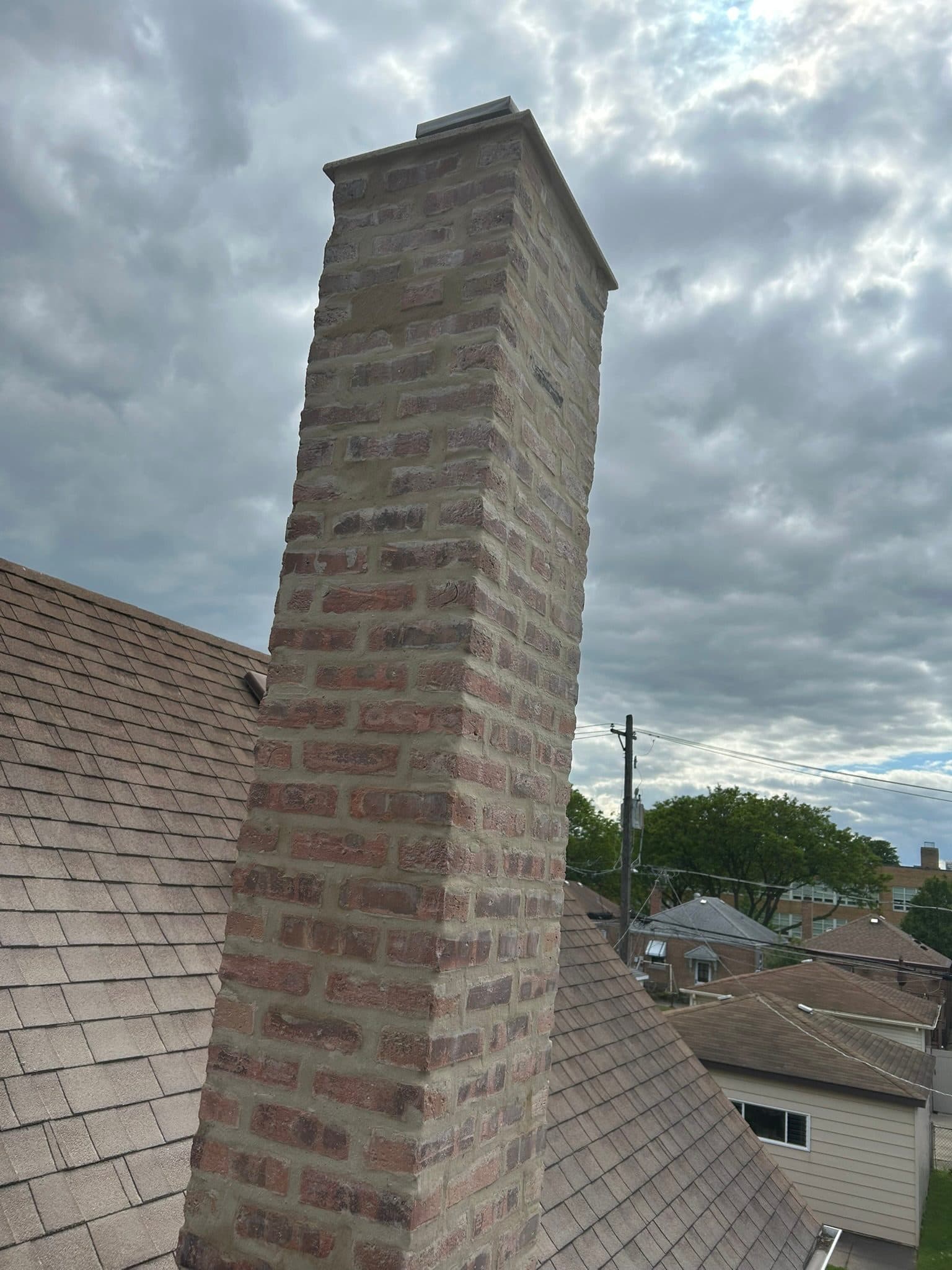
Four Different Problems, One Fireplace
A homeowner opens the fireplace doors, sees crumbling mortar and a gap at the back corner, and asks a reasonable question: does my chimney need work?
The honest answer is that "the chimney" is at least four separate assemblies, built from different materials, doing different jobs, and failing for different reasons:
- The firebox — the chamber holding the fire, built from firebrick to survive direct heat.
- The smoke chamber and throat — the tapered transition funnelling smoke into the flue.
- The flue — the lined passage carrying combustion gases up and out.
- The stack — the masonry standing above your roof, exposed to weather.
A house can easily need work on one and none of the others. Knowing which you are looking at is the difference between a targeted repair and a quote for something you do not need.
Paul Lally's Masonry Inc. repairs fireplace and chimney masonry throughout Chicago and the Chicagoland suburbs. Family-owned since 1988, insured, free on-site estimates. Call (708) 448-8866.
The Firebox: Different Brick, Different Mortar
Look at the inside of your firebox and compare it to the brick on the outside of your house. It is not the same material, and that is deliberate.
Firebrick is a dense, heat-resistant unit made to withstand direct flame and repeated thermal cycling. It is typically lighter in colour than face brick and noticeably harder.
Refractory mortar holds it together — a formulation rated for the temperatures inside a working fireplace, laid in thin joints rather than the thicker joints used outside.
Ordinary brick and standard mortar do not belong in a firebox. Standard mortar is not formulated for that heat; it degrades, cracks and drops out, sometimes within a single burning season. This is the single most common failed DIY repair we find in fireplaces.
Why fireboxes fail
Not weather — the firebox never sees rain. It fails from heat.
Every fire heats the masonry, which expands. Every fire that goes out lets it cool and contract. Do that a few hundred times and the thin refractory joints — which are doing the hardest thermal work of any mortar in your house — begin to open. Once a joint opens, the next fire heats the material behind it directly.
Other contributors: water finding its way down from the top of the chimney and sitting in the firebox, an overfired fireplace pushed harder than it was designed for, and mechanical damage from grates, tools and logs.
Warning signs in the firebox
- Open, crumbling or missing mortar joints, particularly at the back corners
- Cracked, spalling or missing firebrick
- Gaps you can see daylight or a void through
- A back wall that has begun to bow forward
- Firebrick that is loose or moves when pressed
- Debris — sand, mortar crumbs or brick fragments — accumulating on the floor
- Water staining or standing water in the firebox
- Signs of heat on materials behind or beside the fireplace
Open joints in a firebox are not cosmetic. The firebox is what separates fire from what is behind it, and that is why this one gets inspected rather than watched.
The Smoke Chamber: The Part Nobody Knows Exists
Above the firebox, the masonry narrows sharply from the wide fireplace opening to the much smaller flue. That tapered space is the smoke chamber, and below it sits the throat — where the damper lives — and the smoke shelf behind it.
Its job is airflow. Smoke has to be funnelled smoothly upward, and the shape of this space largely determines whether your fireplace drafts well or spills into the room.
The problem is that many smoke chambers were built with corbelled brick — stepped courses creating a rough, stair-stepped interior. That roughness creates turbulence and hurts the draft. Add decades of deterioration, open joints and missing material, and it gets worse.
The recognised repair is parging — coating the smoke chamber interior smooth with an appropriate refractory material, so the airflow path is even. It is one of the more effective and least understood fireplace repairs.
Signs the smoke chamber or throat needs attention
- Smoke spilling into the room when the fireplace is lit properly
- A damper that will not open fully, is rusted, or has seized
- Visible deterioration or missing mortar above the damper
- Debris falling onto the smoke shelf
- A draft that has got noticeably worse over the years
The Flue and the Stack: A Different World
Above the smoke chamber, the situation reverses. Now you are dealing with weather, not heat.
The flue is the lined passage carrying gases out — typically clay tile in older Chicagoland construction. Cracked, spalled or displaced tiles are a serious matter, and flue condition is properly assessed by inspection rather than assumption.
The stack — the masonry above your roof — is the most weather-loaded masonry on your house. It has four exposed faces plus the top, no roof over it, and no heated interior behind it to dry it out. In a Chicagoland winter it cycles through freeze-thaw dozens of times.
That is why chimneys deteriorate from the top down, and why the damage grades downward: worst at the crown, better a few courses below, often sound at the roofline.
Signs of trouble up top
- A cracked, spalled or missing chimney crown, or a thin mortar wash instead of a proper sloped crown
- Mortar joints receding or open in the top courses
- Spalling brick — faces flaked off
- A missing, rusted or dislodged cap over the flue
- Clay flue tile cracked, chipped, or sitting proud of a broken crown
- Dark saturation staining or white efflorescence on the stack
- A visible lean, or a gap between chimney and house — treat as urgent
- Water staining on the top-floor ceiling or in the attic near the chimney
Reading Your Own Fireplace
| What you see | Where the problem is |
|---|---|
| Crumbling joints inside the firebox | Firebox — refractory repointing or rebuild |
| Cracked or missing firebrick | Firebox — firebrick replacement |
| Smoke coming into the room | Damper, smoke chamber, flue blockage, or house pressure |
| Rusted or stuck damper | Throat — damper repair or replacement |
| Rough, stepped surfaces above the firebox | Smoke chamber — parging |
| Water sitting in the firebox | Top of the chimney — crown, cap or flashing |
| Ceiling staining near the chimney | Crown, flashing, or open joints in the stack |
| Spalled brick above the roofline | Stack — repoint or rebuild |
| Cracked crown, flue tile exposed | Crown rebuild |
| Chimney leaning | Structural — assess promptly |
| Cracked hearth extension | Hearth — repair or replacement |
The Hearth Extension
Worth its own mention because it is frequently overlooked. The hearth extension is the non-combustible surface projecting into the room in front of the fireplace, and it exists for one reason: to catch embers and sparks that leave the firebox.
Cracked, loose, missing or undersized hearth material is a genuine safety item, not a decorating question — and a hearth that has been reduced or covered during a remodel may no longer do the job it was built for.
Risks of Waiting
Firebox and chimney problems escalate on different clocks, but both escalate.
In the firebox, every fire works on already-open joints, and the separation between fire and the structure behind it is what is degrading.
In the stack, once the crown cracks, water enters the top of the chimney directly rather than running off it. That saturates the masonry, accelerates freeze-thaw damage, opens joints further, and runs down inside the chimney into flashing, framing and finishes. A stack that has lost its mortar is loose brick standing several feet above your roof.
And where combustion is involved, a deteriorated flue is a carbon monoxide question, not merely a masonry one — which is why anything venting into a chimney warrants a qualified inspection rather than a wait-and-see.
How the Repairs Are Actually Done
Firebox
- Inspect cold and empty, with a light, after clearing ash and debris.
- Determine scope — repointing joints, replacing individual firebrick, or rebuilding the firebox.
- Rake out failed refractory joints back to sound material.
- Replace cracked, spalled and loose firebrick with matched firebrick.
- Repoint in refractory mortar, packed into thin joints rather than smeared across faces.
- Check the throat and damper while there is access.
- Cure before firing. Refractory work needs time, and rushing the first fire undoes it.
Smoke chamber
- Inspect the chamber, throat and smoke shelf.
- Clear debris and remove deteriorated material.
- Parge the interior smooth with an appropriate refractory coating.
- Address the damper where it is seized or deteriorated.
Stack
- Inspect from the roof, not the driveway, plus the flue and the interior.
- Sound the masonry to find where sound material actually begins.
- Establish the rebuild depth and confirm it before demolition.
- Take down the deteriorated section, salvaging brick worth reusing.
- Rebuild in matched brick and compatible mortar, holding original coursing.
- Form a proper crown — sloped, with a bond break at the flue tile and an overhang with a drip edge past the brick face, not a mortar wash troweled flush.
- Repoint sound masonry below, address flashing and counterflashing, and fit a cap sized to the flue.
Materials
Firebrick and refractory mortar inside the firebox — nothing else belongs there.
Refractory parge coating in the smoke chamber.
Type N mortar for most twentieth-century chimney brick outside; lime-rich, softer mixes for the soft brick on pre-1900 greystones, Victorians and older two-flats, where a Portland-heavy mix would spall the faces. Mortar must always be softer than the brick it sits against — mortar is the sacrificial part.
A formed crown with overhang and drip edge, and a cap sized to the flue. Together those two items are a small share of the cost and most of the service life of a chimney.
DIY vs. Hiring a Pro
Sweeping ash, clearing the smoke shelf and having the flue inspected annually are homeowner-scale tasks. Beyond that, three things make fireplace masonry a poor DIY candidate.
The materials are specialised. Using standard mortar in a firebox is the most common mistake in this entire subject, and it fails fast.
The consequences are combustion-related. This is masonry whose job is containing fire and venting gases.
The diagnosis is genuinely tricky. A smoking fireplace can be a damper, a flue blockage, a smoke chamber, or the house itself — and rebuilding the wrong one is expensive and does not fix it.
Chicagoland Context
This region is full of working masonry fireplaces and the chimneys that serve them: brick bungalows, greystones, two-flats and three-flats, post-war ranches and Georgians across the southwest and western suburbs, and older homes throughout Cook, DuPage and Will County.
Two regional realities shape the work. First, freeze-thaw frequency — many cycles a winter rather than one long freeze — punishes any water in the stack. Second, heating changes. A great many of these chimneys were built for coal or early gas furnaces and now vent little or nothing, because a high-efficiency furnace was installed and vented out a sidewall. A cooler, wetter, much smaller exhaust in an oversized flue condenses inside the chimney, wetting the masonry from the inside while weather wets it from the outside — which is why an under-used chimney often deteriorates faster than a hard-working one.
Maintenance and Prevention
- Have the flue inspected annually if you burn, before the season rather than during it.
- Burn seasoned wood. Wet wood produces more creosote and more moisture in the flue.
- Do not overfire. More heat than the firebox was designed for shortens its life.
- Keep a cap on the flue — the cheapest protection available against rain, animals and debris.
- Treat the crown as a maintenance item, addressing hairline cracks long before they become a rebuild.
- Look at the stack each spring with binoculars, after the freeze-thaw season has done its work.
- Check the flashing whenever the roof is worked on.
- Never seal a chimney with a film-forming coating. Masonry has to breathe, and trapping moisture in a chimney accelerates exactly what you are trying to prevent.
- If you have changed heating appliances, have the flue looked at — an orphaned or oversized flue is a real deterioration driver.
Related Services
- Chimney repair and rebuilds
- Tuckpointing and repointing
- Brick repair and brick replacement
- Masonry restoration
- Residential masonry restoration
The Bottom Line
The crumbling mortar you can see when you open the fireplace doors is refractory work inside a firebox, damaged by heat. The spalled brick you can see from the driveway is weather damage to a stack. They are different problems, and a house often has one without the other.
So before you accept a quote for "the chimney," find out which of the four assemblies is actually failing. A firebox repointed in refractory mortar and a stack rebuilt to sound masonry are both legitimate jobs — they are just rarely the same job.
Paul Lally's Masonry Inc. is a family-owned, insured masonry contractor serving Chicago and the Chicagoland suburbs since 1988 — tuckpointing, brick repair and replacement, chimney repair and rebuilds, lintel replacement, masonry restoration, and waterproofing for residential and commercial properties. Built on Craftsmanship. Backed by Experience. Free on-site estimates — call (708) 448-8866 or request an estimate online.
Frequently Asked Questions
What is a firebox and what is it made of?
The firebox is the chamber that actually holds the fire, and it is built from firebrick — a dense, heat-resistant unit set in thin joints of refractory mortar rather than ordinary mortar. Regular brick and standard mortar are not rated for direct flame contact and break down quickly if used there.
Is a crumbling firebox dangerous?
It should be treated seriously. The firebox is what separates fire from the framing and materials behind it, and open joints or missing firebrick reduce that separation. Have it inspected before the next burning season rather than after it.
Can I just patch my firebox with regular mortar?
No. Standard mortar is not formulated for the temperatures inside a firebox, so it degrades, cracks and falls out — often within a season. Firebox joints need refractory mortar, and firebrick replacement needs firebrick, not face brick.
Why is my fireplace suddenly smoking into the room?
Common causes include a damper that is not opening fully, a blocked or restricted flue, a deteriorated smoke chamber disrupting the draft, or a cold flue on the first burn of the season. It can also be a house-pressure issue rather than a chimney one, so the cause should be identified before anything is rebuilt.
What is the smoke chamber and why does it matter?
It is the tapered space above the firebox that funnels smoke from the wide opening into the narrow flue. When its surfaces are rough, corbelled or deteriorated, they disrupt the airflow and hurt the draft, which is why parging it smooth is a recognised repair.
Is fireplace repair the same as chimney repair?
They overlap but they are not the same. The firebox and smoke chamber are interior masonry damaged by heat; the stack above the roof is exterior masonry damaged by weather and freeze-thaw. One house can easily need one and not the other.
There's water in my firebox. What does that mean?
Water reaching the firebox almost always entered at the top — a cracked or missing chimney crown, a missing cap over the flue, open mortar joints in the stack, or failed flashing where the chimney meets the roof. The fix is at the top of the chimney, not in the firebox.
Do I need a mason or a chimney sweep?
A sweep cleans the flue and inspects it, and that inspection is genuinely valuable. Rebuilding a firebox, parging a smoke chamber, repointing or rebuilding the stack, and repairing crowns and flashing are masonry work. Many homeowners end up needing both, in that order.
How much does firebox or fireplace masonry repair cost in Illinois?
It depends on whether joints are being repointed with refractory mortar, individual firebrick replaced, or the firebox rebuilt, plus access and whether the smoke chamber or the stack above the roof also need work. Paul Lally's Masonry Inc. looks at it in person and puts the estimate in writing — call (708) 448-8866.
My fireplace is never used. Does it still need repair?
Possibly, because an unused chimney is still masonry standing above your roof taking weather, and unused flues often deteriorate faster without hot fires to dry them out. If you have genuinely stopped using it, it is worth deciding deliberately whether to maintain it, cap and seal it, or remove it.