
Hiring & Estimates · Chicagoland, IL
How to Hire a Masonry Contractor in Chicago: The Questions to Ask and the Red Flags to Walk Away From
Masonry is one of the easiest trades to fake — a skim job looks identical to a real repair the day it's finished, then fails in three winters. Here are the questions that separate a real mason from a salesman, and the red flags worth walking away from.
2026-07-12
Quick Answer
To hire a masonry contractor in Chicago, verify they are insured, confirm they will grind out failed mortar joints rather than smear over them, and make sure the mortar is matched to your brick in color, sand, and type. Insist on a written scope of work from an on-site inspection — never a phone quote. Paul Lally's Masonry Inc. has done this work across Chicagoland since 1988. Free on-site estimates — call (708) 448-8866.
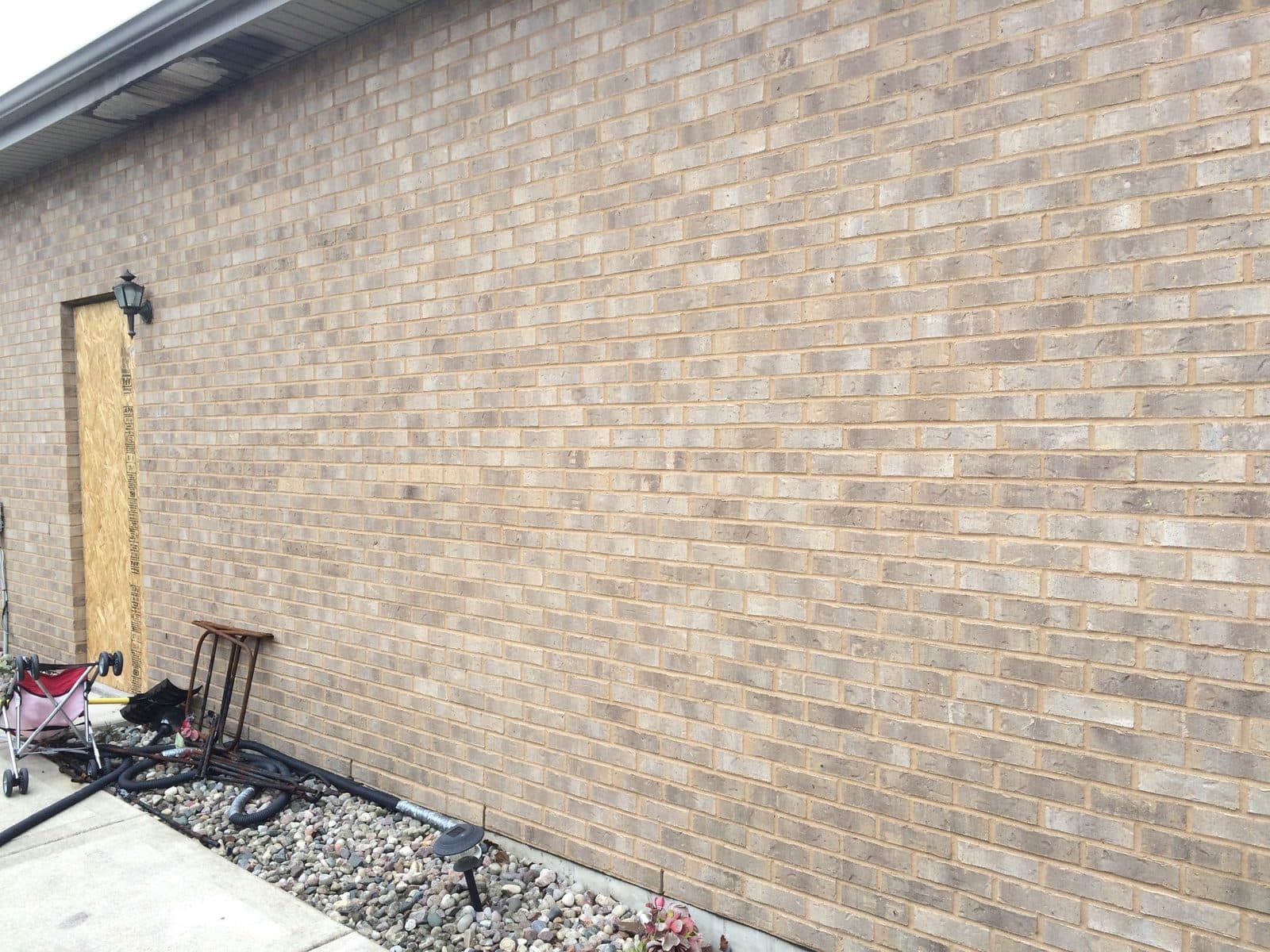
If your mortar is crumbling, your brick is flaking, or your chimney is shedding pieces onto the roof, the hardest part of the job isn't the repair — it's figuring out how to hire a masonry contractor in Chicago who will actually do it right. Paul Lally's Masonry Inc. has worked on Chicagoland brick since 1988, and a meaningful share of what we're called out to fix isn't old brick at all. It's somebody else's repair, done two or three winters ago, already failing. This guide is the honest version of what to ask, what to look for, and when to walk away. Free on-site estimates: (708) 448-8866.
Why masonry is easier to fake than almost any other trade
If a roofer does a bad job, you find out the next time it rains. If an electrician does a bad job, a breaker trips. Masonry doesn't work that way.
A proper tuckpointing repair and a worthless one look identical the day the scaffolding comes down. Both give you clean, uniform, freshly-tooled joints. The difference is entirely in what happened underneath: whether the failed mortar was ground out to depth and replaced, or whether fresh mortar was simply smeared across the face of joints that were never prepared at all. That second version — a skim coat, or a caulk-over — is fast, cheap, and completely invisible to a homeowner at handover.
Then two or three Chicago winters go by. Water gets behind the cosmetic layer, freezes, expands, and pushes it off in sheets. Now you have the original problem plus a layer of failed material that has to be removed before anyone can do the real repair. The second repair always costs more than the first one should have.
That gap — between what a job looks like and what a job is — is the entire reason this article exists. Everything below is designed to close it.
How to hire a masonry contractor in Chicago: the questions that actually matter
You don't need to become a mason to vet one. You need about ten questions, and you need to listen for whether the answers are specific. A real tradesman gets more precise as you push. A salesman gets vaguer.
1. Are you insured — and can I see the certificate? A good answer: yes, and they have their carrier send the certificate of insurance directly to you. What you want covered is general liability and workers' compensation. If someone gets hurt on an uninsured crew working on your property, that can become your problem.
2. How long have you been doing masonry in Chicagoland specifically? A good answer: a real number, a real span of years, and specifics about the local building stock. Chicago brick is its own education. A contractor who's worked here for decades will talk fluently about bungalows, greystones, and two-flats without being prompted.
3. Will you grind the joints out — and to what depth? A good answer: yes, ground out to roughly twice the joint width in depth, so the new mortar has enough material to actually bond and hold. This is the single most diagnostic question on the list. Vagueness here — "we'll clean them up," "we'll pack it in" — is the sound of a skim job being described.
4. How will you match the mortar — color, sand, and type? A good answer: they talk about all three. Color so the repair doesn't read as a patch. Sand texture, because that's what your eye actually registers at ten feet. And type, which is the one that matters structurally.
5. Is that mortar right for the age and hardness of my brick? A good answer: they ask how old the house is before they answer. This is the question that separates masons from installers. Soft, century-old brick needs a soft, lime-rich mortar. Hard modern Type S or Portland-heavy mortar packed into a soft historic wall traps moisture and forces it to escape through the brick face instead of the joint — which destroys the brick. The mortar is supposed to be the sacrificial part of the wall. A contractor who doesn't know that will damage your house while believing they're helping it.
6. Who is actually going to be on my job, and who's accountable if something goes wrong? A good answer: a direct one. You should know who's standing on your roof, and the person who sold you the job should stand behind the person doing it.
7. What exactly is in the written estimate? A good answer: a scope, not a number. See the next section.
8. What happens if you open the wall and find more damage? A good answer: they tell you honestly that it happens, and they describe the process — they stop, show you, and price the additional work before proceeding. Masonry hides its problems until you open it up. Anyone who guarantees there will be no surprises either hasn't looked closely or isn't being straight with you.
9. How will you protect the property and clean up? A good answer: specifics about covering landscaping, windows, and walkways, and about mortar dust — grinding makes a great deal of it.
10. Do you pull permits when the work requires them? A good answer: yes, without hesitation. Most repointing doesn't require a permit; structural rebuilds and significant chimney work often do.
The red flags: when to end the conversation
Some of these are judgment calls. Several are not — they're the standard playbook of the crews that work Chicagoland neighborhoods every spring.
They knocked on your door
This is the biggest one. The story is always some version of "we're already working down the street and have material left over." Reputable Chicagoland masons are booked out on referrals and repeat customers. They are not walking your block looking for work.
The price expires today
Legitimate contractors don't need urgency to close. Pressure to sign immediately exists to prevent you from getting a second opinion — which is precisely what you should do.
Cash only, or a large up-front deposit
A reasonable deposit on a scheduled job is normal. A demand for a large cash payment before work begins is not.
A quote without seeing the wall
Nobody can assess failing mortar joints, spalling brick, or a cracked chimney crown over the phone or from a photo you texted. A number given sight-unseen is a sales tactic, not an estimate.
No written scope of work
If what you have is a dollar figure on a business card, you have nothing enforceable and nothing comparable.
A bid dramatically below everyone else's
This is not a bargain. It's a description of a different, lesser job — usually one that skips the grinding.
They want to seal a wall that's actively leaking
Sealing brick can be genuinely useful — after the water source is fixed. Applying a sealer over failing joints or an active leak traps moisture inside the wall, and trapped water in a Chicago winter is exactly how spalling gets worse.
The scope is a sentence
"Tuckpoint the house" is not a scope. Which elevations? To what depth? Which mortar?
No verifiable local track record
No address, no completed work you can look at, no history in the area.
How to read a masonry estimate
The clearest way to see the difference between a real proposal and a sales number is to put them side by side.
| What a vague estimate says | What a real scope of work says |
|---|---|
| "Tuckpoint the house" | "Repoint the south and west elevations and the chimney above the roofline; north elevation inspected, no work required" |
| "Repair mortar" | "Grind failed joints to approximately twice joint width; remove dust; repoint in full" |
| "Use matching mortar" | "Type N mortar, color- and sand-matched to existing; joint profile tooled to match original" |
| "Replace bad bricks" | "Replace approximately 40 spalled brick; salvage/source matched brick for size, color, and texture" |
| "Fix the chimney" | "Rebuild chimney above roofline; new crown; new cap; reflash to roof" |
| "Clean up when done" | "Protect landscaping and windows; contain mortar dust; wash down face on completion" |
| (no timeline) | "Estimated 4–6 working days, weather permitting" |
The right-hand column is what lets you compare contractors honestly — and it's what makes the work verifiable when it's finished.
Why the cheapest bid usually costs the most
Masonry pricing is driven by real, physical things: the scope of failed material, height and access (a second-story chimney needs staging that a garden wall doesn't), scaffolding, the extent of the damage once it's opened up, the difficulty of mortar matching, and how much brick replacement is genuinely needed. Those factors don't disappear because a bid is low. They just get skipped.
Concretely, a dramatically low bid usually means one or more of these:
- Joints aren't ground out. New mortar is smeared over old, unprepared joints. There's no depth, so there's no bond, so there's no lifespan.
- The wrong mortar goes in. Hard, high-Portland mortar is faster and stronger on paper — and it will quietly destroy soft historic brick by forcing moisture out through the brick face.
- A sealer goes over an active leak, trapping the water it was supposed to keep out.
- Spalled brick gets patched or painted over instead of replaced.
You pay for the work twice, and the second time you also pay to undo the first.
This is why we never quote from a photo. Paul Lally's Masonry Inc. is a family-owned, insured masonry contractor serving Chicago and the Chicagoland suburbs since 1988 — tuckpointing, brick repair and replacement, chimney repair and rebuilds, lintel replacement, masonry restoration, and waterproofing for residential and commercial properties. Built on Craftsmanship. Backed by Experience. Every job starts with a free on-site look at the actual wall, and you get a written scope that says what we're doing and why — call (708) 448-8866.
Chicagoland brick is a specific education
There's a reason "how long have you worked here" is one of the questions.
Chicago's housing stock is old, and it is overwhelmingly masonry. The brick bungalow belt, the greystones with their soft limestone facades, the two-flats and three-flats across the North and South Sides, the commercial storefronts with parapet walls — much of it is a century old or close to it, built with soft brick and soft lime mortar in an era when that was simply how you built.
Then you add the climate. Our freeze-thaw cycles are brutal on masonry: water enters through an open joint, freezes, expands, and levers the wall apart a fraction of a millimeter at a time. Multiply that by a hundred cycles a season and you get crumbling mortar, spalling brick, efflorescence, and eventually bowing walls.
A contractor who hasn't worked on this building stock will default to modern mortar because that's what's on the truck. On a 1990s subdivision home that's fine. On a 1915 greystone, it is a slow-motion mistake — and by the time the brick faces start popping, the crew is long gone.
Getting multiple estimates the right way
Get two or three. But compare them correctly, because three bids for three different jobs tell you nothing.
- Line the estimates up on scope, not on the bottom line.
- Check whether each one specifies grind depth and mortar type.
- See whether they agree on what's actually wrong. If two masons say the chimney needs a rebuild and one says a quick repoint will do, that's not a cheaper option — that's a disagreement about the diagnosis, and it's worth resolving.
- Ask each one to show you the failure on your wall. A good mason will walk you around the house and point at it. That five-minute walk tells you more than any brochure.
Related services and further reading
- Tuckpointing and repointing — grinding out failed joints and repointing with matched mortar
- Chimney repair and rebuilds — crowns, caps, flashing, and above-roofline rebuilds
- Brick repair and replacement — spalled, cracked, and loose brick
- Masonry restoration — full-facade work on older and historic Chicagoland buildings
- What a professional masonry estimate should include
- Professional mason vs. handyman: what's actually different
The short version
Hiring a mason in Chicago comes down to three things you can verify without knowing anything about masonry:
- Proof — insured, with a real local history.
- Preparation — they grind the joints out to depth. They don't smear.
- The right mortar for your brick — matched in color, sand, and type, with the type chosen for the age and hardness of the wall.
Everything else is detail. If a contractor is solid on those three, you're probably in good hands. If they're evasive on any of them, keep looking — because on a brick wall, the difference won't show up for three winters, and by then it's your problem, not theirs.
Paul Lally's Masonry Inc. is family-owned, insured, and has been repairing Chicagoland brick since 1988. Our name is on every job. If you want a straight answer about what your wall actually needs — including hearing that it doesn't need much — call (708) 448-8866 or request a free on-site estimate.
Frequently Asked Questions
How do I know if a masonry contractor in Chicago is legitimate?
Ask for a certificate of insurance sent directly from their carrier, a written scope of work produced after an on-site inspection, and a local track record you can actually look at. A legitimate mason will explain exactly how they intend to grind and repoint your joints and what mortar they'll use, and will not pressure you to sign anything on the spot.
What questions should I ask a masonry contractor before hiring?
Ask whether they're insured; how long they've worked on Chicagoland brick; whether they grind the joints out and to what depth; how they'll match the mortar in color, sand, and type; whether that mortar suits the hardness of your brick; and who is physically on the job. The answers tell you very quickly whether you're talking to a mason or a salesman.
Why is the cheapest masonry bid usually a bad idea?
The cheapest bid almost always skips the preparation — smearing new mortar over old, unprepared joints instead of grinding them out. It looks perfect the day it's done and fails within a few winters, and the second repair costs more because the bad work has to be removed first.
Should a masonry contractor give me a quote over the phone?
No. Nobody can see failing mortar joints, spalled brick, or a cracked chimney crown over the phone, and a number given sight-unseen is a sales tactic rather than an estimate. A real masonry estimate follows an on-site look at the actual wall.
What should be in a written masonry estimate?
It should name the specific elevations or areas being repaired, state that failed joints will be ground out and to what depth, specify the mortar type and color match, list brick replacement counts and how matching brick will be sourced, itemize any chimney components, and cover cleanup and timeline. If the scope just says 'tuckpoint the house,' it isn't an estimate — it's a number.
Does mortar type really matter on an older Chicago home?
It matters enormously. Century-old bungalows, greystones, and two-flats were built with soft brick and soft lime-based mortar, and packing them with hard modern Portland-heavy mortar traps moisture and forces it out through the brick face, causing spalling. Matching mortar hardness to the brick is one of the clearest tests of whether a contractor knows Chicago building stock.
Is it a red flag if a masonry contractor knocks on my door?
It's one of the strongest red flags there is. Reputable Chicagoland masons are booked from referrals and repeat work, not from canvassing streets with a story about 'leftover material from a job down the block' and a discount that expires today.
How many masonry estimates should I get?
Two or three is sensible, but compare the scope of work rather than the bottom line. Three bids for three different jobs tell you nothing — line them up on grind depth, mortar type, brick replacement, and what happens if more damage is found once the wall is opened.
Can a handyman do tuckpointing instead of a mason?
Tuckpointing looks simple and isn't — grind depth, mortar hardness, joint tooling, and color matching all have to be right or the repair fails and can damage the brick. A general handyman rarely owns the grinders or the mortar knowledge, which is why so much of the work we're called to fix was done by one.
Do I need a deposit to hire a masonry contractor?
A reasonable deposit is normal on a scheduled job, but a demand for a large up-front payment — especially in cash — is a warning sign. Payment should track the work, and everything should be documented in writing.