
Masonry Restoration · Chicagoland, IL
Limestone & Sill Repair in Chicago: Fixing Cracked, Spalling Stone
Cracked, flaking, or crumbling limestone sills and trim are one of the most common problems on Chicago greystones and brick homes. Here is how limestone and stone sill repair actually works, what causes the damage, and how a mason decides between patching, a Dutchman repair, and full replacement.
2026-07-09
Quick Answer
Limestone and sill repair covers fixing or replacing cracked, spalling, and eroded limestone sills, lintels, bands, and trim — through composite patching, Dutchman stone-piece replacement, full sill replacement, and repointing the stone joints. It matters most on Chicago greystones and older brick homes, where a failing sill lets water into the wall below. Paul Lally's Masonry Inc. has repaired and restored Chicagoland limestone since 1988 — free on-site estimates at (708) 448-8866.
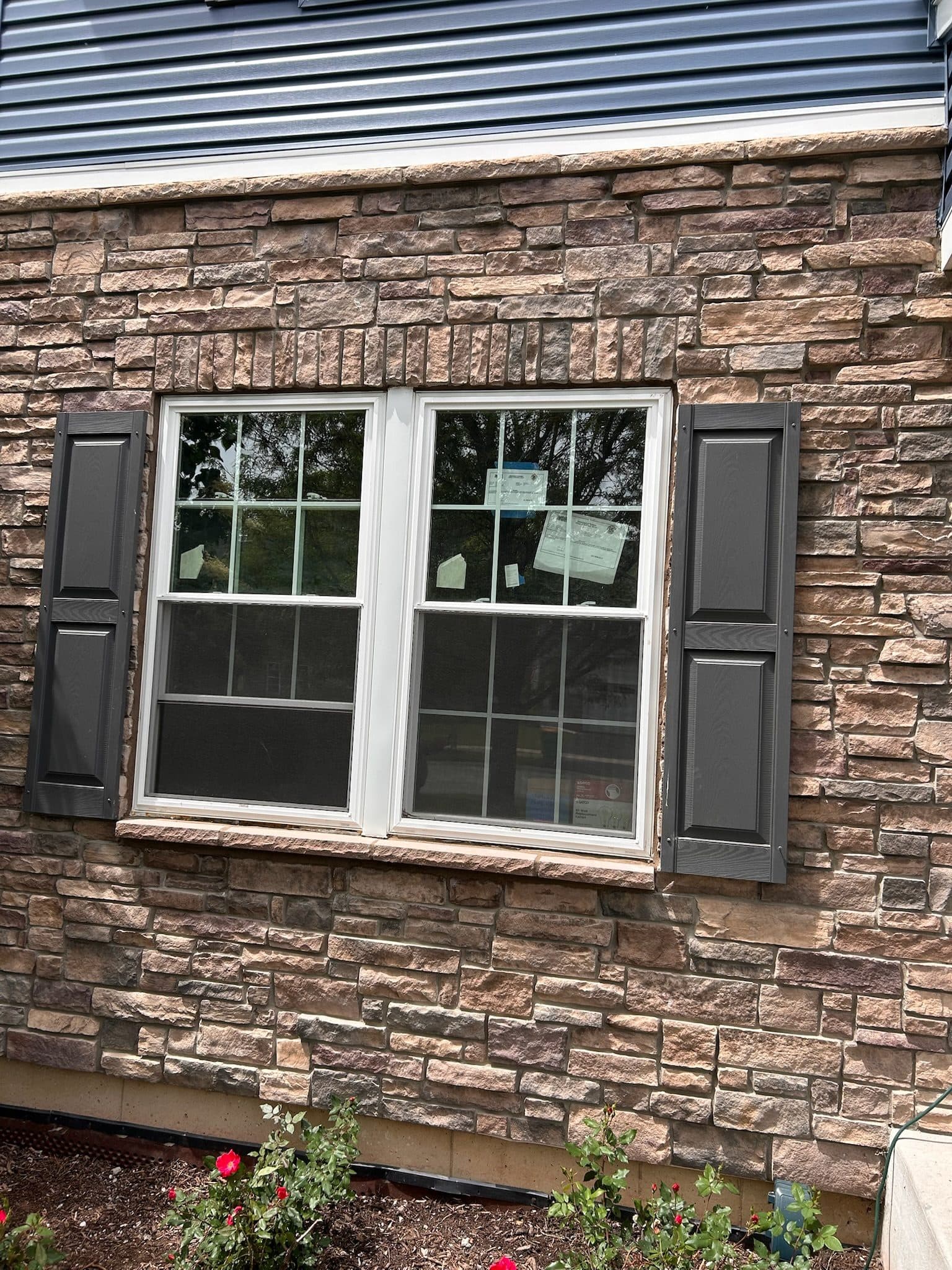
If the stone sills under your windows are flaking, cracking, or turning to sand at the corners, you are looking at one of the most common — and most fixable — problems on Chicago's older masonry homes. Limestone and sill repair covers fixing or replacing cracked, spalling, and eroded limestone sills, lintels, bands, and trim, using composite patching, Dutchman stone-piece replacement, full sill replacement, or repointing the joints around the stone. It matters most on the region's greystones and century-old brick homes, where a failing sill quietly funnels water into the wall below. Paul Lally's Masonry Inc. has repaired and restored Chicagoland limestone since 1988. Free on-site estimates: (708) 448-8866.
Stone doesn't fail overnight. It weathers a little every winter until one spring you notice a sill has lost its crisp edge, a corner has crumbled off, or a hairline crack has opened across the face. Caught early, most of it is a straightforward repair. Left alone, the same stone keeps shedding until the sill has to be rebuilt and the wall underneath has taken on water. This guide walks through what a limestone sill repair really involves, why the stone fails in the first place, and how a mason decides between patching, a Dutchman, and full replacement.
What limestone sills and trim actually are
On a brick or stone home, the limestone elements do specific jobs. The sill is the sloped stone under a window that carries rainwater out and away from the wall. Lintels and bands span openings and run horizontally across a facade. On a classic Chicago greystone, the entire front face is dressed dolomitic limestone, with sills, headers, water tables, and decorative trim all cut from stone.
Limestone is a sedimentary stone — durable, workable, and beautiful, but porous. It drinks water. That is fine as long as the stone can dry out and shed water off its sloped and detailed surfaces. The trouble starts when water gets in and can't get back out fast enough, which in a Chicago climate happens every single winter.
A limestone sill is really a small piece of water management. Its slope, its clean edges, and its sealed joints all exist to move water away from the opening. When any of that fails, the stone stops protecting the wall and starts feeding water into it.
How limestone sills fail
Stone damage in Chicagoland almost always traces back to water plus freeze-thaw, with a few accelerants.
Freeze-thaw spalling and sugaring
Water soaks into the porous stone, freezes, expands roughly nine percent, and pushes the surface apart. Over many cycles the face spalls (flakes off in sheets) or begins sugaring — crumbling into loose granules you can brush off with your hand. Flat sill tops, which hold standing water and snow, take the worst of it.
Road salt and de-icer damage
Near grade — on entry steps, low sills, and water tables — road salt and de-icers dramatically speed up the deterioration. Salts crystallize inside the stone and blow the surface apart, which is why the lowest stones on a building are often the most eaten away.
Rusting embedded metal
Many sills and lintels have steel angles, anchors, or pins hidden inside or beneath them. When that steel rusts it expands and can crack the stone from within — a straight split with rust staining is the tell.
Failed joints and caulk
The mortar joints and caulk around stone are the seals that keep water out of the seams. When they crumble, recede, or dry out and split, water runs straight behind the stone.
Worn slope and standing water
A sill that has eroded until its top is flat instead of sloped no longer drains. Water pools, sits, and works into both the stone and the wall below — a slow but steady source of interior damage.
Warning signs your limestone needs attention
- Flaking or peeling faces — sheets of stone lifting off the surface.
- Sugaring — the stone crumbling to granules at edges and corners.
- Cracks — hairline to open, especially straight cracks with rust staining.
- Lost edges and detail — crisp profiles worn round and soft.
- Open or missing joints around the stone.
- White efflorescence or dark water staining on or below the stone.
- A flat, no-longer-sloped sill holding water after rain.
- Interior clues — damp, staining, or peeling paint on the wall directly inside a failing sill.
Risks of waiting
A little spalling looks cosmetic, but stone damage compounds. Each freeze opens the surface a bit more; each open joint lets in a bit more water. A sill that has lost its slope sends water into the brick or block below, which then spalls, effloresces, and lets moisture reach the interior. What could have been a composite patch or a Dutchman repair becomes a full sill replacement plus repairs to the wall underneath. Stone is patient, but it does not heal — the earlier it's addressed, the smaller the fix.
Repair approaches: how the damage maps to the fix
A good mason matches the method to the actual condition of the stone rather than defaulting to "rip it out."
| Damage | Typical fix |
|---|---|
| Surface spalling, minor loss | Color-matched composite stone patch |
| Localized crack or spall on a sound sill | Dutchman — cut out the bad section, set in matched stone |
| Split-through, badly eroded, or crumbling full-length sill | Full sill replacement with matched stone |
| Open or receding joints around good stone | Repoint the stone joints with soft, matched mortar |
| Flat, no-longer-draining sill | Re-slope / rebuild the wash so it sheds water |
| Rust-cracked stone | Address the embedded steel, then patch or replace the stone |
Composite patching rebuilds a lost area with a stone-repair mortar tinted to match. A Dutchman repair saves the original stone by replacing only the damaged piece — the traditional, invisible fix for a localized problem. Full replacement is for stone that is too far gone to save. Repointing renews the seams. Often a single opening needs a combination: repoint the joints, patch a corner, seal the top.
The greystone context — why this is a Chicago specialty
Chicago's greystones, built largely from the 1890s through the 1920s, are faced in dolomitic limestone quarried in the region — including the Lemont/Joliet beds and Bedford (Indiana) limestone. Those thousands of two-flats and row homes on the South and West Sides carry sills, water tables, headers, and ornate trim all cut from stone. A century of Chicago winters, lake-effect moisture, and decades of road salt have left many of them sugaring and spalling, especially near grade.
Repairing greystone well is a craft: the stone has to be matched to the warm gray dolomite tone, the mortar has to be soft so it flexes with the stone instead of cracking it, and harsh methods like sandblasting are off the table because they destroy the stone's skin. This is exactly the kind of work a careful, experienced mason should handle.
Materials that matter
- Matched stone for Dutchman inserts and replacements — size, color, and texture to the original.
- Tinted composite stone-repair mortar for patches, color-matched to aged limestone.
- Soft, compatible mortar (a lime-based or appropriately soft mix) for repointing stone joints — never a hard Portland-heavy mortar that spalls the stone.
- Breathable penetrating sealer, where appropriate, applied only after the stone is sound.
- Proper flashing and caulk at the right seams to keep water moving away.
Our limestone repair process
- Free on-site assessment. We look at every affected sill and stone, check for rusted embedded metal, and determine whether each needs patching, a Dutchman, replacement, or just repointing.
- Match the stone and mortar. We source matching stone and tint patch material and mortar to the aged limestone.
- Prep the stone. Remove failed material back to sound stone, cut clean seats for Dutchman pieces, and rake out failed joints.
- Repair or replace. Set matched stone or build up composite patches; re-establish the slope so the sill sheds water.
- Repoint and seal. Repoint the stone joints with compatible mortar and, where it helps, apply a breathable sealer.
- Clean up and cure. Let the work cure properly and leave the site clean.
What drives the cost of limestone repair
We never publish a flat price, because stone jobs vary too widely. What moves the number:
- Scope — one spalled sill versus a full band of eroded trim.
- Method — a patch, a Dutchman, or full replacement.
- Height and access — upper-floor sills and tight setbacks need more setup.
- Stone matching — sourcing and matching stone on an older home takes more effort.
- Hidden conditions — rusted embedded steel or wall damage found behind the stone.
The only honest number is a free on-site estimate — (708) 448-8866.
DIY vs. hiring a pro
Re-caulking a joint is within a homeowner's reach. Actual stone repair is not a DIY project. The most common failure is patching soft limestone with a hard, Portland-heavy mortar or a generic concrete patch — it expands and contracts differently than the stone and pops the face off within a season or two, often taking more of the original stone with it. A poorly cut Dutchman or a mismatched patch also looks worse than the crack it replaced. Getting stone repair right is about compatible, breathable materials and careful matching — craftsmanship, not a hardware-store fix.
Chicago / Chicagoland local context
Our winters are hard on stone. Freeze-thaw cycles work on any water the stone has absorbed; lake-effect moisture keeps facades damp; and decades of road salt eat away at everything near grade. The region's building stock — greystones, brick bungalows with limestone sills and headers, two-flats, and century-old homes across Cook, DuPage, and Will counties — is full of stone that is now at the age where sills and trim need attention. Commercial and institutional buildings with cut-stone facades face the same forces at a larger scale.
Maintenance and prevention
- Keep water off the stone — clear gutters and downspouts so runoff isn't sheeting over sills.
- Re-caulk and repoint failing joints before they let water behind the stone.
- Watch the slope — if a sill has gone flat, have the wash re-established.
- Reseal periodically with a breathable sealer where appropriate.
- Catch rust early — rust staining from a sill or lintel means embedded steel is working; address it before it splits the stone.
Related services
- Historic and residential masonry restoration — the broader restoration work greystones often need.
- Tuckpointing and repointing — renewing the mortar joints around brick and stone.
- Masonry waterproofing and sealing — protecting sound stone and brick from water.
- Our limestone and sill repair service hub.
The bottom line
Limestone sills and trim are the water managers of a masonry home, and in Chicago's climate they wear out — flaking, sugaring, cracking, and losing the slope that keeps water out of the wall. The fix ranges from a color-matched patch to a Dutchman insert to full replacement, and the right choice depends on how far the damage has gone. The key is matching the stone and using soft, breathable, compatible materials so the repair lasts and blends in.
Paul Lally's Masonry Inc. is a family-owned, insured masonry contractor serving Chicago and the Chicagoland suburbs since 1988 — tuckpointing, brick repair and replacement, chimney repair and rebuilds, lintel replacement, masonry and limestone restoration, and waterproofing for residential and commercial properties. Built on Craftsmanship. Backed by Experience. If your sills or stone trim are flaking or cracking, call Paul Lally's Masonry Inc. at (708) 448-8866 or request a free estimate — we'll tell you honestly whether it's a patch, a Dutchman, or a replacement.
Frequently Asked Questions
What is limestone sill repair?
Limestone sill repair is the process of fixing or replacing the stone sills, lintels, bands, and trim on a masonry home when they crack, flake, or erode. Depending on the damage, that can mean a composite patch, a Dutchman repair where a matched piece of stone is set in, full sill replacement, or repointing the joints around the stone. The goal is always to shed water and stop it from getting into the wall below.
Why is my limestone window sill crumbling?
Most crumbling comes from water and freeze-thaw: the flat top of a sill holds rain and snowmelt, water soaks into the porous stone, then freezes and expands and flakes the face off. Road salt and de-icers accelerate it near ground level, and a rusting steel angle or anchor hidden inside the stone can crack it from within. Once the surface starts sugaring or spalling, it only gets worse each winter.
Can a cracked limestone sill be repaired, or does it need to be replaced?
It depends on how far the damage goes. Surface spalling and small cracks can often be repaired with a color-matched composite patch or a Dutchman stone insert, while a sill that is split through, badly eroded, or crumbling across its whole length usually needs full replacement. A mason can tell you which at a free on-site look.
What is a Dutchman repair?
A Dutchman repair is when a mason cuts out just the damaged section of a stone and sets in a matched piece of new stone, rather than replacing the whole sill or block. It is a traditional stone-repair method that saves the sound original stone and keeps the look consistent — ideal for a localized crack or spall on an otherwise good sill.
Should limestone be sealed after repair?
Often, yes — a breathable penetrating sealer helps limestone shed water without trapping moisture inside the stone. But sealing is the last step, not the fix: the stone has to be sound and the joints repointed first, and the wrong film-forming coating can trap water and make spalling worse. We recommend the right approach case by case.
Do you match the color and texture of the existing stone?
Yes. On a repair we match the stone type, color, and texture as closely as possible, and we tint composite patching mortar to blend with the aged limestone. On Chicago greystones that usually means matching the warm gray dolomite tone so the repair reads as part of the original facade rather than a patch.
How much does limestone sill repair cost in Chicago?
There is no flat rate — it depends on how many sills or stones are affected, whether the fix is a patch, a Dutchman, or a full replacement, the height and access, and how well the stone has to be matched. A single spalled sill is a small job; a full band of eroded trim on a greystone is a larger one. The only accurate figure is a free on-site estimate from Paul Lally's Masonry Inc.
Why does limestone damage matter beyond looks?
A sill's job is to carry water away from the wall. When it cracks or the slope wears flat, water runs back into the brick or block below instead of dripping clear, which leads to interior stains, efflorescence, and freeze-thaw damage inside the wall. Fixing the stone protects the whole opening, not just the appearance.
Is limestone repair something I can DIY?
Small caulking touch-ups are within reach, but real stone repair is not a DIY job. The wrong hard mortar or patching compound expands differently than the soft stone and pops the face off within a season or two, and a botched Dutchman looks worse than the original crack. Matching stone and using compatible, breathable materials is what makes a repair last.