
Chimney Repair · Chicagoland, IL
Masonry Chimney or Prefab Chase? How to Tell What You Have — and Who Can Actually Fix It
Two chimneys can look nearly identical from the driveway and be completely different structures. One is solid masonry a mason repairs. The other is a wood-framed box with a brick face or siding on it, and half of what fails on it isn't masonry work at all.
2026-08-24
Quick Answer
A true masonry chimney is a solid brick or block structure with a masonry crown, built from the foundation up. A prefab chase is a wood-framed box enclosing a factory-built metal fireplace, finished with brick veneer or siding and capped with a sheet-metal chase cover. Masons repair masonry chimneys and brick-veneer chase walls; chase covers, metal flues, and the appliance itself are not masonry work. Paul Lally's Masonry has repaired and rebuilt Chicagoland chimneys since 1988 — (708) 448-8866.
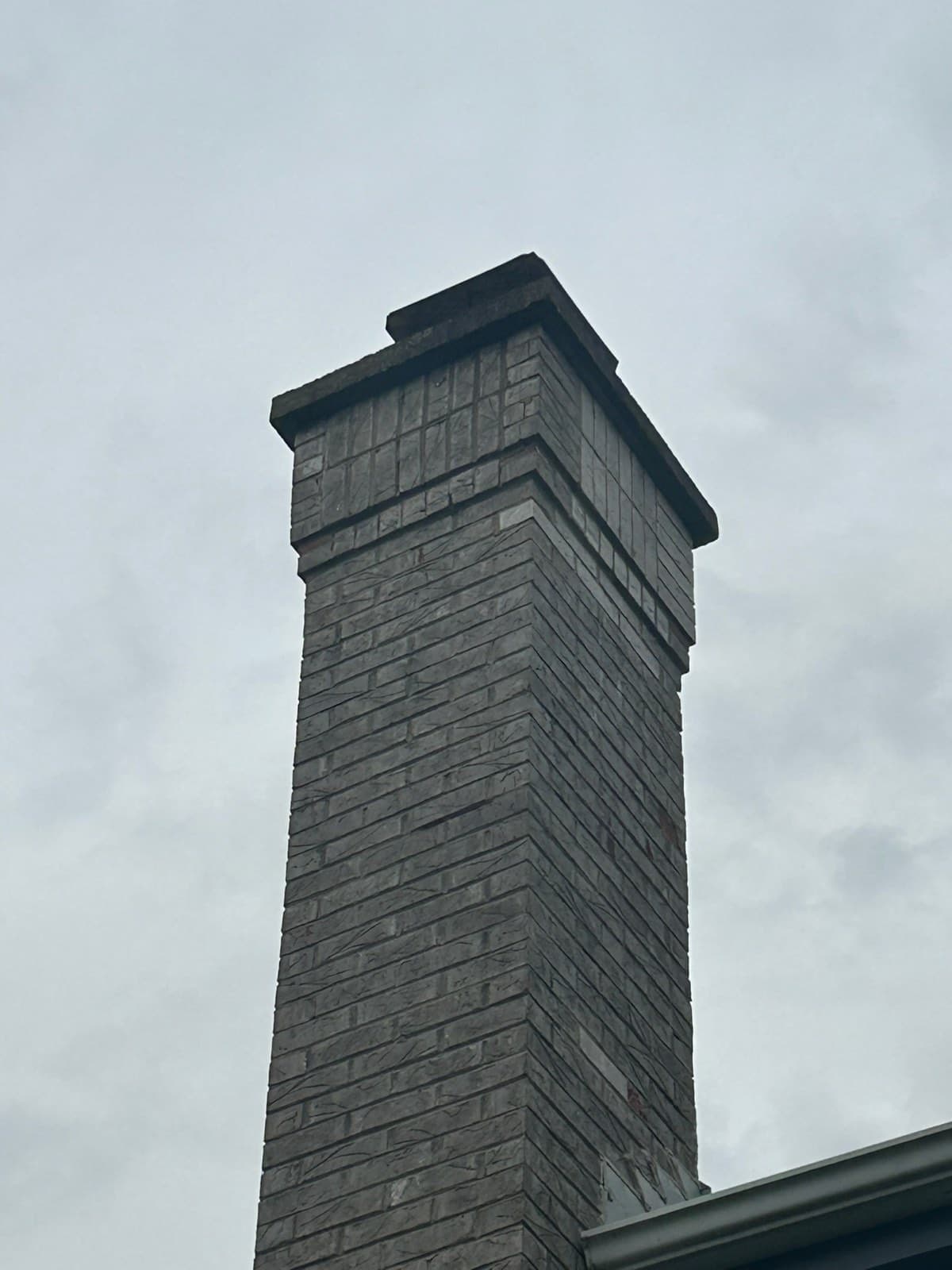
Stand at the curb and look at two Chicagoland houses with brick chimneys. One is a solid masonry chimney built from the foundation up. The other is a wood-framed box with brick glued to the front of it, containing a metal fireplace made in a factory.
From the sidewalk, they can look nearly identical. What is inside them is completely different — different failure modes, different repairs, different trades, and very different answers to "should this be repaired or rebuilt?"
Paul Lally's Masonry has repaired and rebuilt Chicagoland chimneys since 1988. Before you spend a dollar on yours, it is worth ten minutes finding out which kind you actually own. Free on-site assessment: (708) 448-8866.
The two kinds of chimney
A true masonry chimney
A masonry chimney is a structure. It starts at a footing below grade and is built up in brick, block, or stone — through the house, through the roof, and above the roofline as a freestanding stack. Inside is a flue, on most Chicago-area homes a stack of clay flue tiles. At the bottom is a firebox of firebrick laid in refractory mortar. On top is a crown: a sloped masonry cap that sheds water off the stack and away from the flue tiles.
It weighs many tons, it is self-supporting, and every part of it is masonry.
A prefab chase
A chase is an enclosure. Inside it is a factory-built metal fireplace — a firebox with steel walls and removable refractory panels — venting through a round insulated metal flue. Around all of that is a wood-framed box, finished on the outside with brick veneer, stone veneer, siding, or stucco. On top is a chase cover: a flat sheet-metal lid the flue passes through, usually finished with a metal rain cap.
It is light framing with a facing on it. Some of it is masonry. Most of it is not.
How to tell which one you have
| Check this | Masonry chimney | Prefab chase |
|---|---|---|
| The top | Sloped concrete or mortar crown; square clay flue tiles projecting through | Flat sheet-metal chase cover; round metal flue and cap |
| The firebox | Firebrick laid in mortar, with visible joints | Metal walls with removable refractory panels; a data plate |
| The damper | Cast iron plate at the throat, above the firebox | Often a metal damper at the top of the flue, controlled by a chain |
| The base | Continues down through the basement to a footing | Framed box; may be cantilevered or sit on a small platform |
| In the attic | Masonry passing through | Framed chase with a metal pipe inside |
| Weight and mass | Very substantial; thick walls | Light; the walls are framing and a facing |
| Approximate era | Common through the mid-twentieth century | Common in homes from roughly the 1970s onward |
The top is the fastest tell, and you can usually make the call from the ground with binoculars or a zoomed phone photo. Square clay tiles sticking up out of a sloped masonry cap means masonry. A flat metal lid with a round pipe means prefab.
What fails on a masonry chimney
The crown
The most common failure on Chicago masonry chimneys, and it is almost always a construction defect showing its age. Crowns get poured too thin, poured flat instead of sloped, built flush with the brick instead of overhanging with a drip edge, and built tight against the flue tiles with no expansion joint. Every one of those cracks eventually, and once the crown cracks, water goes straight into the top of the stack.
The stack above the roofline
Exposed on four sides, unheated, and taking the full weather load. It stays wet longer than any other masonry on the house, cycles through more freezing and thawing, and reliably deteriorates decades ahead of the rest of the building — open joints, spalling faces, and eventually courses losing their bond.
Flashing
Where the chimney passes through the roof, step flashing and counterflashing keep water out. Counterflashing that was surface-caulked instead of let into a cut reglet in the mortar joint fails; so does flashing disturbed by a roof replacement. A great many "chimney leaks" are flashing leaks.
Mortar joints
Same as anywhere else on a house, only faster, because the stack is the wettest masonry on the property. Joints erode, crack, and let water in.
The flue liner
Clay tiles crack from heat, from settlement, and from water freezing in the joints. Liner condition is inspection territory — a sweep or qualified inspector, with a camera — and it matters before any appliance gets used.
Lean
A stack that has taken on a lean is telling you the mortar has failed asymmetrically, the crown has been feeding water down one face, or something below has moved. It is not a cosmetic finding.
What fails on a prefab chase
The chase cover
This is the one. Galvanized chase covers rust through, often within a couple of decades in this climate, and once they do, the whole framed chase becomes a bucket. Rust streaks running down the brick or siding from the top of the chimney are the classic symptom. Stainless steel covers cost more and last dramatically longer. This is not masonry work — it is a sheet-metal item — but it is one of the most common causes of chimney leaks we get called about.
The brick veneer on the chase walls
This part is masonry work. Veneer on a chase fails the same way veneer fails anywhere else: open joints, spalled brick, blocked or missing weeps, failed flashing at the base of the veneer, and cracking where the framing behind it moves. We repair and repoint chase veneer the same way we repair any veneer wall.
Flashing at the roof
Same failure mode as a masonry chimney, same consequences.
The framing behind the facing
The failure nobody sees. Once water has been getting past the cover or the flashing for a few years, the framing inside the chase is wet, and that is a carpentry problem the masonry repair does not touch. It is worth knowing about before you spend money on the outside of a box that is rotting on the inside.
The appliance and the metal flue
Factory-built fireplaces and their flues are manufactured systems with their own components and service requirements. Not masonry, not our trade, and not something to guess at.
Why the distinction changes the repair decision
On a masonry chimney, the question is usually repair or rebuild, and how far down. If the joints have failed and the crown is cracked but the masonry is holding its bond and plumb, that is repointing plus a new crown, cap, and flashing. If the stack is leaning, the brick is spent, or the deterioration runs below the roofline, it should be rebuilt down to sound masonry. Rebuilding just the top three courses of a stack that is bad six courses down is money spent twice.
On a prefab chase, the question is usually which trade, and in what order. A stainless chase cover and correct flashing solve most chase leaks. The veneer repair is masonry. The rot inside is carpentry. And doing the masonry before the cover is replaced is the wrong order — you would be repairing the wall while the leak keeps running.
Knowing which building you own is what keeps you from paying for the wrong repair.
The Chicagoland context
This region is unusually hard on chimneys, and for one reason above all others: the stack above the roofline is the most exposed masonry on any building, in a climate that cycles through freezing and thawing dozens of times each winter.
Chicago's older housing stock — bungalows, two-flats, greystones, workers' cottages, and the postwar ranches out through the southwest suburbs — is full of masonry chimneys built with soft common brick and lime-rich mortar. That masonry needs soft, compatible mortar when it is repointed or rebuilt; a hard modern high-Portland mix drives stress into the brick faces and spalls them, and on a chimney that damage compounds fast because the masonry is already saturated more often than anything else on the house.
The suburbs built from the 1970s onward — Orland Park, Frankfort, Mokena, Naperville, Homer Glen — carry a much higher share of prefab chases, often with brick-veneer or partial-brick facings. That stock is now well into the age where galvanized chase covers rust through and original flashing gives up.
Two eras, two chimney types, two entirely different repair conversations, frequently on the same street.
What drives the cost of chimney work
We do not publish rates, because no two stacks are the same job. What genuinely moves an estimate:
- Repair versus rebuild, and how far down a rebuild has to reach
- Height above the roof and roof pitch — access is a large part of chimney cost
- Staging or lift requirements versus roof access
- Crown work — repair, or a properly formed new crown with overhang and drip edge
- Flashing — new step and counterflashing let into the masonry
- Brick match difficulty, especially on older common brick
- Chase-specific items — a stainless chase cover, veneer repair, or flashing
- Season and curing conditions
The on-site assessment is free, and we will tell you which trade you actually need — (708) 448-8866.
DIY vs. hiring a pro
Two parts of this are genuinely homeowner-friendly: looking at your own chimney with binoculars, and keeping the area under a deteriorating stack clear. Beyond that, chimney work is roof work at height on the most weather-damaged masonry on the building, and the failures we get called to fix most often are:
- Crowns patched with sealant instead of rebuilt, which lasts about a season
- Counterflashing surface-caulked to the brick instead of let into a cut joint
- Stacks repointed with mortar far too hard for old common brick
- The top few courses rebuilt while the real deterioration was below them
- A prefab chase's veneer repaired while a rusted-through chase cover kept leaking
Maintenance and prevention
- Look at your chimney once a year, ideally in spring, with binoculars from the ground
- Watch for rust streaks below the top — the chase cover tell
- Watch for white staining or efflorescence on the stack, which means water is moving through the masonry
- Check for debris on the roof or in the gutters below the chimney — mortar and brick fragments are an early warning
- Keep flashing in mind whenever the roof is worked on; roofers disturb it routinely
- Have the flue inspected by a sweep or qualified inspector before using a fireplace, especially after buying a house
- Address a cracked crown early — it is far cheaper than the stack rebuild it eventually causes
Related services
- Chimney repair and rebuilds — crowns, caps, flashing, repointing, and full stack rebuilds
- Tuckpointing and repointing — for the joints on the stack and the walls below
- Brick repair and brick replacement — for spalled and failed units
- Masonry waterproofing — a breathable repellent on an exposed stack after repairs cure
- Residential masonry restoration — when the chimney is one item on a longer list
The short version
Look at the top of your chimney. Sloped masonry crown with square clay tiles means a masonry chimney — a real structure, repaired and rebuilt by a mason. Flat metal cover with a round pipe means a prefab chase — a framed box where the veneer and the flashing are masonry work and the cover, flue, and appliance are not.
Both leak. Both fail first at the top. And on both, the right repair starts with knowing what you are actually looking at.
Paul Lally's Masonry Inc. is a family-owned, insured masonry contractor serving Chicago and the Chicagoland suburbs since 1988 — tuckpointing, brick repair and replacement, chimney repair and rebuilds, lintel replacement, masonry restoration, and waterproofing for residential and commercial properties. Built on Craftsmanship. Backed by Experience. Free on-site estimates — call (708) 448-8866.
Not sure what kind of chimney you have, or whether yours needs repair or a rebuild? We will look at it and give you a straight answer — including when the right call is a different trade. Request a free on-site estimate or call (708) 448-8866.
Frequently Asked Questions
How do I tell if my chimney is real masonry or a prefab chase?
Look at the top. A masonry chimney is capped with a sloped concrete or mortar crown with clay flue tiles projecting through it; a prefab chase is capped with a flat sheet-metal chase cover with a round metal flue and a cap on top. In the firebox, masonry means firebrick laid in mortar, while a factory-built unit has metal walls with removable refractory panels.
Can a mason repair a prefab chimney chase?
A mason repairs the masonry parts — the brick veneer on the chase walls, its mortar joints, and the flashing where the chase meets the roof. The chase cover, the metal flue, the cap, and the fireplace unit itself are not masonry work, and anyone telling you otherwise is guessing.
Why is my chimney leaking?
Most chimney leaks come from four places: a cracked or undersized crown, missing or failed flashing at the roof, open mortar joints in the stack, or a rusted-through chase cover on a prefab. Water almost never comes in through sound brick — it comes in at a detail that has failed.
What is a chimney crown and why does it crack?
The crown is the sloped masonry cap on top of a masonry chimney that sheds water off the stack and away from the flue. It cracks because it was poured too thin, poured flat instead of sloped, built with no overhang or drip edge, or built without an expansion joint around the flue tiles — all of which are common.
What is a chase cover and how long does it last?
It is the sheet-metal lid on top of a prefab chase. Galvanized covers rust out and are one of the most common sources of chimney leaks in Chicagoland; stainless steel lasts far longer. If you have rust streaks running down the brick or siding below the top of the chimney, look at the cover first.
Should my chimney be repaired or rebuilt?
It depends on how far down the deterioration runs. A stack with open joints and a bad crown but sound masonry below the roofline is a repair. A stack that is leaning, has lost its bond or spalled through, or has water damage extending below the roof line generally needs rebuilding down to sound masonry.
Why does the part of my chimney above the roof look so much worse?
Because that section is exposed on all four sides, gets no heat from the house, and stays wet longer than any other masonry on the building. In a climate with dozens of freeze-thaw cycles a winter, the stack above the roofline reliably fails first — often decades before the masonry below it.
Do I still need to maintain a chimney I never use?
Yes. An unused chimney weathers exactly like a used one and can shed brick onto a roof, a walk, or a neighbor's property, and its crown and flashing still let water into the house when they fail. Not using it removes the fire risk, not the water and structural ones.
Can a prefab chase be converted to a real masonry chimney?
Not in any practical sense. A masonry chimney is a structure built from the foundation up and a framed chase was never designed to carry that weight. What can be improved is everything about the chase: proper brick veneer repair, correct flashing, and a stainless chase cover.
Who should I call first about a chimney problem?
If the problem is water, deteriorating brick, a failed crown, a leaning stack, or flashing, that is masonry work. If it is smoke, draft, a cracked flue liner, an appliance issue, or a required inspection before use, that is a chimney sweep or a qualified inspector. Plenty of jobs need both trades, and the honest answer sometimes is that we are not the right first call.