
Commercial Masonry · Chicagoland, IL
Parapet Wall Repair: Protecting Chicago's Flat-Roof Buildings
Why parapet walls fail first on Chicago's flat-roofed buildings, the warning signs, and how masons repair or rebuild them before water reaches the roof and the floors below.
2026-06-23
Quick Answer
A parapet wall is the section of masonry that extends above the roofline on flat-roofed buildings, and it fails first because it is exposed to weather on both faces and the top. Failing parapets crack, lean, and let water into the roof and the floors below. Repairs range from tuckpointing and a new coping to a full rebuild of the affected section. Paul Lally's Masonry Inc. has repaired and rebuilt Chicagoland parapets since 1988 — free estimates at (708) 448-8866.
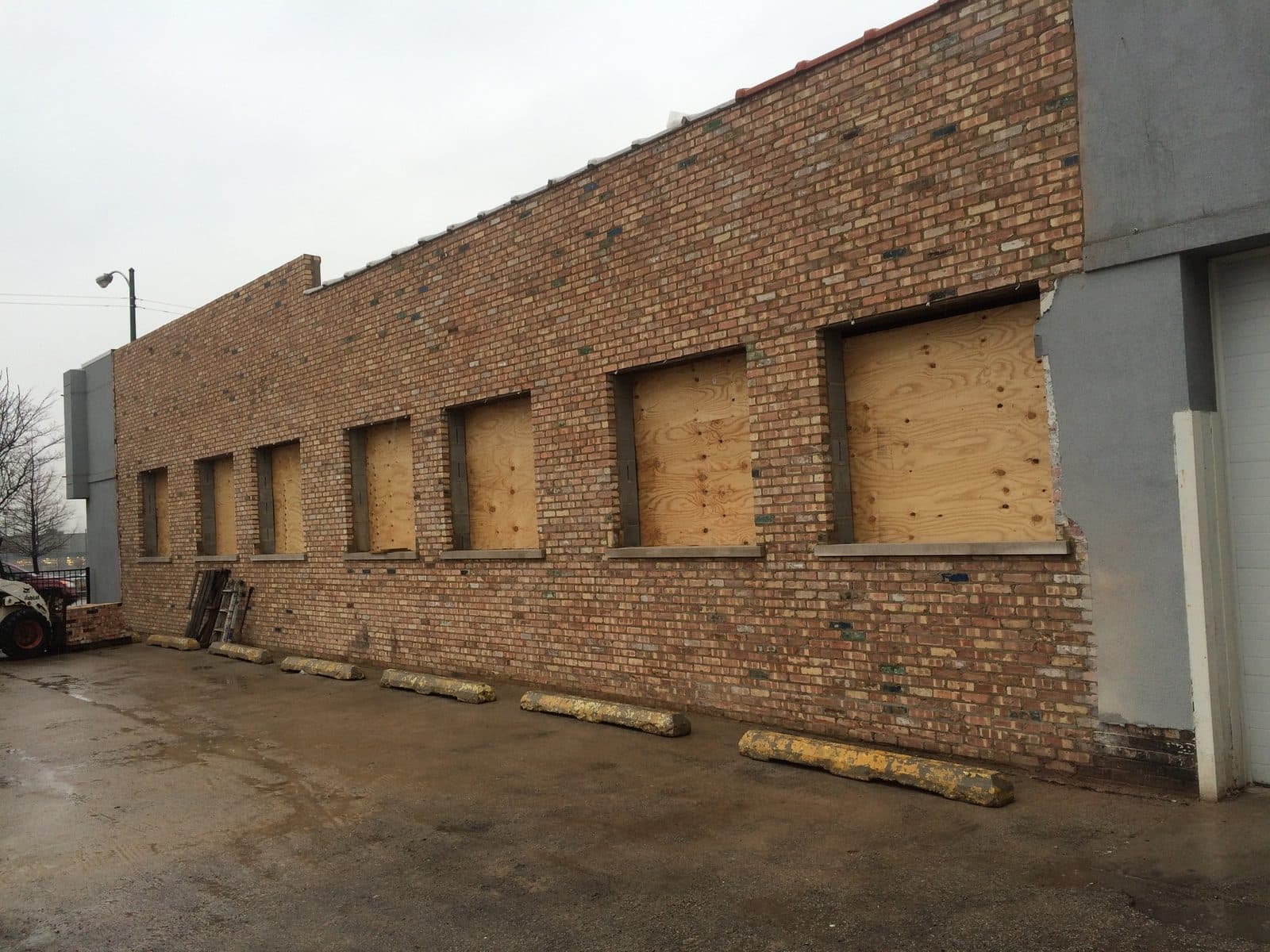
Parapet wall repair: the masonry that fails first
A parapet wall is the section of masonry that extends above the roofline on a flat-roofed building — and it is almost always the first masonry to fail, because it is exposed to weather on both faces and across the top. While the walls below are sheltered on the inside, a parapet takes wind-driven rain on both sides, standing water and snow on its coping, and the full force of Chicago's freeze-thaw cycles. Left alone, a failing parapet cracks, leans, and funnels water straight into the roof and the floors below — and over a sidewalk, it becomes a safety problem. Paul Lally's Masonry Inc. has repaired and rebuilt parapet walls on Chicagoland commercial and multi-unit buildings since 1988. For a free on-site assessment, call (708) 448-8866.
This guide covers what a parapet does, why it deteriorates so fast in our climate, how to read the warning signs, and the repair and rebuild options that actually stop the water.
What a parapet wall is and what it does
On flat-roofed buildings — storefronts, mixed-use buildings, warehouses, and the classic Chicago two-flat and apartment building — the exterior walls don't stop at the roof. They continue up past it to form a parapet. The parapet hides the flat roof from the street, helps contain the roof edge, can serve as a firebreak between adjacent buildings, and provides a finished top to the facade.
The very top of the parapet is capped by coping — stone, masonry, or metal — whose job is to shed water away from the wall. Where the roof meets the inside face of the parapet, flashing seals the joint. When coping and flashing are sound, the parapet keeps water out. When they fail, the parapet becomes a funnel pouring water into the building.
Why parapets deteriorate faster than any other wall
The parapet's problem is exposure:
- Three weathered surfaces. Both the street face and the roof face are exposed, plus the top — three surfaces taking water, versus one for the walls below.
- The coping takes standing water. Rain and snow sit on top of the parapet and work into any crack in the coping or its joints.
- Freeze-thaw on all sides. Water in the masonry freezes and expands through dozens of winter cycles a year, and the parapet has nowhere protected to hide.
- Differential movement. The parapet heats, cools, and moves more freely than the restrained wall below, fatiguing the joints where they meet.
- Age. On Chicago's century-old masonry buildings, original coping seals, flashing, and mortar are long past their service life.
Put together, that is why a building inspection so often finds the walls in decent shape and the parapet falling apart.
Warning signs of a failing parapet
From the street and the roof, watch for:
- Cracked or open mortar joints along the parapet.
- A lean or bulge — the parapet tipping toward the street or the roof.
- Displaced, cracked, or loose coping at the top.
- Spalling brick — faces flaking off from trapped water.
- Efflorescence and staining — the chalky bloom that signals water moving through.
- Water on the top floor or roof, ceiling stains, or a deteriorating roof edge.
- Vegetation growing from the joints or coping — a sure sign of long-term water and neglect.
Treat it as urgent when the parapet is leaning or bulging, coping is loose, or brick is loose above a sidewalk or entrance — that is a safety and liability issue, not a someday repair.
The risk of deferring parapet repair
A failing parapet rarely fails cheaply. Water that gets past the coping and flashing:
- Destroys the roof membrane and edge, leading to roof leaks.
- Soaks the top-floor interior, causing ceiling and wall damage inside tenant spaces.
- Accelerates freeze-thaw spalling, turning a tuckpointing job into a rebuild.
- Creates a falling-masonry hazard over public walkways.
For a building owner, catching the parapet at the tuckpointing-and-coping stage is dramatically cheaper than a rebuild plus roof and interior repairs later.
How parapet walls are repaired
The right repair depends entirely on the condition, which is why it starts with an assessment:
- Assess from roof and ground. Gauge the lean, check the coping and flashing, and find where water is entering.
- Repair vs. rebuild decision. Sound structure with failing joints and coping → repair. Leaning, badly spalled, or shifted brick → rebuild the affected section.
- Renew the water path. Repair or replace coping so it sheds water, and address through-wall flashing where the roof meets the parapet — this is the heart of the fix.
- Tuckpoint and replace brick. Grind and repoint failed joints with matched mortar; replace spalled brick with matched units.
- Waterproof where appropriate. A breathable sealer can extend the life of the restored masonry.
When a rebuild is needed
A leaning or badly deteriorated parapet is usually dismantled to a sound course and rebuilt — salvaging good brick, matching replacements, installing proper coping and flashing, and rebuilding with color- and type-matched mortar. Rebuilt correctly with a sound cap and flashing, the parapet stops being the building's weak point.
Materials and details that make the difference
| Element | Why it matters |
|---|---|
| Coping | The cap that sheds water; must be sealed and sloped to drain away from the wall |
| Through-wall flashing | Seals the roof-to-parapet joint and directs water back out |
| Matched mortar (type & color) | Soft older brick needs softer mortar; the wrong mix spalls the brick |
| Matched brick | Keeps a rebuilt section consistent with the facade |
| Breathable sealer | Reduces water uptake while letting the wall release moisture |
Skipping the coping and flashing details is the most common reason a "repaired" parapet leaks again within a couple of seasons.
What drives the cost of parapet repair
No flat rate — the number depends on:
- Length and height of the parapet.
- Repair vs. rebuild scope.
- Coping and flashing condition and replacement.
- Roof access and staging.
- How much brick must be replaced.
The only honest figure is a free on-site assessment — (708) 448-8866.
DIY vs. hiring a pro
Parapet work is rooftop, often multi-story, structural masonry directly above public space — not a DIY job. The repair also hinges on getting coping and flashing right, which takes experience to detail correctly. For both safety and durability, parapet repair belongs with an experienced commercial mason who is insured.
The bottom line for building owners
The parapet is the most exposed and most neglected masonry on a flat-roofed building, and it is usually the first thing to let water in. Addressing it early — sound coping, good flashing, tuckpointing, and matched brick — protects the roof, the interior, and the public below, at a fraction of the cost of a full rebuild after the damage spreads.
Paul Lally's Masonry Inc. is a family-owned, insured masonry contractor serving Chicago and the Chicagoland suburbs since 1988 — parapet wall repair and rebuilds, commercial masonry restoration, facade restoration, tuckpointing, brick repair and replacement, lintel replacement, and waterproofing. We assess the parapet, fix the water path at the coping and flashing, and rebuild with matched brick and mortar. Built on Craftsmanship. Backed by Experience.
Concerned about the parapet on your building? Call Paul Lally's Masonry Inc. at (708) 448-8866 or request a free estimate.
Related reading & services
Frequently Asked Questions
What is a parapet wall?
A parapet is the portion of an exterior masonry wall that extends above the roofline on a flat-roofed building. You see them on commercial storefronts, mixed-use buildings, and Chicago two-flats and apartment buildings. The parapet hides the flat roof from the street and helps contain it, but because it sits up in the weather it is the most exposed masonry on the structure.
Why do parapet walls fail before the rest of the building?
Because they are exposed on three sides — both faces and the top — while the walls below are protected on the inside. Water hits the parapet from every direction, the top coping takes standing water and snow, and freeze-thaw works it hard. That triple exposure is why parapets crack, lean, and deteriorate first.
What are the signs of a failing parapet wall?
Look for cracked or open mortar joints, a lean or bulge in the wall, displaced or cracked coping stones at the top, spalling brick, efflorescence and staining, and water showing up on the top floor or roof. A leaning parapet over a sidewalk is also a safety concern that should be addressed quickly.
Is a leaning parapet wall dangerous?
It can be. A parapet that is leaning, bulging, or has loose brick sits directly above sidewalks and entrances, so failing masonry is a real safety and liability risk. A pronounced lean means the wall has lost integrity and should be assessed promptly rather than left through another freeze-thaw season.
Can a parapet wall be repaired or does it need to be rebuilt?
Both are common. If the structure is sound but the joints and coping are failing, tuckpointing, coping repair, and flashing can fix it. If the wall is leaning, badly spalled, or the brick has shifted, the affected section is usually rebuilt. An on-site assessment determines which the building needs.
What is coping and why does it matter on a parapet?
Coping is the cap — stone, masonry, or metal — along the top of the parapet that sheds water away from the wall. When coping cracks, shifts, or loses its seal, water pours straight into the top of the wall, and that is one of the leading causes of parapet failure. Sound coping and flashing are central to any lasting repair.
How much does parapet wall repair cost?
There is no flat rate — it depends on the length and height of the parapet, whether it needs tuckpointing and coping work or a full rebuild, roof and staging access, and how much brick must be replaced. The only accurate figure is a free on-site assessment from Paul Lally's Masonry Inc.
Who repairs parapet walls in the Chicago area?
Paul Lally's Masonry Inc. repairs and rebuilds parapet walls on commercial buildings, storefronts, and multi-unit residential across Chicago and the Chicagoland suburbs. Family-owned since 1988 and insured for commercial work, we assess the parapet, fix the water path, and rebuild with matched brick and mortar. Call (708) 448-8866.