
Brick Repair · Chicagoland, IL
Why Is My Brick Crumbling? Spalling Brick in Chicago Explained
Flaking, popping, crumbling brick is called spalling — and in Chicago it almost always comes down to trapped water and freeze-thaw. Here's what causes it, how to stop it, and when a brick needs replacing.
2026-06-22
Quick Answer
Crumbling, flaking brick is called spalling, and in Chicago it's almost always caused by water absorbing into brick and then freezing — the freeze-thaw cycle pops the face off the brick. The fix is to stop the water (tuckpoint failing mortar, repair the source), replace spalled bricks, and seal the wall. Paul Lally's Masonry Inc. has repaired spalling brick across Chicagoland since 1988 — free estimates at (708) 448-8866.
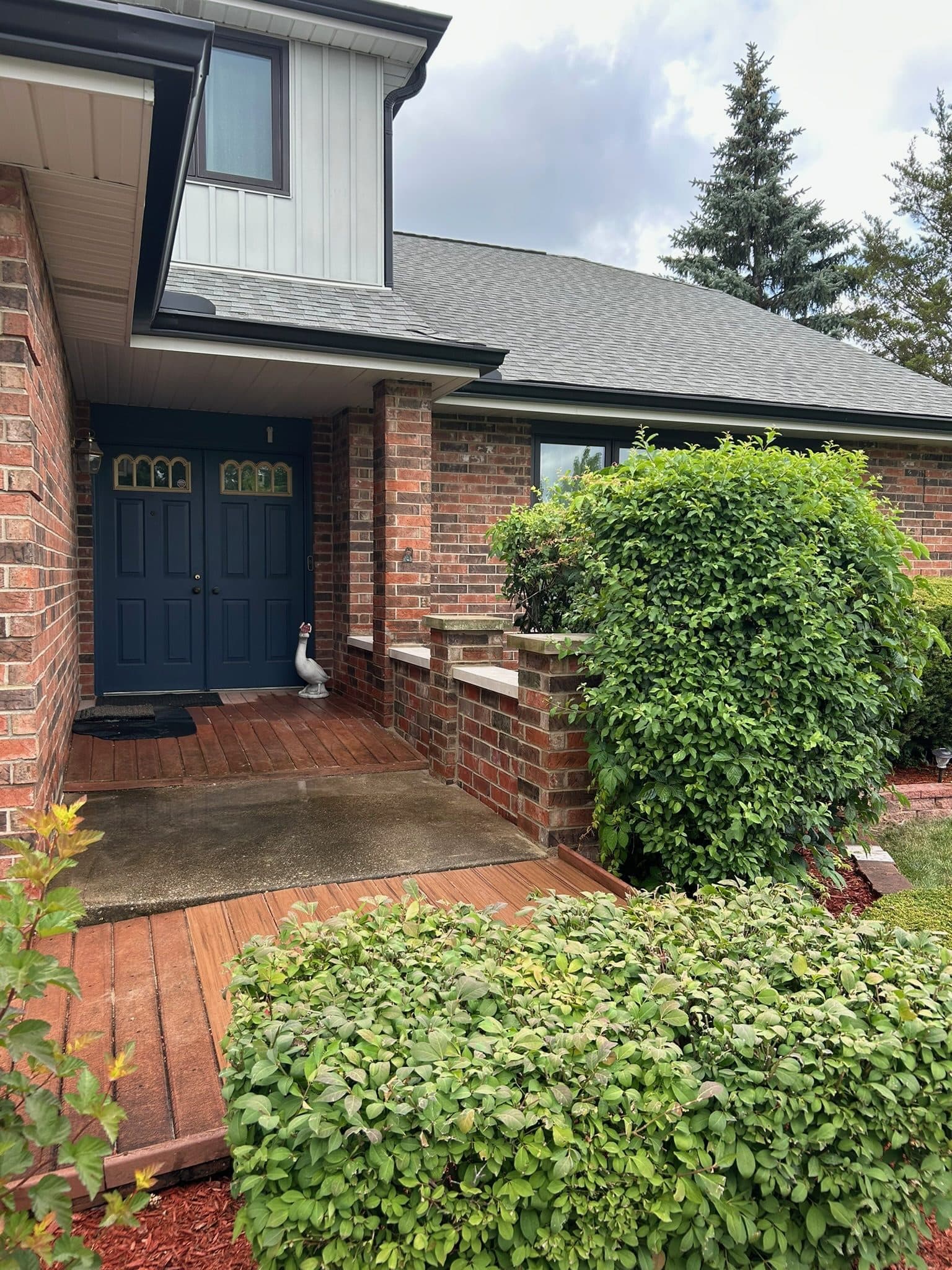
If chunks of your brick are flaking off, popping, or turning to powder, you're seeing spalling — and you're not alone. On Chicago and Chicagoland homes, spalling brick is one of the most common masonry problems we see, and it almost always traces back to one thing: water that got into the brick and then froze. This article explains exactly why brick crumbles here, how to tell how serious it is, and what actually fixes it.
The short answer: brick spalls when water absorbs into it (or into failing mortar joints) and our freeze-thaw cycle expands that moisture, prying the hard outer face off the brick. The fix is to stop the water, replace the damaged brick, and seal the wall — in that order. Paul Lally's Masonry Inc. has been repairing spalling brick across Chicagoland since 1988, and here's everything you need to understand the problem.
What spalling brick actually is
A brick is hardest on the outside. During manufacturing, the fired outer face becomes dense and weather-resistant, while the interior stays softer and more porous. Spalling is when that protective face flakes, crumbles, or pops off, exposing the vulnerable inside.
Once the face is gone, the brick can't do its one job — shedding water — so it soaks up even more moisture and deteriorates faster. That's why spalling is a problem that feeds itself: the more it spreads, the faster it spreads.
Why brick crumbles in Chicago: the freeze-thaw cycle
Here's the building science in plain terms. Brick and mortar are porous; they absorb water like a sponge. When temperatures drop below freezing — which happens constantly in a Chicago winter — that absorbed water turns to ice and expands by roughly 9%. That expansion pushes outward from inside the brick. When it thaws, the water re-absorbs and the cycle repeats, sometimes dozens of times in a single winter.
Every cycle is a tiny hammer blow from the inside. Eventually the outer face can't hold, and it spalls off. This is why spalling is far worse on the south and west elevations (more sun-driven thaw cycles) and on walls that stay damp.
Common causes & warning signs
Spalling is the symptom. These are the underlying causes — and the early warning signs that water is getting into your wall before whole faces start popping off.
Failing mortar joints
Crumbling, receding, or cracked mortar is the #1 entry point for water. Mortar is the wall's first line of defense, and when it fails, water pours into the assembly. This is why tuckpointing is so often part of a spalling repair.
Missing or worn sealant and flashing
Gaps around windows, failed caulk joints, and bad flashing at the chimney or roofline channel water straight into the masonry.
Drainage and gutter problems
Overflowing gutters, downspouts that dump against the wall, and grading that pushes water toward the foundation keep brick saturated — exactly the condition spalling needs.
Trapped moisture (often from bad sealing)
Sealing brick with a non-breathable coating can trap interior moisture, which then freezes inside the wall. Counterintuitively, the wrong sealer causes spalling.
Early warning signs to watch for
- Efflorescence — white, chalky powder on the brick (a sign water is moving through it)
- Hairline cracks or gaps in the mortar
- Loose bricks or hollow-sounding faces
- Water stains on interior walls
- Small flakes or "popped" faces starting on the most exposed elevations
How a professional repairs spalling brick
A proper repair is a sequence, not a single step. Skipping any part leaves the wall vulnerable.
- Diagnose the water source. A mason identifies where water is entering — mortar, flashing, gutters, grade — because replacing brick without stopping the water just guarantees the new brick spalls too.
- Remove the spalled bricks. Damaged units are carefully cut out without disturbing the surrounding wall.
- Source matching brick. Replacement brick is matched as closely as possible in size, color, and texture — critical on older Chicago brick that's no longer manufactured.
- Reset with matched mortar. New bricks are laid and the joints are color- and profile-matched to the existing wall.
- Tuckpoint failing joints. Surrounding deteriorated mortar is ground out and repointed so the whole area sheds water again.
- Seal (when appropriate). A breathable masonry sealer is applied after the water sources are fixed, reducing future absorption without trapping moisture.
Materials & techniques that matter
- Matching brick — color, size, and texture; on bungalows and greystones this often means hunting down salvage or the closest current equivalent.
- Matched mortar — using the right strength (Type N for softer historic brick; harder mortar can damage old units) and matching color and joint profile.
- Breathable sealers — vapor-permeable products that let the wall dry out while repelling liquid water.
Repair vs. replace: how bad is it?
| Situation | Typical approach |
|---|---|
| A few flaked faces, mortar mostly sound | Replace affected bricks + spot tuckpoint + seal |
| Widespread spalling on one elevation | Replace damaged units + tuckpoint the elevation + seal |
| Spalling plus loose/bulging brick | Full evaluation — possible section rebuild |
| Spalling on a chimney above the roof | Often a chimney rebuild above the roofline |
A few spalled faces caught early is an inexpensive repair. Widespread, ignored spalling that has let water deep into the wall is where costs climb — which is the whole argument for acting early.
Spalling vs. efflorescence vs. cracking: reading the signs
Homeowners often lump every brick problem together, but the signs point to different things — and telling them apart helps you understand how urgent the repair is.
| What you see | What it usually means | Urgency |
|---|---|---|
| White, chalky powder (efflorescence) | Water is moving through the masonry, carrying salts to the surface | Early warning — find the water source |
| Flaking, popping, crumbling faces (spalling) | Water has frozen inside the brick and broken the face off | Repair soon — it spreads |
| Hairline cracks in mortar joints | Normal aging or minor settling letting water in | Tuckpoint before it widens |
| Step cracks through brick and mortar | Possible structural movement | Have it evaluated promptly |
| Loose or bulging bricks | Water has gotten deep into the wall assembly | Address quickly — can become structural |
Efflorescence is the earliest and cheapest stage to catch — it's the wall telling you water is getting in before any brick has failed. Spalling is the next stage, once that water has started freezing inside the brick. Step cracks and bulging are the serious end of the spectrum, where the wall may be moving. Reading which stage you're at tells you whether you're looking at simple sealing, a brick-and-mortar repair, or a larger restoration.
How we match brick on older Chicago homes
The hardest part of a spalling repair on a Chicago bungalow or greystone isn't pulling out the bad brick — it's finding brick that matches. Much of the brick on the region's older homes hasn't been manufactured in decades, in colors, textures, and sizes that don't map neatly to anything on a modern pallet. An experienced mason sources the closest current equivalent, pulls from salvage when a true match exists, and blends replacements into less-visible areas when an exact face match isn't possible. Then the mortar around the new brick is matched in color and joint profile, because a perfect brick surrounded by the wrong mortar still reads as a patch. Getting both right is the difference between a repair you can spot from the sidewalk and one that disappears into a 90-year-old wall. It's painstaking work — and it's exactly the kind of craftsmanship the Lally name has been built on since 1988.
DIY vs. hiring a pro
Replacing a spalled brick looks like a swap, but the skill is in everything around it: cutting the old brick out without cracking its neighbors, sourcing a true match, mixing mortar to the correct (not too hard) strength, and — most importantly — correctly diagnosing the water source. Get the diagnosis wrong and you'll be doing it again next winter. Spalling is usually a job for an experienced mason.
Paul Lally's Masonry Inc. is a family-owned, insured masonry contractor serving Chicago and the Chicagoland suburbs since 1988 — tuckpointing, brick repair and replacement, chimney repair and rebuilds, lintel replacement, masonry restoration, and waterproofing for residential and commercial properties. Built on Craftsmanship. Backed by Experience. Free on-site estimates — call (708) 448-8866.
Preventing spalling in the first place
The brick on Chicago's century-old bungalows, greystones, and two-flats has survived this long because the mortar was maintained and the water was managed. To keep your wall out of trouble: keep gutters and downspouts flowing away from the wall, tuckpoint failing mortar before it fully erodes, fix flashing and caulk gaps promptly, and consider a breathable sealer on exposed elevations. An annual look at the south and west walls catches most problems while they're still cheap.
Related services
- Brick repair & replacement — removing and matching spalled brick.
- Tuckpointing & repointing — sealing off the mortar joints that let water in.
- Masonry waterproofing & sealing — breathable sealing to prevent future spalling.
- Masonry restoration — for walls where spalling is widespread.
The bottom line
Crumbling brick isn't random — it's water plus freeze-thaw, and it gets worse every winter you wait. The fix is to find and stop the water, replace the spalled brick with a real match, tuckpoint the failed mortar, and seal. Done right, the wall sheds water again and stops deteriorating.
If your brick is flaking, popping, or powdering, have it looked at before another Chicago winter. Paul Lally's Masonry Inc. has repaired spalling brick across Chicagoland since 1988 — call (708) 448-8866 or request a free on-site estimate. Built on Craftsmanship. Backed by Experience.
Frequently Asked Questions
What does it mean when brick is spalling?
Spalling means the outer face of the brick is flaking, crumbling, or popping off, exposing the softer interior. In Chicago it's almost always caused by water getting into the brick and freezing. Spalled brick can no longer shed water properly, so the problem accelerates if it isn't addressed.
Why is my brick crumbling in Chicago?
Brick crumbles here because water soaks into porous brick or failing mortar joints, then freezes and expands during our freeze-thaw winters, prying the brick face apart. The most common culprits are deteriorated mortar, missing sealant, bad drainage, or a moisture source like a leaking gutter.
Is spalling brick a structural problem?
A few spalled bricks on a wall face usually aren't structural, but they're a warning sign that water is getting into the wall. Left alone, spalling spreads and can lead to loose bricks, bowing walls, and damage behind the brick. It should be evaluated, not ignored.
Can spalled brick be repaired, or does it need replacing?
Once a brick's face has spalled off, that brick can't be 'patched' back to full strength — the damaged units are removed and replaced with matching brick. The critical part is fixing the water source so the new brick doesn't spall too.
Will new brick match my old Chicago brick?
An experienced mason sources replacement brick matched as closely as possible in size, color, and texture — important on older bungalows and greystones where the original brick is no longer made. Matching mortar around the new brick is just as important to the final look.
Does sealing brick prevent spalling?
A breathable masonry sealer can reduce water absorption and help prevent spalling, but only after the real water sources — failing mortar, bad flashing, gutter problems — are fixed. Sealing over an active leak can trap moisture and make spalling worse, so sequence matters.
How fast does spalling brick get worse?
It depends on exposure and how many freeze-thaw cycles the wall sees, but spalling tends to accelerate once it starts because the exposed interior absorbs water even faster. A wall with a few popped faces this year can have many more after one hard Chicago winter.
Should I tuckpoint or replace the brick first?
Usually both are part of the same repair: replace the spalled bricks and tuckpoint the failed mortar joints that let water in, then seal. Doing one without the other leaves the wall vulnerable — the goal is to stop water everywhere it's getting in.