
Homeowner Education · Chicagoland, IL
Why One Wall of Your House Is Always Worse Than the Others
Walk around your house and one elevation will be visibly rougher than the rest. That isn't bad luck or bad brick — it's exposure, and it's predictable enough that a mason can usually guess which wall it is before walking around the corner. Knowing why tells you which wall to fix first.
2026-08-29
Quick Answer
One elevation of a house almost always deteriorates faster than the others because exposure is not evenly distributed: the north side gets least sun and dries slowest, the weather-facing side takes the most wind-driven rain, and shaded or enclosed walls never dry between wettings. Masonry survives freeze-thaw by drying, so the wall that dries least fails first. Paul Lally's Masonry Inc. assesses and phases masonry repairs across Chicagoland. Family-owned since 1988, insured. Call (708) 448-8866.
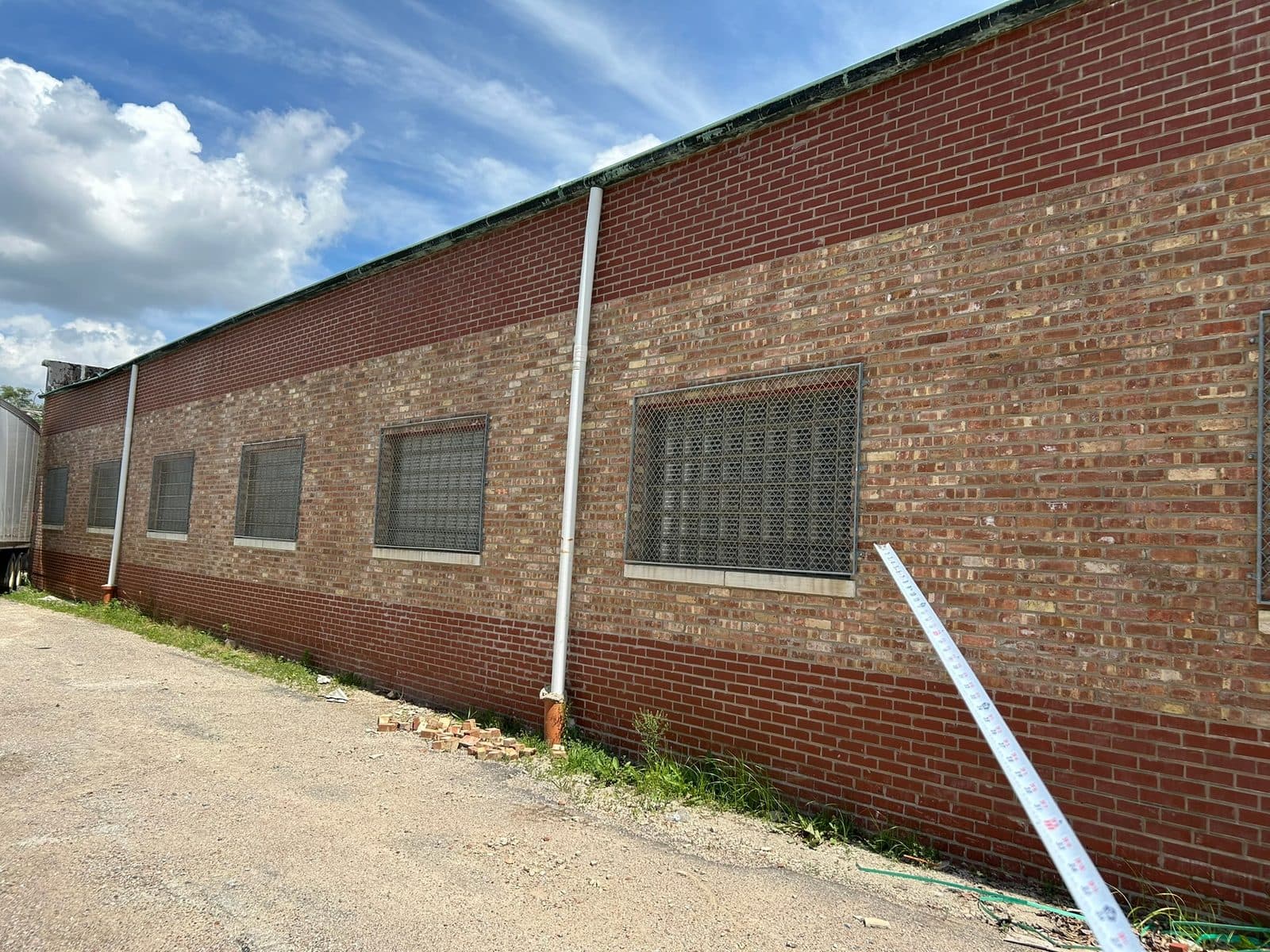
One Wall Is Always Worse. It's Not Random.
Walk around your house and look properly at each wall.
One of them will be visibly rougher than the others — joints more open, faces flaking, maybe green in places, maybe darker for longer after rain. And it will very likely be the same wall your neighbour would point at on their own house.
That is not bad luck, bad brick, or a bad bricklayer having an off day in 1962. It is exposure, and it is consistent enough that a mason can usually guess which elevation is worst before walking around the corner.
Understanding why is genuinely useful, because it tells you which wall to fix first when you cannot do all of them.
Paul Lally's Masonry Inc. assesses and phases masonry repairs on homes and buildings throughout Chicago and the Chicagoland suburbs. Family-owned since 1988, insured, free on-site estimates. Call (708) 448-8866.
The Principle: Masonry Survives by Drying
Everything on this page comes back to one mechanism.
Brick and mortar are porous. They absorb water, and in a Chicagoland winter that water freezes, expands roughly nine percent, and pushes against the surrounding material. Each cycle does a tiny amount of damage.
The reason a wall lasts a century anyway is that it dries between wettings. Sun and moving air pull moisture back out, so the masonry goes into most freeze events considerably drier than it was after the last rain.
So the question is not how much water a wall gets. It is how wet the wall still is when the temperature drops.
Two walls on the same house, in the same rain, can be in completely different condition — because one of them dried and the other did not.
The Five Things That Make One Wall Worse
1. Sun — how fast it dries
The single biggest factor. A north-facing wall in this hemisphere gets the least direct sun all year, and in winter it may get essentially none. It dries slowest after every rain, holds snow at its base longest, and stays frozen longer.
South-facing walls dry fastest. They take a different kind of punishment — the largest daily temperature swings, which drives thermal movement — but they are rarely the wall that is crumbling.
2. Wind-driven rain — how much gets in
Rain falling straight down mostly runs off a wall. Rain driven horizontally into a wall gets pushed into the joints and pore structure.
That means a weather-facing elevation absorbs far more water per storm than a sheltered one, even though both got identical rainfall. In Chicagoland the prevailing weather generally loads the north and west faces hardest — which is why those two so often coincide with the worst wall.
3. Shade and enclosure — whether air can reach it
Trees, garages, neighbouring buildings, fences and dense plantings all reduce sun and airflow.
The extreme case in this region is the gangway — the narrow strip between two houses on a city or inner-suburb lot. It gets almost no sun, almost no drying wind, and frequently receives roof water from both buildings converging into a three-foot channel. Gangway walls are reliably among the dampest masonry on any property.
4. Water delivery — what the building itself puts on the wall
This is the one you can actually change, and it often outweighs orientation entirely:
- A downspout discharging at or near the wall
- An overflowing or sagging gutter sheeting water down a whole elevation
- A roof valley or edge dumping onto one spot
- A sill that has lost its wash or drip edge and now aims water at the brick below
- Irrigation spraying the wall several mornings a week
- Grade, soil and mulch piled against the lowest courses
A single downspout can make a south-facing wall the worst on the house. Building details beat compass direction more often than people expect.
5. Ground-level effects — splash and salt
The bottom of every wall gets extra punishment: splash-back off drives, walks, patios and stoops, plus de-icing salt in winter dissolving into meltwater, soaking into the brick, and crystallising inside it as it dries.
That is why damage so often appears as a sharp horizontal band near grade — and why the elevation facing a salted driveway (usually the garage wall) is frequently the worst on an otherwise sound house.
Reading Your Own Building
| What you see | What it usually means |
|---|---|
| One elevation generally rougher than the rest | Orientation — least sun, most driven rain |
| Moss, algae or persistent dark staining | That wall is not drying between wettings |
| A vertical stripe of damage | A downspout or gutter joint delivering water |
| A sharp horizontal band near grade | Splash line, plus winter salt |
| Damage under sills only | Sills have lost pitch or drip edge |
| Rear worse than front | Less attention, more shade, often softer original brick |
| Gangway wall worst of all | Minimal sun and airflow, converging roof water |
| Chimney worst of everything | Four exposed faces, no roof over it, no heated interior behind |
| White efflorescence | Water is actively moving through that masonry |
| Damage evenly spread on every elevation | Look at the mortar — a previous too-hard repointing may be the cause |
One caution: if the damage genuinely is uniform on all four sides, exposure is probably not your explanation. That pattern points at the mortar itself, and specifically at a repointing done with a mix harder than the brick — which forces stress into the brick faces everywhere at once.
Why This Should Change Your Repair Order
Most homeowners cannot or would rather not do everything at once, and phasing by exposure is a sound way to split it. But the order matters more than the split.
- Anything unsafe first. Loose masonry above a walkway, a chimney shedding material, brick displaced out of plane. Exposure is irrelevant to this.
- Stop the water delivery. Gutters, downspout extensions, grade, sills, flashing, irrigation. This is mostly not masonry work, it is the cheapest item on the list, and it improves every elevation at once.
- Corroding steel. Lintels and anchors keep expanding regardless of which wall they are on.
- The worst-exposed elevation — usually north or the weather-facing side, or whichever wall the building is delivering water to.
- The remaining elevations, in descending order of exposure.
- Protection and cosmetic work last — sealing only where genuinely appropriate, and only after the repairs are done.
Doing step four before step two is the classic mistake. Repointing the wall while the downspout still discharges on it means paying for the same wall twice.
What a Proper Assessment Looks At
- Walk all four elevations, not just the one you called about.
- Note orientation and shading — what sun each wall actually gets, and what is blocking it.
- Trace every water path — gutters, downspouts, roof edges, valleys, sills, grade, irrigation.
- Sound the masonry by tapping, which finds units that have lost bond behind faces that still look acceptable.
- Check mortar hardness against the brick, since a too-strong previous repointing changes the whole diagnosis.
- Look at the chimney from the roof — it is the most exposed masonry on any house.
- Check the gangway and rear, which are the walls most often skipped and most often worst.
- Rank by risk, then by exposure, and write the scope so it can be phased.
Materials Note
Whichever wall you start with, the rule is constant: mortar must be softer than the brick it sits against. Mortar is the sacrificial component — meant to give first, because a joint can be replaced and a brick face cannot. Type N suits most modern and post-war brick; softer, lime-rich mixes belong on soft historic brick.
And on a chronically damp elevation specifically, resist the instinct to seal it. A film-forming coating on a wall that already struggles to dry traps moisture inside it, and in a Chicagoland winter that trapped water freezes and takes the brick face off with the coating attached. If a treatment is warranted at all it should be a breathable, vapour-permeable water repellent, applied after the repairs and after the water sources are corrected.
Related work: tuckpointing and repointing, brick repair and brick replacement, chimney repair, limestone and sill repair, residential masonry restoration.
DIY vs. Hiring a Pro
The diagnostic half of this is genuinely something a homeowner can do, and doing it well makes every conversation with a contractor better. Walk your building after a rain and notice which walls are still dark. Look for moss. Follow your downspouts to where they actually discharge. Photograph each elevation once a year from the same spot.
The interventions that follow split cleanly. Water management — extending downspouts, clearing gutters, pulling mulch back off the bottom courses, adjusting a sprinkler head — is homeowner work with an outsized payoff.
Repointing and brick replacement are not, mainly because the parts that determine whether they last are invisible when finished: how far back the joints were cut, whether mortar was packed in lifts, and whether the mix was softer than the brick.
Chicagoland Context
The regional factors sharpen all of this.
Freeze-thaw frequency — many cycles a winter rather than one long freeze — punishes damp masonry repeatedly rather than once, which is precisely why drying matters so much here.
Lake-influenced moisture and humidity slow drying across the region generally.
Dense lots and gangways in Chicago and the inner suburbs create the shaded, enclosed, water-converging conditions described above at enormous scale.
And the housing stock. Chicago brick bungalows, greystones, two-flats and three-flats were frequently built with harder face brick on the street elevation and softer, cheaper common brick on the sides and rear — where nobody was going to look. So on a lot of older homes the rear elevation is worse for two independent reasons at once: it gets less sun and attention, and it is made of more absorptive material.
Maintenance and Prevention
- Walk the building after a rain and note which walls stay dark longest. That is your priority list.
- Extend every downspout well away from the wall, and check them each spring.
- Clean the gutters twice a year — an overflowing gutter sheets water down a whole elevation.
- Trim back plantings and limbs touching or shading walls, especially in a gangway.
- Keep soil and mulch off the lowest courses, and never bury weep holes.
- Adjust irrigation so nothing sprays masonry.
- Photograph each elevation annually from the same position so you can see change.
- Give the worst-exposed wall a look each spring, after the freeze-thaw season has done its work.
The Bottom Line
Your walls are not aging at the same rate because they are not living the same life. The one with least sun, most driven rain, least airflow — or a downspout pointed at it — is going to fail first, and it is going to keep failing first.
That is genuinely good news for anyone budgeting, because it means repairing one elevation is often the honest scope, not a compromise. Fix the water the building is putting on the wall, start with the wall that dries least, and work outward from there.
Paul Lally's Masonry Inc. is a family-owned, insured masonry contractor serving Chicago and the Chicagoland suburbs since 1988 — tuckpointing, brick repair and replacement, chimney repair and rebuilds, lintel replacement, masonry restoration, and waterproofing for residential and commercial properties. Built on Craftsmanship. Backed by Experience. Free on-site estimates — call (708) 448-8866 or request an estimate online.
Frequently Asked Questions
Why is the north side of my house always the worst?
Because it gets the least direct sun, so it dries slowest after every rain and snowmelt. Masonry survives freeze-thaw by drying out between wettings, and a wall that stays damp enters every freeze wetter than the walls that get sun.
Is it normal for only one wall to need work?
Completely normal, and it is usually the honest scope. Exposure is not evenly distributed around a building, so the walls do not age at the same rate. A contractor who quotes every elevation without explaining why each is included is worth questioning.
Which wall should I repair first if I can only do one?
Generally the one taking the most water and drying the least — often the north or the weather-facing elevation — unless something more urgent exists elsewhere, like a corroding lintel or a chimney shedding masonry. Safety and active water entry always outrank general deterioration.
Why is the back of my house worse than the front?
Several reasons combine: rear elevations often get less maintenance attention, they frequently carry the gutters and downspouts, they may be shaded by garages or trees, and on many older homes the rear was built with softer, cheaper brick than the street face.
What does green growth on a wall tell me?
That the masonry is staying damp — moss and algae only grow where it does. They are not themselves destroying the brick, but they are a reliable signal that the wall is not drying between wettings, which is what drives freeze-thaw damage.
Does the gangway between houses make it worse?
Yes, noticeably. A narrow gangway gets very little sun and almost no drying wind, and roof water from two buildings often converges into that strip. It is one of the most consistently damp locations on a Chicago-area property.
Is wind-driven rain really different from ordinary rain?
Yes. Rain driven horizontally into a wall is pushed into the joints and pores rather than running down the face, so a weather-facing elevation takes in far more water per storm than a sheltered one — even though both got the same rainfall.
Should I seal the bad wall?
Only after the repairs are done and the water sources are corrected, and only with a breathable, vapour-permeable repellent. A film-forming coating on a wall that already struggles to dry traps the moisture inside it, which makes exactly the problem you are trying to fix worse.
Can I do the walls in stages over a few years?
Yes, and phasing by exposure is a sensible way to do it — worst-exposed and most water-damaged first, sheltered elevations later. What matters is stopping the water sources first, because those affect every wall regardless of the order.
How much does repointing one elevation cost in Illinois?
It depends on the wall area, height and access, how much of the joint and brick has actually failed, and whether staging or a lift is needed. Paul Lally's Masonry Inc. walks every elevation and puts the estimate in writing — call (708) 448-8866.