
Brick Repair & Replacement · Naperville, IL
Brick Repair & Replacement in Naperville, IL — Spalling, Cracks & More
Spalling, cracked, or loose brick on your Naperville home? Paul Lally's Masonry Inc. repairs and replaces damaged brick, matches the original units, and fixes the water problem behind the damage. Free on-site estimates.
Quick Answer
Brick repair in Naperville, IL replaces individual spalled, cracked, or loose bricks and the failed mortar around them, while brick replacement rebuilds larger damaged sections. Paul Lally's Masonry Inc. matches your existing brick in size, color, and texture so the repair disappears into the wall. Family-owned, serving Chicagoland since 1988. Free estimate — call (708) 448-8866.
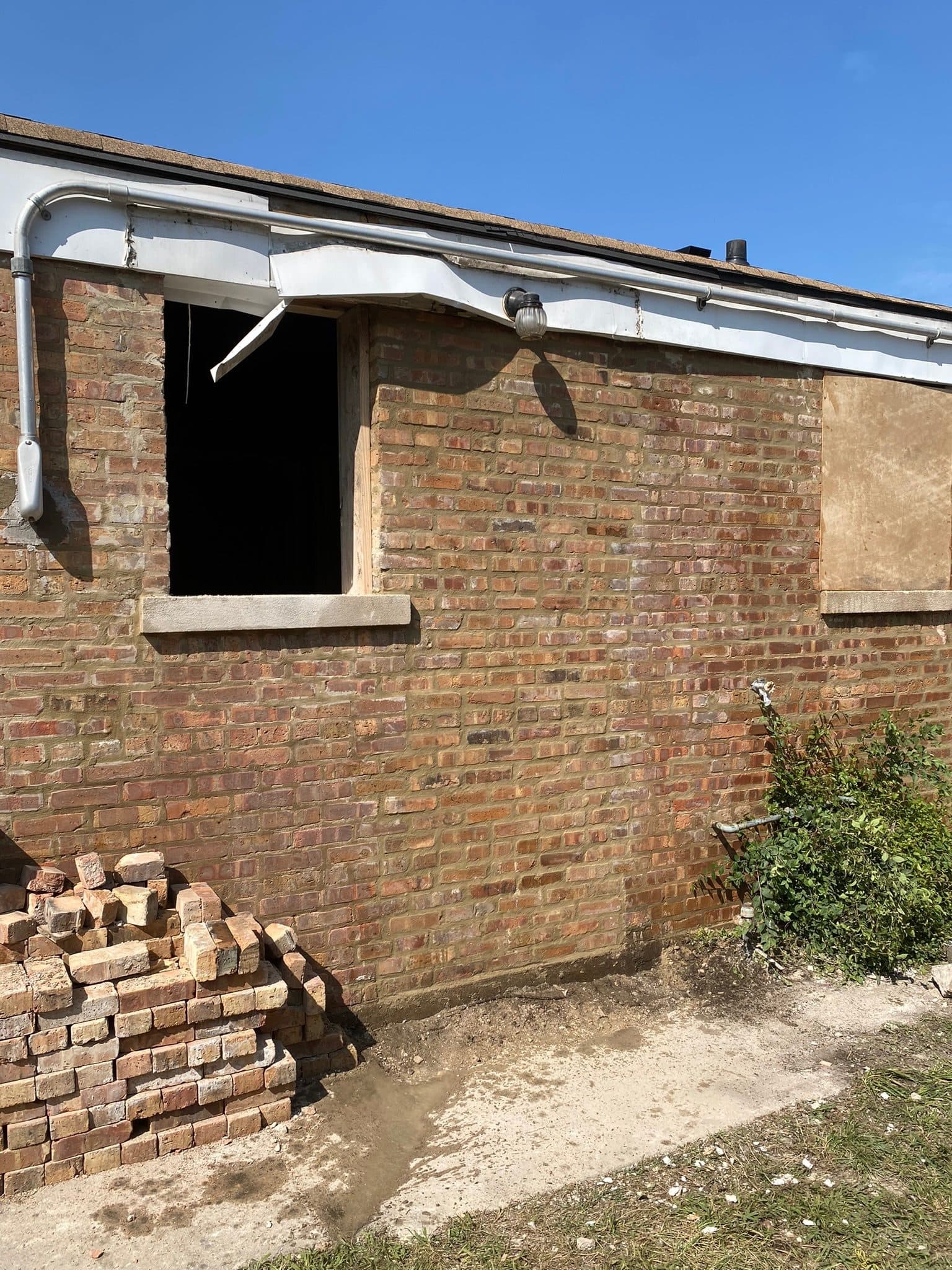
A single cracked brick rarely stays a single cracked brick. Once the face of one unit spalls off or a brick works loose, water has a way into the wall — and on a Naperville home that survives Chicago-area freeze-thaw winters, that water keeps widening the damage every season. Paul Lally's Masonry Inc. repairs and replaces damaged brick across Naperville and DuPage County, matches the original units so the fix disappears, and — just as importantly — finds and stops the water that caused the problem in the first place.
What brick repair and brick replacement actually mean
Brick repair is targeted work: removing individual spalled, cracked, or loose bricks and the failed mortar around them, then setting matched replacement units and repointing the joints. It's the right call when the damage is scattered and the wall behind it is sound.
Brick replacement (or partial rebuilding) is larger in scope — taking out and rebuilding a whole damaged section, course, or corner. That's what's needed when spalling is widespread, a section is bulging or bowing, or the brick has shifted because of movement below or a failed lintel above. Most Naperville jobs are somewhere on this spectrum, and a quick on-site look is the honest way to tell which one you need.
Paul Lally's Masonry Inc. is a family-owned, insured masonry contractor serving Chicago and the Chicagoland suburbs since 1988 — tuckpointing, brick repair and replacement, chimney repair and rebuilds, lintel replacement, masonry restoration, and waterproofing for residential and commercial properties. Built on Craftsmanship. Backed by Experience. Free on-site estimates — call (708) 448-8866.
Signs your Naperville brick needs attention
Walk the perimeter of your home and look for:
- Spalling or flaking brick — the face of the brick popping, flaking, or crumbling off, often leaving a rough, recessed scar.
- Cracked bricks — splits through individual units, especially below windows and near the foundation.
- Loose or shifting bricks — a brick you can rock or that sits proud of its neighbors.
- Step cracks — staircase-pattern cracks following the mortar joints, a classic sign of movement.
- Gaps and missing mortar — open or receding joints that let water straight into the wall.
- Bulging or bowing — a wall or section that no longer sits flat.
- Efflorescence — white, chalky deposits, the telltale sign that water is moving through the masonry.
If you're seeing several of these, the brick is telling you the wall is taking on water.
What causes brick damage around here
In Naperville the culprit is almost always water plus the freeze-thaw cycle. Brick is porous; when failed mortar joints, a bad sealer, poor drainage, or a leaking lintel let water soak in, that water freezes, expands, and pries the face off the brick. Repeat that over a few DuPage County winters and a small problem becomes a wall. Other drivers include foundation settling or movement (which shows up as step cracks), and previous bad repairs that used the wrong, too-hard mortar.
The risk of waiting
Damaged brick isn't just cosmetic — it's a breach. Every spalled face and open joint feeds more water into the wall, which damages neighboring brick, the structure behind it, and eventually the interior. A repair that's a handful of bricks today can become a rebuilt section next year. Catching it early is the single cheapest thing you can do for brick.
How we repair and match brick
Our process is built around making the repair invisible and durable:
- Assess the cause. We find why the brick failed — failed joints, drainage, a lintel — so the fix lasts.
- Match the brick. We match size, color, and texture. On newer DuPage subdivisions we can often source a current or near-match unit; on older Naperville homes we match closely or use reclaimed salvage brick.
- Remove the damaged units carefully, without disturbing sound surrounding brick.
- Rebuild and reset the new brick on properly matched mortar.
- Repoint and tool the joints so they blend, then clean the work.
Matching is where craftsmanship shows. A repair with mismatched brick or the wrong mortar color reads as a patch from the curb; a properly matched repair disappears into the wall.
The brick-matching challenge
Naperville's housing stock is split, and that changes the matching job. Newer subdivision homes often use current production brick we can match from a supplier, while historic downtown Naperville brick — older, softer, and long out of production — usually has to be matched by hand or sourced from salvage. Either way, mortar color and joint profile matter as much as the brick itself.
What drives the cost
We never quote brick repair sight-unseen, and we don't publish prices — every wall is different. What moves the number is straightforward:
- Extent — a few bricks versus a rebuilt section.
- Matching difficulty — readily sourced brick versus a hand- or salvage-matched older brick.
- Height and access — ground-level work versus second-story walls needing scaffolding.
- Underlying cause — whether a lintel or drainage issue has to be addressed too.
The only accurate figure is a free on-site estimate, in writing, so you know exactly what the work involves before anyone starts.
Naperville and DuPage County context
Naperville spans the full range of Chicagoland masonry. Newer subdivisions across DuPage and Will County are built largely in brick veneer that's now decades old — old enough that lintels are rusting and mortar joints are due. The historic downtown and older neighborhoods carry century-old full-masonry and brick homes that need careful matching and a softer touch. Both face the same enemy: the DuPage freeze-thaw cycle that turns every bit of trapped water into a wedge.
Trusted, family-owned, and accountable
Paul Lally's Masonry Inc. has repaired brick across Chicagoland since 1988. We're family-owned, insured, and the family name is on every job — so the brick gets matched right and the water problem gets fixed, not painted over. Built on Craftsmanship. Backed by Experience.
When you're ready, we also handle the related work brick repair often touches: tuckpointing and mortar joint repair to renew failing joints, full brick repair and replacement, and comprehensive masonry restoration for older Naperville homes.
Get a free brick repair estimate in Naperville
If your brick is spalling, cracking, loosening, or stepping with cracks, have it looked at before the next freeze. Request a free on-site estimate or call Paul Lally's Masonry Inc. at (708) 448-8866 — we'll tell you honestly whether you need a simple repair or a larger replacement, match your brick, and make it right.
Brick Repair & Replacement in Naperville, IL — Frequently Asked Questions
How much does brick repair cost in Naperville, IL?
There is no flat rate — brick repair cost depends on how many bricks are damaged, how hard the brick is to match, and how high and accessible the wall is. Replacing a few spalled bricks near the ground is far less involved than rebuilding a bowing second-story section. The only accurate number is a free on-site estimate.
Do I need brick repair or full brick replacement?
If only scattered bricks are spalled, cracked, or loose and the wall is otherwise sound, targeted brick repair is usually enough. Widespread spalling, bulging or bowing sections, or movement above a failed lintel point toward replacing or rebuilding a larger area. A mason can tell the difference in a quick on-site look.
Can you match the brick on my Naperville home?
Almost always. On newer DuPage County subdivisions we can often source a current or close-match brick; on older Naperville homes we match by color, size, and texture, or reclaim salvage brick. Good matching in both brick and mortar is what makes a repair invisible.
Why is the brick on my house flaking and crumbling?
That is spalling — the brick face popping or flaking off, usually because water soaked into the brick and then froze and expanded over Chicago-area winters. Failed mortar joints, bad sealers, or poor drainage let the water in. Repairing the brick without fixing the water path just lets it happen again.
What are the stair-step cracks running through my brick?
Step cracks that follow the mortar joints in a staircase pattern usually signal movement — settling, foundation shift, or a failing lintel. Sometimes it is cosmetic, sometimes structural. It is worth having a mason look before it widens, because the fix is much smaller when caught early.
Is brick repair covered by homeowners insurance?
Everyday weathering and freeze-thaw spalling are considered maintenance and generally aren't covered. Damage from a covered event — a storm, a vehicle impact, or certain water losses — sometimes is. Get a written estimate to submit with any claim.
How long can I wait to repair damaged brick?
Not long. A single spalled or loose brick is an open door for water, and water is what spreads the damage to neighboring brick and into the wall. The longer you wait, the larger — and more expensive — the repair becomes.
Brick Repair & Replacement in Nearby Areas
Other Masonry Services in Naperville, IL
Learn more about our brick repair & replacement services across Chicagoland, or view all service areas.
Free on-site estimates across Chicagoland.