
Tuckpointing & Repointing · Hickory Hills, IL
Tuckpointing in Hickory Hills, IL — Restore Failing Mortar Before Water Gets In
Failing mortar joints in Hickory Hills let water into your brick and basement long before the brick itself fails. Paul Lally's Masonry Inc. grinds out crumbling mortar and repacks joints with color- and profile-matched mortar to protect your home. Free on-site estimates.
Quick Answer
Paul Lally's Masonry Inc. provides tuckpointing and repointing in Hickory Hills, IL — grinding out failed mortar and repacking joints with color- and profile-matched mortar. Family-owned and serving Chicagoland since 1988, insured, with free on-site estimates. Call (708) 448-8866.
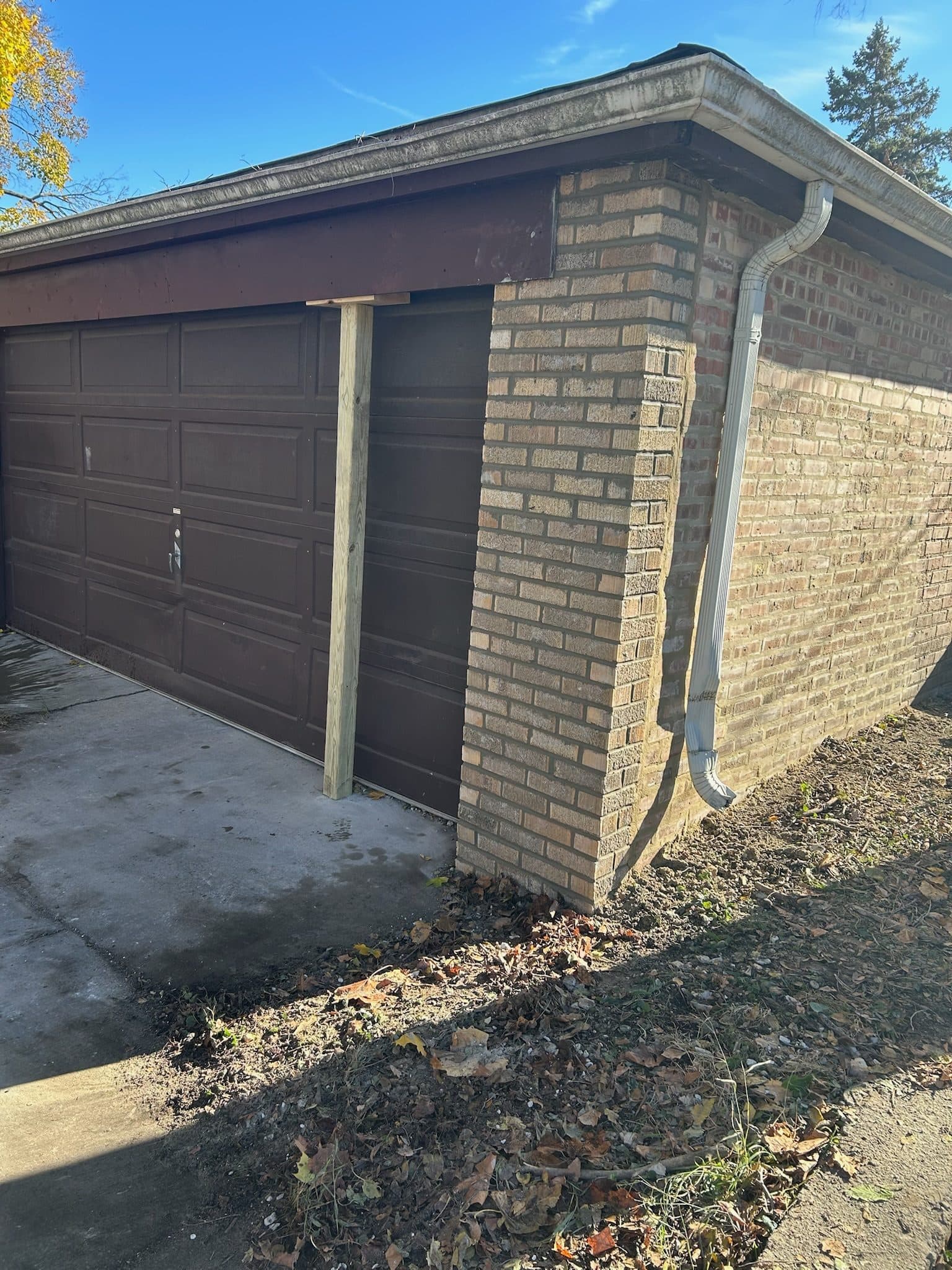
Who does tuckpointing in Hickory Hills, IL?
Paul Lally's Masonry Inc. does tuckpointing in Hickory Hills, IL. We're a family-owned masonry contractor that has served Chicago and the Chicagoland suburbs since 1988, grinding out failed mortar joints and repacking them with color- and profile-matched mortar so water stays out of your brick and your basement. If your joints are receding, crumbling, or letting in moisture, call (708) 448-8866 for a free on-site estimate in Hickory Hills.
Tuckpointing is one of those repairs that's easy to put off — the brick still looks solid, so the wall seems fine. But the mortar between the brick is what actually seals the building, and it wears out decades before the brick does. This page explains what tuckpointing is, how to tell when you need it, what drives the cost, and how we approach it here in southwest Cook County.
What tuckpointing (and repointing) actually is
Tuckpointing is the process of removing deteriorated mortar from between your brick and repacking the joints with fresh mortar. It's the same thing most people mean when they say repointing.
The work happens in two stages:
- Grinding out the failed mortar. We cut out the old, crumbling mortar to a consistent depth without chipping or cracking the surrounding brick. This is the part that separates a lasting repair from a cosmetic smear — mortar packed over soft, failing mortar won't bond and won't last.
- Repacking with matched mortar. We fill the cleaned joints with new mortar mixed to match the color of your existing joints, then tool it to the same profile (the shape of the joint face) as the rest of the wall. Done right, the repair disappears into the wall instead of looking like a patch.
The goal is a wall that once again sheds water at the joints — because the joints, not the brick, are the weak point.
Signs your Hickory Hills home needs tuckpointing
Walk the exterior and look closely at the mortar lines. You likely need tuckpointing if you see:
- Receding or recessed joints — mortar that has worn back so it sits noticeably lower than the brick face.
- Crumbling or sandy mortar — if you can scratch mortar out with a screwdriver or it turns to sand between your fingers, the binder has failed.
- Gaps and hairline separations between brick and mortar where water can enter.
- Efflorescence — the chalky white staining that appears when water moves through masonry and leaves mineral deposits behind.
- Loose or shifting brick — a sign the mortar is no longer holding units in place.
- New dampness or water in the basement, especially after wind-driven rain, which often traces back to open joints above.
Any one of these means water is getting in. On a brick home, that's the early warning — the stage where the fix is still just the mortar.
Quotable: The brick doesn't fail first. The mortar fails first, and the mortar is what keeps water out — which is why open joints are a repair you want to catch early.
The risk of waiting
Open mortar joints are an entry point for water, and water is what does the real damage. Once moisture is behind the brick, Chicago's freeze-thaw cycle takes over: water gets into the wall, freezes, expands, and pushes the masonry apart a little more with each cold snap. Left long enough, that cycle spalls (flakes and cracks) the face of the brick, loosens units, and can turn a straightforward tuckpointing job into brick replacement or a rebuild.
Tuckpointing a wall while the joints are the only problem is a fraction of the work of replacing damaged brick after the fact. Catching it early is the whole point.
Our tuckpointing process
Every Hickory Hills tuckpointing job with Paul Lally's Masonry Inc. follows the same disciplined steps:
- Free on-site assessment. We inspect the mortar joints and brick, identify where the mortar has failed and how far it's spread, and check for related issues like open lintels or chimney joints.
- Careful grinding. We remove the deteriorated mortar to the correct depth, protecting the brick edges as we go.
- Color and profile matching. We mix mortar to match your existing joint color and choose the right mortar type for your brick before we ever pack a joint.
- Repacking and tooling. We fill the joints fully and tool them to match the surrounding profile so the wall sheds water and looks uniform.
- Cleanup and walkthrough. We clean the work area and walk the finished wall with you.
Materials: the right mortar for the right brick
Mortar is not one-size-fits-all, and using the wrong mix can quietly damage a wall.
- Type N mortar is a softer, more flexible mix. It's usually the right choice for older, softer brick — including much of the mid-century brick around Hickory Hills — because it moves with the brick and won't over-stress it.
- Type S mortar is harder and stronger, better suited to certain structural or below-grade conditions.
Here's the trap: packing a hard, high-strength mortar into a wall of soft older brick can cause the brick to crack and spall, because the mortar becomes harder than the brick around it. Matching the mortar to the brick — not just grabbing the strongest bag — is part of doing this right. We also match the color and the joint profile so the repair blends into the existing masonry rather than standing out.
Quotable: The strongest mortar isn't always the right mortar. On older soft brick, an over-hard mix cracks the very brick it's supposed to protect.
What drives the cost of tuckpointing in Hickory Hills
We don't publish flat prices, because no two walls are the same. What actually determines the cost of a tuckpointing job is:
- Wall area — how many square feet of joints need to be ground out and repacked.
- Height and access — ground-level walls are straightforward; second-story walls and chimneys need staging and take longer.
- Mortar matching — matching an older, custom color and profile takes more care than a standard repair.
- Extent of deterioration — spot repairs cost less than a full wall, and a wall where damage has reached the brick may need additional work.
The honest answer to "what will this cost" is that it depends on your specific wall — which is why we come out and look. Paul Lally's Masonry Inc. gives free on-site estimates in Hickory Hills. Call (708) 448-8866 and we'll assess the joints in person and give you a clear, written number with no obligation.
Tuckpointing in Hickory Hills and southwest Cook County
Hickory Hills sits in southwest Cook County, and its housing stock is largely mid-century — brick ranches and split-levels, many built in the decades of postwar growth around 95th Street. That timing matters: a lot of these homes are now at the age where the original mortar has reached the end of its service life and the joints are due for attention.
Local weather does its part too. North- and west-facing walls take the brunt of wind-driven rain and the harshest freeze-thaw exposure through a Chicago winter, so those elevations — and chimneys, which are exposed on all sides — tend to show mortar deterioration first. If you're on one of Hickory Hills' brick blocks and you've noticed the joints looking tired on the shaded side of the house, that's exactly the pattern we see.
Beyond tuckpointing, if the damage has already reached the brick we also handle brick repair and replacement, and where water intrusion is a recurring problem we can pair the repointing with masonry waterproofing to keep the wall protected. You can read more about our full tuckpointing service as well.
Why Hickory Hills homeowners call Paul Lally's Masonry Inc.
- Family-owned, serving Chicagoland since 1988 — decades of hands-on experience with exactly the brick and mortar found across southwest Cook County.
- Insured — the protection you should expect from any masonry contractor working on your home.
- Color- and profile-matched work — repairs that blend in, not patches that stand out.
- Free on-site estimates — we look at your wall in person before we quote a number.
Built on Craftsmanship. Backed by Experience.
Get a free tuckpointing estimate in Hickory Hills
If your mortar joints are receding, crumbling, or letting water in, don't wait for the freeze-thaw cycle to turn it into brick damage. Reach out through our contact page or call (708) 448-8866 for a free on-site estimate in Hickory Hills, IL.
Paul Lally's Masonry Inc. is a family-owned, insured masonry contractor serving Chicago and the Chicagoland suburbs since 1988 — tuckpointing, brick repair and replacement, chimney repair and rebuilds, lintel replacement, masonry restoration, and waterproofing for residential and commercial properties. Built on Craftsmanship. Backed by Experience. Free on-site estimates — call (708) 448-8866.
Tuckpointing & Repointing in Hickory Hills, IL — Frequently Asked Questions
How much does tuckpointing cost in Hickory Hills, IL?
There's no flat rate — the cost of tuckpointing depends on how much wall area needs work, the height and access (ground-level walls versus a second story or chimney), whether we're matching an older custom mortar color and joint profile, and how far the mortar deterioration has spread. The only way to price it accurately is to see it. Paul Lally's Masonry Inc. gives free on-site estimates in Hickory Hills — call (708) 448-8866 and we'll assess the joints in person and give you a clear, written number.
What's the difference between tuckpointing and repointing?
In everyday use they mean the same thing: removing failed mortar from the joints and packing in fresh mortar. Technically, repointing is the repair itself, while traditional tuckpointing also refers to a decorative finishing technique. When homeowners in Hickory Hills ask for tuckpointing, they almost always mean the repair — and that's exactly what we do, matching the color and profile so it blends into the existing wall.
How do I know if my brick needs tuckpointing?
Look for mortar that's receding, crumbling, or sandy enough to scratch out with a screwdriver, along with visible gaps between brick, white efflorescence staining, loose or shifting brick, or new dampness in the basement. Any of these in Hickory Hills means the joints are no longer sealing out water. Catching it early keeps the repair to the mortar instead of the brick.
Will the new mortar match my existing brick?
Yes. Color- and profile-matching is a core part of good tuckpointing. We match the mortar color and shape the joints to the same profile as the surrounding wall so the repair blends in rather than standing out as a patch — which matters on the mid-century brick homes common around Hickory Hills.
Do you offer free estimates in Hickory Hills?
Yes. Paul Lally's Masonry Inc. provides free on-site estimates throughout Hickory Hills and the surrounding southwest Cook County suburbs. We come out, inspect the mortar joints and brick, explain what we see, and give you a written estimate with no obligation. Call (708) 448-8866 to schedule.
Tuckpointing & Repointing in Nearby Areas
Other Masonry Services in Hickory Hills, IL
Learn more about our tuckpointing & repointing services across Chicagoland, or view all service areas.
Free on-site estimates across Chicagoland.