
Tuckpointing & Repointing · Chicagoland, IL
Tuckpointing vs. Brick Replacement: Which One Do You Actually Need?
Tuckpointing renews the mortar joints between bricks; brick replacement swaps out the bricks themselves. Most Chicagoland homes need tuckpointing first — and only need brick replaced where the brick face has already spalled or cracked.
Quick Answer
Tuckpointing repairs the mortar joints between bricks; brick replacement swaps out bricks that are spalled, cracked, or crumbling. If the mortar is failing but the brick is sound, you need tuckpointing. If the brick faces are flaking or broken, those units need replacement. Paul Lally's Masonry Inc. diagnoses both across Chicagoland — family-owned since 1988. Free estimate: (708) 448-8866.
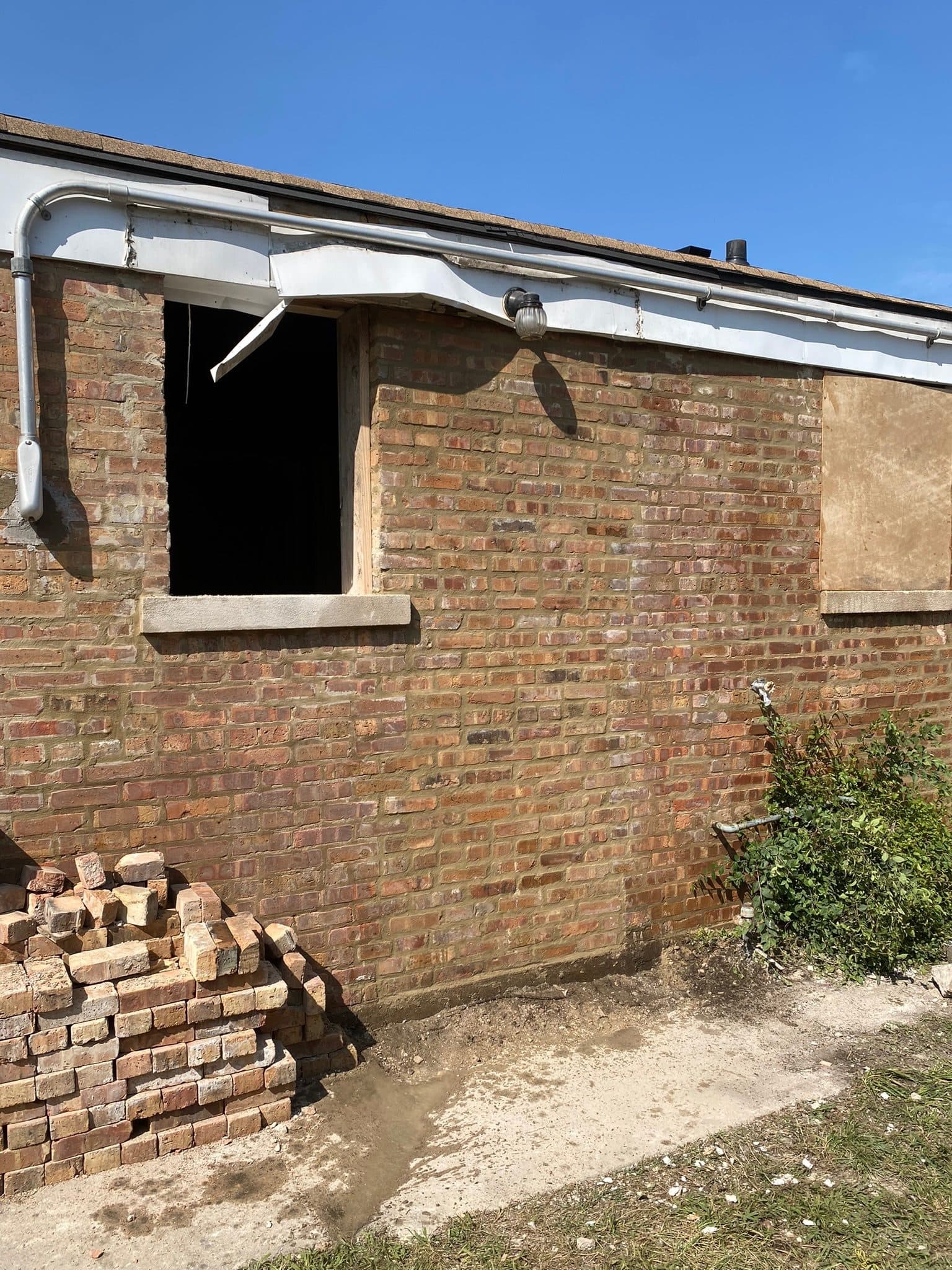
The short answer
Tuckpointing repairs the mortar joints between your bricks. Brick replacement swaps out the bricks themselves. They solve two different problems, and most Chicagoland brick homes need tuckpointing long before they ever need brick replaced. Paul Lally's Masonry Inc. — family-owned and serving Chicago and the suburbs since 1988 — diagnoses which one your wall actually needs and never sells you the bigger job when the smaller one will do. Free on-site estimate: (708) 448-8866.
Here's the rule of thumb: if the gray lines (mortar) are failing, that's tuckpointing. If the bricks themselves (the red/brown faces) are failing, that's replacement. Walk your wall and look closely — what's actually breaking down tells you which repair you need.
Tuckpointing vs. brick replacement at a glance
| | Tuckpointing / Repointing | Brick Replacement | |---|---|---| | Fixes | Failing mortar joints | Damaged brick units | | You need it when | Mortar is receding, soft, sandy, or cracked | Brick faces are spalling, flaking, popping, or cracked through | | What we do | Grind out old mortar to depth, repack with matched mortar | Remove damaged brick, set matched/salvaged brick, repoint around it | | Disturbs the brick? | No — brick stays in place | Yes — units are removed and replaced | | Relative scope | Less involved | More involved (matching + cutting in) | | Best case | Done early, it prevents brick replacement | Needed once brick has already failed |
The two go together more often than not: when we replace spalled brick, we tuckpoint the joints around it so the whole patch sheds water as one wall.
What tuckpointing fixes
Tuckpointing renews the mortar joints — the gray bands between your bricks. Mortar is designed to be the sacrificial layer: it absorbs weather, movement, and freeze-thaw so the brick doesn't have to. After a few decades the mortar wears out, recedes below the brick face, turns sandy, and stops sealing the wall. Water then gets in.
You need tuckpointing when:
- Mortar has receded more than about a quarter-inch below the brick face
- You can rake the mortar out with a key or screwdriver, or it crumbles to sand
- There are hairline gaps or cracks running along the joints
- You see sandy mortar dust collecting at the base of the wall
- Efflorescence (white powdery staining) or damp interior walls show water is moving through
Critically, the brick itself is still sound in all of these cases. That's what makes tuckpointing the right — and lighter — repair.
What brick replacement fixes
Brick replacement addresses the bricks themselves once they've failed. By the time a brick is spalling — its face flaking, popping, or crumbling off — no amount of mortar work brings it back. The unit has to come out and a matched one goes in.
You need brick replacement when:
- Brick faces are spalling — flaking or popping off in layers
- Bricks are cracked through or broken
- Bricks have gone soft, hollow-sounding, or crumbly
- Units are loose, shifted, or missing
- A previous freeze-thaw season left a row of brick faces lying at the base of the wall
Spalling is almost always a downstream symptom: water got into the wall (usually through failed mortar), soaked the brick, froze, and pried the face off. So replacement done right always includes fixing the water source — otherwise the new brick fails the same way.
Why most homes need tuckpointing first
On Chicago bungalows, greystones, two-flats, and suburban brick homes, the failure sequence is almost always the same: mortar fails → water gets in → brick spalls. Catch it at the mortar stage and tuckpointing keeps the water out and the brick intact. Wait until the brick is spalling and you're now paying for replacement and the tuckpointing on top of it.
That's the honest reason we push homeowners to look at their mortar early. The cheapest path is almost never "do nothing and see" — it's renewing the mortar before the freeze-thaw cycle turns a mortar job into a brick job.
What drives the cost of each (and why we won't quote online)
We never publish prices, because no two walls are the same. What actually moves the number:
- Extent — how much mortar has failed, or how many bricks have spalled
- Height and access — ground-floor walls vs. multi-story walls or chimneys needing scaffolding
- Matching difficulty — older soft brick and custom mortar colors take more sourcing and skill
- Cause repair — flashing, drainage, or lintel issues feeding the damage
The only accurate number is a free on-site estimate. We'll tell you straight which repair the wall needs — and which it doesn't.
Chicagoland context
Cook, DuPage, and Will County homes take a beating from freeze-thaw and lake-effect moisture. The classic Chicago bungalow belt and greystone two-flats were built with soft, lime-rich brick and mortar that demands matched, breathable repairs — hard modern cement mortar against soft old brick actually causes spalling by forcing stress into the brick face. Knowing the difference between a tuckpointing wall and a replacement wall on century-old masonry is exactly the judgment a family-owned mason brings.
Paul Lally's Masonry Inc. is a family-owned, insured masonry contractor serving Chicago and the Chicagoland suburbs since 1988 — tuckpointing, brick repair and replacement, chimney repair and rebuilds, lintel replacement, masonry restoration, and waterproofing for residential and commercial properties. Built on Craftsmanship. Backed by Experience. Free on-site estimates — call (708) 448-8866.
Related services
- Tuckpointing & Repointing — renewing failing mortar joints
- Brick Replacement — swapping out spalled and cracked brick
- Brick Repair — combined repair of brick and mortar
- Masonry Waterproofing — sealing the wall after the repair
Talk to a real mason
Not sure whether your wall needs tuckpointing, brick replacement, or both? That's exactly what a free on-site estimate answers. Call Paul Lally's Masonry Inc. at (708) 448-8866 or request a free estimate. Family-owned since 1988 — our name is on every job.
Tuckpointing & Repointing in Chicagoland, IL — Frequently Asked Questions
Do I need tuckpointing or brick replacement?
If the mortar joints are receding, soft, or crumbling but the bricks themselves are solid, you need tuckpointing. If the brick faces are flaking, popping off, or cracked through, those individual bricks need to be replaced. Most walls need tuckpointing; only the damaged bricks within them need replacement. A free on-site look from Paul Lally's Masonry Inc. tells you exactly which.
Is tuckpointing cheaper than brick replacement?
Generally yes — tuckpointing renews the mortar without disturbing the brick, while replacement means carefully removing and matching units, which is more involved. That is exactly why catching failing mortar early matters: timely tuckpointing keeps water out of the wall so the brick never spalls and never needs replacing. We never quote a price online — every job gets a free on-site estimate.
Can you replace just a few bricks instead of a whole wall?
Yes. Spot brick replacement removes only the spalled or cracked units and sets matched brick in their place, tying back into the surrounding mortar. We replace as few or as many as the wall actually needs, then tuckpoint the joints around them so water stays out.
Why does brick spall in the first place?
Almost always water plus Chicago's freeze-thaw cycle. Water gets into the wall — usually through failed mortar joints — soaks into the brick, freezes, and pries the face apart. That is why we always fix the water source, not just the symptom, or the new brick will fail the same way.
Will replacement brick match my existing wall?
Matching is the whole craft of a good replacement. We match new or salvaged brick to your wall in size, color, and texture, and match the surrounding mortar in color and type. On older Chicago bungalow and greystone brick, that often means sourcing reclaimed brick and using a softer mortar so the repair blends and lasts.
If I tuckpoint now, will I still need brick replacement later?
If your brick is still sound, proper tuckpointing keeps water out and prevents the spalling that leads to replacement — so done in time, it is the repair that saves you the bigger one. If some bricks have already spalled, those won't heal; they need replacing. We handle both in one visit so the wall is fully sealed.
Tuckpointing & Repointing in Nearby Areas
Learn more about our tuckpointing & repointing services across Chicagoland, or view all service areas.
Free on-site estimates across Chicagoland.