
Masonry Restoration · Chicagoland, IL
Masonry Steps, Stoops, and Porches: The Hardest-Worked Masonry You Own
Your front steps take salt, snowmelt, splashback, and every footstep into the house. They deteriorate faster than any wall on the property — and unlike a wall, when they fail somebody trips.
2026-08-06
Quick Answer
Masonry steps, stoops, and porches fail faster than walls because they take de-icing salt, standing meltwater, splashback, and constant foot traffic all at once. Common failures are spalled treads, loose or rocking steps, eroded limestone, deteriorated porch piers, and separation from the house. Paul Lally's Masonry has repaired Chicagoland steps and stoops since 1988 — (708) 448-8866.
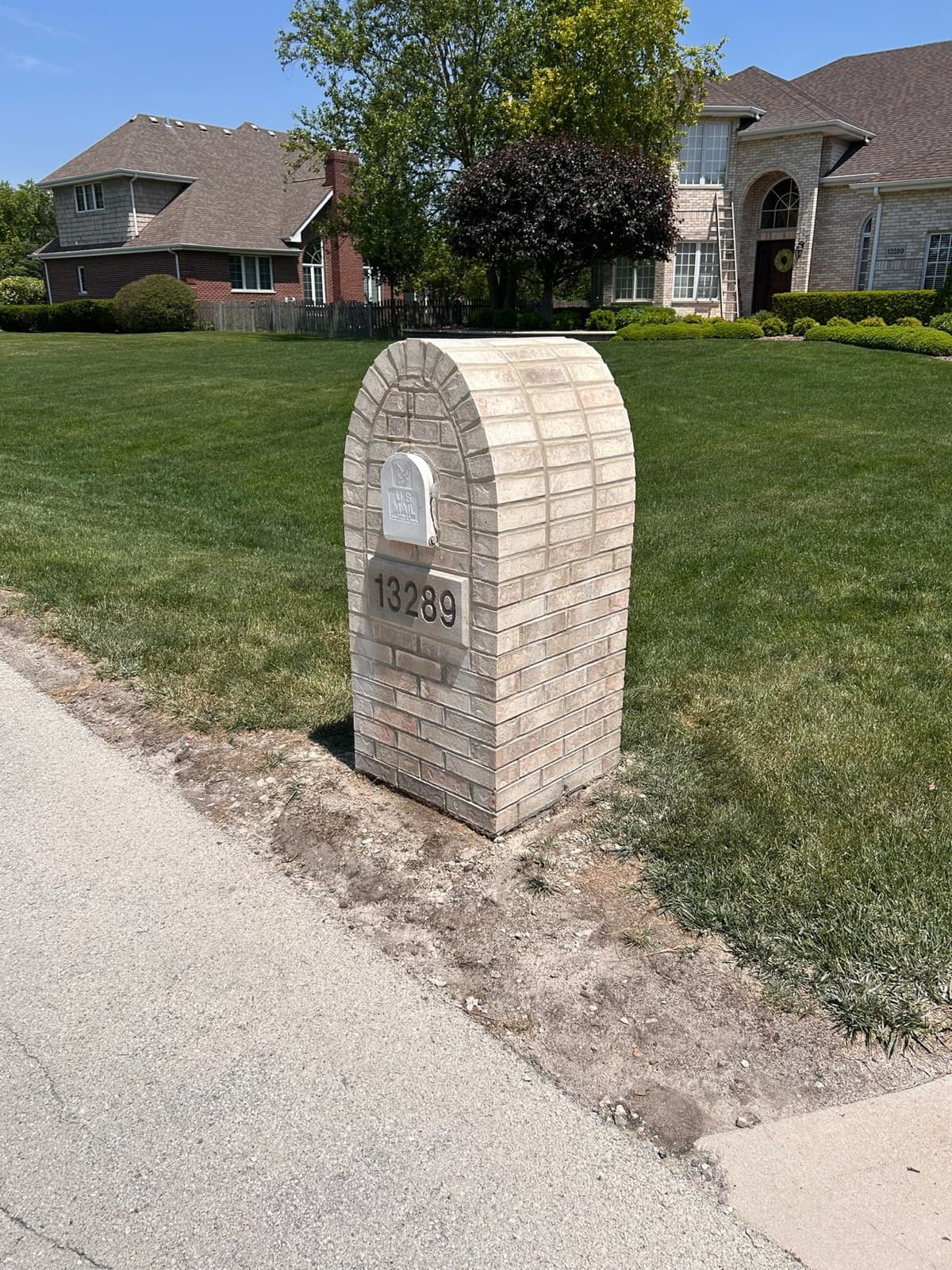
Every masonry surface on your property weathers. Your front steps get weathered, salted, soaked, frozen, and walked on — often several of those in the same afternoon.
That's why they fail first, and by a wide margin. And unlike a wall that spalls quietly on the north elevation, when steps fail, somebody trips. Paul Lally's Masonry has been repairing Chicagoland steps, stoops, and porch masonry since 1988.
Why steps take more punishment than any wall
Five things acting at once:
1. Salt goes directly on them. No wall on your property gets deliberately salted every winter. Your steps do — repeatedly, all season.
2. Water stands on them. A wall sheds water vertically. A tread is horizontal, so meltwater sits there and soaks in until it freezes.
3. Splashback hits them from below. Rain off the walk and drive throws water back at the risers and cheek walls.
4. They're abraded constantly. Foot traffic, shovels, and snow blowers wear the surface, opening pores that then take more water.
5. They sit at grade on a shallower foundation than the house. Which means they move independently, seasonally, on Chicagoland's clay soils.
The salt mechanism, specifically
Freeze-thaw gets all the attention, but on steps salt crystallization does comparable damage and works on a longer schedule.
De-icing salt dissolves and soaks into porous brick, mortar, limestone, and concrete. Then, as the masonry dries, the salt crystallizes inside the pores and expands — mechanically very similar to ice forming, with one crucial difference:
It happens whenever the masonry dries out, not only when it freezes. Salt that soaked into your treads in January keeps cycling through spring and into summer.
That's why the deterioration is so concentrated on the walking surfaces and the first few inches of the risers, and why steps beside a heavily salted walk look decades older than the wall six feet behind them.
What actually fails, in order
Tread surfaces
Spalling, scaling, and pitting on the horizontal surfaces. On concrete, the surface flakes away in layers. On brick, faces pop off. On limestone, the stone delaminates in flat sheets along its bedding planes.
Joints
Mortar between units on a stair takes water from above and salt directly, so it recedes and washes out faster than joints anywhere else on the property. Open joints then let water into the core of the stair, which is where the real damage starts.
The core beneath the finish
Many masonry stoops are a structural core with a masonry finish — brick or stone facing over a fill or block core. Once water gets past the joints into that core, it freezes there. The finish then starts pushing off in sections, and what looked like a surface problem turns out to be a rebuild.
This is the failure homeowners most often underestimate, because from outside it looks like a few loose bricks.
Loose and rocking units
Individual treads or facing units that move under foot. Immediate trip hazard, and evidence the bedding beneath has failed.
Cheek walls
The low side walls flanking a stair. They take splashback, snow piled off the steps, and salt, and they're often the first part to show open joints and spalled units.
Porch piers and posts
On Chicago's bungalows, greystones, and two-flats, front porches frequently bear on masonry piers. Those piers sit at grade, take salt and snowmelt, and carry real load. Deterioration there is structural, not cosmetic.
Separation from the house
A widening gap where the stoop meets the foundation. The house sits on a deep footing; the steps often don't. They settle independently, and Chicagoland's clay soil swells and shrinks seasonally, working the two apart.
That gap then channels water straight down against the foundation — which is how a step problem becomes a foundation masonry problem.
Signs worth acting on
- Spalling, scaling, or pitted tread surfaces
- Loose or rocking treads and facing units
- Open, washed-out, or missing mortar joints
- Limestone delaminating in flat sheets
- Cracked or broken treads
- A step that has settled out of level, or a stair that's no longer square
- A widening gap between the stoop and the house
- Deteriorated cheek walls or crumbling porch piers
- Efflorescence — white salt bloom on treads and risers
- Debris — sand, chips, or fragments accumulating at the base
- Standing water on treads after rain, which means the pitch has gone flat or backward
Anything loose, rocking, or out of level moves to the top of the list — it's a trip hazard on the path everyone uses to reach your door.
Repair, or rebuild?
| Condition | Usually |
|---|---|
| Spalled tread faces, stair sound and level | Replace units, repoint |
| Open joints, everything else sound | Repoint |
| Localized limestone damage | Patch or Dutchman repair |
| A few loose facing units | Reset and repoint |
| Deteriorated cheek walls, stair sound | Rebuild the cheek walls |
| Stair settled, rocking, or out of square | Rebuild — the base has failed |
| Finish pushing off in sections | Rebuild — water is in the core |
| Porch piers crumbling under load | Assess structurally, then rebuild |
The honest dividing line: if the problem is the surface, it's a repair. If the problem is what's underneath the surface, it's a rebuild — and patching over a failed core just puts new material on a stair that's still moving.
How Paul Lally's Masonry approaches step and stoop work
- Check whether it's structural. A settling stair, a rocking stoop, or a crumbling porch pier under load is a different conversation from spalled treads. Where a porch is bearing on failing masonry, we'll say so plainly.
- Find the water. Where meltwater sits, where splashback lands, where snow gets piled, whether the treads still pitch to drain, and where salt is applied.
- Assess the core, not just the face. Open joints and drummy-sounding facing tell you water has already got in.
- Remove failed material back to sound masonry — no patching over a failed core.
- Rebuild or reset with proper bedding, so nothing rocks.
- Repoint with a mortar suited to the exposure — this is one of the genuine cases for a stronger mix (see below).
- Restore the pitch so treads drain rather than pond.
- Patch or Dutchman-repair stone to save original limestone wherever possible.
- Address the gap at the house where the stoop has separated.
- Walk it with you and give you the salt conversation.
Materials — and the one place Type S earns its keep
Across most of this site we argue hard that mortar must be softer than the masonry, and that reaching for the strongest mix damages soft brick. That holds on walls.
Steps and stoops are one of the genuine exceptions. Grade-level exterior stairs face high moisture, direct salt exposure, freeze-thaw from standing water, and real compressive and abrasive load. Type S mortar is often correctly specified here where the masonry units can take it — the same way it's appropriate below grade on foundations.
But it's still a per-job decision, not a default. On original limestone steps and soft century-old brick, a hard mix will still spall the material — those get softer, matched mortars and stone repair mortars regardless of exposure. The exposure argues for strength; the material has the final say.
Otherwise: matched brick and salvaged units, matched Indiana and Illinois limestone with tinted stone repair mortars, and breathable penetrating sealers only where sealing is warranted at all — never a film-forming coating, which on a walking surface traps water and fails under traffic.
What drives the cost
- How many treads, risers, and units are involved
- Repair versus rebuild, and whether the core has to be addressed
- Material — brick, limestone, or concrete, and how difficult it is to match
- Stone scope — patching, Dutchman repairs, or replacement, plus fabrication lead time
- Whether the stair has settled and the base needs work
- Cheek walls and porch piers in scope
- Access — a narrow city gangway versus an open suburban front yard
- Drainage corrections at the base
Paul Lally's Masonry gives a free on-site estimate in writing after looking at the actual stair.
Chicagoland context
Our region is unusually hard on steps, and the housing stock puts a lot of masonry underfoot.
Chicago bungalows and greystones have front stoops and stairs of brick and Indiana limestone, often with substantial cheek walls and stone treads — original, more than a century old, and irreplaceable in the sense that a new piece can only ever approximate it.
Two-flats and three-flats add rear porch structures bearing on masonry piers at grade, taking the same salt and snowmelt on the route tenants use daily.
The postwar and later suburbs — Oak Lawn, Evergreen Park, Orland Park, Tinley Park, Palos Heights, Frankfort, Mokena, New Lenox — have brick and concrete stoops with long salted walks and driveways feeding splashback straight at them.
What they share: repeated hard freeze-thaw cycling, wet springs, and a genuinely heavy regional salt load. The damage concentrates on the treads, the first few inches of the risers, the cheek walls, and the north side where snow lingers and sun never reaches.
Maintenance that actually extends their life
- Switch to sand or grit for traction where you can. The single highest-value change, and it's cheap.
- If you must use a melting product, use less, keep it off the masonry where possible, and sweep up the residue once the ice is gone rather than letting it sit and soak in.
- Don't pile shoveled snow on the steps or against the cheek walls.
- Keep the treads draining — standing water is the enemy.
- Repoint before joints wash out, which is the cheap moment before water reaches the core.
- Direct downspouts away from the base of the stoop.
- Look at them every spring, when the salt-and-freeze season has just finished showing you what it did.
See protecting masonry through a Chicago winter and the masonry maintenance checklist.
Related services
Step, stoop, and porch masonry draws on brick repair, brick replacement, tuckpointing and repointing, limestone and sill repair, foundation masonry repair where the stair meets the house, caulking and joint sealant, masonry waterproofing, and residential or historic masonry restoration.
The bottom line
Your steps take salt, standing meltwater, splashback, and every footstep into the house — so they wear out years ahead of any wall on the property. The surface failures are repairs; the settling, rocking, and separating failures are rebuilds, and patching over a failed core just buys a season.
The distinction that matters most: a spalled wall is a maintenance item. A rocking tread on your front steps is a trip hazard, and it's on the path everyone who visits your house has to use.
And the cheapest thing on this page is still the best one: stop putting rock salt on them.
Paul Lally's Masonry Inc. is a family-owned, insured masonry contractor serving Chicago and the Chicagoland suburbs since 1988 — tuckpointing, brick repair and replacement, chimney repair and rebuilds, lintel replacement, masonry restoration, and waterproofing for residential and commercial properties. Built on Craftsmanship. Backed by Experience.
We'll tell you honestly whether your steps want repointing, a few replaced units, or a genuine rebuild — and we won't sell you a rebuild you don't need. Our family name is on every job.
Free on-site estimates — call (708) 448-8866 or request an estimate online.
Frequently Asked Questions
Why do my front steps deteriorate faster than the rest of the house?
Because they take everything at once — de-icing salt applied directly to them, standing meltwater that can't drain off a flat tread, splashback, and constant foot traffic that abrades the surface. No wall on your property gets salted deliberately every winter, and your steps do.
Can crumbling masonry steps be repaired, or do they need rebuilding?
Both are common. Spalled treads, deteriorated joints, and localized damage on a structurally sound stair are repaired — units replaced, joints repointed, stone patched or Dutchman-repaired. Rebuilding becomes the answer when the steps are settling, rocking, pulling away from the house, or the core beneath the finish has failed.
How much does masonry step repair cost in Chicagoland?
There's no flat rate. Cost is driven by how many treads and risers are involved, whether it's repair or rebuild, whether the stair has settled and needs its base addressed, the material — brick, limestone, or concrete — and how difficult that material is to match. Paul Lally's Masonry provides a free on-site estimate in writing.
Why are my steps pulling away from the house?
Usually because the stoop and the house sit on different foundations and settle independently — the house on a deep footing, the steps often on a shallower one. Seasonal clay movement and water at the base accelerate it. A widening gap is worth addressing because it channels water straight down against the foundation.
Does salt really damage steps that much?
Yes, more than most homeowners realize. Salt draws into porous masonry in solution, then crystallizes and expands as the surface dries — a mechanism much like freeze-thaw but one that works whenever the masonry dries out, not only when it freezes. It's the single biggest reason steps fail before walls.
What should I use on my steps instead of rock salt?
Sand or grit for traction is the safest thing for the masonry, since it doesn't chemically attack anything. If you need actual melting, use as little as possible and sweep up residue once the ice is gone rather than letting it sit and soak in. That one habit adds years to a set of steps.
Are cracked or rocking steps a safety issue?
Yes, and that's what separates step repair from most masonry work. A loose tread, a rocking step, a spalled edge, or a step that has settled out of level is a trip hazard on the route everyone uses to enter the house — including visitors, deliveries, and anyone you'd rather not have fall.
Can limestone steps be saved once they're delaminating?
Often, yes. Limestone splits along its natural bedding planes, so failures come away in flat sheets rather than crumbling evenly — and sound stone with localized damage can be patched or repaired with a Dutchman, where only the failed portion is cut out and a matching piece is fitted in. Full replacement is the last resort on original stone.
When is the best time to repair steps?
Late spring through early fall. Mortar needs workable temperatures to cure properly and steps take immediate foot traffic, so cold-weather work on them is a poor idea. It's also the natural time to catch the damage — the freeze-thaw and salt season has just finished showing you what it did.