
Masonry Maintenance · Chicagoland, IL
Snow, Ice, and Salt: How to Protect Chicagoland Masonry Through Winter
Most winter masonry damage isn't caused by cold — it's caused by decisions made in November about where snow gets piled, what gets salted, and where the downspout ends. Here's the prevention list that actually works, and the time to act on it is before the first freeze.
2026-08-03
Quick Answer
Winter masonry damage in Chicagoland comes from water in the wall freezing, and from de-icing salt crystallizing inside porous brick and stone. The highest-value protections are free: keep shoveled snow off the walls, keep salt away from masonry, clear gutters, and extend downspouts before the ground freezes. Paul Lally's Masonry has protected Chicagoland masonry since 1988 — (708) 448-8866.
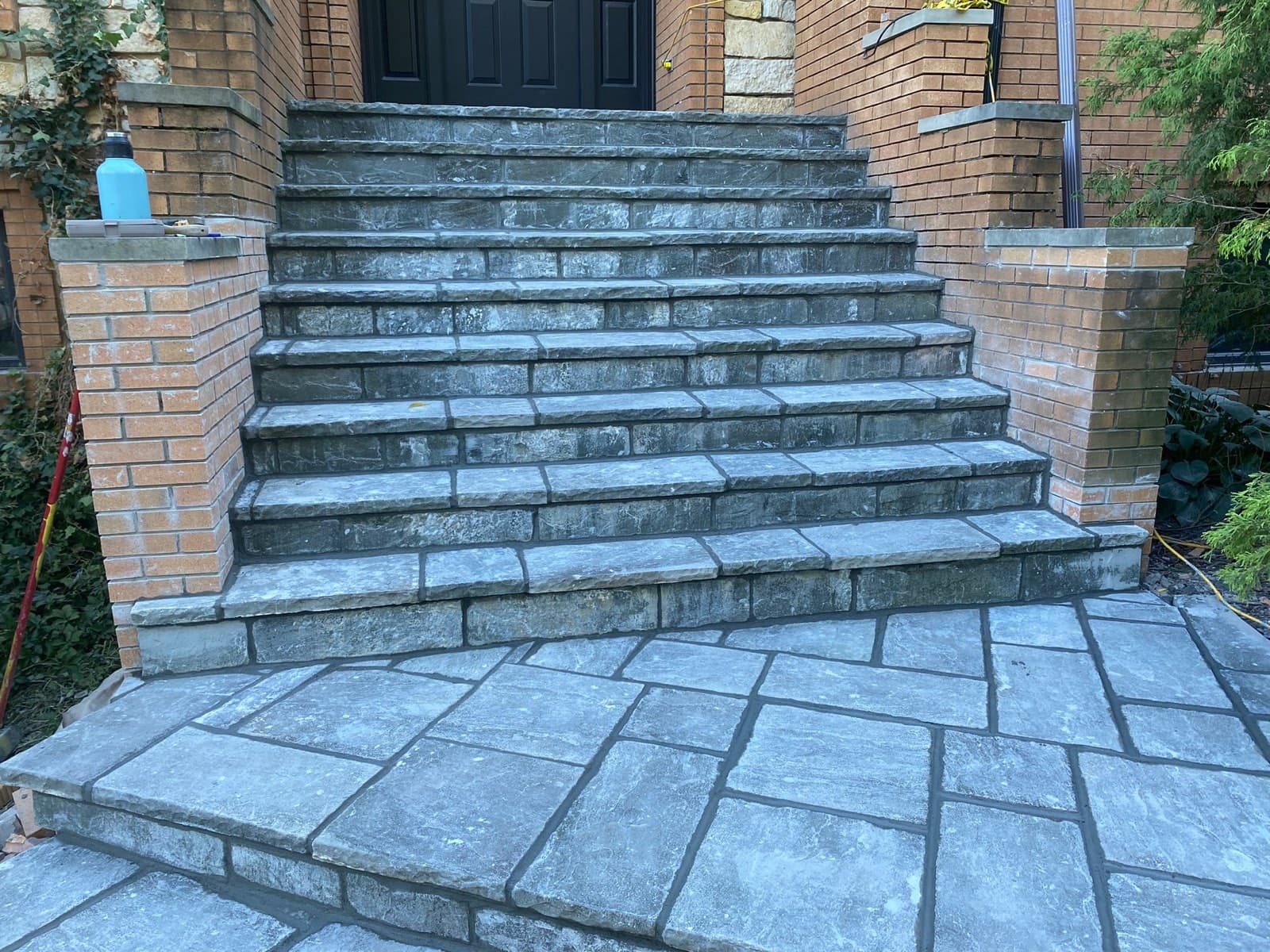
Chicagoland masonry doesn't fail because it gets cold. Brick has no objection to cold.
It fails because water is inside it when the cold arrives — and almost every decision that puts water there is made before winter starts. Where the shoveled snow goes. Whether the gutters were cleared. Where the downspout ends. What gets thrown on the front steps in January.
The most valuable things on this list cost nothing. Paul Lally's Masonry has been repairing what a Chicagoland winter does to brick since 1988, and this is the prevention we'd actually want a homeowner to do.
The two mechanisms doing the damage
Freeze-thaw
Masonry is porous. It absorbs water — through failed mortar joints, spalled brick faces, splashback, and standing snowmelt. When temperature drops below freezing, that absorbed water expands roughly nine percent with enormous force and nowhere to go.
So it pushes the hard, fired face off the brick. That's spalling, and it's permanent — the exposed core then absorbs water faster, so each winter does more damage than the last.
Chicago's particular cruelty is the number of cycles. It isn't one long freeze; it's repeated hard cycles, sometimes several in a single week, each one working the masonry a little further apart.
Salt crystallization — the one people underestimate
De-icing salt draws into porous brick, mortar, and limestone in solution. Then, as the masonry dries, the salt crystallizes and expands inside the pores — a mechanism mechanically very similar to ice, with one important difference:
It works whenever the masonry dries out, not only when it freezes. Salt that soaked into your front steps in January keeps cycling through spring.
This is why the bottom courses beside a driveway look sandblasted while the identical wall six feet higher is untouched, and why limestone steps and stoops deteriorate faster than anything else on a property.
The before-winter checklist
Ordered by value per unit of effort.
Free, and worth the most
1. Get gutters clear and downspouts extended. A blocked gutter overflowing down a wall, or a downspout discharging at the foundation corner, delivers more water into masonry over one winter than nearly anything else. Extensions should carry water well clear of the house.
2. Decide now where snow will go — and it isn't against the wall. A snowbank piled against the foundation is a reservoir held in direct contact with the masonry for weeks, usually carrying salt from wherever it was scraped off. Pick a spot away from the walls before the first shovel comes out.
3. Check grade. Soil should slope away from the house. Mulch, soil, and landscaping built up against the brick hold moisture against it year-round and put the wall in contact with water at exactly the wrong height.
4. Cut vegetation back off the walls. Shrubs tight to the house keep masonry shaded and damp and stop it drying between cycles.
Cheap and quick
5. Cap any open flue. An uncapped chimney is an open pipe pointed into your house. Rain and snow go straight down it, and a chimney that no longer gets warm never dries out. See chimney crowns, caps, and flashing.
6. Look at the chimney crown. A cracked crown lets meltwater directly into the body of the chimney — and the chimney is the most exposed masonry you own, weathered from four sides above the roofline.
7. Get on the roof if you have a flat one. Check the parapet coping. Open cap joints send water down inside the wall all winter, and it appears as a top-floor ceiling stain in February. See parapet wall repair.
8. Rethink what goes on the steps. Sand or grit for traction is the safest thing for masonry — it doesn't chemically attack anything. If you need melting, use as little as possible, keep it off the masonry surfaces where you can, and sweep up residue once the ice is gone rather than letting it sit and soak in. Limestone steps in particular will thank you.
Worth booking a mason for — before the season
9. Repoint failing joints. The mortar joint is the wall's weather barrier; on solid masonry it's the only one. Going into winter with open joints means going into winter with an open channel into the wall. If the key test digs in and mortar comes out as sand, that's the job. See what is tuckpointing.
10. Replace spalled brick that's lost its face — those units are now absorbing water faster than the wall around them.
11. Deal with a rust-jacked lintel. A horizontal crack above a window or garage door is an open water path and actively expanding steel. Winter makes both worse.
12. Address grade-level masonry — the base course, parging, and foundation walls that will spend the next four months under snow and salt. See foundation masonry repair in Chicago.
About sealing before winter
This one needs care, because the instinct is understandable and the timing is frequently wrong.
Sealing only helps if three things are true:
- The mortar joints are already sound. Sealing over failing joints coats the leak path instead of closing it, and slows the wall's ability to dry.
- The masonry is genuinely dry. Sealer applied to damp brick doesn't penetrate and doesn't perform — and you've now made it harder for that trapped moisture to leave before the freeze.
- There's enough mild weather left to cure. Sealer needs time and moderate temperatures.
And it must be a breathable, penetrating product. A film-forming coating traps moisture inside the wall going into winter, which is precisely the condition that spalls brick. The product sold as protection becomes the cause.
If it's late October, the joints are failing, and someone offers to seal the house before the snow — that's a job to decline. See is masonry waterproofing worth it.
Can masonry work be done once it's cold?
Within limits, and the limits are real.
Mortar is a chemical reaction, not a glue that dries. It needs moderate temperature and moisture to hydrate and gain strength, and it keeps gaining strength for weeks. Water in curing mortar that freezes disrupts the cure permanently, producing weak, crumbly joints that fail early — you'd be paying for the same work twice.
Cold-weather work requires reliably above-freezing conditions, protection, and disciplined practice. We will reschedule a job rather than install mortar we know won't cure. That occasionally frustrates a homeowner in November, and it's still the right call.
Genuinely urgent conditions — loose masonry above a walkway, active water entry into a unit — can often be stabilized in the off-season even when full repairs wait for spring. Our post on the best time of year for masonry repair in Chicago covers the seasonal picture.
Practical consequence: book earlier than feels necessary. Everyone calls in September. Mortar cures on the weather's schedule, rain adds days, and matching brick adds sourcing lead time.
During the winter
- Don't pile shoveled or plowed snow against walls, steps, or the garage. The single highest-value habit on this page.
- Keep salt off masonry surfaces where you reasonably can, and sweep up residue afterward.
- Clear snow off flat roofs and away from parapet bases where safe to do so.
- Watch for ice damming — standing ice at a chimney or roofline keeps that masonry saturated far longer.
- Note where icicles form. They map where water is escaping and running, which is often where it's also entering.
- Look for new efflorescence — white chalky bloom means water is actively moving through the wall right now. See stains on brick.
The spring walkaround
The freeze-thaw season is the stress test. When it's over, walk the property and look for:
- New spalling — flaking, powdering, or popped brick faces
- Mortar debris at the base of walls or in gutters
- Widened cracks, especially any that are now displaced rather than flush
- Deterioration at grade beside drives, walks, steps, and stoops — the salt signature
- New efflorescence
- Interior stains that appeared over the winter
- Loose or shifted coping on flat roofs
- Chimney debris on the roof or ground
That's also the moment to book work, because the calendar is open and the mortar will cure properly. Our masonry maintenance checklist for Chicago covers the full year.
Why Chicagoland specifically
Three things make this region unusually hard on masonry.
The cycle count. Not one deep freeze but dozens of transitions across a season, each one an opportunity for absorbed water to expand.
The salt load. Municipal salting plus every driveway, walk, and stoop in the region. Chicagoland masonry near grade sees far more salt exposure than masonry in most of the country.
The housing stock. The bungalow belt, greystones, two-flats, and brick storefronts were built roughly 1890–1930 from soft, locally-fired common brick with lime-based mortar — genuinely durable when maintained, and considerably more porous than modern units. The postwar suburbs add brick veneer with drainage cavities that must stay clear to work.
Related services
Pre-winter work commonly involves tuckpointing and repointing, brick repair, brick replacement, chimney repair and rebuilds, lintel repair and replacement, parapet wall repair, limestone and sill repair, foundation masonry repair, caulking and joint sealant, and masonry waterproofing where sealing is genuinely appropriate.
The bottom line
Cold doesn't damage masonry. Water already inside it does — and salt finishes the job.
The three highest-value things you can do cost nothing: keep shoveled snow off the walls, keep salt off the masonry, and get your gutters and downspouts discharging well clear of the house. After that, close the water paths — failing joints, spalled brick, a cracked crown, an uncapped flue, open coping — and do it while there's still enough mild weather for mortar to cure properly.
Everything else is repair work you're scheduling for spring.
Paul Lally's Masonry Inc. is a family-owned, insured masonry contractor serving Chicago and the Chicagoland suburbs since 1988 — tuckpointing, brick repair and replacement, chimney repair and rebuilds, lintel replacement, masonry restoration, and waterproofing for residential and commercial properties. Built on Craftsmanship. Backed by Experience.
We'll walk the property, tell you what genuinely needs closing before the freeze and what can wait for spring, and put it in writing. Our family name is on every job.
Free on-site estimates — call (708) 448-8866 or request an estimate online.
Frequently Asked Questions
What actually causes winter damage to brick?
Water that's already inside the masonry freezing and expanding roughly nine percent. Cold alone does nothing to dry brick — the damage requires water to be in there first, which is why every effective winter protection is really about keeping water out of the wall before the freeze arrives.
Is rock salt bad for brick and stone?
Yes. Salt draws into porous brick, mortar, and limestone, then crystallizes and expands as it dries — a mechanism much like freeze-thaw, but one that works whenever the masonry dries out, not only when it freezes. It's the main reason masonry beside driveways, walks, steps, and stoops deteriorates faster than the same wall higher up.
What should I use on my steps instead of rock salt?
Sand or grit for traction is the safest option for the masonry itself, since it doesn't chemically attack anything. If you need actual melting, use as little as possible, keep it off the masonry surfaces where you can, and sweep up residue once the ice is gone rather than letting it sit and soak in.
Why does piling snow against the house matter?
Because a snowbank against a wall is a reservoir held in direct contact with the masonry for weeks, and it usually carries salt from the drive or walk it came off. That keeps the base course saturated through repeated freeze-thaw cycles at the exact spot where masonry is already most vulnerable.
Should I seal my brick before winter?
Only if the joints are already sound, the masonry is dry, and there's enough mild weather left for the sealer to cure — and only with a breathable penetrating product. Sealing failing joints or damp masonry in late fall traps water in the wall going into the freeze, which is worse than doing nothing.
Can tuckpointing be done in winter in Chicago?
Only within limits. Mortar needs temperatures reliably above freezing to cure, because water in curing mortar that freezes disrupts the cure permanently and leaves weak, crumbly joints. Late-season work depends on the forecast and cold-weather practice, and a reputable mason will reschedule rather than install mortar into a hard freeze.
What's the single most valuable thing I can do before winter?
Clear the gutters and get downspout discharge well away from the foundation. A blocked gutter overflowing down a wall, or a downspout dumping at the corner, puts more water into masonry over one winter than almost anything else — and fixing it costs nothing but an afternoon.
Why do my steps and stoop deteriorate faster than the walls?
Because they take everything at once — splashback, standing meltwater, piled snow, direct salt application, and foot traffic. Limestone steps are especially vulnerable because the stone is porous and splits along its natural bedding planes when absorbed water or salt crystals expand inside it.
Is ice on the chimney or roofline a masonry problem?
It can be. Ice damming and standing snow at a chimney or parapet keeps that masonry saturated far longer than a wall that sheds water, and a cracked crown or missing cap lets meltwater run straight into the chimney. The masonry above the roofline is the most exposed on the building and the least inspected.
When should I book masonry repairs so they're done before winter?
Earlier than feels necessary — ideally by late summer for anything beyond a small repair. Mortar cures on the weather's schedule, rain adds days, matching brick can add sourcing lead time, and everyone else is calling at the same time in September. Booking in the season ahead is far easier than compressing work into October.