
Chimneys · Chicagoland, IL
Signs Your Chimney Needs Repair: A Chicago Homeowner's Guide
A cracked crown, white staining, spalling brick, a rusted flashing line, or a lean — here is how a Chicago homeowner spots a failing chimney early, how urgent each sign is, and when to call a mason.
2026-06-28
Quick Answer
The clearest signs your chimney needs repair are a cracked or crumbling crown, white staining (efflorescence) on the brick, spalling or flaking brick faces, rusted or lifted flashing, open or sandy mortar joints, water stains on the ceiling near the chimney, and any visible lean. Paul Lally's Masonry Inc. has inspected, repaired, and rebuilt Chicagoland chimneys since 1988 — free on-site estimates at (708) 448-8866.
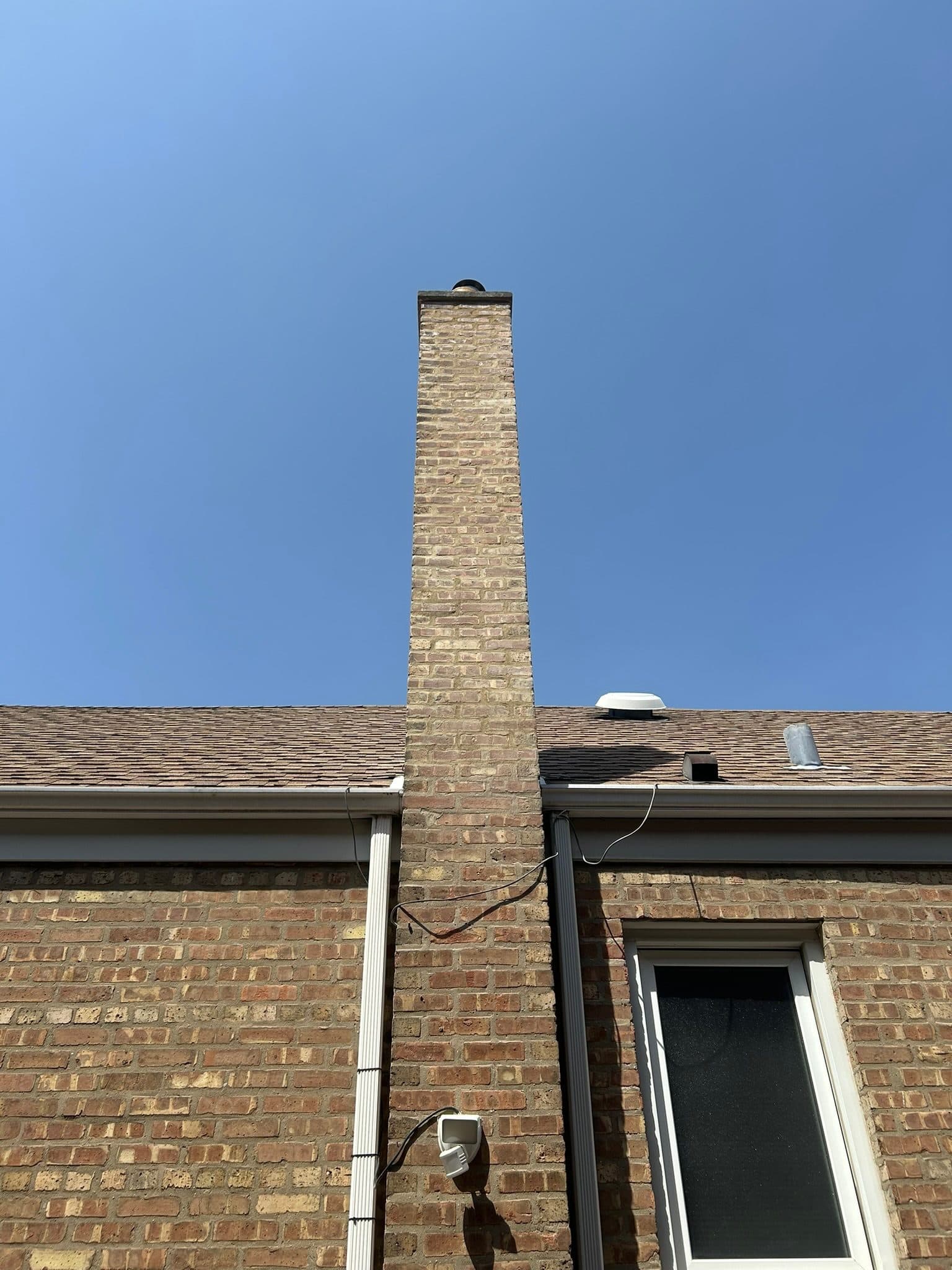
Your chimney shows you it needs help long before it fails — if you know what to look for. The clearest signs your chimney needs repair are a cracked or crumbling crown, white staining (efflorescence) on the brick, spalling or flaking brick faces, rusted or lifted flashing, open or sandy mortar joints, water stains on the ceiling near the chimney, and any visible lean. Each of those is the chimney telling you that water has found a way in. Paul Lally's Masonry Inc. has inspected, repaired, and rebuilt brick chimneys across Chicago and the Chicagoland suburbs since 1988 — and we trace every problem back to its real source before we quote a number. Family-owned, insured. Free on-site estimates: (708) 448-8866.
This guide walks you through every warning sign, how urgent each one is, and a simple check you can do from the ground this weekend.
Why the chimney is the first masonry to fail
No other masonry on your house takes the beating a chimney does. It stands above the roofline exposed on all four sides, it has a flat top — the crown — that collects rain and snow instead of shedding it like a sloped roof, and it has a seam, the flashing, where it punches through the roof. Add Chicago's freeze-thaw winters, where water seeps into mortar and brick, freezes, expands, and cracks the masonry apart, and the chimney becomes the place damage shows up first.
Understanding the parts makes the warning signs easier to read. From the top down, a brick chimney has a cap (the cover over the flue opening), a crown (the sloped slab that sheds water off the top), the flue (the liner that carries smoke and gases), the brick and mortar of the stack itself, and the flashing (the metal that seals the joint where the chimney meets the roof). A failure in any one of those lets water into the system, and water is what destroys masonry.
The warning signs, one by one
A cracked or crumbling crown
The crown is your chimney's roof. When it cracks — and concrete crowns crack with age and freeze-thaw — water runs straight down into the chimney structure instead of away from it. A failing crown is one of the most common and most consequential problems, because it feeds water to everything below. From the ground you may see chunks missing at the top edge or a rough, eroded surface. A crown repair caught early is a small job; ignored, it is the root cause behind a lot of full rebuilds.
White staining and efflorescence
That chalky, white, powdery bloom on the brick is efflorescence — mineral salts carried to the surface by water moving through the masonry. The staining itself is harmless, but what it tells you is not: water is actively traveling through your chimney. Wherever you see efflorescence, the mortar joints, crown, or flashing nearby are letting moisture in. It is one of the most useful early-warning signals a homeowner can spot.
Spalling or flaking brick
Spalling is when the face of a brick flakes, pops, or crumbles off, often leaving a lighter, rougher patch behind. It happens when water gets into the brick, freezes, and breaks the face apart — classic freeze-thaw damage. Spalled brick is past the cosmetic stage; the brick is losing material and can no longer keep water out, so the damage accelerates. Spreading spalling on a chimney is a strong sign that repair is overdue.
Rusted or lifted flashing
The flashing is the metal seal where the chimney meets the roof, and it is behind a large share of "my chimney leaks when it rains" calls. Look for rust streaks running down the brick from the roofline, metal that has lifted or pulled away, or dried, cracked sealant. Failed flashing lets water into the roof framing and the ceiling below, not just the chimney — so it tends to cause interior damage quickly.
Open, sandy, or missing mortar joints
Run your eye along the mortar lines. Healthy joints are solid and full; failing joints look recessed, sandy, crumbling, or open, sometimes with gaps you could fit a coin into. Mortar is the chimney's weather seal, and once it erodes, water flows freely into the structure. This is exactly what chimney tuckpointing addresses — grinding out the failed mortar and packing in new, matched mortar. Open joints near the top of the stack are especially urgent.
A leaning or tilting stack
A chimney that leans, tilts, or has a visible gap opening up between it and the house is the most serious sign on this list. A lean means the structure or its footing has failed, and a leaning masonry chimney can ultimately fall. This is not a wait-and-watch situation — it needs to be evaluated promptly, and it usually calls for a rebuild rather than a patch.
Water stains on the ceiling or walls inside
Sometimes the first sign shows up indoors. Brown rings or damp patches on the ceiling or wall in the room the chimney passes through usually mean water is getting past the crown, flashing, or joints and traveling into the house. Because the stain appears away from the actual leak, the entry point has to be diagnosed in person rather than guessed at.
Brick or mortar debris in the firebox or on the roof
If you find pieces of brick, sandy mortar, or concrete in the firebox, on the roof, or on the ground at the base of the chimney, the masonry is actively shedding material. That debris came from somewhere — a deteriorating crown, spalling brick, or failing joints overhead. It is a clear signal that the chimney has moved from "aging" to "failing."
A damaged or missing chimney cap
The cap covers the flue opening and keeps rain, animals, and debris out. A missing or damaged cap lets water pour directly down the flue and into the chimney, and it lets animals nest inside. It is one of the simpler fixes, but left undone it speeds up deterioration throughout the chimney.
Shaling — flue tile flakes in the firebox
Thin slices or flakes of chimney tile collecting in the firebox are called shaling, and they mean the clay flue liner is deteriorating. A compromised liner is both a performance and a safety concern, and it often accompanies water damage elsewhere in the chimney. If you are seeing shaling, have the chimney looked at before the next heavy-use season.
How urgent is it? A quick reference
Not every sign is an emergency, but none should be ignored through another Chicago winter. Here is how the common signs generally rank:
| Sign | What it usually means | How urgent |
|---|---|---|
| Leaning or tilting stack | Structural / footing failure | Urgent — evaluate now |
| Loose or falling bricks | Active structural failure | Urgent — evaluate now |
| Cracked or crumbling crown | Water entering from the top | High — repair soon |
| Rusted / lifted flashing | Active leak into roof & ceiling | High — repair soon |
| Spalling brick | Freeze-thaw damage, accelerating | Moderate–high |
| Open / sandy mortar joints | Weather seal failing | Moderate — tuckpoint |
| White staining / efflorescence | Water moving through masonry | Early warning — inspect |
| Damaged or missing cap | Water & debris down the flue | Moderate — replace |
When more than one sign appears together — say, efflorescence plus open joints plus a rough crown — they are usually the same water problem showing up in several places, and the chimney has reached the point where a professional should look at it.
A 5-minute ground-level chimney check
You can spot most of these signs yourself, safely, from the ground with a pair of binoculars. Do not get on the roof — leave that to a mason. Walk around the house and check:
- The crown — does the top slab look solid, or cracked and eroded?
- The brick faces — any flaking, popping, or missing faces (spalling)?
- The mortar joints — full and solid, or recessed, sandy, and open?
- The flashing line — any rust streaks or metal pulling away where the chimney meets the roof?
- The cap — present and intact, or missing/bent?
- The whole stack — does it stand straight, or is there a lean or a gap at the roof?
- Inside — any stains on the ceiling or wall near the chimney?
If you tick more than one or two of those, it is worth a professional set of eyes — which is exactly what a free on-site estimate provides.
Why Chicagoland chimneys fail early
Chicago is hard on chimneys. Our winters cycle repeatedly above and below freezing, and every cycle drives water deeper into any crack or open joint, then freezes and expands it. Lake-effect moisture keeps masonry damp longer than in drier climates, giving freeze-thaw more to work with. On top of that, a lot of the region's housing stock is older — the brick bungalows, greystones, and two-flats of the Bungalow Belt and the surrounding suburbs — with chimneys that have already weathered many decades of this. The result is that masonry which might last untouched for ages in a mild climate needs attention sooner here, and the chimney shows it first.
Repair or rebuild?
The good news: most chimney problems are repairs, not rebuilds. If the brick and structure are sound and only the mortar, crown, flashing, or cap have failed, chimney tuckpointing and targeted repairs put it right. A rebuild — frequently just the section above the roofline, which takes the worst weather — is reserved for chimneys with badly spalling brick, a lean, or real structural movement. If you want the deeper decision framework, see our guide on chimney repair vs. rebuild, and the full scope of what we do on the chimney repair and rebuilds page.
What affects the cost of chimney repair
There is no flat price for chimney repair, because no two chimneys fail the same way — so be wary of any number quoted before someone has actually looked at yours. What moves the figure is the scope (a crown reseal and a few repointed joints versus a full above-the-roofline rebuild), the height and access (taller stacks and steep roofs need more setup and safety), the extent of the damage (how much brick has spalled and how far water has traveled), and brick and mortar matching (sourcing brick and mixing color- and type-matched mortar for an older Chicagoland home takes more care). We never publish a price for that reason; the only honest number is a free on-site estimate after we have diagnosed the real problem. The takeaway from a cost standpoint is simple: the earlier you catch the signs above, the smaller the scope — and the smaller the scope, the smaller the job.
How to keep a sound chimney sound
Once a chimney is in good shape, keeping it there is mostly about keeping water out:
- Look once a year, ideally in spring after the freeze-thaw season, using the ground-level check above.
- Keep the crown and cap intact — they are the first line of defense against water from the top.
- Address open mortar joints early with tuckpointing before water reaches the brick.
- Consider breathable masonry sealing on a sound chimney to slow water absorption without trapping moisture inside.
- Fix small things small — a crown reseal or a few repointed joints is a fraction of the work of a rebuild.
Related services
- Chimney repair and rebuilds — crowns, flashing, caps, tuckpointing, and above-the-roofline rebuilds.
- Tuckpointing and repointing — renewing the failed mortar joints most chimneys need first.
- Brick repair and replacement — for spalled or cracked chimney brick.
- Masonry waterproofing and sealing — to protect a freshly repaired chimney from the next wet season.
The bottom line
A chimney rarely fails without warning — it stains, cracks, spalls, and opens up first. If you are seeing white staining, a rough or cracked crown, flaking brick, rust at the flashing, sandy mortar joints, ceiling stains, or any lean, your chimney is asking for attention, and the sooner you answer the smaller the repair. Paul Lally's Masonry Inc. is a family-owned, insured masonry contractor serving Chicago and the Chicagoland suburbs since 1988 — chimney repair and rebuilds, tuckpointing, brick repair, and waterproofing for residential and commercial properties. Built on Craftsmanship. Backed by Experience.
Not sure how serious what you are seeing is? Let us take a look before the next freeze. Call Paul Lally's Masonry Inc. at (708) 448-8866 or request a free on-site estimate.
Frequently Asked Questions
What are the first signs my chimney needs repair?
The earliest signs are usually cosmetic but meaningful: white chalky staining (efflorescence) on the brick, hairline cracks in the crown at the top, and mortar joints that look sandy, recessed, or open. Catching it at this stage usually means tuckpointing and a crown repair rather than a rebuild. A free on-site inspection will tell you which stage you are at.
How do I know if my chimney is unsafe to use?
Stop and have it inspected if the chimney leans, if bricks are loose or falling, if you find chunks of brick or mortar in the firebox or on the roof, or if there are large cracks running through the structure. These point to structural failure rather than surface wear. When in doubt, do not use the chimney until a mason has looked at it.
Why is there white staining on my brick chimney?
That white, powdery deposit is efflorescence — mineral salts left behind as water moves through the masonry and evaporates at the surface. It is not the problem itself; it is a signal that water is getting into the chimney, usually through a failed crown, open joints, or bad flashing. The staining tells you to find and stop the water source.
What does a cracked chimney crown lead to if I ignore it?
The crown is the slab at the very top that sheds rain away from the brick below. Once it cracks, water pours straight into the chimney structure, and Chicago's freeze-thaw cycles then spall the brick and open the mortar joints from the inside out. A small crown repair today commonly prevents a partial rebuild later.
Is a leaning chimney an emergency?
Treat it as one. A lean almost always means the structure or its footing has failed, and a leaning masonry chimney can eventually fall — a serious hazard to people, roofs, and cars below. A leaning chimney should be evaluated promptly and usually needs to be rebuilt rather than patched.
Can I inspect my chimney myself?
You can do a useful ground-level check with binoculars — look at the crown, the brick faces, the mortar joints, the flashing line, and the cap, and check the ceiling inside near the chimney for stains. What you cannot safely judge from the ground is the condition of the crown surface, the flue, and the flashing seal, which is where a mason's on-site inspection comes in.
How often should a brick chimney be checked for masonry damage?
A quick visual check once a year — ideally in spring, after the freeze-thaw season — catches most problems early. Older Chicagoland chimneys and any chimney that has already had water issues benefit from a closer professional look. Early detection is the difference between a tuckpointing visit and a rebuild.
Do chimney problems always mean a full rebuild?
No. If the brick and structure are sound and only the mortar, crown, flashing, or cap have failed, the fix is usually tuckpointing and targeted repairs. A rebuild — often just the section above the roofline — is reserved for chimneys with badly spalling brick, a lean, or structural movement. An honest mason tells you which one you actually need.