
Brick Repair · Lisle, IL
Brick Repair in Lisle, IL — Spalling & Cracked Brick Fixed
When brick faces start flaking off a Lisle home, the wall is telling you water got behind the mortar. Paul Lally's Masonry Inc. cuts out the failed brick and replaces it with matched units so the wall is sound again.
Quick Answer
Paul Lally's Masonry Inc. provides brick repair in Lisle, IL — cutting out spalled, cracked, and loose brick and replacing it with color- and size-matched units set in the correct mortar. Family-owned and serving Chicagoland since 1988, insured. Free on-site estimates — call (708) 448-8866.
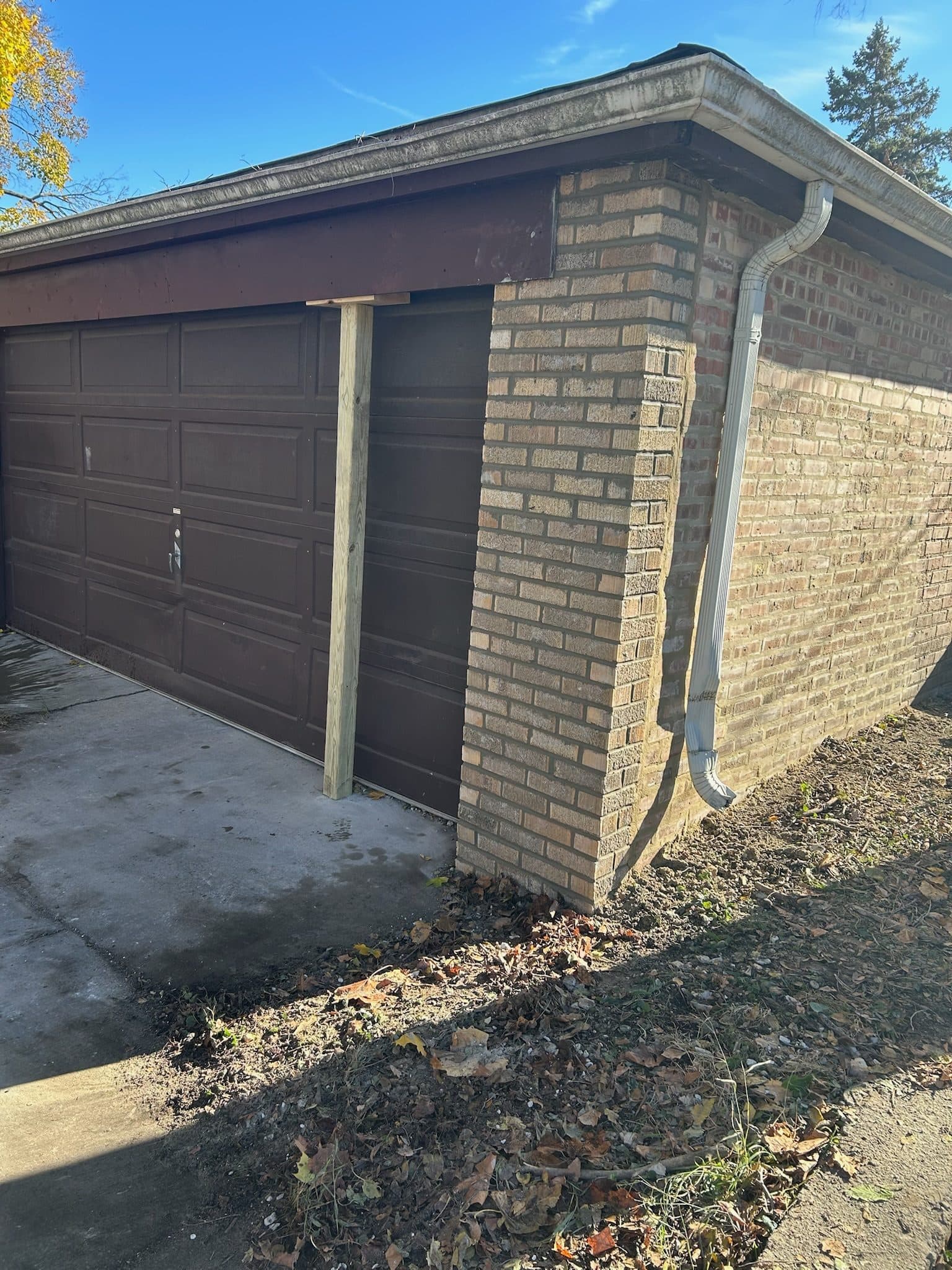
Walk the perimeter of your Lisle home after a hard winter and look closely at the brick, especially on the north and west sides and anywhere near grade. If you see brick faces that have flaked or popped off, hairline cracks stepping through the units, or brick that feels loose when you press on it, the wall is telling you something specific: water got behind the mortar, froze, and started tearing the brick apart from the inside. That is not cosmetic. It is the point where brick repair stops the damage from spreading.
Paul Lally's Masonry Inc. provides brick repair in Lisle, IL — cutting out spalled, cracked, and loose brick and replacing it with color- and size-matched units set in the correct mortar so the wall is sound and sheds water again. We are family-owned and have served Chicagoland since 1988. For a free on-site estimate, call (708) 448-8866.
What is actually happening to the brick
Brick failure almost never starts with the brick. It starts with water, and water gets in through failed mortar joints. Here is the chain of events that plays out on Lisle homes:
- Mortar joints erode or crack open over the decades.
- Rain and snowmelt seep behind and into the brick.
- DuPage County's winter freezes that water, which expands roughly nine percent.
- The expansion pushes on the brick from the inside until the hard outer face pops off.
That last step is spalling — the flaking, crumbling, pitted look that turns a solid wall into something that sheds grit onto the ground below. Once a brick's dense outer face is gone, the soft interior soaks up water even faster, so the next freeze takes more of it, and the failure spreads to neighboring units. Cracked and loose brick follow the same logic: something let water in, and the freeze-thaw cycle did the rest.
Why Lisle's housing stock is prone to it
Lisle's Arboretum Village neighborhoods are full of the exact construction that shows brick failure with age — mid-century brick ranches and split-levels from the 1950s through the '70s, brick-and-frame colonials, and brick veneer on newer subdivision homes. A few patterns repeat across these houses:
- Low brick near grade takes the worst of the splashback, sidewalk salt, and snow piled against the wall, so it spalls first.
- South and west elevations cycle through the most sun-and-freeze swings in a single day.
- Chimneys and porch piers stand fully exposed on all sides and often show cracked or loose brick before the walls do.
- Older, softer brick on mid-century homes is more absorbent than modern brick, so it suffers more when the mortar around it fails or when a previous repair used too-hard cement.
Brick repair versus full replacement
This is the question most Lisle homeowners really want answered, and the honest answer is that the two are very different jobs.
Brick repair — cutting out and replacing individual failed units — is what the large majority of homes need. If the damage is limited to spalled face brick, a run of cracked units, or a few loose brick, we remove just those and reset matched replacements. The wall around them is left untouched.
Full replacement — rebuilding a section of wall — is only warranted when the wall has lost structural integrity. Signs of that include bulging or leaning courses, wide stepped cracks running diagonally through the mortar and brick, or failure so widespread that individual replacement no longer makes sense. Rebuilding a sound wall that only needs a dozen brick swapped is wasteful, and we will tell you when repair is the right call.
How we cut out and replace brick
Replacing brick well is careful, patient work — the goal is a repair you cannot find later.
- Remove the failed brick. We cut the mortar around each damaged unit and take it out without disturbing the sound brick around it. On veneer, we protect the wall tie and backing.
- Clean the pocket. The old mortar bed is cleared so the new brick seats properly and bonds to fresh mortar, not old debris.
- Set the matched brick. Each replacement is buttered and set to line up with the surrounding coursing, joint width, and face plane.
- Point and tool the joints. Mortar is packed around the new brick and tooled to match your existing joint profile — concave, V, or flush — so it disappears.
- Clean down and cure. The face is cleaned and the mortar cured properly, leaving a wall that looks original.
Matching the brick — and what to do when it is discontinued
Matching is where a real mason earns the job. Two things have to match: the brick and the mortar.
For the brick, the challenge on older Lisle homes is that the original units are frequently discontinued. We handle that a few ways. First, we source the closest available match by size, color range, and surface texture, since brick color naturally varies unit to unit and a good match blends into that variation. Second, when the appearance of a prominent wall matters most, we salvage sound brick from an inconspicuous area — a garage side wall, a spot behind landscaping — and use the new, slightly different brick in the hidden location where no one will notice.
For the mortar, color is only half of it. The mortar type matters more than most homeowners realize:
- Type N mortar is medium-strength and more flexible — the right choice for most older Lisle brick because it is softer than the brick and moves with it.
- Type S mortar is harder and reserved for structural or below-grade conditions.
The rule that protects your house is simple: the mortar should be softer than the brick. Set soft mid-century brick in too-hard modern mortar and the brick — not the joint — takes the stress and spalls all over again. Matching the right mortar is exactly the kind of detail a quality repair accounts for.
What drives the cost of brick repair in Lisle
Every wall is different, so we never quote a flat rate sight unseen. The factors that move a brick repair estimate are:
- How many brick have failed — a handful of spalled face brick versus a large affected area.
- Height and access — ground-floor work is done from ladders; upper walls, chimneys, and parapets need scaffolding.
- Match difficulty — sourcing or salvaging brick to match a discontinued unit takes more effort than a common size.
- Mortar condition — if the surrounding joints are also failing, tuckpointing that area is part of a lasting fix.
- Detail work — sills, arches, chimney brick, and decorative coursing are slower than flat field walls.
We walk every one of these with you on-site so you understand what you are paying for, and the estimate is free. For the number on your home, call (708) 448-8866.
Where brick repair fits with the rest of your masonry
Brick repair rarely stands completely alone. The mortar that failed and let water in usually needs attention too, which is why brick replacement and tuckpointing in Lisle, IL so often go together. The core service — how we cut out, match, and reset brick — is detailed on our brick repair and replacement page.
Paul Lally's Masonry Inc. is a family-owned, insured masonry contractor serving Chicago and the Chicagoland suburbs since 1988 — tuckpointing, brick repair and replacement, chimney repair and rebuilds, lintel replacement, masonry restoration, and waterproofing for residential and commercial properties. Built on Craftsmanship. Backed by Experience. Free on-site estimates — call (708) 448-8866.
Why Lisle homeowners call Paul Lally's Masonry Inc.
We have repaired Chicagoland brick since 1988, and the family name is on every job — no upsell, no shortcuts, no disappearing after the deposit. We walk your home with you, show you which brick have failed and why, and tell you honestly whether you need targeted repair or something more. When we match brick, we match it so the repair blends into the wall you already have. Built on Craftsmanship. Backed by Experience.
If the brick on your Lisle home is flaking, cracking, or coming loose, do not wait for the damage to spread to the units around it. Request a free on-site estimate or call (708) 448-8866.
Brick Repair in Lisle, IL — Frequently Asked Questions
How much does brick repair cost in Lisle, IL?
There is no flat rate. The cost depends on how many brick have failed, whether they are on a ground-floor wall or a two-story elevation, how hard your brick is to match, and whether the mortar behind them also needs work. Replacing a few spalled face brick is far simpler than rebuilding a whole section. The only accurate figure is a free on-site estimate from Paul Lally's Masonry Inc.
What causes brick to spall or flake in Lisle?
Almost always water. When mortar joints fail, water seeps behind the brick and soaks into it. DuPage County's freeze-thaw winters then freeze that water, and the expansion pops the hard outer face right off the brick — that is spalling. Salt from sidewalks and a too-hard mortar troweled against soft brick make it worse.
Do I need brick repair or full replacement of the wall?
Most Lisle homes need targeted repair, not a rebuild. If only the face brick have spalled or a handful are cracked, we cut those units out and replace them. A full section rebuild is only warranted when the wall has lost structural integrity — bulging, stepped cracking, or widespread failure. We tell you honestly which one your wall needs.
Can you match the brick on my older Lisle home?
Usually, yes. On mid-century Lisle ranches and colonials the original brick is often discontinued, so we source the closest available match by size, color, and texture — or, when the look matters most on a front elevation, salvage sound brick from a hidden area and use new brick where it will not be seen.
What is the white powder on my brick?
That chalky bloom is efflorescence — mineral salts left behind as water moves through the brick and evaporates. It is not damaging by itself, but it is a clear sign water is getting into the wall, which is exactly what leads to spalling. It tells us the mortar joints likely need attention too.
Will the new brick and mortar match the rest of the wall?
That is the whole job. We match the replacement brick to your existing units and set them in mortar matched for color, texture, and type. On older soft Lisle brick that means a softer, lime-rich mortar rather than hard modern cement, so the repair blends in and does not stress the surrounding brick.
How long can I wait before fixing spalling brick?
Spalling only gets worse, and it does not reverse. Once a brick's hard face is gone, the soft interior soaks up water faster and the next freeze takes more of it — and the neighboring brick often follow. Catching it while only a few brick are affected keeps it a small repair instead of a section rebuild.
Do you offer free estimates for brick repair in Lisle?
Yes. Paul Lally's Masonry Inc. provides free on-site estimates throughout Lisle and DuPage County. We look at the actual wall, explain what failed and why, and give you a written estimate — call (708) 448-8866.
Brick Repair in Nearby Areas
Other Masonry Services in Lisle, IL
Learn more about our brick repair services across Chicagoland, or view all service areas.
Free on-site estimates across Chicagoland.