
Brick Repair · Chicagoland, IL
Why Your Brick Repair Doesn't Match — and What a Good Mason Does About It
Brick is fired clay, made in batches, from local pits, in sizes that have changed over a century. Matching a repair is a real technical problem — here's what actually makes a patch visible, and what can honestly be done about it.
2026-08-03
Quick Answer
A brick repair looks like a patch for five reasons: wrong mortar color, wrong joint profile, wrong brick size, wrong color or texture, and the weathering difference between new and century-old masonry. Mortar color and joint tooling are the two most visible and the two most fixable. Paul Lally's Masonry has matched Chicagoland brick since 1988 — free estimates at (708) 448-8866.
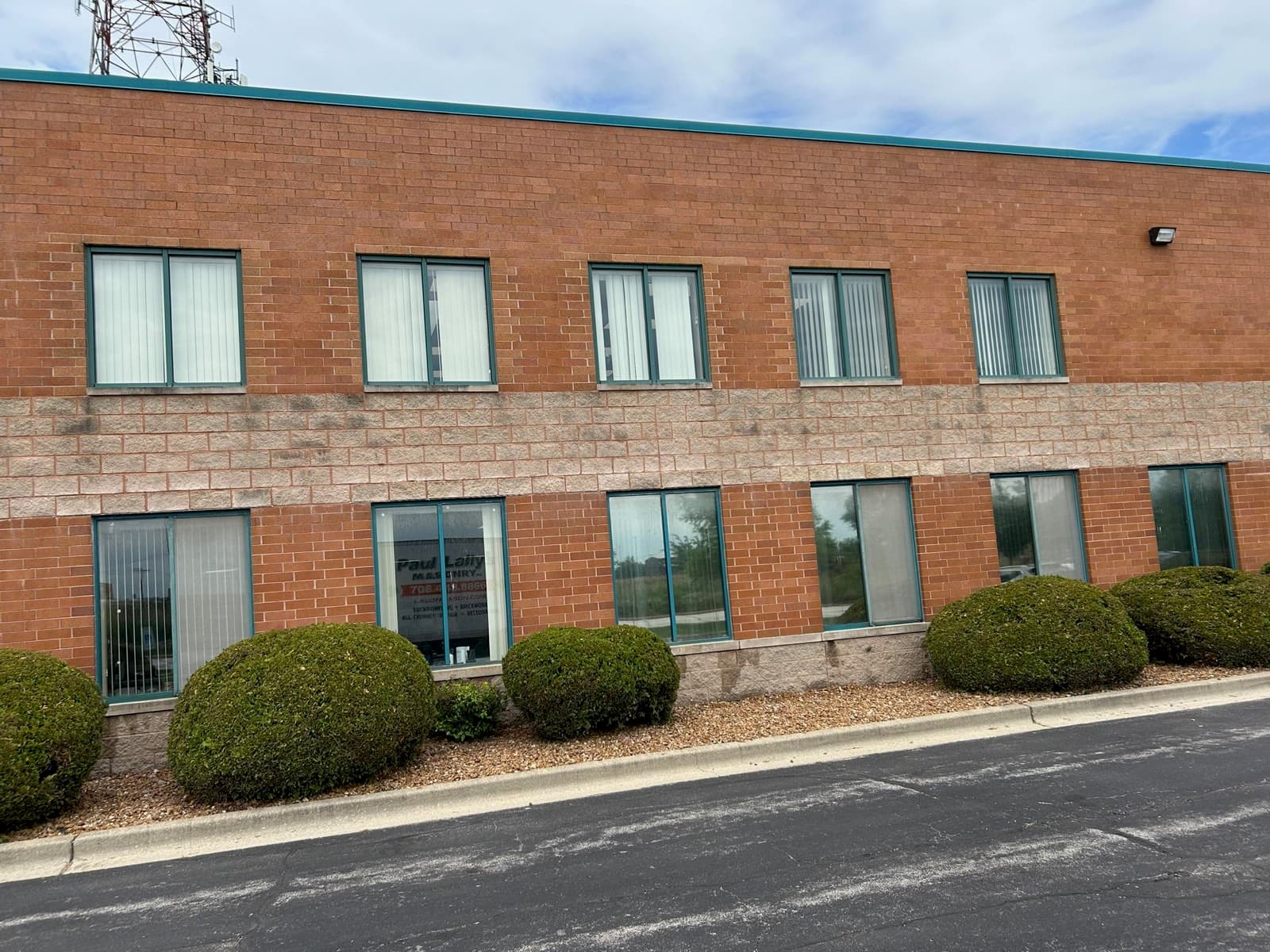
Somebody replaced a dozen bricks on your front elevation and now you can see exactly where, from the sidewalk, every single day.
It's one of the most common complaints we hear about other people's masonry work, and the frustrating part is that the brick usually isn't the problem. Paul Lally's Masonry has been matching Chicagoland brick since 1988, and in our experience the thing your eye is actually catching is almost always the mortar.
Here's what genuinely makes a repair visible, in order of how much it matters.
The five reasons a repair shows
1. Wrong mortar color — the biggest offender
Your eye doesn't scan a brick wall brick by brick. It reads the grid — the continuous network of joints running across the whole elevation. That grid is a single connected visual object, and a section where the grid changes color is enormously conspicuous.
Generic grey mortar dropped into a wall with warm, sandy, buff-colored original joints creates a rectangle your eye finds instantly, even when every brick in it is a perfect match.
Mortar color comes from the sand, primarily, plus the cement and lime and any pigment. Matching it means matching the aggregate — grain size and color — not just adding tint to a standard bag. See mortar matching for tuckpointing.
2. Wrong joint profile — the one people can't name
The joint profile is the shape the mason tools into the surface of the mortar. Common ones:
| Profile | What it looks like | Where you'll see it |
|---|---|---|
| Concave | Pressed into a smooth curve | The most common modern profile |
| Weathered | Angled, sloping outward and down | Sheds water well; common on older work |
| Raked | Recessed square, deep shadow | Strong shadow line; poor water shedding |
| Struck | Angled inward and down | Older work; holds water |
| Grapevine | Concave with a raised bead | Historic and reproduction work |
| Flush | Level with the brick face | Utility work, some rear elevations |
Each profile throws a different shadow. Across a wall, that shadow line is continuous and your eye tracks it. A repair tooled to a different profile stands out even when the mortar color is dead right — because the shadow breaks.
This is the detail cheap work skips most often, because tooling correctly takes timing and care and nobody complains about it until the scaffolding is down.
3. Wrong brick size and coursing
This one surprises homeowners. Brick dimensions have changed over the last century, and older Chicago brick frequently doesn't match today's common modular sizes.
Drop a modern unit into an old wall and the coursing goes off — the horizontal lines stop aligning, and the mason has to make up the difference in the joints, which produces joints of visibly inconsistent thickness. That reads as wrong even to someone who couldn't say why.
Matching size and coursing height is part of a proper repair.
4. Wrong brick color and texture
The obvious one, and genuinely a real constraint. Brick is fired clay — its color comes from the clay body, the minerals in it, and the firing conditions. Historic Chicago common brick was made from local clay pits in batch kilns, which produced enormous variation not just between manufacturers but between firings and even within a single kiln load.
That variation is why old Chicago walls have so much tonal range, and it's a small mercy: a wall that already contains a range of tones is more forgiving to match than one flat color. Blended face brick, common through the suburbs from the 1970s onward, is similarly forgiving.
Texture matters as much as color — wire-cut, sand-faced, smooth, tumbled — and a texture mismatch shows even at a distance where color differences have washed out.
5. Weathering — the one nobody can fix
A century of weathering cannot be manufactured. Old brick carries accumulated atmospheric patina, softened arrises, subtle surface erosion, and staining that a brand-new unit simply doesn't have.
An honest mason tells you this up front: a good match reads as part of the wall rather than as a patch, but it will look slightly fresher for the first several years before it closes the gap. Anyone promising invisible on day one is overselling.
What a good mason actually does about it
- Salvage first. Bricks removed to access a lintel or rebuild a section get cleaned of old mortar and relaid. Original brick is by definition a perfect match — it's the same material with the same weathering.
- Source salvaged brick from reclamation yards for anything that has to be replaced on a visible elevation. On older Chicago masonry this is usually the best available option.
- Match size and coursing before worrying about color, because coursing errors can't be corrected later.
- Match texture, then color range — and against the actual wall, in daylight, not from a catalog.
- Match the mortar sand. This is where mortar color actually comes from.
- Make test batches where the match matters, and let them cure before committing the wall. Wet mortar and cured mortar are different colors.
- Tool to the existing profile, matched by eye against an untouched section.
- Hide unavoidable compromises. Where a perfect match genuinely isn't available, sound original brick from a rear or concealed elevation can be relocated to the visible face, and the sourced replacement brick goes where nobody looks. That's a very old trick and a very good one.
- Show you the match before committing. You should see the proposed brick held against your wall.
The Chicagoland picture
Our region makes this both easier and harder than most.
Easier, because Chicago common brick was produced in staggering quantities for decades — the city's clay deposits fed brickyards that supplied the bungalow belt, the two-flats, and the greystones. That means salvaged stock genuinely exists and reclamation yards around Chicagoland carry it. If you own a common-brick building, you're in better shape than most of the country.
Harder, because the same batch-kiln production that created that supply also created enormous variability. Two "Chicago common" bricks from different yards and different decades can differ noticeably in color, size, and hardness.
The suburban stock is a different problem. Brick and veneer from the 1950s onward used manufactured face brick in specific named colors and blends — many long discontinued. A discontinued single-tone face brick is genuinely one of the harder matches in this trade. A blend is much easier, because a new unit only has to fall inside a range the wall already contains.
And on greystones, the limestone matters as much as the brick — different material, different matching problem, and stone that once lost can only be approximated. See historic masonry restoration and lime mortar.
Setting expectations honestly
Here's what we tell homeowners before starting:
- Mortar color and joint profile — we can match these well, and they're the ones that matter most.
- Brick size and coursing — matchable with proper sourcing.
- Brick color and texture — usually a good match; sometimes a compromise, and we'll say which before you commit.
- Weathering — will read fresher for the first few years and then close.
- New mortar's initial brightness — normal. It cures light and darkens over months. Judging a mortar match on day one is judging it too early.
What we won't do is promise invisible and then hand you a patch. If the honest answer is "the closest available brick is a shade lighter and you'll see it for a few years," that's the conversation to have before the work, not after.
The mistake that's worse than a visible patch
While we're on matching, one warning. In the pursuit of a good-looking repair, plenty of contractors reach for a harder, denser mortar because it tools crisply and looks sharp.
On soft, century-old Chicago brick that is genuinely destructive. Mortar must be softer than the brick, so the joint absorbs movement rather than the brick doing so. A hard modern Portland-rich mix against soft historic brick makes the brick face spall along every joint line — permanent damage that no amount of good color matching offsets.
A slightly visible repair on a sound wall beats a beautiful repair that's eating your brick. See why masonry repairs fail.
What matching costs you
Matching well isn't a material cost so much as a time cost:
- Sourcing salvaged brick and visiting reclamation yards
- Test batches that have to cure before evaluation
- Careful tooling to profile rather than quick finishing
- Salvaging and cleaning original units instead of discarding them
- Relocating sound brick from concealed elevations
That's why a matched repair takes longer than a fast one — and why a bid that's dramatically cheaper is usually pricing a repair that will be visible forever. Paul Lally's Masonry gives a free on-site estimate in writing, and we'll tell you where the match will be strong and where it'll be a compromise.
Related services
Matching matters most in brick replacement and brick repair, and it applies equally to tuckpointing and repointing, lintel repair and replacement where brick is relaid above an opening, chimney repair and rebuilds, parapet wall repair, limestone and sill repair, residential masonry restoration, and historic masonry restoration.
The bottom line
If a repair on your house is obvious, look at the mortar before you blame the brick. Wrong color and wrong joint profile account for most visible patches, and both are entirely fixable by a mason who takes them seriously.
Brick size and coursing are matchable with proper sourcing. Color and texture are usually matchable and occasionally a compromise. Weathering is the one honest limit — and it closes on its own over a few years.
Paul Lally's Masonry Inc. is a family-owned, insured masonry contractor serving Chicago and the Chicagoland suburbs since 1988 — tuckpointing, brick repair and replacement, chimney repair and rebuilds, lintel replacement, masonry restoration, and waterproofing for residential and commercial properties. Built on Craftsmanship. Backed by Experience.
We'll show you the match against your wall before we commit to it, and we'll tell you honestly where it'll be close and where it won't. Our family name is on every job — which is a decent reason not to leave a patch on the front of your house.
Free on-site estimates — call (708) 448-8866 or request an estimate online.
Frequently Asked Questions
Why does my brick repair stand out so much?
Usually it's the mortar rather than the brick. Wrong mortar color and the wrong joint profile are the two most visible errors and account for most patches people notice, because your eye reads the continuous grid of joints across a wall far more readily than it reads individual brick tones.
Can old Chicago brick actually be matched?
Often, yes — Chicago common brick was produced in enormous quantities and salvaged stock is available through reclaimed brick yards. The harder matches are unusual face brick, discontinued color blends, and heavily textured or specialty units. A good mason will show you the proposed match against your wall before committing.
Why won't a new brick ever look exactly like a hundred-year-old one?
Because a century of weathering can't be manufactured. Old brick carries accumulated patina, softened arrises, subtle surface erosion, and atmospheric staining that a new unit simply doesn't have yet. A good match gets close enough to read as part of the wall, and it closes further over the first several years.
Has brick size changed over the years?
Yes, and it matters more than most homeowners expect. Older Chicago brick was often laid in dimensions that differ from today's common modular sizes, so a modern unit dropped into an old wall can throw off the coursing. Matching size and coursing height is part of a proper repair, not an optional refinement.
What is salvaged brick and is it worth using?
Salvaged brick is reclaimed from demolished buildings of the same era and sold through reclamation yards. On older Chicago masonry it's usually the best possible match, because it's genuinely the same material with the same weathering. It costs more in sourcing time than a new unit, and it's almost always worth it on a visible elevation.
Why does new mortar look so bright at first?
Fresh mortar cures light and continues changing color for months as it carbonates and weathers. A properly matched joint reads noticeably fresher for the first season and then settles toward the surrounding wall. Judging a mortar match on day one is judging it too early.
What is a joint profile and why does it matter?
The joint profile is the shape the mason tools into the mortar — concave, weathered, raked, struck, grapevine, or flush. Your eye picks up the continuous shadow line those profiles create across a wall, so a repair tooled to a different profile stands out even when the mortar color is perfect.
Can you use the original bricks that came out of the wall?
Where they're sound, yes, and it's the best match available. Bricks removed to access a lintel or rebuild a section are salvaged, cleaned of old mortar, and relaid. Only units that are genuinely spalled or cracked through get replaced with sourced brick.
Will the repair blend in over time?
It should. A properly matched brick and mortar will weather toward the surrounding wall over the first few years, and the difference that's obvious in year one is usually unremarkable by year three. What doesn't improve with time is the wrong joint profile or a genuinely wrong brick — those stay visible.
Who matches brick well in the Chicago area?
Paul Lally's Masonry Inc. is a family-owned, insured masonry contractor serving Chicago and the Chicagoland suburbs since 1988 — brick repair and replacement, tuckpointing, chimney repair, lintel replacement, and restoration. We match brick and mortar deliberately and show you the match before committing. Free estimates at (708) 448-8866.