
Masonry Restoration · Chicagoland, IL
Reading a Chicagoland Building's Age From Its Brick and Mortar
You can date most Chicago-area masonry within a couple of decades just by looking at it — the bond pattern, the brick itself, the joints, and what's holding the wall to the floors. And the era tells you exactly what the wall needs.
2026-08-13
Quick Answer
You can estimate a Chicagoland building's era from its masonry: header courses in common bond and soft lime mortar indicate pre-1930s solid masonry, while uniform running bond with weep holes at the base indicates post-1960s brick veneer. The era determines the correct mortar, and using a modern hard mix on pre-1930s brick causes permanent damage. Paul Lally's Masonry has served Chicagoland since 1988 — (708) 448-8866.
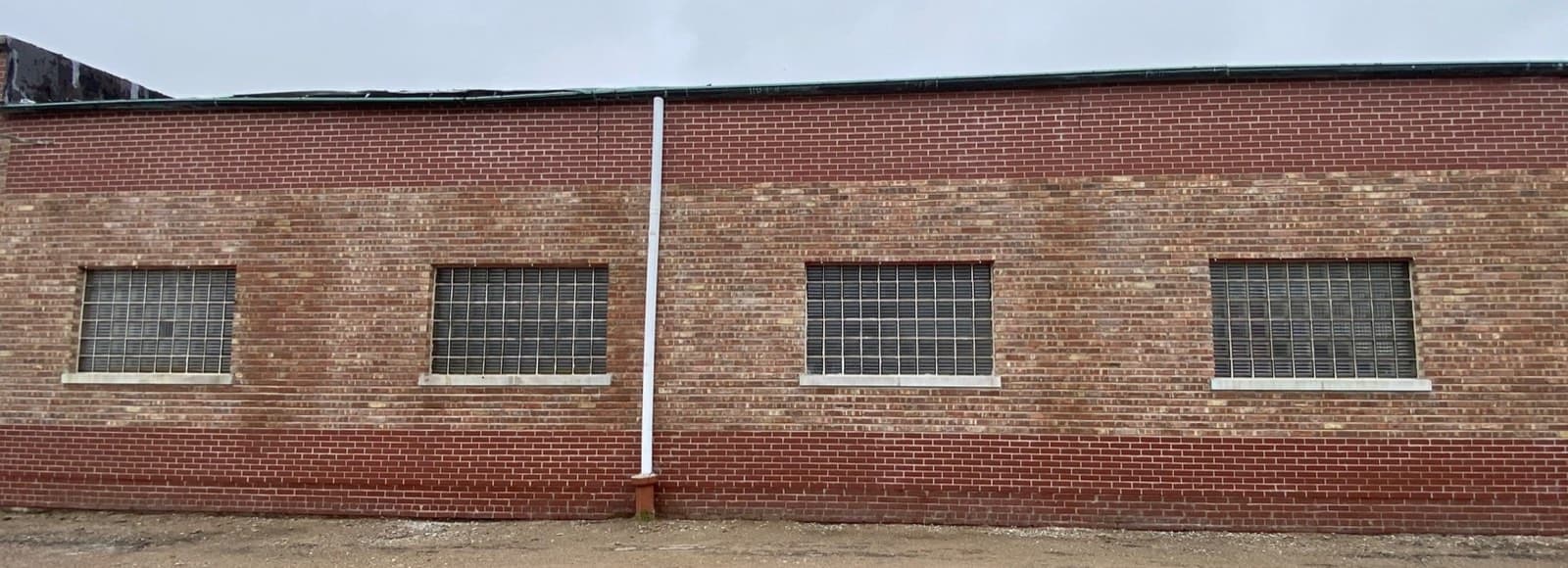
You can date most Chicagoland masonry within a couple of decades from the sidewalk. Not precisely — but closely enough to know what your wall is made of and what it needs, which is the part that actually matters.
And it matters a great deal, because the era determines the correct mortar. Get that wrong and you don't merely underperform — you permanently damage the brick. Paul Lally's Masonry has been reading Chicagoland buildings since 1988. Here's how.
The four tells, in order of usefulness
1. Header courses
Stand back and study the pattern. Do you see rows where the bricks read as small squares rather than long rectangles, repeating every fifth to seventh course all the way up?
Those are headers — bricks turned sideways so their short ends face out, physically spanning between two layers of brick to tie them together. The pattern is called common bond (or American bond), and it is structural, not decorative.
Headers mean solid multi-wythe masonry. In Chicagoland that generally means pre-1930s.
A completely uniform pattern of long rectangles — running bond, every course identical — points toward brick veneer, generally post-1960s.
One caution: some later solid walls used metal ties instead of headers, so no headers doesn't prove veneer on its own. Use the other tells.
2. Weep holes
Walk the base of the wall just above the foundation, and look above windows and doors. Small open head joints, or little plastic vents, spaced every couple of feet?
Weep holes mean brick veneer, which means a drainage cavity behind the brick, which means later construction. Solid masonry has no cavity and therefore no weeps.
This is the fastest single check on the list, and it's decisive. See weep holes explained.
3. Wall depth at an opening
Open a window and measure from the outside face of the brick to the inside face of the wall.
- Around four to five inches of brick → single wythe → veneer
- Eight inches or more of masonry → multi-wythe → solid
4. The brick and mortar themselves
Older brick tends to be softer, more porous, more variable in colour within the same wall, and often has slightly irregular faces — the product of local clay and batch kilns. Chicago common brick is the classic example.
Later brick is harder, denser, more uniform, and from the 1970s onward frequently a deliberate blend of tones across the wall.
Older mortar is lime-based: softer, often lighter or buff-toned, and a key will mark it. Modern mortar is Portland-rich: harder, greyer, and resists a key.
Watch for the mismatch. Hard grey joints against soft old brick almost always means a later repointing, not original work — and frequently a repointing that's now damaging the wall.
The Chicagoland eras
Pre-1900
Genuine nineteenth-century construction — the older streets of Hinsdale, Downers Grove, La Grange, Lemont, Naperville, Frankfort's village core, and pockets of the city.
What you'll see: solid multi-wythe masonry, header courses, soft hand-made or early machine-made brick, lime mortar, limestone sills and lintels, stone foundations. Sometimes local Lemont limestone — the honey-coloured dolomite quarried along the Des Plaines valley.
What it needs: soft lime-based mortar, hand-raked joints on the softest brick, gentle cleaning, and stone saved rather than replaced.
1890–1915: the greystone era
What you'll see: brick behind a substantial Indiana limestone facade — sills, lintels, water table, steps, quoins, carved trim. Solid masonry behind the stone. Roughly thirty thousand of them survive in Chicago.
What it needs: everything above, plus stone consolidation, patching, and Dutchman repairs rather than replacement. Never sandblasting — it strips limestone's weathered skin permanently.
1910–1940: the bungalow belt
What you'll see: the city's signature stock — solid multi-wythe Chicago common brick, often face brick on the front and common brick on the sides, limestone sills and trim, a masonry chimney, and on two-flats and three-flats a flat roof with a parapet.
What it needs: soft, lime-rich or low-Portland mortar. This is the masonry most commonly ruined by hard modern mixes.
1940s–1960s: the transition
What you'll see: post-war ranches, Cape Cods, Georgians, and split-levels across Oak Lawn, Evergreen Park, Worth, Chicago Ridge, Bridgeview, Burbank. Genuinely mixed — some solid masonry, some early veneer. Harder brick than the bungalow belt.
What it needs: usually standard Type N. Check the wall rather than the year — this is the era where assumptions go wrong.
1970s–1990s: veneer takes over
What you'll see: brick veneer over frame across Orland Park, Tinley Park, Homer Glen, Mokena, New Lenox, Palos Heights. Running bond, weep holes, control joints, flashing, blended face brick, stone accents, wide picture windows and two- or three-car garages on ungalvanized steel lintels.
What it needs: repair rather than restoration — weep holes kept clear, flashing intact, ties sound, and lintels watched. The steel over those wide openings is now at exactly the age where rust jacking shows up.
2000s onward
What you'll see: veneer over frame, sometimes combined with EIFS or stucco panels, prefab fireplace chases rather than masonry chimneys, engineered flashing details.
What it needs: the same veneer logic, and an honest answer about which elements aren't masonry at all.
Quick reference
| Tell | Pre-1930s | Post-1960s |
|---|---|---|
| Bond | Header courses (common bond) | Uniform running bond |
| Wall depth | 8"+ | ~4–5" |
| Weep holes | None | Yes, at base course |
| Brick | Soft, porous, variable | Harder, uniform, often blended |
| Mortar | Lime-based, softer, lighter | Portland-rich, harder, greyer |
| Chimney | Masonry, clay flue, concrete crown | Often a framed chase, metal cover |
| Anchor plates | Sometimes visible | No |
| Correct mortar | Soft / lime-rich | Type N |
The other giveaways
Anchor plates. Cast-iron stars, circles, and S-shapes bolted to the wall are the visible end of steel tie rods holding masonry walls to the floor framing. They indicate load-bearing masonry — and are either original to that construction or a retrofit added because a wall needed tying. See those metal stars on Chicago brick buildings.
The parapet. A flat roof with a wall standing above it is characteristic of the city's pre-1930s two-flats, three-flats, and storefronts — and of later commercial construction.
The chimney top. Concrete crown with clay flue tile showing = masonry chimney. Sheet metal cover with a round pipe = a framed chase, which means later construction.
Brick size. Older Chicago brick was often laid in dimensions differing from today's modular sizes, which is why a modern unit dropped into an old wall throws off the coursing.
Joint profile. Grapevine and struck profiles skew older; concave dominates modern work.
Why any of this changes the repair
Everything above resolves into one decision.
Mortar must always be softer than the brick beside it. It's the sacrificial element — designed to yield so that thermal movement and moisture cycling are absorbed by the joint rather than the masonry.
On pre-1930s soft brick, a modern high-strength mortar inverts that. The joint stops yielding, the brick face becomes the sacrificial element, and it spalls along every mortar line. Permanently. Repointing can be redone; brick faces cannot.
On post-1960s veneer, the mortar question is more forgiving — and the real issues become the drainage cavity, weep holes, flashing, ties, and lintels.
Same trade. Genuinely different jobs. Which is why a mason who doesn't raise your building's era before quoting hasn't diagnosed it. See why masonry repairs fail.
How to use this when hiring
You don't need to be right about the decade. You need to ask a better question:
"What era is this wall, and what mortar does that call for?"
On a century-old building, an answer that doesn't mention the softness of the brick is a bad sign. On a veneer wall, an answer that doesn't mention weep holes or flashing is the equivalent.
See what actually happens during a free masonry estimate and the masonry terms glossary.
Related services
Era determines which of these applies: tuckpointing and repointing, brick repair, brick replacement, limestone and sill repair, lintel repair and replacement, chimney repair and rebuilds, parapet wall repair, foundation masonry repair, caulking and joint sealant, masonry waterproofing, and residential, commercial, or historic masonry restoration.
The bottom line
Headers and soft lime mortar mean pre-1930s solid masonry — and soft mortar for any repair. Running bond with weep holes at the base means post-1960s veneer — and the drainage path matters more than the mix.
Go look at the bottom course of your own wall this weekend. Thirty seconds and you'll know which building you own — and what the right answer looks like when someone quotes you.
Paul Lally's Masonry Inc. is a family-owned, insured masonry contractor serving Chicago and the Chicagoland suburbs since 1988 — tuckpointing, brick repair and replacement, chimney repair and rebuilds, lintel replacement, masonry restoration, and waterproofing for residential and commercial properties. Built on Craftsmanship. Backed by Experience.
We read the building before we price it, every time. Our family name is on every job.
Free on-site estimates — call (708) 448-8866 or request an estimate online.
Frequently Asked Questions
How can I tell how old my brick building is?
Look for header courses — rows where bricks turn sideways so their short ends face out. Regular headers mean solid multi-wythe masonry, which in Chicagoland generally means pre-1930s. A uniform running bond with no headers and small weep holes along the base course means brick veneer, which generally means post-1960s.
What are weep holes and what do they tell me?
Weep holes are the small open joints or vents along the bottom course of a brick-veneer wall that drain the cavity behind the brick. Their presence is one of the quickest era tells there is, because solid masonry has no cavity and no weeps — so if you have them, you're looking at later construction.
Why does the era of my building matter for repairs?
Because it determines the correct mortar, and getting that wrong causes permanent damage. Pre-1930s brick is soft and was laid in lime-based mortar, so it needs a soft mix; pack a modern high-strength mortar against it and the brick face spalls along every joint line instead of the joint yielding.
What is Chicago common brick?
It's the soft, locally-fired brick made from Chicago-area clay in enormous quantities and used across the city's pre-1930s stock — bungalows, greystones, two-flats, and storefronts. It's more porous and softer than modern brick, which is both why it weathers the way it does and why salvaged stock is genuinely available for matching.
Can I tell the era from the mortar itself?
Broadly, yes. Older lime-based mortar is softer, often lighter or buff-toned, and can be scratched or crumbled more easily; modern Portland-rich mortar is harder, greyer, and resists a key. If a wall has obviously hard grey joints against soft old brick, that's usually a later repointing rather than original work.
What do the metal stars on old buildings tell me?
They're anchor plates — the visible end of a steel tie rod tying the masonry wall to the floor framing or the opposite wall. They indicate load-bearing masonry construction, and they're either original to a building of that type or a retrofit added because a wall needed tying.
Has brick size actually changed?
Yes, and it matters for repairs. Older Chicago brick was often laid in dimensions that differ from today's common modular sizes, so a modern unit dropped into an old wall can throw off the coursing and force inconsistent joint thicknesses. Matching size and coursing height is part of a proper repair.
My building is from the 1950s. Which category is it?
The transition period, and it genuinely varies — some 1930s-to-1960s construction is solid masonry and some is early veneer. That's exactly why you check the wall rather than the build year: look for headers, measure the wall depth at an opening, and check the base course for weep holes.
Does dating my masonry help me hire better?
It helps you ask a better question. If you know your wall is pre-1930s soft brick and a contractor doesn't mention mortar hardness before quoting, that tells you something useful — the era is the most consequential fact about the repair, and a mason who diagnoses will raise it unprompted.