
Masonry Restoration · Chicagoland, IL
Masonry Terms Every Chicagoland Homeowner Should Know
A plain-English glossary of the words that show up in masonry estimates, inspection reports, and contractor conversations — with what each one means for your building and why it matters in a freeze-thaw climate.
2026-08-05
Quick Answer
The masonry terms Chicagoland homeowners most need are: wythe (a vertical layer of brick), pointing and repointing (renewing mortar joints), spalling (the brick face breaking off), efflorescence (salt deposits from water movement), lintel (the steel carrying brick over an opening), parapet (wall above a flat roof), coping (its cap), weep holes (veneer drainage), and rust jacking (corroding steel lifting masonry). Paul Lally's Masonry has served Chicagoland since 1988 — (708) 448-8866.
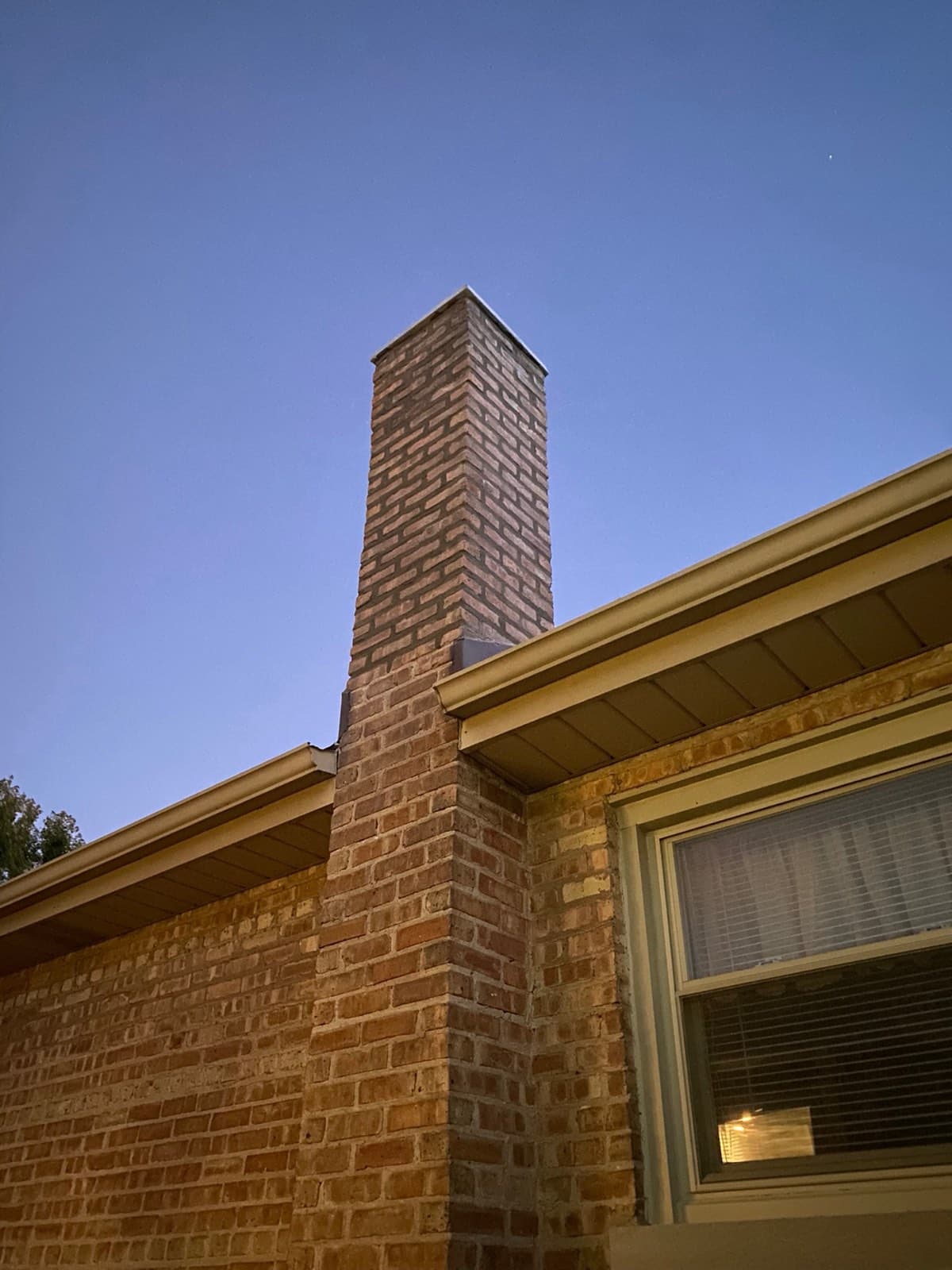
Masonry has its own vocabulary, and most homeowners meet it for the first time in an estimate or a home inspection report — usually at the exact moment they most need to understand it.
This is the plain-English version. Not a dictionary for its own sake: each entry includes what the term means for your building and, where it matters, why it behaves the way it does in a Chicagoland winter. Paul Lally's Masonry has been explaining these on job walks since 1988.
Wall anatomy
Wythe — One continuous vertical layer of masonry, one unit thick. A brick-veneer wall is a single wythe hung on framing; older solid masonry is two, three, or more wythes bonded together as one structural unit. Why it matters: the two manage water in opposite ways, so knowing which you own changes nearly every repair. See brick veneer vs. solid masonry.
Brick veneer — A single non-structural wythe hung on a framed or block wall with an air gap behind it. It carries no building load and is designed to let water in and drain it back out. Why it matters: leaks in veneer are often about drainage, flashing, or ties — not the brick face.
Solid masonry — A load-bearing wall of multiple wythes. The brick is the structure. Why it matters: the mortar joints are the only water barrier the wall has, so repointing is structural maintenance rather than cosmetics.
Wall ties — Metal anchors holding a veneer wythe flat against the structure behind it. Why it matters: when they corrode, the veneer can bow outward and units can release.
Cavity / air gap — The deliberate space behind a veneer wythe that lets water drain. Why it matters: mortar droppings blocking it during a repair cause leaks years later.
Weep holes — Small open joints or vents along the bottom course of a veneer wall that drain the cavity. Never seal, caulk, or mortar these shut. They're the drain.
Parapet — The section of exterior wall that continues above a flat roof. Why it matters: it's exposed on both faces plus the top, so it fails decades before the rest of the building — and it's the hidden source of most "the roof is leaking" calls. See parapet wall repair.
Coping — The cap on top of a parapet: clay tile, limestone, precast, or metal. Its only job is shedding water off the top of the wall. Why it matters: when coping joints open, water runs down inside the wall.
Water table — A projecting course of masonry or stone near grade that throws water clear of the foundation. Why it matters: it takes heavy salt and splashback exposure, so it's often the worst stone on a building.
Corbel — Masonry courses stepped progressively outward to support something above or create a decorative projection. Common on Chicago cornices and chimney tops.
Joints and mortar
Bed joint — The horizontal mortar joint between courses. Head joint — The vertical joint between units in a course.
Pointing — Finishing the mortar joint when masonry is first laid.
Repointing — Removing deteriorated mortar and replacing it. Tuckpointing — Historically a decorative two-color technique; in everyday Chicagoland use, the same thing as repointing. See what is tuckpointing.
Joint profile — The shape tooled into the mortar surface: concave, weathered, raked, struck, grapevine, or flush. Why it matters: each throws a different shadow line, so a repair tooled to the wrong profile is visible even when the mortar color is perfect.
Raking / grinding — Cutting old mortar out of a joint. Why it matters: proper depth is roughly two to two and a half times the joint width. Anything shallower has nothing to bond to.
Skim pointing — Smearing fresh mortar over failing joints without cutting them out. Why it matters: it's the most common bad masonry job in Chicagoland. Looks perfect for a season, then sheets off.
Mortar types — Roughly from softest to strongest: lime / low-Portland, Type O, Type N, Type S, Type M. Why it matters: stronger is not better. Mortar must be softer than the brick beside it so the joint absorbs movement. Type N is the residential workhorse; Type S belongs below grade and in high-exposure conditions; soft lime-rich mixes belong on pre-1930s Chicago brick.
Lime mortar — Traditional soft, breathable mortar used before Portland cement became standard. Why it matters: it's what most of Chicago's pre-1930s masonry was laid in, and what that masonry still wants. See historic masonry restoration and lime mortar.
Backer rod — Foam rope pressed into a joint behind flexible sealant to set the bead depth and prevent three-sided adhesion. Why it matters: a caulk joint installed without it fails early regardless of product quality.
Bond patterns
Running bond — Uniform pattern of stretchers (long faces out), no headers. Typical of veneer.
Common bond (American bond) — Periodic header courses — rows where bricks turn sideways so their short ends face out, tying two wythes together. Why it matters: headers are structural, and spotting them is the quickest way to identify solid masonry.
Stretcher — A brick laid with its long face out. Header — laid with its short end out. Soldier course — bricks standing on end, long face out; often decorative, common above openings.
Arris — The sharp edge of a brick where two faces meet. Why it matters: chip it during grinding and it never comes back. It's why careful joint removal takes time.
Damage and diagnosis
Spalling — The hard fired face of a brick breaking, flaking, or popping off. Caused by absorbed water freezing and expanding roughly nine percent. Permanent. See spalling brick.
Efflorescence — White, chalky mineral salt left on masonry as water travels through and evaporates. Why it matters: harmless in itself, but proof water is moving through your wall. See stains on brick.
Freeze-thaw cycling — Water in masonry freezing and expanding, repeatedly. Why it matters: the engine behind nearly all Chicagoland masonry damage, and we get many cycles per winter rather than one long freeze.
Rust jacking — Corroding steel expanding to several times its original volume and lifting the masonry above it. Why it matters: the usual cause of a horizontal crack above a window, door, or garage opening.
Step crack / stair-step crack — A crack climbing diagonally through the mortar joints. Why it matters: extremely common and frequently not structural. What matters is whether it's displaced (one side proud of the other) and whether it's still moving. See step cracks in brick walls.
Displacement — One side of a crack sitting out of plane from the other. Why it matters: the single most useful field test for telling wear from movement. Displacement means structural until proven otherwise. See mason or structural engineer.
Bowing / bulging — A wall out of plane along its length. On solid masonry, wythe separation or lost bond. On veneer, failed ties. Either way, prompt attention.
Delamination — Stone splitting along its natural bedding planes, coming away in flat sheets. Typical of failing limestone sills.
Mortar smear — Dull haze left on brick faces when mortar residue wasn't cleaned off. Cosmetic, and frequently mistaken for efflorescence.
Components and repairs
Lintel — The horizontal member carrying masonry above an opening. On most Chicagoland homes, a steel angle iron. Why it matters: it's the component most likely to fail on a postwar house, and the wider the opening the more load it carries. See failing lintels.
Sill — The projecting piece beneath a window that throws water clear. Drip edge — the groove cut into a sill's underside that makes water fall away rather than run back onto the wall. Why it matters: once a drip edge erodes, one worn sill becomes a problem for the whole wall beneath it.
Chimney crown — The concrete cap across the top of a chimney. Chimney cap — the cover over the flue opening. Why it matters: a cracked crown and an uncapped flue are two of the three water paths into a chimney; flashing at the roofline is the third. See chimney crowns, caps, and flashing.
Flashing — Sheet material sealing the junction where masonry meets a roof or another element.
Dutchman — A stone repair where only the failed portion is cut out squarely and a matching piece of new stone is fitted in. Why it matters: preserves original stone and its profile, and is far less invasive than replacement.
Parging — A thin cement coat over foundation block or brick. Why it matters: once it fails, water sits behind it against the masonry — so it's removed back to sound material rather than patched.
Shoring — Temporary support for masonry above an opening while a lintel is replaced. Why it matters: its presence separates a proper lintel job from a dangerous one.
Toothing — Interlocking new masonry into existing by removing alternating units, so a rebuilt section bonds into the original wall rather than butting against it.
Salvaged brick — Reclaimed units from demolished buildings of the same era. Why it matters: on older Chicago masonry it's usually the best possible match. See why your brick repair doesn't match.
Chicago-specific terms
Chicago common brick — Soft, locally-fired brick made in enormous quantities from regional clay, used across the city's pre-1930s building stock. Porous, variable in tone, and easily damaged by hard mortar or aggressive cleaning.
Greystone — A Chicago rowhouse or two-flat with a substantial Indiana limestone facade over brick. Why it matters: the stone is the irreplaceable part, and it wants soft mortar and gentle cleaning.
Two-flat / three-flat — Chicago's characteristic two- and three-unit masonry buildings: load-bearing walls, flat roof, parapet, rear porch on masonry piers.
Bungalow belt — The bands of 1910s–1940s brick bungalows across the Northwest and Southwest Sides.
Coach house — A small masonry outbuilding at the rear of an older city lot, often over or beside a garage.
Critical examination — The periodic facade inspection Chicago's ordinance requires for exterior walls on taller buildings. Why it matters: deteriorated parapet, coping, and lintel masonry are among the most commonly written-up findings.
Why any of this matters when you're hiring
You don't need this vocabulary to own a brick house. But it does one useful thing: it lets you tell a diagnosis from a sales pitch.
A mason who tells you your lintel is rust jacking, that your wall is a single wythe of veneer so the weeps need to stay clear, and that your joints have to come out to roughly two and a half times their width is describing your building. One who talks only about scope and price hasn't looked that closely.
Ask what caused the damage before you discuss what it costs. The answer tells you most of what you need to know. See how to hire a masonry contractor in Chicago.
Related services
The terms above map onto tuckpointing and repointing, brick repair, brick replacement, lintel repair and replacement, parapet wall repair, chimney repair and rebuilds, limestone and sill repair, foundation masonry repair, caulking and joint sealant, masonry waterproofing, residential and commercial masonry restoration, and historic masonry restoration.
The short version
If you remember five: wythe (how many layers your wall has), spalling (the face coming off the brick, permanently), efflorescence (proof water is moving through), lintel (the steel over your openings, and the thing most likely to fail), and repointing (renewing the joints that are designed to wear out so your brick doesn't).
Paul Lally's Masonry Inc. is a family-owned, insured masonry contractor serving Chicago and the Chicagoland suburbs since 1988 — tuckpointing, brick repair and replacement, chimney repair and rebuilds, lintel replacement, masonry restoration, and waterproofing for residential and commercial properties. Built on Craftsmanship. Backed by Experience.
We'll walk your building and explain what we're seeing in plain language — no jargon for its own sake, and no scope you can't follow. Our family name is on every job.
Free on-site estimates — call (708) 448-8866 or request an estimate online.
Frequently Asked Questions
What is a wythe?
A wythe is one continuous vertical layer of masonry units, one unit thick. A brick-veneer wall is a single wythe hung on framing; older solid masonry walls are two, three, or more wythes bonded together into one structural unit. Knowing which you have changes how nearly every repair is done.
What's the difference between pointing, repointing, and tuckpointing?
Pointing is finishing the mortar joint when masonry is first laid. Repointing is removing deteriorated mortar and replacing it. Tuckpointing historically meant a decorative two-color technique, but in everyday Chicagoland use it means the same thing as repointing — renewing your mortar joints.
What does spalling mean?
Spalling is when the hard fired face of a brick breaks, flakes, or pops off, leaving a rough sandy surface. It happens when water absorbed into the brick freezes and expands, and it's permanent — once the protective face is gone the brick absorbs water faster and deteriorates more quickly.
What is efflorescence?
Efflorescence is the white, chalky mineral salt left on masonry when water travels through it and evaporates at the surface. The deposit itself is harmless and brushes off, but it's evidence that water is moving through your wall — which is the part worth investigating.
What is rust jacking?
Rust jacking is what happens when a steel lintel or anchor corrodes: rust occupies several times the volume of the steel it came from, so the expansion lifts and cracks the masonry above it. It's the usual cause of a horizontal crack running above a window, door, or garage opening.
What are weep holes and should they ever be sealed?
Weep holes are the small open joints or vents along the bottom course of a brick-veneer wall that let water drain out of the cavity behind the brick. They should never be sealed, caulked, or mortared shut — blocking them turns a wall designed to drain into one that holds water.
What is a Dutchman repair?
A Dutchman is a stone repair where only the damaged portion of a piece is cut out squarely and a matching piece of new stone is fitted into the void. It's standard on historic masonry because it preserves the surrounding original stone and its profile rather than replacing the whole piece.
What's the difference between Type N and Type S mortar?
Type S is the stronger, higher-compressive mix; Type N is the medium-strength workhorse for most above-grade residential work. Stronger isn't better — mortar must be softer than the brick beside it, so Type S belongs below grade and in genuine high-exposure conditions, not on soft century-old Chicago brick.
What is parging?
Parging is a thin cement coat applied over foundation block or brick to protect it and give a finished surface. When it cracks or sheets away, water gets behind it and sits against the masonry, so failed parging is removed back to sound material rather than patched over.
Why do these terms matter when I'm hiring a mason?
Because they let you tell a diagnosis from a sales pitch. A contractor who explains that your lintel is rust jacking, that your wall is a single wythe of veneer, and that your joints need cutting to depth is describing your building; one who talks only about scope and price hasn't looked closely enough.