
Masonry Restoration · Chicagoland, IL
What Actually Happens During a Free Masonry Estimate
A good masonry estimate is a diagnosis, not a measurement. Here's what a mason should actually do at your house, what you should be asked, what you should ask back, and the visit behaviors that tell you which kind of contractor you've got.
2026-08-06
Quick Answer
A proper masonry estimate visit is a diagnosis: the mason walks every elevation, tests mortar hardness by hand, gets up to the chimney and roofline rather than assessing from the ground, identifies why the damage happened, and then scopes the repair. Expect 30–60 minutes on a house and a written scope afterward. Paul Lally's Masonry gives free on-site estimates across Chicagoland — (708) 448-8866.
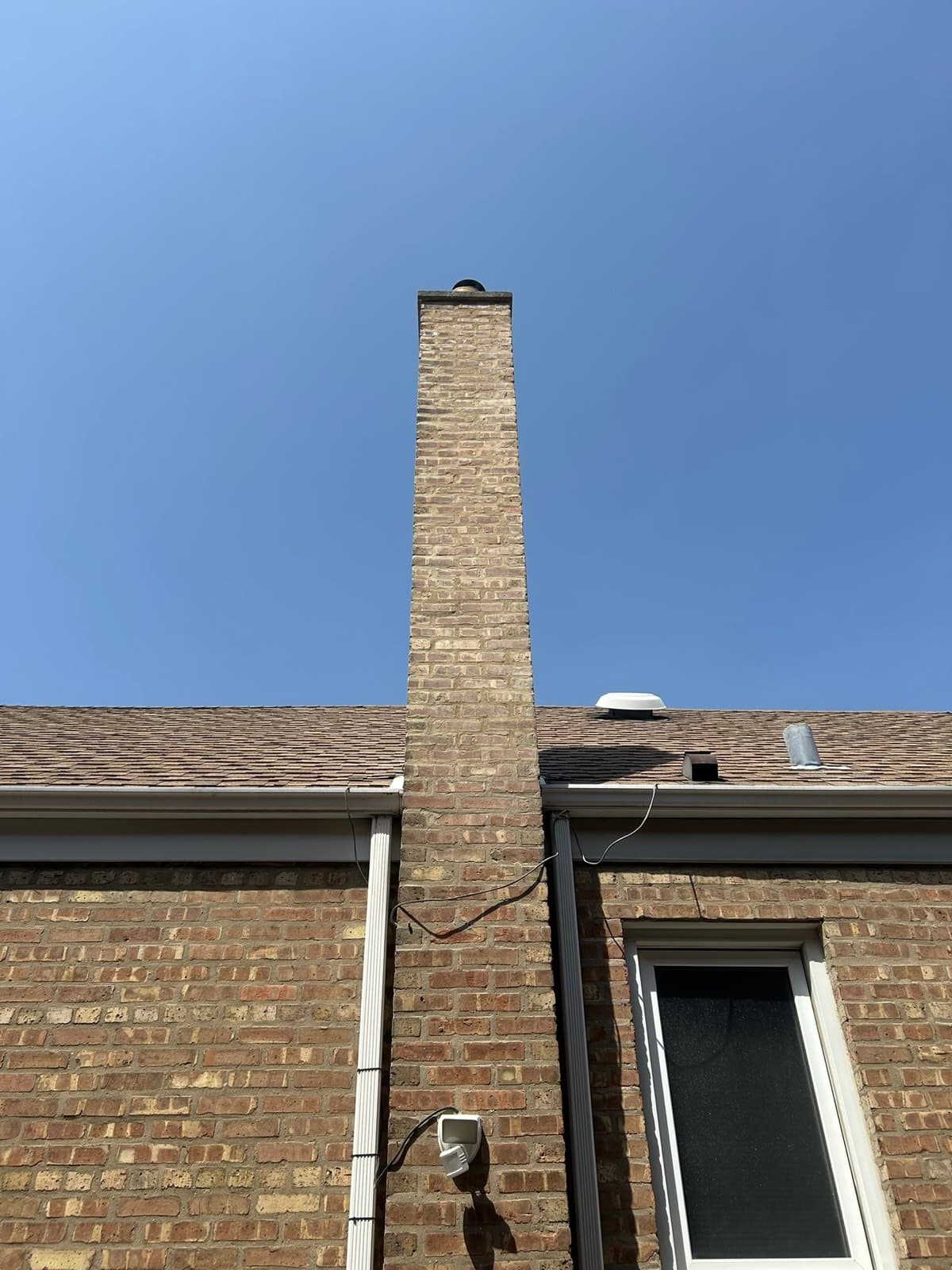
A masonry estimate is not a measurement exercise. Two walls with identical square footage can need completely different work, at completely different cost, for reasons that are invisible until somebody looks properly.
A good masonry estimate is a diagnosis. The number at the bottom is the last thing that gets decided, and it follows from what the mason worked out about why your masonry is failing. Paul Lally's Masonry has been giving free on-site estimates across Chicagoland since 1988, and this is what one should actually involve — including the parts that tell you which kind of contractor is standing in your driveway.
Before the visit
What to gather:
- Photos, especially of conditions that come and go — a stain that only appears after wind-driven rain, efflorescence that shows up in spring
- Any home inspection report or facade inspection findings, if you have them
- A rough timeline — when you first noticed it, whether it's getting worse
- History of previous repairs, including who did them and roughly when. This matters more than people expect; a wall repointed with hard mortar ten years ago is a different job than one that's never been touched.
What to have ready:
- Clear access to the affected walls — move vehicles, unlock gates, secure pets
- Access to the basement or crawl space if the concern is at grade
- Interior access to any room showing stains
What should actually happen at the house
1. You walk it together first
The visit should start with you showing what you've noticed, not with the mason measuring. What you've observed — when it leaks, where it stains, what's changed — is genuine diagnostic information nobody else has.
2. Every elevation, not just the one you called about
A mason should walk all sides of the building, including the rear and any side that's tight against a neighbor. Masonry problems very often originate somewhere other than where they show, and failures cluster on the weather elevations — usually north and west — which may not be the wall that prompted your call.
3. Hands on the mortar
Expect the mason to touch your joints — running a key or screwdriver along them to test hardness. Mortar that crumbles out as sand has failed; mortar that resists hasn't. This takes seconds and it's the single most informative thing anyone does on the visit.
If nobody touches your mortar, nobody assessed it.
4. Up to the chimney and the roofline
For anything involving a chimney, parapet, or coping, someone has to get up there. These cannot be assessed from the ground, and they are where water most commonly enters a building — a cracked crown, an uncapped flue, open coping joints.
On a flat-roofed or commercial building, an estimate that didn't include getting on the roof is incomplete, however thorough the paperwork looks. See parapet wall repair.
5. Looking above every problem
Water runs downhill. The source of a stain or a failure is essentially always higher than where you see it — often several feet, sometimes on a different part of the building. A mason should be looking up from every symptom: at the joints above, the sill, the lintel, the coping, the gutter.
6. Identifying the wall type
Solid masonry or brick veneer? This changes nearly every repair decision, because the two manage water in opposite ways. A mason should be able to tell you which you have and how they know — header courses, wall depth at an opening, weep holes at the base. See brick veneer vs. solid masonry.
7. Reading the era and the brick
On a Chicago-area building, how old and how soft the brick is determines which mortar is correct. Pre-1930s common brick is soft and wants a lime-rich mix; a hard modern mortar will spall it. A mason who doesn't raise this on a century-old building hasn't considered the most consequential decision in the job.
8. Checking the water management
Gutters, downspout discharge, grade, splashback, where snow gets piled, vegetation against the wall. A surprising share of masonry failures trace back to a downspout that's been soaking one corner for years — and no repair holds while that continues.
9. Telling you the cause
This is the moment that separates a diagnosis from a sales pitch. Before any discussion of scope or price, you should hear why the damage happened: failed joints, a rusting lintel, a cracked crown, a blocked weep, grade against the wall, or a previous repair done in the wrong mortar.
If the conversation goes straight from "here's what's wrong" to "here's the number," something got skipped.
The questions to ask back
Ask these, and listen for whether the answers are specific or vague:
- "What caused this?" — ask it first, and ask it before price comes up
- "How deep will you cut the joints, and why that depth?" — a real answer references the joint width
- "What mortar type are you using, and how did you decide?" — on old brick, an answer that doesn't mention the brick's softness is a bad sign
- "Is this repair or restoration?" — and what the difference means for your building
- "Are you sealing anything, and in what order?" — sealing before repointing is a red flag
- "How will you clean the masonry?" — sandblasting or high pressure on historic brick is disqualifying
- "What about the gutter / lintel / grade?" — does the scope address the cause or just the symptom
- "What happens if you find more once the wall is open?" — and how does that get priced
- "How long, and what does weather do to the schedule?"
- "Can you show me a wall you did five years ago?" — masonry work reveals itself with time
What you should get afterward
A written scope should tell you:
- Where — which elevations, which openings, how much of each
- What — what's being removed and what's being installed
- How deep — joint preparation described, not assumed
- Which materials — mortar type and matching approach, brick sourcing
- How joints will be finished — tooled to match the existing profile
- What's being done about the cause, not just the damage
- How additional findings are handled
- A realistic schedule, with weather acknowledged
Our page on what a masonry estimate should include covers the document side in more detail.
Visit behaviors that tell you a lot
Good signs:
- Walks every elevation without being asked
- Touches the mortar
- Gets up to the chimney or roofline when it's relevant
- Explains the cause before the cost
- Says "you don't need that" about something
- Raises the gutter, the grade, or the drainage
- Distinguishes urgent from can-wait
- Tells you when you need a structural engineer instead
- Puts it in writing afterward rather than on the spot
Warning signs:
- A number quoted from the driveway in ten minutes
- Never touches the mortar
- Won't go up to a chimney they're proposing to repair
- Pressure to sign today, or a discount that expires
- A large deposit demanded up front
- Proposes sealing a wall with visibly failing joints
- Talks only about scope and price, never cause
- Proposes caulking your brick joints instead of repointing them
- Recommends sandblasting or pressure washing historic brick
- A quote dramatically below the others with no explanation of why
That last one deserves emphasis: on masonry, the cheapest bid is frequently pricing different — and worse — work. Skim pointing over failed joints costs less because it skips the grinding, which is most of the labor. It looks identical on completion day and sheets off within a couple of seasons. See why masonry repairs fail.
Comparing multiple estimates
Get more than one. But compare them properly:
Ask each contractor the same questions, and pay most attention to what they say caused the damage. If two masons describe genuinely different causes, that gap matters far more than the price difference — one of them is wrong, and hiring the wrong diagnosis costs more than the wrong price.
Then compare described scope: joint depth, mortar specification, what's removed versus covered, and whether the cause is addressed. A quote that says "tuckpoint front elevation" and a quote that says "cut joints to depth, repoint in matched lime-rich mortar, replace 14 spalled units, address the downspout at the northwest corner" are not competing for the same job.
Our guide to hiring a masonry contractor in Chicago covers the vetting side.
What a free estimate is — and isn't
It is a contractor's assessment of your masonry, an explanation of what's happening and why, and a written proposal for the work — at no cost and no obligation.
It isn't an independent engineering report. If your wall is bowing, leaning, or displaced, or you're seeing sticking doors and sloping floors inside, what you need is a licensed structural engineer — a paid, independent service. Any mason worth hiring will tell you that rather than sell you masonry work that won't hold. See mason or structural engineer.
Why this matters more in Chicagoland
Two regional realities raise the stakes on getting the diagnosis right.
The building stock is old and soft. Bungalows, greystones, two-flats, three-flats, and storefronts built roughly 1890–1930 from soft, locally-fired common brick in lime mortar. On that masonry, the wrong mortar causes permanent damage — the brick face spalls along every joint line, and no repointing brings it back. A contractor who doesn't diagnose the brick before quoting the joint can genuinely make your building worse.
The failures are water-driven and often hidden. Repeated hard freeze-thaw cycling, wind-driven rain off the lake, and de-icing salt at grade mean the visible damage is regularly a long way from its cause — a parapet feeding a second-floor stain, a lintel cracking a wall, a downspout eating a foundation. That's why the walkaround matters more than the tape measure.
Related services
Whatever the estimate turns up, the work usually falls under tuckpointing and repointing, brick repair, brick replacement, chimney repair and rebuilds, lintel repair and replacement, parapet wall repair, limestone and sill repair, foundation masonry repair, caulking and joint sealant, masonry waterproofing, or residential, commercial, and historic masonry restoration.
The bottom line
Expect 30 to 60 minutes, every elevation walked, hands on your mortar, someone up at the chimney or roofline if that's in scope, and an explanation of the cause before any discussion of cost.
Ask "what caused this?" first. The quality of that answer predicts the quality of the work better than anything else you'll learn during the visit — and it's the one thing a bad contractor can't fake.
Paul Lally's Masonry Inc. is a family-owned, insured masonry contractor serving Chicago and the Chicagoland suburbs since 1988 — tuckpointing, brick repair and replacement, chimney repair and rebuilds, lintel replacement, masonry restoration, and waterproofing for residential and commercial properties. Built on Craftsmanship. Backed by Experience.
We'll walk the whole building, show you what we're seeing, tell you what's urgent and what can wait a season — and tell you when you don't need us at all. Our family name is on every job.
Free on-site estimates — call (708) 448-8866 or request an estimate online.
Frequently Asked Questions
How long should a masonry estimate visit take?
For a typical house, expect roughly 30 to 60 minutes — longer if the chimney, roofline, or multiple elevations are involved. A visit that takes ten minutes and produces a number on the spot means nobody diagnosed anything, and you should treat that quote as a guess.
Should the mason get on the roof?
For anything involving a chimney, parapet, or coping, yes — those cannot be assessed from the ground, and they're where most water actually enters a building. A commercial or flat-roofed building estimate that didn't include getting on the roof is incomplete regardless of how detailed the paperwork looks.
Is a free masonry estimate really free?
Ours is, with no obligation. Be clear about what you're getting though — a free estimate is a contractor's assessment and proposal, not an independent engineering report. If your wall is bowing or displaced, what you need is a licensed structural engineer, and that's a paid service we'd tell you to get.
What should I have ready before the mason arrives?
Photos of anything you've noticed, especially conditions that come and go with weather, plus any home inspection report or facade inspection findings. Know roughly when problems started and what's been repaired before. Clear access to the affected walls, and make sure gates are unlocked and pets are secured.
What questions should I ask during the visit?
Ask what caused the damage before you discuss price — that single question separates a diagnosis from a sales pitch. Then ask how deep the joints will be cut, what mortar type and why, whether anything needs sealing and in what order, and what happens if more damage is found once the wall is open.
Why do masonry quotes vary so much between contractors?
Usually because they're pricing genuinely different work. One may be cutting joints to proper depth and matching mortar while another is skim-coating over the existing joints, and from the driveway those look identical. Compare the described scope — depth, materials, and what's actually being removed — not just the number.
Should I get more than one estimate?
Yes, and get them scoped comparably. Ask each contractor the same questions and compare what they say caused the damage — if two masons describe completely different causes, that difference matters far more than the price gap. The cheapest bid on masonry is frequently the most expensive thing you can buy.
Will the estimate change once work starts?
It can, honestly, because masonry hides its own condition — what's behind a failed joint or above a lintel isn't visible until the wall is open. A good proposal says up front how additional findings get handled and priced, rather than leaving it to a conversation mid-job.
Do I need to be home for the estimate?
It's better if you are, at least at the start and end. Much of the value is in the walkaround conversation — being shown the actual conditions and hearing why they happened. If you can't be there, ask for photos of what was found alongside the written scope.