
Brick Repair · Chicagoland, IL
The Detached Garage: The Most Neglected Masonry on Your Chicago Property
Nobody photographs the garage, nobody looks at the alley elevation, and nobody budgets for it — which is why the brick garage out back is usually in worse shape than the house it belongs to. Here's what fails, why it fails faster, and what's worth doing.
2026-08-02
Quick Answer
A detached brick garage typically deteriorates faster than the house because it is unheated, sits low to grade, takes plow snow and de-icing salt, and rarely gets inspected. The common failures are the base course at grade, the lintel over the overhead door, roofline and parapet masonry, and soft mortar on the alley elevation. Paul Lally's Masonry has repaired Chicagoland garages since 1988 — (708) 448-8866.
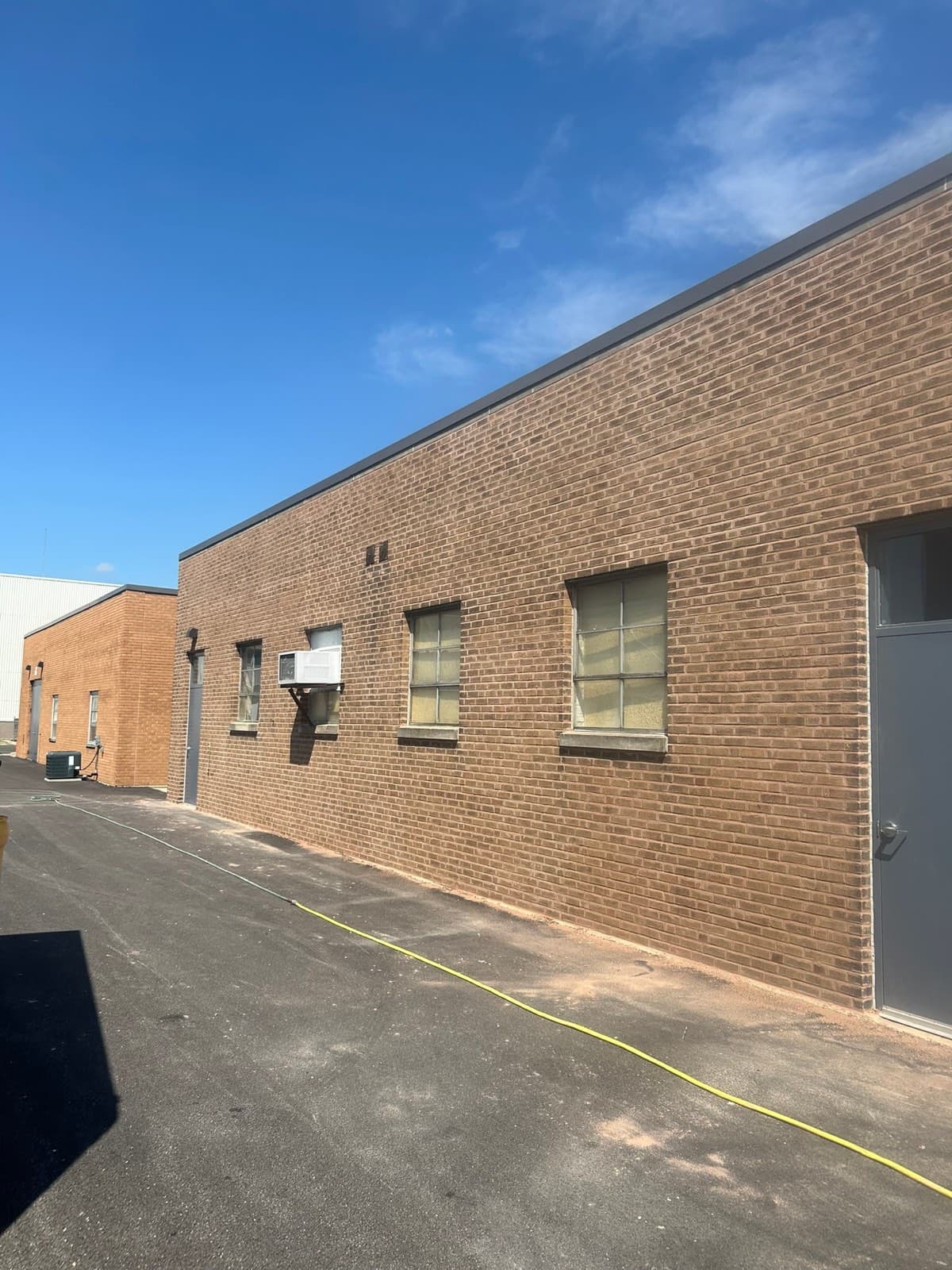
Walk any Chicago alley and look at the garages. Really look at them.
You'll see soft, receding mortar joints. Brick crumbling in the bottom three courses. A horizontal crack running the width of the overhead door with rust bleeding down beneath it. Coping missing off a parapet. Whole sections of face brick gone sandy.
Now walk around to the front of those same properties and look at the houses. They're mostly fine.
A detached brick garage almost always deteriorates faster than the house it belongs to — not because it was built worse, but because it lives a harder life and nobody ever looks at it. Paul Lally's Masonry has been repairing Chicagoland garages, coach houses, and outbuildings since 1988. Here's what's actually happening back there.
Why the garage fails faster
Five reasons, and they compound.
1. It's unheated
This is the big one and the least obvious. A heated house helps dry its own walls. Interior warmth drives moisture outward through the masonry, so a brick wall on a heated building spends less time saturated.
An unheated garage has none of that. Masonry that gets wet stays wet, far longer, and every hour it stays saturated is an hour it can freeze. In a climate with repeated hard freeze-thaw cycling, that difference alone is enormous.
2. It sits low to grade
Garage floors are typically at or near grade with no basement beneath. That puts the base course of masonry right where the water is — splashback off the apron and alley, standing meltwater, and soil moisture wicking up.
3. It takes the plow snow and the salt
Snow gets shoveled and plowed against the garage — off the apron, out of the alley, off the driveway — and then sits there melting for weeks. And de-icing salt comes with it.
Salt is genuinely destructive to masonry. It draws into porous brick, block, and mortar, then crystallizes and expands as it dries — a mechanism much like ice, but one that works year-round wherever salt is present. It's why the bottom courses of an alley garage look sandblasted while the same wall at eye level is intact.
4. Its widest opening is its weakest point
The overhead door is a wide span — often sixteen feet or more on a two-car garage — carrying brick on a steel lintel that, on most Chicagoland garages, was never galvanized. Widest opening, most load, least protected steel.
5. Nobody ever looks at it
This is the honest one. Homeowners see the front of the house every day. The alley elevation of the garage might get a proper look once a decade. Deterioration that would be caught early on the house runs for years out back.
What actually fails, in order
First: the base course at grade
Crumbling, sandy mortar in the bottom three or four courses. Spalled brick faces. Sometimes brick eaten back far enough that the wall is visibly losing material. Concentrated on whichever side takes the plowed snow, and worst beside the apron.
Second: the overhead door lintel
A horizontal crack running along the joint above the door, frequently with orange-brown rust staining bleeding down the brick, sometimes with step cracks radiating from the top corners and a visibly lifted or sagging course.
That's rust jacking. Corroding steel expands to several times the volume it started as, and with brick sitting on top and nowhere to go, it pushes up. See failing lintels and cracked brick above windows — the mechanism is identical on a garage, just with more load.
Third: the roofline
On flat-roofed garages — very common in the city — there's a parapet above the roof deck, exposed on both faces, with coping on top. It fails exactly like a parapet on any other building, only with less maintenance. Loose or missing coping, soft joints, spalling brick, sometimes a visible lean. See parapet wall repair.
On pitched-roof garages, the failure concentrates at the gable ends and any chimney.
Fourth: the weather elevation
Whichever wall takes the wind-driven rain — usually north and west — with soft joints and spalling across the general field.
Fifth: movement
Less common, but real. Garages sit on shallower foundations than houses, so frost heave and the seasonal swelling and shrinking of Chicagoland's clay soils affect them more. A garage wall that's bowing or leaning is a different problem from one that's crumbling — see mason or structural engineer for how to tell them apart.
Signs worth acting on
- Mortar you can dig out by hand, especially low on the wall
- Spalling brick — flaking, powdering, popped faces
- Missing brick or holes through the wall
- A horizontal crack above the overhead door, with or without rust staining
- A door that's gone out of square or binds against its opening
- Loose or missing coping on a flat-roofed garage
- A wall that's bowing, leaning, or out of plumb
- Efflorescence — white chalky salt bloom
- Brick and mortar debris on the ground along the base
- Daylight visible through a wall from inside
- Water pooling against the base after rain or melt
Loose brick over an alley, a walkway, or where cars and people pass is a safety item, not a maintenance one — and alley garages sit directly against public passage.
Repair or rebuild?
Most garages are worth repairing. Here's roughly how we scope it:
| Condition | Usually |
|---|---|
| Soft joints, sound brick, walls plumb | Repoint |
| Localized spalled and missing brick | Replace units + repoint |
| Cracked brick above the overhead door | Replace the lintel, relay the brick |
| Deteriorated base course, wall otherwise sound | Rebuild the bottom courses |
| Failed coping / parapet on a flat roof | Re-cope, repoint or rebuild above roofline |
| One wall badly gone, others sound | Rebuild that wall |
| Walls bowing, structure racked, framing gone | Rebuild — and get it assessed first |
Demolition and new construction is a much bigger commitment than most owners realize, and an original brick garage frequently suits an older Chicago property far better than a modern replacement would. We'd rather repoint and relay your bottom courses than talk you into a teardown.
How we approach garage masonry
- Walk all four elevations — including the alley side, which is the one nobody has looked at.
- Check the water management first: where snow gets piled, where the apron drains, whether grade slopes toward the wall, whether gutters (if any) discharge against it.
- Assess the overhead door lintel specifically.
- Distinguish deterioration from movement. A crumbling wall and a leaning wall need different responses.
- Scope by risk — anything that could fall or is letting water in first.
- Shore before touching a lintel. The brick above the opening gets supported before any steel moves.
- Rebuild and repoint with matched materials, salvaging original brick where it's sound.
- Clean up — alleys and aprons get left usable.
Materials
Mortar matched for type, color, sand, and joint profile. On garages, Type S is more often genuinely appropriate than it is on a house — the base course and grade-level masonry face higher exposure and greater compressive demand, which is one of the few places the stronger mix earns its place. Higher on the wall, and on older soft brick, standard Type N or softer mixes remain correct.
The governing rule still applies: mortar should be softer than the brick it sits against. A hard modern mix packed against soft century-old common brick will make the brick faces spall at the joints — permanent damage, and just as true on a garage as on a greystone.
Brick salvaged and reused where matching matters. New lintels sized for the span with proper bearing and corrosion protection — an overhead door span is not a place to under-spec. Concrete block matched where the garage is block construction.
What drives the cost
- How many walls are in scope
- Repair type — repointing versus rebuilding courses versus rebuilding a wall
- Base course condition and how far up the deterioration runs
- The overhead door lintel — span, and how much brick must be shored and relaid
- Roofline work — parapet and coping on flat-roofed garages
- Brick matching difficulty on older or unusual units
- Access — an alley garage with tight clearance, no staging room, and restricted parking works differently than one on an open driveway
- What's found once the failed material comes off
Paul Lally's Masonry gives a free on-site estimate in writing after walking the structure.
Chicagoland context
The detached garage is close to a defining feature of Chicago residential building. The alley grid across the city means most bungalows, two-flats, three-flats, and greystones have a garage at the rear property line, opening onto the alley — and an enormous number of them are masonry, built between roughly 1910 and 1960, contemporaneous with the houses.
There are coach houses too — the small brick outbuildings behind older city lots, some still used as living space — which have all the same exposure problems plus habitable-building complications.
In the suburbs the pattern shifts: more attached garages, but plenty of detached brick and block structures behind homes in Oak Lawn, Evergreen Park, Berwyn-adjacent Cook County, and the older sections of the southwest suburbs.
What they share is exposure. Unheated. Low to grade. Snow piled against them. Salted heavily. Rarely inspected. And subject to the same Cook, DuPage, and Will County freeze-thaw cycling that works over every other masonry wall in the region — only harder, because these walls never get the chance to dry out.
Maintenance that actually helps
- Stop piling snow against the walls. The single highest-value change, and it's free.
- Keep salt away from the base course where you can — sand or a masonry-safe alternative near the wall.
- Slope the apron and grade away from the structure.
- Clear gutters if the garage has them, and get discharge away from the base.
- Walk the alley elevation once a year. Just look at it.
- Repoint before joints recede deeply — the cheap moment, on a building where the expensive moment arrives fast.
- Deal with the overhead door lintel at the first horizontal crack, not the third winter.
Our masonry maintenance checklist for Chicago covers the full cadence for the property.
Related services
Garage work typically involves tuckpointing and repointing, brick repair, brick replacement, lintel repair and replacement, foundation masonry repair at grade, parapet wall repair on flat-roofed structures, caulking and joint sealant, and masonry waterproofing once the masonry is sound. For larger scopes, residential masonry restoration.
The bottom line
Your garage is unheated, sits at grade, gets snow piled against it, gets salted, and never gets inspected — so it wears out two to three times faster than your house. The base course goes first, the overhead door lintel second, the roofline third.
Almost all of it is repairable, and repairing it is far cheaper than the teardown people assume they're facing. The genuinely useful thing you can do this winter costs nothing: stop putting the shoveled snow against the wall.
Paul Lally's Masonry Inc. is a family-owned, insured masonry contractor serving Chicago and the Chicagoland suburbs since 1988 — tuckpointing, brick repair and replacement, chimney repair and rebuilds, lintel replacement, masonry restoration, and waterproofing for residential and commercial properties. Built on Craftsmanship. Backed by Experience.
We'll walk the garage as carefully as we'd walk the house, and tell you honestly whether it wants repointing or rebuilding. Our family name is on every job.
Free on-site estimates — call (708) 448-8866 or request an estimate online.
Frequently Asked Questions
Why is my brick garage in worse shape than my house?
Because it's unheated, sits lower to grade, and takes abuse the house doesn't. An unheated building has no interior warmth to help dry its walls, so masonry stays saturated longer and cycles through freeze-thaw harder. Add plow snow piled against it, de-icing salt, and the fact that nobody inspects the alley side, and it deteriorates on a much faster clock.
What fails first on a detached garage?
The base course at grade, almost always — that's where snowpack, splashback, and salt concentrate. The lintel over the overhead door is next, because it's the widest opening on the structure carrying the most load on steel that was rarely galvanized. After that, roofline or parapet masonry and the mortar on whatever elevation faces the weather.
How much does garage masonry repair cost in Chicago?
There's no flat rate. Cost depends on how many walls are involved, whether it's repointing or rebuilding courses, the condition of the overhead door lintel, how much brick needs replacing, and access — an alley garage with tight clearance works differently than one on an open driveway. Paul Lally's Masonry provides a free on-site estimate in writing.
Is it worth repairing an old brick garage or should I rebuild?
Most are worth repairing. Repointing, replacing failed brick, and swapping a rusted lintel is a far smaller job than demolition and new construction, and an original brick garage often suits the property better than a modern replacement. Rebuilding enters the conversation when walls are bowing, the structure has lost bond, or the roof framing has gone with it.
The brick above my garage door is cracking. What is that?
Almost certainly the steel lintel rusting. An overhead door is the widest opening on the building, so that lintel carries the most load, and as steel corrodes it expands to several times its thickness and lifts the brick above it. A horizontal crack running the width of the opening, often with rust staining below, is the signature.
Does road salt really damage garage masonry?
Significantly. Salt draws into porous brick, block, and mortar, then crystallizes and expands as it dries — a mechanism much like freeze-thaw but one that works year-round wherever salt is present. It's a major reason the bottom courses of an alley garage look far worse than anything above them.
My garage is concrete block, not brick. Do you work on those?
Yes. A great many Chicagoland garages are concrete block, sometimes with a brick face on the street or alley elevation. Block has its own failure patterns — particularly at control joints, at grade, and where water has gotten into the cores — and it's repointed and repaired differently than brick.
Should I fix the garage or the house first?
Anything that could fall or is actively letting water in comes first regardless of which building it's on. Beyond that, the house usually takes priority for value and livability — but the garage deteriorates faster, so deferring it for years often means a much larger scope later. It's a reasonable candidate for a second phase rather than an indefinite postponement.
Can garage masonry be repaired if I still need to park in it?
Generally yes. Masonry work is exterior, so the interior stays usable most of the time, though there will be periods when the overhead door area is inaccessible — particularly during lintel replacement, when the brick above the door is shored. We'll tell you which days those are so you can plan.
Who repairs detached garages in the Chicago area?
Paul Lally's Masonry Inc. is a family-owned, insured masonry contractor serving Chicago and the Chicagoland suburbs since 1988, working on garages, coach houses, and outbuildings as well as homes and commercial property — tuckpointing, brick repair and replacement, lintel replacement, and rebuilding. Free on-site estimates at (708) 448-8866.