
Brick Repair · Chicagoland, IL
Step Cracks in Brick Walls: What They Mean, When to Worry, and How They're Fixed
A stair-step crack running up your brick means the wall has moved. Here's how to read the crack pattern, tell whether the movement is still active, know which signs are genuinely urgent, and understand what a real repair involves.
2026-07-12
Quick Answer
Step cracks in brick walls are cracks that climb the wall in a stair-step pattern along the mortar joints, and they mean the wall has moved — usually from foundation settlement, expansive clay soil, poor drainage, or a rusting steel lintel. The crack itself is a symptom; the repair has to fix the cause first, then rebuild or repoint the damaged masonry. Paul Lally's Masonry Inc. has diagnosed and repaired cracked brick across Chicagoland since 1988 — free on-site estimates at (708) 448-8866.
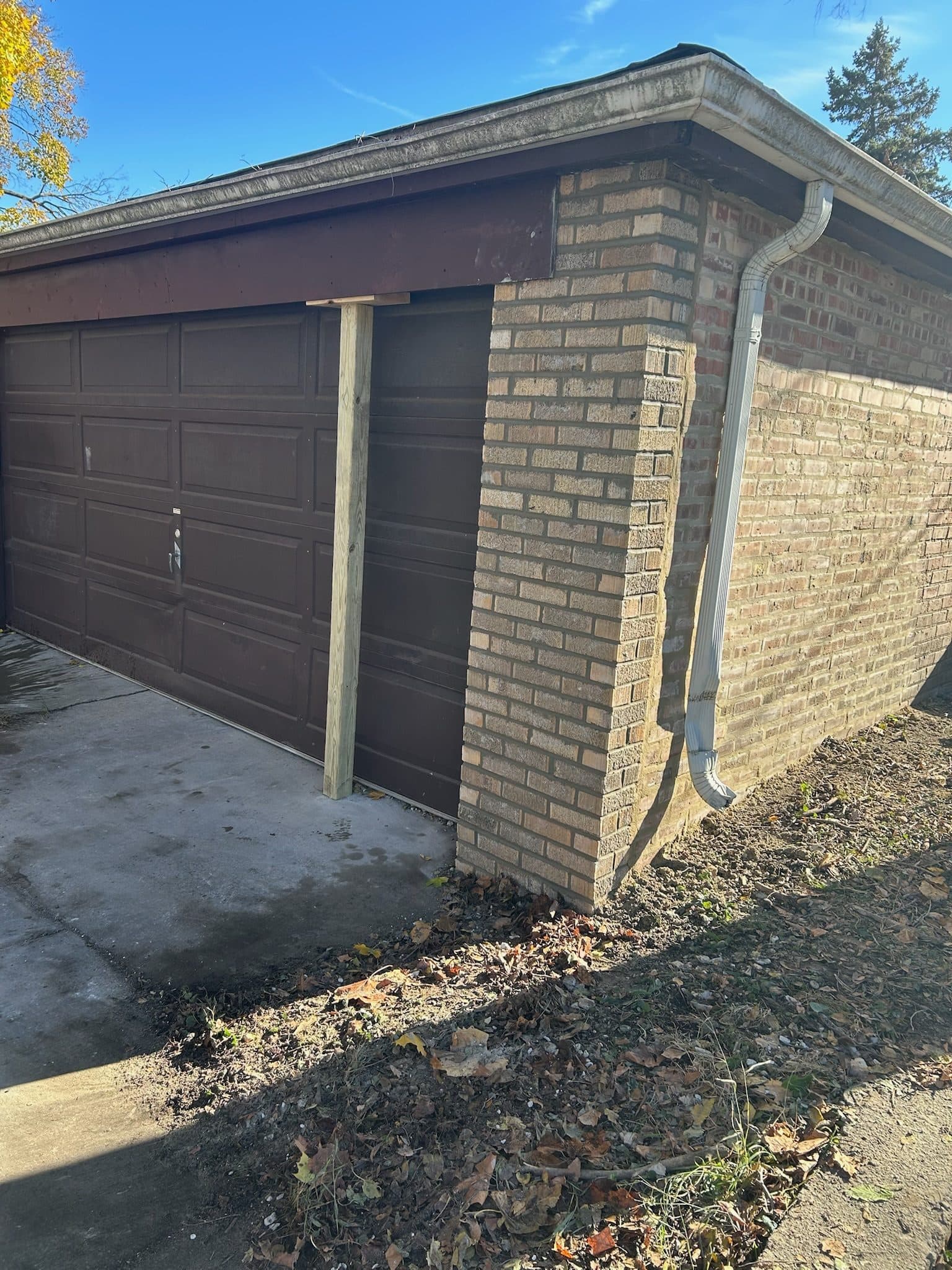
If you're standing in the yard looking at a crack that climbs your brick wall in a staircase pattern, following the mortar joints up and across, up and across — that is a step crack, and it means one thing for certain: the wall has moved. What it does not automatically mean is that your house is failing. Step cracks in brick walls run the full range from a decades-old, long-settled hairline that needs nothing more than proper repointing, to an active structural problem that needs prompt attention. The three questions that matter are why did it move, how much, and is it still moving?
Paul Lally's Masonry Inc. has been diagnosing and repairing cracked brick across Chicago and the Chicagoland suburbs since 1988. This guide explains how to read the crack, which signs are genuinely urgent, and what an honest repair actually involves. If you want a real answer about your wall, we'll come look at it — free on-site estimates, (708) 448-8866.
What a step crack actually is
A brick wall is a system of two very different materials: hard, brittle brick units, and softer mortar joints holding them together. Mortar is deliberately weaker than the brick — it's the sacrificial part of the wall. So when a wall is put under stress and something has to give, the failure travels along the path of least resistance: the joints.
That's why the crack looks like a staircase. It runs up a head joint (the vertical joint between two bricks), across a bed joint (the horizontal joint under a course), up the next head joint, and so on. Stair-step cracks in brick are simply the shape a masonry wall makes when it moves.
That shape is also useful, because different movements make different patterns. A mason reads the crack the way a mechanic listens to an engine.
| Crack pattern | What it usually means | Typical urgency |
|---|---|---|
| Stair-step following the joints, wider at one end | Differential movement — one part of the wall or footing has moved more than another (settlement, soil, drainage) | Depends on width and whether it's still moving — have it evaluated |
| Vertical crack, often near a corner or opening | Expansion/contraction, a missing or failed expansion joint, or shrinkage | Usually lower urgency; often a repointing and joint issue |
| Horizontal crack, especially in a long run | Lateral pressure on the wall, or corroded wall ties / rusting steel — the wall is being pushed | High — get it looked at promptly |
| Horizontal crack directly above a window or door | A rusting steel lintel expanding as it corrodes ("rust jacking") | Moderate to high — the lintel is failing |
| Hairline crack, thin, unchanged over years | Old, settled, dormant movement | Low structurally — but still seal it against water |
| Crack with displacement (one side pushed out of plane) | The wall has lost alignment, not just cracked | High — structural evaluation |
One honest caveat before we go further: nobody, including us, can diagnose a wall from a paragraph on the internet. The table tells you what a pattern tends to mean. Only looking at the actual wall — the crack, the soil, the gutters, the lintels, the interior — tells you what's true about yours.
What causes step cracks in brick walls
Foundation settlement and differential settlement
All buildings settle. Uniform settlement — the whole house going down evenly — rarely cracks brick. Differential settlement, where one part of the foundation drops more than another, absolutely does. The wall gets pulled apart diagonally, and the joints open in a staircase. This is the classic cause, and it's why step cracks so often start near a corner or an opening and widen as they climb.
Chicagoland's expansive clay soil
Much of our region sits on heavy clay. Clay swells when it's wet and shrinks when it dries — and it does this every year. A wet spring followed by a dry August can move the soil under a footing measurably. Over decades of that cycle, the corner of a house that sits in the wettest or driest ground moves relative to the rest, and the brick above it cracks.
Poor drainage and downspouts at the foundation
This is the cause we see most often and the one homeowners can most often fix. A downspout dumping straight onto the soil beside the foundation, grading that slopes toward the house, or a clogged gutter overflowing at one corner will saturate the ground in exactly one spot. That soil swells, then dries, then swells again — and the wall above it cracks. Very often, a step crack is a gutter problem that has been going on for fifteen years.
Rusting or failing steel lintels
The steel angle iron carrying the brick above a window or door rusts. Rusting steel expands to many times its original thickness — rust jacking — and it lifts the masonry sitting on it. The result is a horizontal crack along the lintel and step cracks fanning up and out from the corners of the opening. This is a lintel problem masquerading as a wall problem, and repointing it accomplishes nothing.
Missing or failed expansion joints
Brick expands and contracts with temperature and moisture. Long walls need somewhere to absorb that movement. If the expansion joints were left out, undersized, or filled hard with mortar over the years, the wall relieves the stress by cracking — often vertically at a corner, sometimes as a step crack.
Tree roots and frost heave
A mature tree close to the house draws enormous amounts of water out of the clay in summer, shrinking the soil under that side of the foundation. And in a Chicago winter, water in the soil freezes and heaves upward — pushing a shallow footing, a stoop, or a porch pier, and cracking the masonry it carries.
Corroded wall ties on brick veneer
On brick veneer construction — common on post-war and subdivision homes across the south and southwest suburbs — the brick skin is tied back to the structure with metal ties. When those ties corrode, the veneer loses its connection, and the wall can crack, bulge, and eventually bow away from the house.
Overloaded or undersized footings
Less common, but real: an addition, a heavy roof change, or an original footing that was never adequate for the load can settle under stress and crack the masonry above it.
The one question that matters most: is it still moving?
Everything about the repair changes depending on the answer.
A dormant crack — the house settled, it stopped, and the crack has been the same width since the Reagan administration — is essentially a water-entry and appearance problem. Repoint it properly, replace any cracked brick, and it's genuinely done.
An active crack — one that is still opening — cannot be fixed with mortar, because the same force that opened it the first time will open it again. Patch it and you'll get a fresh crack next spring, usually running right alongside your patch.
Here's how movement is actually assessed:
- Measure and photograph it. Hold a tape or ruler across the crack and take a dated photo. Mark the extreme ends of the crack with a pencil line so you can see if it lengthens.
- Watch it across a full seasonal cycle. Our clay soil moves with the seasons, and our masonry moves with freeze-thaw. A crack judged over one month tells you very little; a crack judged from spring to spring tells you a great deal.
- Note whether it's wider at the top or the bottom. Wider at the top usually points to one side dropping; wider at the bottom points to heave or rotation. It's a clue to what is moving.
- Check the inside of the house. Doors and windows that suddenly stick or won't latch, fresh drywall cracks running diagonally from the corner of a door frame, sloping floors — these say the movement is structural and current, not historical.
- Look for fresh debris. Mortar dust or grit accumulating below the crack means the joint is still working.
If the crack is stable, you have time to plan the repair. If it's moving, you want eyes on it sooner.
When to worry — the urgency ladder
Most step cracks are not emergencies. These signs, however, mean stop reading and get the wall evaluated promptly:
- A horizontal crack running along a bed joint over any distance — this is the wall being pushed, not settling.
- Bowing or bulging — sight down the wall from the corner. If it's belly-out, that's a structural condition.
- Displacement — one side of the crack has pushed out past the other, so the wall is no longer in a single plane.
- A crack that is visibly widening, or is wide enough to slide a coin into and growing.
- Loose bricks you can move by hand, or bricks that have shifted position.
- Daylight visible through the wall, or through the chimney.
- Doors and windows binding, floors sloping, or interior cracks appearing along with the exterior crack.
- Step cracks fanning out from the corners of a window or door, with a horizontal crack at the lintel — the steel is failing above your head.
None of this means your house is coming down. It means the wall is telling you something and it should be read by someone who does this for a living.
How step cracks are actually repaired
- Diagnose and correct the cause first. This is the whole ballgame. If it's drainage, the grading, gutters, and downspouts get corrected. If it's a rusted steel lintel, the lintel is replaced. If it's settlement, the foundation issue is addressed before a single brick is touched. Cosmetically filling a step crack without fixing what caused it is the classic bad repair — and it's the one we're most often hired to undo.
- Open and clean the cracked joints. The failed mortar is ground out of the affected joints to proper depth — roughly twice the joint width — not skimmed over.
- Reinforce where the wall needs it. Where a crack is long or the wall needs its strength restored across the break, the masonry can be stitched — helical ties or reinforcement bedded into the horizontal joints across the crack, tying the two sides back into one wall.
- Replace the damaged brick. Cracked, spalled, or crushed brick units are cut out and replaced with brick matched as closely as possible in size, color, and texture.
- Rebuild the section if the wall is displaced. When brick is out of plane, bowing, or has lost its bond, the section is taken down and rebuilt — salvaging and matching brick, and installing new wall ties where the old ones corroded.
- Repoint and tool the joints to match. Fresh mortar is packed in and tooled to the original joint profile so the repair reads as part of the wall rather than a scar across it.
- Seal and manage water last. Once the wall is sound and weathertight, sealing and drainage improvements protect the work going forward.
Materials and technique — why the mortar matters
Matching mortar isn't about vanity. It's about whether the repair survives.
- Color and sand are matched so the patch disappears into the wall.
- Type is matched to the brick, not to preference. A soft, century-old Chicago common brick wants a softer, lime-based mortar. Pack a hard, Portland-heavy modern mortar into a soft old wall and the mortar becomes stronger than the brick — so the brick becomes the sacrificial material, and the faces start spalling off within a few winters. On harder modern brick, a Type N (or where conditions call for it, Type S) mortar is appropriate.
- A rigid patch in a moving wall will fail. This is worth repeating: if the wall is still moving, hard mortar shoved into the crack simply relocates the failure a few inches over. The wall doesn't care how good the patch looks.
Why Chicagoland brick cracks the way it does
Our region hands masonry a specific set of problems. Expansive clay soils swell and shrink under footings every single year. Freeze-thaw cycling — water into the crack, freeze, expand, widen, repeat — turns a hairline into an open joint over a decade, which is why an "only cosmetic" crack still needs sealing.
And our housing stock is old and largely masonry. Chicago brick bungalows, greystones, and two-flats were built a century ago on soft brick and lime mortar, and a lot of them have been repaired at some point with mortar that was far too hard. In the post-war suburbs — Oak Lawn, Evergreen Park, Tinley Park, Orland Park, Palos Heights — brick veneer subdivision homes bring their own signature failure: rusting steel lintels over the picture windows and garage openings, and corroding wall ties behind the veneer. The step crack fanning up from your front window's corner is often a steel problem, not a soil problem.
Paul Lally's Masonry Inc. is a family-owned, insured masonry contractor serving Chicago and the Chicagoland suburbs since 1988 — tuckpointing, brick repair and replacement, chimney repair and rebuilds, lintel replacement, foundation masonry repair, restoration, and waterproofing for residential and commercial properties. Built on Craftsmanship. Backed by Experience. Free on-site estimates — call (708) 448-8866.
Prevention and maintenance
Most of what cracks brick in this region is water in the wrong place, and most of that is fixable with a ladder and an afternoon:
- Extend your downspouts. Get the water several feet away from the foundation, not onto the soil beside it. This is the highest-value thing most homeowners can do for their masonry.
- Grade soil away from the house. The ground should fall away from the foundation, not pool against it.
- Keep gutters clear. An overflowing gutter concentrates water at exactly one corner — and that corner is where you'll see the crack.
- Keep the mortar joints tight. Sound joints keep water out of the wall in the first place. Failing joints are an open invitation.
- Walk the house once a year. Look at the weather-facing walls, the chimney, and above every window and door. Photograph anything new.
DIY versus hiring a mason
Sealing a crack yourself is cheap and easy, and that is precisely the danger. A tube of caulk hides the diagnosis. The crack stops being visible, so it stops being monitored — and the settlement, the drainage problem, or the rusting lintel keeps working behind it. When you find it again, you're not repointing a joint anymore; you're rebuilding a section.
The other DIY trap is mortar type. Homeowners reach for the strongest bag on the shelf, which on an old soft-brick wall is exactly the wrong choice and will cost you brick faces down the line.
Diagnosing masonry movement is a judgment call built on seeing a lot of walls. That's the part you're actually hiring for.
Related services
- Brick repair for cracked, loose, and damaged units
- Tuckpointing and repointing failed mortar joints
- Steel lintel repair and replacement over windows and doors
- Foundation masonry repair
- Brick replacement and section rebuilding
Further reading: bowing and bulging brick walls, failing lintels and cracked brick above windows, and foundation masonry repair in Chicago.
The bottom line
A step crack is your wall telling you it moved. That's information, not a verdict. Most of the cracked brick we look at across Chicagoland turns out to be old settlement or a drainage problem that's been quietly running for years — fixable, and not frightening. Some of it is a rusting lintel or a wall losing its ties, and those are worth catching early. The only real mistake is filling the crack, forgetting about it, and letting the cause keep working.
We've been reading Chicagoland brick since 1988, and our name is on every job we do. If there's a crack climbing your wall and you want a straight answer about what caused it and what it actually needs, we'll come out, look at the wall, and tell you — free on-site estimate, no upsell.
Call Paul Lally's Masonry Inc. at (708) 448-8866, or request your free estimate here. Built on Craftsmanship. Backed by Experience.
Frequently Asked Questions
Are step cracks in brick walls serious?
Sometimes, and sometimes not — the pattern alone doesn't tell you. A thin, old, dormant step crack from settlement that finished decades ago is a cosmetic and water-entry issue, while a widening crack with bricks pushed out of plane is a structural one. The width, whether it's growing, and whether the wall is displaced are what separate the two.
Do step cracks always mean foundation problems?
No. Foundation settlement is one common cause, but a rusting steel lintel over a window, a failed expansion joint, frost heave, or a downspout soaking the soil at one corner can all produce the same stair-step pattern. That's why the crack has to be diagnosed rather than assumed.
Can I just fill a step crack with caulk or mortar?
You can, but if the cause is still active the crack will simply reopen — often right beside the patch. Filling a crack without correcting what moved the wall is the single most common bad masonry repair we're called in to undo.
How wide does a crack in brick have to be before I worry?
Width matters less than movement and displacement. A hairline crack that is visibly wider this year than last year is more concerning than a wider crack that hasn't changed in twenty years, and any crack where one side of the brick has pushed outward past the other should be looked at promptly.
How do I know if a brick crack is still moving?
Movement is judged over time: photograph the crack with a ruler or tape beside it, mark the ends with a pencil, and check it across a full season of freeze-thaw. Sticking doors and windows, fresh interior drywall cracks in the same wall, or debris falling from the joint all suggest the movement is still active.
Will a step crack let water into my house?
Yes — an open crack is a direct path for water into the wall, and in Chicagoland that water freezes, expands, and widens the crack every winter. Even a crack that is structurally dormant should be properly repointed so the wall sheds water again.
Does homeowners insurance cover cracked brick?
It depends entirely on the cause and your specific policy — damage from a sudden covered event is treated very differently from gradual settlement, soil movement, or deferred maintenance, which are commonly excluded. Read your policy and ask your carrier; we can document the condition of the masonry, but we can't tell you what your policy will pay.
How much does it cost to fix a step crack in a brick wall?
It depends on what caused it and how far the damage runs — repointing a dormant crack is a much smaller job than rebuilding a displaced section, replacing a rusted lintel, or reinforcing a wall with helical ties. Height and access, scaffolding, the number of damaged bricks, and matching the original brick and mortar all drive the number. Paul Lally's Masonry Inc. gives free on-site estimates — call (708) 448-8866.
Can a cracked brick wall be repaired, or does it have to be rebuilt?
Most cracked walls are repaired, not rebuilt. Rebuilding a section becomes necessary when the brick is displaced out of plane, the wall is bowing, or the masonry has lost its bond — otherwise the crack is stitched, repointed, and the damaged brick replaced.
Should I fix the drainage or the brick first?
The drainage — or whatever else is moving the wall. Correcting grading, downspouts, and gutters, or replacing a rusted lintel, comes before the masonry repair, because a wall that is still moving will crack again no matter how well the brick is patched.