
Caulking & Joint Sealant · Orland Park, IL
Commercial Caulking & Joint Sealant in Orland Park, IL — Reseal the Building on a Schedule, Not After the Leak
On a commercial building the sealant all goes in on the same day, so it all fails on roughly the same schedule. Here is how Orland Park property managers can plan the reseal instead of chasing leaks one joint at a time.
Quick Answer
Commercial caulking in Orland Park, IL means cutting out failed sealant and installing new backer rod and elastomeric sealant at storefront and window perimeters, expansion and control joints, coping and precast joints, and material transitions — planned building-wide, elevation by elevation. Paul Lally's Masonry, family-owned and insured since 1988, gives free on-site estimates: (708) 448-8866.
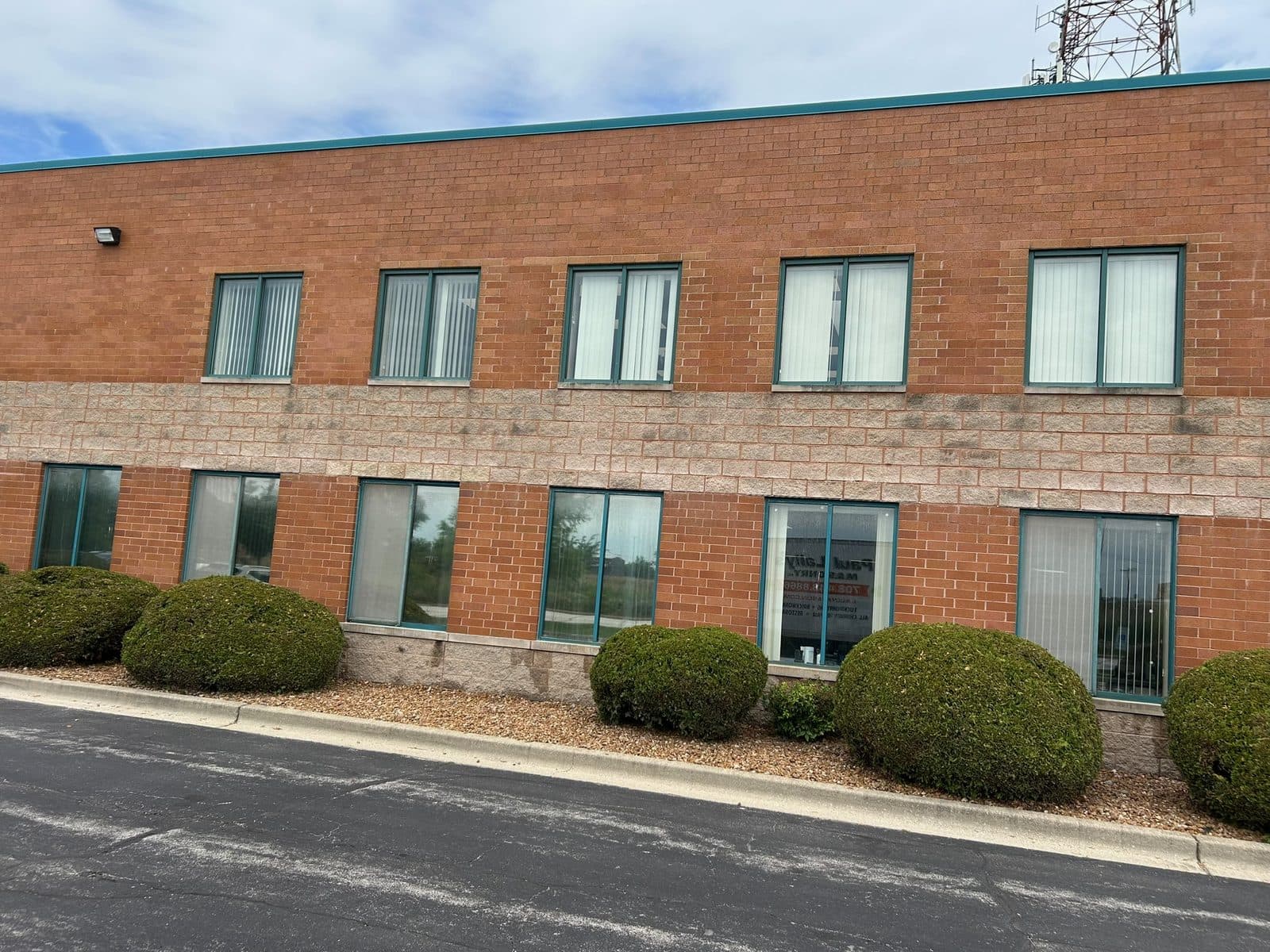
Commercial caulking in Orland Park, IL is the planned replacement of the sealant that keeps water out of a building's moving joints: storefront and window perimeters, control and expansion joints in brick and block, coping joints at the roof edge, and every transition between different materials. Paul Lally's Masonry does this work for property managers, owners and association boards across Orland Park. Call (708) 448-8866 for a free on-site estimate.
On a commercial building, all of the sealant usually went in during the same few weeks of construction. It ages under the same sun and through the same winters, so it tends to fail on roughly the same schedule. Fixing whichever joint leaked last month means paying for a lift, a crew and a call-out over and over again on a building that needs one planned reseal.
Paul Lally's Masonry Inc. is a family-owned, insured masonry contractor serving Chicago and the Chicagoland suburbs since 1988. We handle tuckpointing, brick repair and replacement, chimney repair and rebuilds, lintel replacement, masonry restoration, caulking and waterproofing for residential and commercial properties. Built on Craftsmanship. Backed by Experience. Free on-site estimates: (708) 448-8866.
What commercial caulking covers
A commercial wall is made of rigid pieces, such as brick, block, precast and stone, set against things that move: aluminum storefront, steel, glass and roofing. Joint sealant is the flexible line where those pieces meet or where the wall was designed to move. On a typical Orland Park retail or office building, that means:
- Storefront and window perimeters: the joint between aluminum framing and masonry
- Control joints in concrete block (CMU) and expansion joints in brick veneer, the vertical breaks that let long walls move
- Coping and precast joints: the gaps between cap pieces at the parapet or roof edge
- Dissimilar-material transitions, such as brick to block bands, masonry to metal panel, and masonry to EIFS
- Penetrations: conduit, lights, signage brackets, hose bibs and vents
Ordinary mortar joints between the units are not on that list. They get tuckpointing, not caulk.
Signs the building is due for a reseal
- Beads that are cracked, crazed or chalky to the touch
- Sealant pulled away from one side of the joint (adhesive failure)
- Sealant split down the middle (cohesive failure)
- Joints with daylight, voids or missing material, often at corners and terminations
- Water staining inside at storefront heads, or wet ceiling tile below windows
- Efflorescence or dark wet streaks running down from a joint on the masonry face
If you see these on one elevation, the others are rarely far behind.
What waiting costs a commercial owner
Water that gets past a failed perimeter joint does not stay at the joint. It runs into the wall cavity, soaks the steel lintel over the opening, wets interior finishes, and in winter freezes and widens the gap. A reseal is one of the smallest lines in commercial masonry maintenance. The repairs it prevents, such as rusted lintels, spalled brick, ruined drywall and tenant complaints, are not small.
How we scope and phase a building-wide reseal
- Walk every elevation and record each joint type, its condition, width and depth, and its total linear footage.
- Separate sealant problems from masonry problems. A joint that is leaking because the lintel behind it is rusting, or because the coping has shifted, needs masonry repair before it is sealed. Sealing over it only hides the problem.
- Prioritize by exposure and risk: active leaks first, then south and west elevations and storefront perimeters, then the rest.
- Phase around tenants, one elevation or one storefront run at a time, with entrances kept open and work timed around business hours.
- Cut out all failed sealant and clean the joint faces down to sound material.
- Set backer rod so the new bead bonds to the two sides of the joint only, which lets it stretch without tearing.
- Prime where the substrate needs it, then install and tool a sealant suited to that joint.
- Document the work by elevation, so the next cycle can be planned rather than discovered.
Materials
Sealant is chosen per joint, not per building. Masonry movement joints generally take a polyurethane or silicone sealant rated for that movement. Storefront perimeters get a sealant compatible with the frame finish. Coping joints need a sealant that will take UV and standing water. Every joint gets a correctly sized closed-cell backer rod. The color is matched to the mortar, block or frame so the work disappears on the elevation.
What drives the cost
We don't publish prices because every building is different. The main factors are:
- Total linear footage, plus joint width and depth
- How much old material has to be removed, and whether earlier work used the wrong product
- Height and access: ladder, boom lift or swing stage, and parking lot coordination
- Phasing around open tenants and after-hours requirements
- Masonry repairs found behind failed joints that have to be done first
Paul Lally's Masonry gives a free written estimate, broken out by elevation and joint type, so a property manager can phase the work across budget years if needed.
Orland Park buildings we see
Orland Park's commercial stock is mostly late-20th-century and newer: retail and strip centers along LaGrange Road and 159th Street, office and medical buildings, and condominium and townhome communities across the village. Much of it is brick veneer and split-face concrete block with long runs of storefront glass. Construction like that depends heavily on control joints and perimeter sealant, and much of that original sealant has now been through decades of Chicagoland freeze-thaw winters and summer sun. On many of these buildings the first full reseal is overdue.
For associations, sealant is easy to put in a reserve plan. It is cyclical, measurable and predictable, which is exactly what a board needs.
For Orland Park homeowners
The same rules apply at home on a smaller scale. Window and door perimeters, the joint where the brick meets the siding or trim, and garage door jambs are the usual failure points. If the bead is cracked or pulling away, it should be cut out and redone properly with backer rod. Adding a new bead over the old one won't hold.
Related services in Orland Park and nearby
- Caulking & joint sealant: our full service overview
- Commercial masonry restoration, when the joints are only part of the problem
- Commercial masonry restoration in Orland Park
- Commercial masonry restoration in Palos Heights, next door in our home base
- Masonry waterproofing, the step that follows once joints and mortar are sound
- Lintel replacement for rusted steel found behind a failed perimeter joint
Plan the reseal before the next leak
Paul Lally's Masonry is family-owned, insured and has served Orland Park and the rest of Chicagoland since 1988. We put our name on every job and we stand behind it. Call (708) 448-8866 or request a free on-site estimate. We'll walk the building and give you a reseal plan you can schedule.
Caulking & Joint Sealant in Orland Park, IL — Frequently Asked Questions
How much does commercial caulking cost in Orland Park, IL?
It is driven by total linear footage of joint, joint width and depth, how much old sealant must be cut out, height and lift access, and whether the work has to be phased around open tenants. Paul Lally's Masonry walks the building and gives a free written estimate broken out by elevation and joint type.
How often should a commercial building in Orland Park be resealed?
Sealant does not last as long as the masonry around it, so plan on a full reseal cycle rather than waiting for leaks. South and west elevations, which take the most sun, usually fail first. A walk-around inspection every year or two tells you when the cycle is due.
Can you caulk over the old sealant?
No. New sealant laid over a failed bead bonds to the old material, not to the masonry or frame, and it fails with it. The old sealant is cut out, the joint faces are cleaned, backer rod is set, and new sealant is tooled in.
Can the work be done while our tenants stay open?
Yes. Caulking is quiet, low-dust work. We phase it by elevation or by storefront, keep entrances usable, and schedule around the hours that matter to each tenant.
Which joints on a strip center or office building need sealant?
Storefront and window perimeters, vertical control joints in block and brick veneer, expansion joints, joints between precast or stone coping pieces, and every place two different materials meet. Mortar joints between the brick or block themselves get mortar, not caulk.
Why are our storefront joints failing faster than the rest of the building?
Storefront framing is aluminum, which moves with temperature far more than the masonry around it, and those perimeters usually face the parking lot and the afternoon sun. That combination works a sealant joint harder than anywhere else on the building.
Is caulking part of masonry work or a separate trade?
On a masonry building it is part of keeping the wall dry, and it is often found during the same inspection as mortar, lintel or coping problems. Having one contractor look at the whole wall avoids sealing over a problem that needs masonry repair first.
Caulking & Joint Sealant in Nearby Areas
Other Masonry Services in Orland Park, IL
Learn more about our caulking & joint sealant services across Chicagoland, or view all service areas.
Free on-site estimates across Chicagoland.