
Caulking & Joint Sealant · Homer Glen, IL
Caulking & Joint Sealant in Homer Glen, IL — The Cheapest Masonry Work You'll Ever Buy
Sealant is a wear item. It has a service life, it reaches the end of it quietly, and when it does, water starts going somewhere it was never meant to go. Replacing it on schedule is the least expensive masonry work available — and it is done wrong more often than almost anything else.
Quick Answer
Paul Lally's Masonry Inc. provides masonry caulking and joint sealant in Homer Glen, IL — cutting out failed sealant and rebuilding expansion, control and perimeter joints with proper backer rod and the right sealant for each substrate. Family-owned since 1988, insured. Free on-site estimates — call (708) 448-8866.
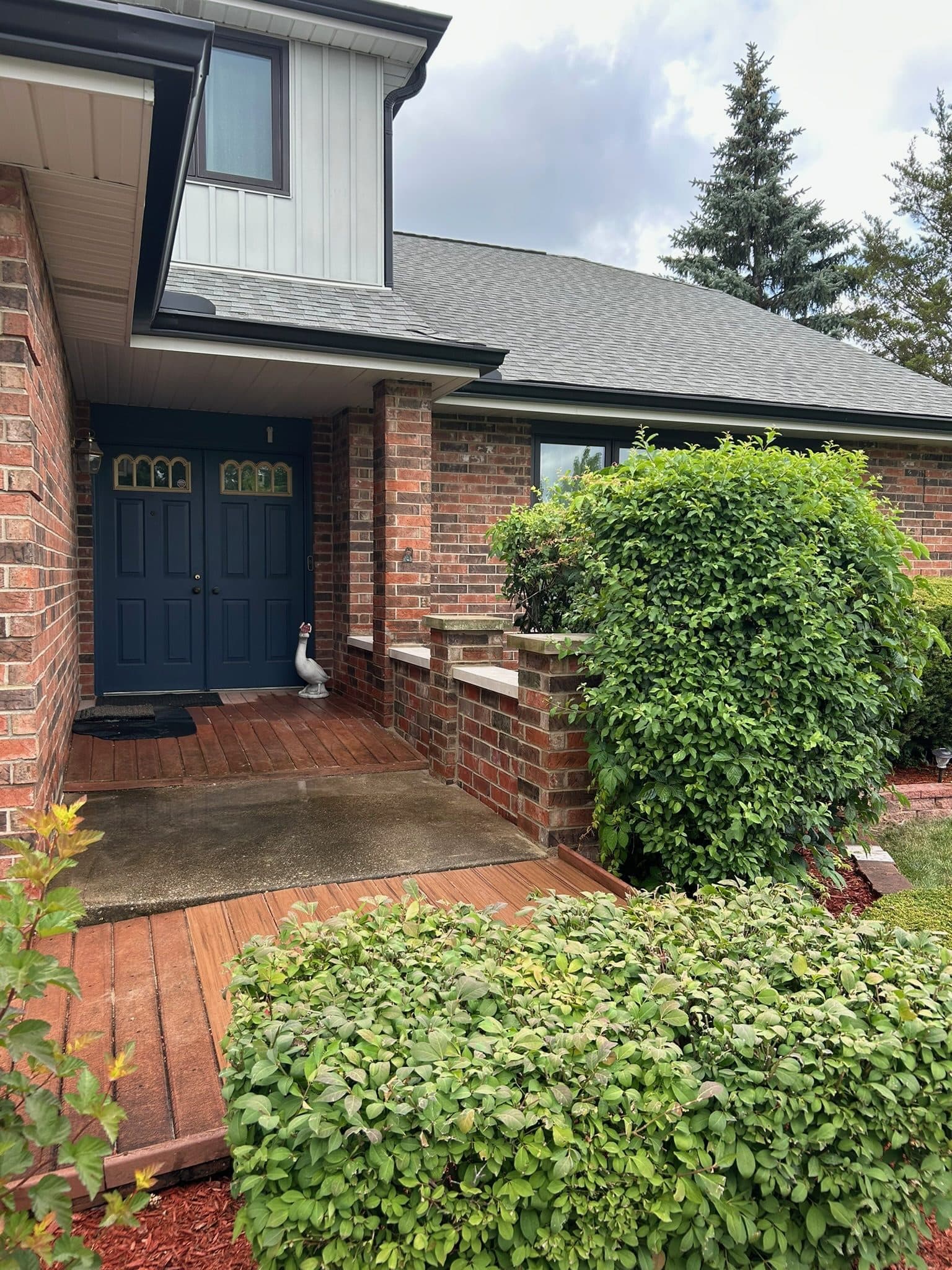
Caulking & Joint Sealant in Homer Glen, IL
Caulking and joint sealant in Homer Glen, IL is the least glamorous work we do and, dollar for dollar, the most protective. Paul Lally's Masonry Inc. rebuilds sealant joints on homes and commercial buildings across Homer Glen and the surrounding southwest suburbs. Family-owned since 1988, insured, free on-site estimates. Call (708) 448-8866.
Nobody calls a mason about caulk. They call about the water damage it let in three years after it failed.
Sealant Is a Wear Item — Mortar Isn't
This is the distinction most homeowners have never had explained, and it explains almost everything else on this page.
Mortar joints are rigid. They bond masonry units together and they are meant to stay exactly where they are. When they wear out, you tuckpoint them.
Sealant joints are flexible on purpose. They fill the places a building is designed to move: expansion and control joints in brick veneer, the perimeter of every window and door, and every spot where masonry meets a different material — wood trim, siding, flashing, a deck ledger, a slab.
Those two things are not interchangeable, and swapping them is a real failure we find regularly:
- Mortar packed into a moving joint cracks straight through within a season, because it cannot stretch.
- Sealant smeared into an eroded mortar joint as a shortcut instead of proper repointing fails fast and makes the real repair harder later.
Mortar holds masonry together. Sealant lets it move without letting water in.
Why Homer Glen Is a Sealant Town
Homer Glen incorporated in 2001, and while there is older stock scattered through it, the bulk of the village is relatively young construction on large lots — brick and stone veneer homes from the 1990s and 2000s, plus newer commercial along the 159th Street and Bell Road corridors.
That matters, because young masonry does not fail the way century-old masonry does. On a twenty-five or thirty-year-old brick veneer home, the mortar is often still in decent shape across most of the wall — but the sealant is well past its service life, and it is failing everywhere at once:
- Around every window and door
- At the expansion and control joints designed into the veneer
- Where brick or stone meets siding, trim, soffit or a gable end
- At hose bibs, vents, conduit, light fixtures and railings
- Where a deck ledger or porch roof ties into the wall
- At the transition from stone or brick wainscot to whatever is above it
On a lot of Homer Glen houses, the highest-value masonry work available right now is not tuckpointing. It is sealant replacement.
Signs Your Sealant Has Failed
- Sealant that has hardened, cracked, or crazed on the surface
- A bead that has pulled away from one side of the joint — adhesive failure
- A bead split down the middle — cohesive failure, often from a joint with no backer rod
- Sealant that has gone chalky, shrunk, or turned brittle
- Gaps you can see daylight or a gap card through
- Missing sections entirely
- Multiple visible layers, where somebody caulked over caulk
- Staining or damp patches on the wall below a joint
- Interior water at a window corner or along a wall base
Risks of Waiting
A failed sealant joint is an open hole at exactly the places a wall is most vulnerable — the perimeter of openings and the transitions between materials. That water gets behind the veneer, wets the sheathing and framing behind it, reaches the lintel steel over the openings, and in a Chicagoland winter freezes inside the assembly.
The bad part is how quiet it is. Sealant failure rarely announces itself. It shows up as a damp basement corner, a stain at a window that keeps coming back after painting, or brick spalling below a joint — well after the cheap fix has stopped being the fix.
Our Process
Doing this properly is mostly removal.
- Survey the whole building and identify every joint type — expansion, control, perimeter, transition, penetration.
- Determine why each joint exists, because that decides the material and the joint design.
- Cut out the old sealant completely, back to sound substrate on both faces.
- Clean and prepare the joint faces — mechanically, not with a rag and a hope.
- Set backer rod to the correct depth so the bead has the right width-to-depth ratio and cannot bond to the back of the joint.
- Prime where the substrate requires it.
- Gun the sealant in a continuous bead with no voids.
- Tool the bead so it makes full contact with both faces and sheds water.
- Address the masonry around it — repointing, brick repair, sill and flashing issues — because sealant cannot fix a masonry problem.
Materials
Sealant is not one product. Choosing correctly means matching the joint's expected movement capability and both substrates, and using a formulation rated for the exposure — including whether it will be painted and whether it is in constant sun.
Backer rod type matters too, and so does joint geometry: a bead that is too deep cannot stretch, and a bead that is too thin tears. This is the part that separates sealant work that lasts from sealant work that looks fine for a season.
Related services: tuckpointing and repointing, waterproofing and masonry sealing, limestone and sill repair, and residential masonry restoration.
What Drives the Cost
- Total joint footage and how many joint types are involved
- Height and access — ground floor versus a two-story gable
- Removal difficulty, especially where sealant has been layered over old sealant
- Substrate condition and whether masonry repair is needed first
- Number of penetrations and transitions
- Sun and weather exposure, which affects material selection
We look at it in person and put the estimate in writing. That look is free.
Serving Homer Glen and the Southwest Suburbs
Paul Lally's Masonry Inc. is a family-owned, insured masonry contractor serving Chicago and the Chicagoland suburbs since 1988 — tuckpointing, brick repair and replacement, chimney repair and rebuilds, lintel replacement, masonry restoration, and waterproofing for residential and commercial properties. Built on Craftsmanship. Backed by Experience. Free on-site estimates — call (708) 448-8866.
We work throughout Homer Glen and neighbouring Lemont, Mokena, New Lenox and Orland Park.
Get a Free Homer Glen Sealant Assessment
If the caulk around your windows has hardened, cracked or pulled away, this is the cheapest thing on your house to fix and the most expensive thing to ignore. Call (708) 448-8866 or request a free estimate.
Caulking & Joint Sealant in Homer Glen, IL — Frequently Asked Questions
How much does masonry caulking cost in Homer Glen, IL?
Sealant work is scoped by how much joint there is, how high it sits, what has to be cut out first, and how many different substrates and joint types are involved. Removing failed sealant properly is most of the labour, so a wall that has been caulked over three times costs more than one that has not. Paul Lally's Masonry Inc. gives free on-site estimates in Homer Glen — call (708) 448-8866.
What is the difference between caulking and tuckpointing?
Tuckpointing replaces the mortar between masonry units — a rigid joint meant to stay put. Caulking fills joints that are designed to move: expansion and control joints, window and door perimeters, and where masonry meets a different material. Mortar in a moving joint cracks, and sealant in a mortar joint fails. They are not interchangeable.
How long does exterior sealant last?
It varies with the product, the joint design and the exposure, but sealant is a maintenance item measured in years rather than decades — and a south or west elevation in full sun ages faster than a sheltered one. The honest answer is to inspect it rather than assume a number.
What is backer rod and why does it matter?
Backer rod is the foam cord set into the joint behind the sealant. It controls the depth of the bead so the sealant can stretch properly, and it keeps the sealant from bonding to the back of the joint — three-sided adhesion, which is the single most common reason a sealant joint tears.
Can I just caulk over the old caulk?
No, and this is where most sealant work goes wrong. New sealant bonds to whatever it touches, so applied over failed material it is only as good as the failed material underneath. The old sealant has to be cut out, the joint faces cleaned back to sound substrate, and the joint rebuilt.
Water is getting in around my windows. Is that a caulking problem?
It might be, and it might be the sill, the lintel, the flashing, or joints further up the wall carrying water down. Sealant is often blamed for leaks that start somewhere else. We trace where the water is actually entering before recommending a fix.
Do you do sealant work on Homer Glen homes and commercial buildings?
Yes — residential and commercial both, throughout Homer Glen and the surrounding Will and Cook County suburbs. Paul Lally's Masonry Inc. has been doing this work since 1988. Free on-site estimates — call (708) 448-8866.
Caulking & Joint Sealant in Nearby Areas
Other Masonry Services in Homer Glen, IL
Learn more about our caulking & joint sealant services across Chicagoland, or view all service areas.
Free on-site estimates across Chicagoland.