
Commercial Masonry Restoration · Frankfort, IL
Commercial Masonry Restoration in Frankfort, IL — Historic Downtown and the Route 30 Corridor
A commercial building does not close while its wall is repaired. On a working property the sequencing, the access and the protection matter as much as the mortar.
Quick Answer
Commercial masonry restoration in Frankfort, IL covers tuckpointing, brick and block repair, lintel replacement, parapet rebuilding and façade restoration on historic downtown storefronts, retail centres, and flex and industrial buildings — scoped and phased around operations. Paul Lally's Masonry is a family-owned, insured Chicagoland masonry contractor working since 1988 — (708) 448-8866.
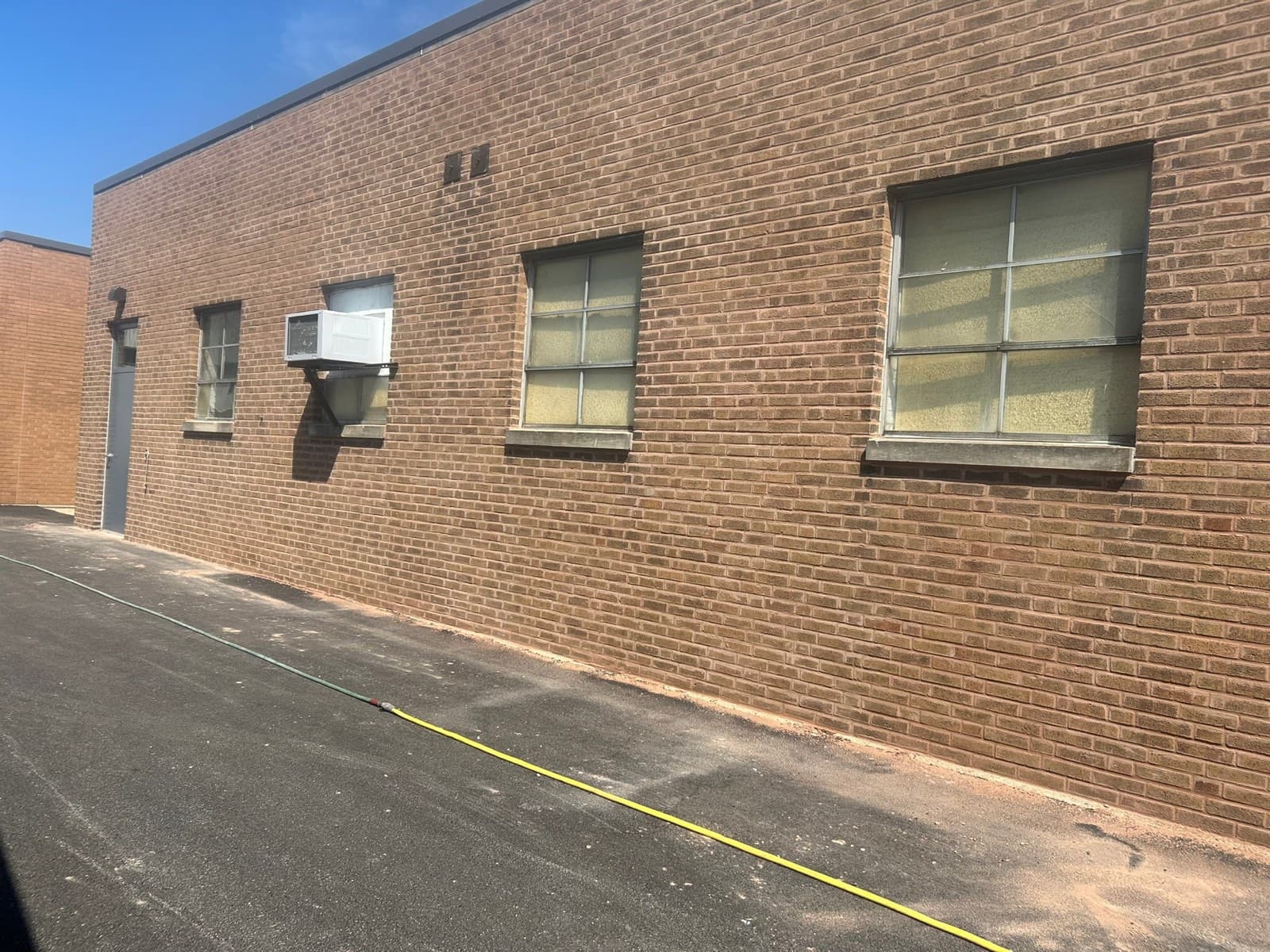
On a house, a masonry repair is a project. On a commercial building it is an operation that has to happen around customers, tenants, deliveries and people walking under the wall all day.
Commercial masonry restoration in Frankfort, IL is work we have been doing across Chicagoland since 1988 — and what separates a good commercial mason from a good residential one is rarely the mortar. It is knowing how to get a wall repaired properly without shutting the building down.
Paul Lally's Masonry Inc. is a family-owned, insured masonry contractor serving Chicago and the Chicagoland suburbs since 1988 — tuckpointing, brick repair and replacement, chimney repair and rebuilds, lintel replacement, masonry restoration, and waterproofing for residential and commercial properties. Built on Craftsmanship. Backed by Experience. Free on-site estimates — call (708) 448-8866.
Two commercial worlds in one village
Frankfort's commercial masonry splits cleanly, and the two halves need genuinely different work.
The historic downtown. The Kansas Street and White Street blocks and the buildings around the Old Plank Road Trail — nineteenth and early-twentieth-century masonry commercial buildings with original storefronts, stone and steel lintels, upper-floor space, and street-facing parapets and cornice detail directly above a walkable sidewalk.
This is restoration in the traditional sense. Soft, compatible mortar. Careful unit matching. Stone repair. A light hand on cleaning. Hard modern mortar on this stock drives stress into century-old units and spalls their faces — the single most common way well-intentioned repairs damage a historic downtown.
The Route 30 and Route 45 corridors, and the commercial development toward I-80. Retail centres, service buildings, restaurants and flex properties — long unbroken brick and concrete block elevations, wide storefront glass and overhead openings, split-face block fronts, and flat roofs with parapets above. Deterioration here tends to be uniform rather than localised, which makes the plan a prioritisation and square-footage exercise rather than patching.
The five places commercial buildings actually fail
Parapets and roof edges. The most exposed masonry on any flat-roofed building — weathered on three surfaces, no roof over it, no heated space behind it — and standing above sidewalks, entries and parking. First priority, every time.
Wide-span lintels. Storefront glass, overhead doors and dock openings span far more than a residential window. When the steel over a sixteen-foot opening corrodes it is carrying substantially more masonry, and the movement shows up fast as a straight horizontal crack with rust staining below it.
Control joints on block walls. Concrete block shrinks as it cures, so block buildings are built with deliberate vertical breaks. When the sealant in one lets go, that joint becomes a full-height water path — presenting inside as a damp vertical stripe that gets blamed on the roof for years.
Grade and entry-level damage. Salt, plow damage and impact at the bottom courses every Will County winter. Predictable, and far better planned for than reacted to.
Joints on the weather elevations. South and west walls run years ahead of north and east on the same building.
How we run work on an occupied building
We walk it with you first. Where lifts can set, where material stages, which entrances must stay clear, what hours work can make noise, and what has to be protected.
We prioritise by risk, not appearance. Overhead and structural first. Then active water entry. Then the elevation everyone looks at. That ordering matters most when a budget will not cover everything in one year — and phasing across budget years is a sensible way to run a building, provided the phasing follows priority rather than convenience.
We plan access honestly. Some elevations need scaffolding, some a lift, some can be reached from the roof. Access drives a real share of commercial masonry cost and it belongs in the scope rather than being discovered mid-job.
Overhead protection wherever the public passes beneath. Not optional on a downtown sidewalk, and occasionally a village authorisation item.
We provide proof of insurance before work begins. Paul Lally's Masonry is insured, and any owner or manager should require that in writing from every contractor bidding the work.
What the service covers
- Tuckpointing and repointing at scale, with mortar matched in type, colour, sand and joint profile
- Brick and block repair and replacement, including matching units on older façades
- Lintel repair and replacement over storefronts, service doors and overhead openings, with flashing and end dams
- Parapet wall repair and rebuilding, including coping and roof-edge detailing
- Façade and cornice restoration on street-facing elevations
- Caulking and joint sealant at control joints, expansion joints and around openings
- Masonry sealing on sound, properly repaired walls
- Structural brick and block wall rebuilding where deterioration has gone past repair
Materials
Mortar matched to the existing masonry and, on the historic downtown stock, softer than the units around it — Type N or softer where the wall calls for it, Type S only where the assembly genuinely needs the strength. Salvaged brick reused wherever sound; replacements matched in size, colour and texture. Through-wall flashing detailed continuous with end dams. Coping set with slope, overhang and a real drip. Backer rod and properly tooled sealant at movement joints. No sandblasting and no high-pressure washing on historic masonry — both permanently strip the weather-resistant outer skin.
What drives the cost
Wall square footage. Height and access. The ratio of repointing to rebuilding. Substrate type and whether units can be matched. Parapet, coping and flashing scope. Overhead and pedestrian protection. Whether work must happen outside trading hours. Whether the building sits in the historic downtown and the work is more exacting. Weather windows, since mortar needs workable temperatures to cure.
We publish no rates, because commercial scopes are not comparable building to building. What we provide is a free on-site estimate in writing with the scope broken out, so you can see what is urgent, what is deferrable and what a phased plan would look like.
Serving Frankfort and the surrounding Will County corridors
We work throughout Frankfort and the communities around it — Mokena, New Lenox, Tinley Park, Orland Park, Homer Glen and Lemont. Related services: commercial masonry restoration, parapet wall repair, lintel repair and replacement, tuckpointing and repointing, and caulking and joint sealant.
For how commercial scopes get planned and phased, see our commercial masonry restoration guide for Chicagoland.
Get a scope you can budget from
Family-owned since 1988, insured, and used to working around a building that has to stay open. Our name is on every job.
Get a free on-site estimate — or call (708) 448-8866. Built on Craftsmanship. Backed by Experience.
Commercial Masonry Restoration in Frankfort, IL — Frequently Asked Questions
How much does commercial masonry restoration cost in Frankfort, IL?
It depends on the scope — wall square footage, height and access, whether lifts or scaffolding are required, the ratio of repointing to rebuilding, and parapet and lintel work. Paul Lally's Masonry provides a free on-site estimate in writing with the scope broken out so it can be budgeted or phased.
Can you work while our tenants stay open?
Yes — occupied and trading is the normal condition on commercial work. Access, staging and noisy operations get planned around business hours and customer entrances, with overhead protection wherever the public passes beneath, and the sequence agreed before we mobilise.
What fails first on a downtown storefront building?
The parapet and roof edge, followed by the storefront lintel and the joints on the weather elevations. The top of the wall is weathered on three surfaces with no heated space behind it, and it sits directly above the sidewalk.
Do historic district requirements apply downtown?
They can, depending on the property. Review commonly covers mortar, joint profile, unit matching and cleaning method — all things a proper restoration would do anyway. We confirm requirements with the village before work begins rather than after.
Can restoration be phased across budget years?
Frequently, and it is often the right call. We prioritise by risk — anything overhead or structural first, then active water entry, then appearance — so a multi-year plan protects the building in the correct order rather than the convenient one.
Do you handle concrete block as well as brick?
Yes. The newer retail and flex buildings along the corridors are heavy on concrete block, which fails differently — control joint sealant failure, cracking, spalling at the base, and water moving through porous split-face units.
Are you insured for commercial work?
Paul Lally's Masonry is insured, and we provide proof of coverage before work begins on any commercial property. Owners and managers should ask every contractor for that in writing early.
How urgent is loose masonry above a sidewalk?
It is the building's first priority. Anything overhead outranks appearance work at street level, because loose material several storeys above a walkable sidewalk is a safety matter rather than maintenance.
Commercial Masonry Restoration in Nearby Areas
Other Masonry Services in Frankfort, IL
Learn more about our commercial masonry restoration services across Chicagoland, or view all service areas.
Free on-site estimates across Chicagoland.