
Commercial Masonry Restoration · Lemont, IL
Commercial Masonry Restoration in Lemont, IL — Downtown Is Built of Stone, and Stone Has Its Own Rules
Lemont's downtown was quarried out of the ground it stands on. Restoring a commercial building here means knowing what dolomite limestone will and will not tolerate — and the single most common cause of permanent damage to it is a cleaning method, not weather.
Quick Answer
Paul Lally's Masonry Inc. provides commercial masonry restoration in Lemont, IL — restoring downtown limestone storefronts, brick commercial buildings, parapets, lintels and facades with soft lime-based mortars and non-abrasive methods, phased around tenant operations. Family-owned since 1988, insured. Free on-site estimates — call (708) 448-8866.
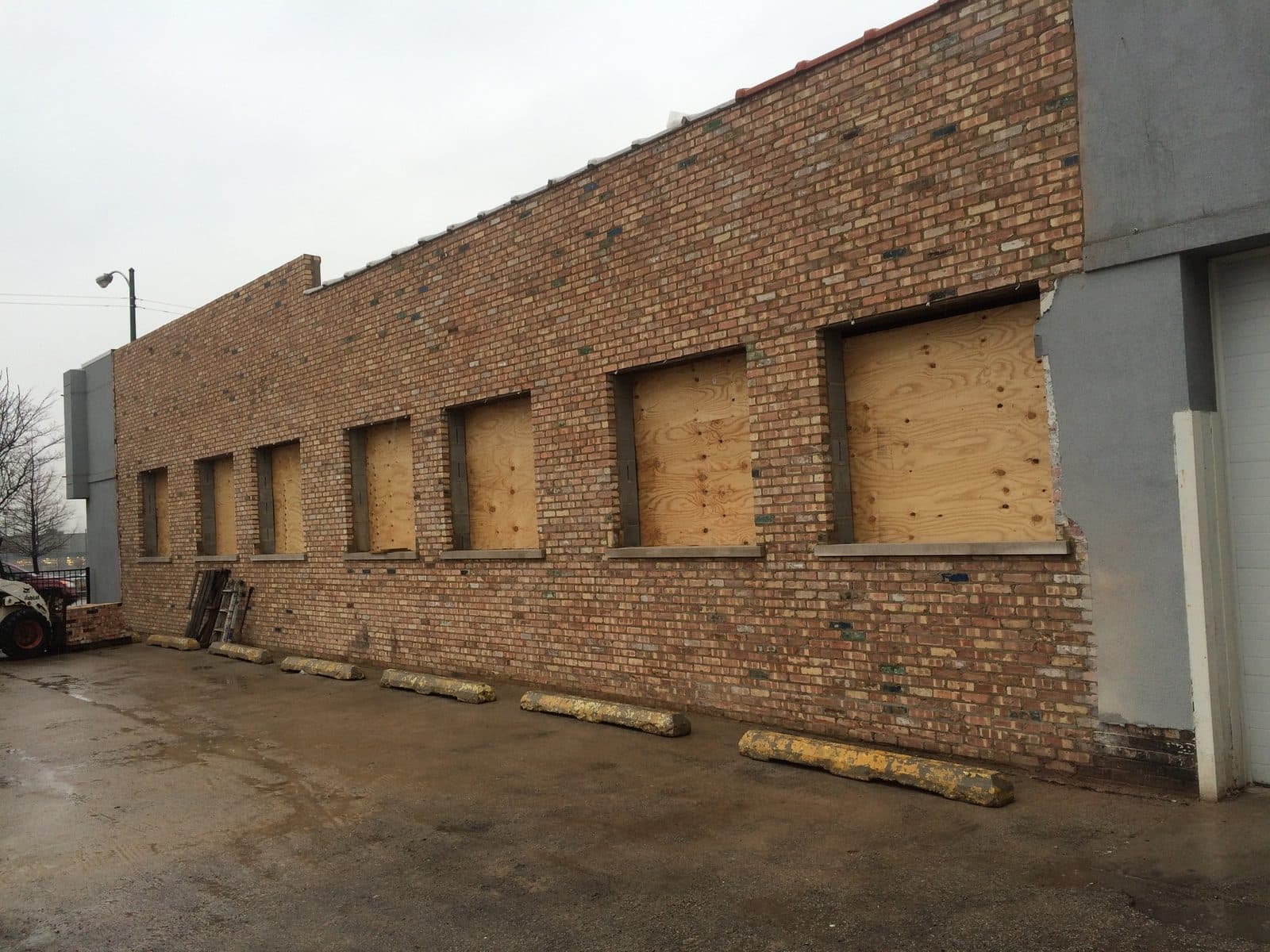
Commercial Masonry Restoration in Lemont, IL
Paul Lally's Masonry Inc. provides commercial masonry restoration in Lemont, IL — storefront facades, limestone buildings, parapet walls, lintels, copings and full-elevation repointing, phased around a business that has to keep its doors open. Family-owned and insured, serving Chicagoland since 1988. Free on-site estimates: (708) 448-8866.
Lemont is not a generic suburb with a commercial strip. It is a stone town, and it is made of the ground it stands on. The dolomitic limestone under the Des Plaines valley was quarried here through the canal years and went into the buildings of the downtown, the churches on the bluff, the canal-era structures, and foundations across the village. Some of it went to Chicago. Most of what stayed is still standing on Main Street and Illinois Street today.
That fact changes the restoration work more than anything else about the building.
The most expensive mistake on a Lemont building is a cleaning method
Ask any mason who works on stone what does the most irreversible damage to a historic limestone facade, and the honest answer is not weather, not freeze-thaw, not neglect. It is abrasive cleaning.
Dolomite limestone develops a weathered outer skin over decades — a denser, case-hardened surface layer that is the stone's own protection. Sandblasting or high-pressure washing removes it. What is left behind is the soft, open, absorbent interior of the stone, now exposed directly to rain, salt spray and freeze-thaw. The building looks brighter for one season and then deteriorates faster for the rest of its life, and nothing can put that skin back.
The same logic applies to chemical cleaners used at the wrong strength on the wrong stone. Our rule on a stone building is simple: use the gentlest method that actually works, test it on an inconspicuous panel first, and stop as soon as the result is acceptable rather than as soon as the stone is bright.
If a contractor's proposal for your Lemont storefront opens with pressure washing the facade, get another opinion before it happens.
Soft stone needs soft mortar
The second rule is the one that governs every joint on the building. Mortar must be softer than the unit it holds.
The original mortar in Lemont's stone downtown is lime-based — weak, permeable, and deliberately so. It absorbs movement, it lets the wall breathe moisture back out, and when it fails it erodes harmlessly and gets replaced. That is its job.
Repoint a soft limestone or soft common-brick wall with a hard, Portland-heavy modern mortar and you invert the system. The joint is now stronger than the stone. Thermal movement, settlement and freeze-thaw stress no longer relieve themselves in the mortar, so they go through the face of the stone instead — spalling, delamination, sugaring at the surface. Moisture that used to evaporate through the joint is now driven out through the unit face, carrying salts with it.
We match the mortar to the wall: soft, lime-rich mixes on the historic stone and soft older brick; appropriate modern mixes on the later commercial and industrial stock. Color, texture and joint profile are matched to a test panel before the wall is repointed.
What we actually restore on a Lemont commercial building
- Storefront facades — repointing, stone repair, lintel and sill work, and the sealant joints at storefront framing that leak long before the masonry does.
- Parapet walls and copings — the most exposed masonry on any commercial building, weathered on both faces and the top, and the element most likely to shed material onto a public sidewalk.
- Steel lintels and shelf angles — corroded steel over storefront openings expands as it rusts and lifts the courses above it, opening a horizontal crack you can read from across the street.
- Stone repair rather than wholesale replacement — patching, Dutchman repairs where a sound piece of matched stone is let into a failed area, and full unit replacement only where the stone is genuinely gone.
- Brick-to-stone junctions — the water table, sill and foundation lines where two materials that absorb and move differently meet, and where deterioration reliably begins.
- Water management — roof drainage, scupper and downspout discharge, through-wall flashing, and grade at the base of the wall.
Phasing a commercial scope by risk
Very few building owners fund a full restoration in one year, and they should not have to. What matters is that the phasing follows risk, not appearance.
| Priority | What goes in it | Why it is first | | --- | --- | --- | | 1. Public safety | Loose parapet units, failing copings, spalled stone above an entrance or sidewalk | Falling material is the only failure that becomes an incident rather than a repair | | 2. Active water entry | Failed copings, open joints on the weather elevation, failed flashing, corroded lintels | Water inside the wall is what turns a repair into a rebuild | | 3. Accelerating deterioration | Elevations where joints have opened past the face of the units | Cost climbs quietly every season this waits | | 4. Appearance | Sound but stained, patched or mismatched areas | Real value, no urgency |
That ranking goes into the written scope with each phase priced separately, so you can commit to phase one this year and know exactly what phase two is.
Keeping the building open while we work
A downtown storefront, a professional office or an occupied commercial building cannot shut down for masonry. We plan around that from the survey:
- Entrances stay usable, with overhead protection wherever work is above a doorway or public sidewalk.
- Staging is worked out first — Lemont's downtown lots are tight, and where the equipment sits determines what the job costs and how disruptive it is.
- The loudest work gets scheduled where the scope allows — grinding and cutting shifted away from peak business hours.
- Tenants get told what is happening and when, so you are not fielding calls you did not expect.
What drives the cost
Height and access first — ground-level storefront work and a three-story parapet are different jobs. Then the proportion of stone to brick, because stone work is slower and more skilled. Then how much steel is in the scope, whether parapets and copings are included, the extent of damage once joints are opened, and how much of the work has to be staged around occupancy. We do not publish rates for commercial masonry, because the same figure would badly misprice two buildings on the same block. We survey the building and give you a written, phased scope.
Trust signals
Paul Lally's Masonry Inc. is a family-owned, insured masonry contractor serving Chicago and the Chicagoland suburbs since 1988 — tuckpointing, brick repair and replacement, chimney repair and rebuilds, lintel replacement, masonry restoration, and waterproofing for residential and commercial properties. Built on Craftsmanship. Backed by Experience. Free on-site estimates — call (708) 448-8866.
Related services
- Historic masonry restoration — lime mortar, stone repair and matched materials
- Parapet wall repair — the highest-risk element on a commercial building
- Limestone and sill repair — patching, Dutchman repairs and matched stone
- Lintel repair and replacement — corroded steel over storefront openings
- Tuckpointing and repointing — matched mortar, matched profile
Get a free on-site survey in Lemont
If your parapet is shedding material, a coping has lifted, a horizontal crack has opened over a storefront window, or joints on the weather elevation have receded past the face of the stone, have it surveyed before winter. Paul Lally's Masonry Inc. — (708) 448-8866 — or request an estimate online.
Commercial Masonry Restoration in Lemont, IL — Frequently Asked Questions
How much does commercial masonry restoration cost in Lemont, IL?
It is driven by the height and access of the elevation, how much of the facade is stone versus brick, whether parapets and copings are in scope, the amount of steel behind the wall, and how the work has to be staged around a business that stays open. Paul Lally's Masonry Inc. surveys the building and puts a phased scope in writing — call (708) 448-8866.
Can you power wash or sandblast our limestone building?
No, and we will talk you out of it. Sandblasting and high-pressure washing strip the weathered outer skin off dolomite limestone permanently, leaving a softer, more absorbent surface that deteriorates faster than the one you started with. There is no putting it back. Cleaning should be the gentlest method that works.
What is Lemont limestone and why does it matter to the repair?
The local stone is a dolomitic limestone quarried along the Des Plaines valley and used throughout downtown Lemont and the canal corridor. It is a relatively soft, porous stone, which means it needs soft lime-based mortar and gentle handling — hard modern mortar and abrasive cleaning both damage it.
Can you work while our business stays open?
Yes, and it should be planned that way from the start. We sequence work to keep entrances usable, set overhead protection where anything is being done above a sidewalk or doorway, and can shift the noisiest cutting to off-hours where the scope allows it.
Should we repair the parapet or rebuild it?
It depends on whether the wall is deteriorating in place or moving. Eroded joints and a few failed units on a plumb, stable parapet is a repair. Displacement — leaning, bowed, or courses stepped out of line — usually means rebuilding from a sound bearing down, because a parapet is exposed on both faces and the top, and it is the element most likely to drop material onto a sidewalk.
How do you decide what to do first on a limited budget?
We rank the scope by risk, not appearance. Anything that could fall onto a public way comes first, then anything actively letting water into the building, then the deterioration that is accelerating, then cosmetics. That ranking goes into the written scope so you can phase it across budget years with your eyes open.
Do you handle brick commercial buildings too, or only stone?
Both. Lemont has brick commercial and industrial stock along the corridor as well as the stone downtown, and a great many buildings are a mix — brick walls on stone foundations, with stone sills, lintels and water tables. The junctions between the two are usually where the trouble starts.
Do you serve Lemont and the surrounding area?
Yes — Lemont, 60439, and the surrounding Cook, DuPage and Will County communities including Homer Glen, Lockport, Woodridge, Darien and Palos Park. Paul Lally's Masonry Inc. has been doing this work since 1988. Free on-site estimates — call (708) 448-8866.
Commercial Masonry Restoration in Nearby Areas
Other Masonry Services in Lemont, IL
Learn more about our commercial masonry restoration services across Chicagoland, or view all service areas.
Free on-site estimates across Chicagoland.