
Lintel Repair & Replacement · Mokena, IL
Lintel Replacement in Mokena, IL — A Garage Header Is Not a Window Lintel
The steel over a three-foot window and the steel over a sixteen-foot garage opening are not the same repair, are not the same member, and do not fail the same way. On Mokena's big-garage subdivision homes, span is the variable that decides everything — and it is the one nobody talks about.
Quick Answer
Paul Lally's Masonry Inc. provides lintel replacement in Mokena, IL — removing corroded steel lintels over windows, doors and wide garage openings, installing proper through-wall flashing and correctly sized replacement steel with adequate bearing, and rebuilding the masonry above. Family-owned since 1988, insured. Free on-site estimates — call (708) 448-8866.
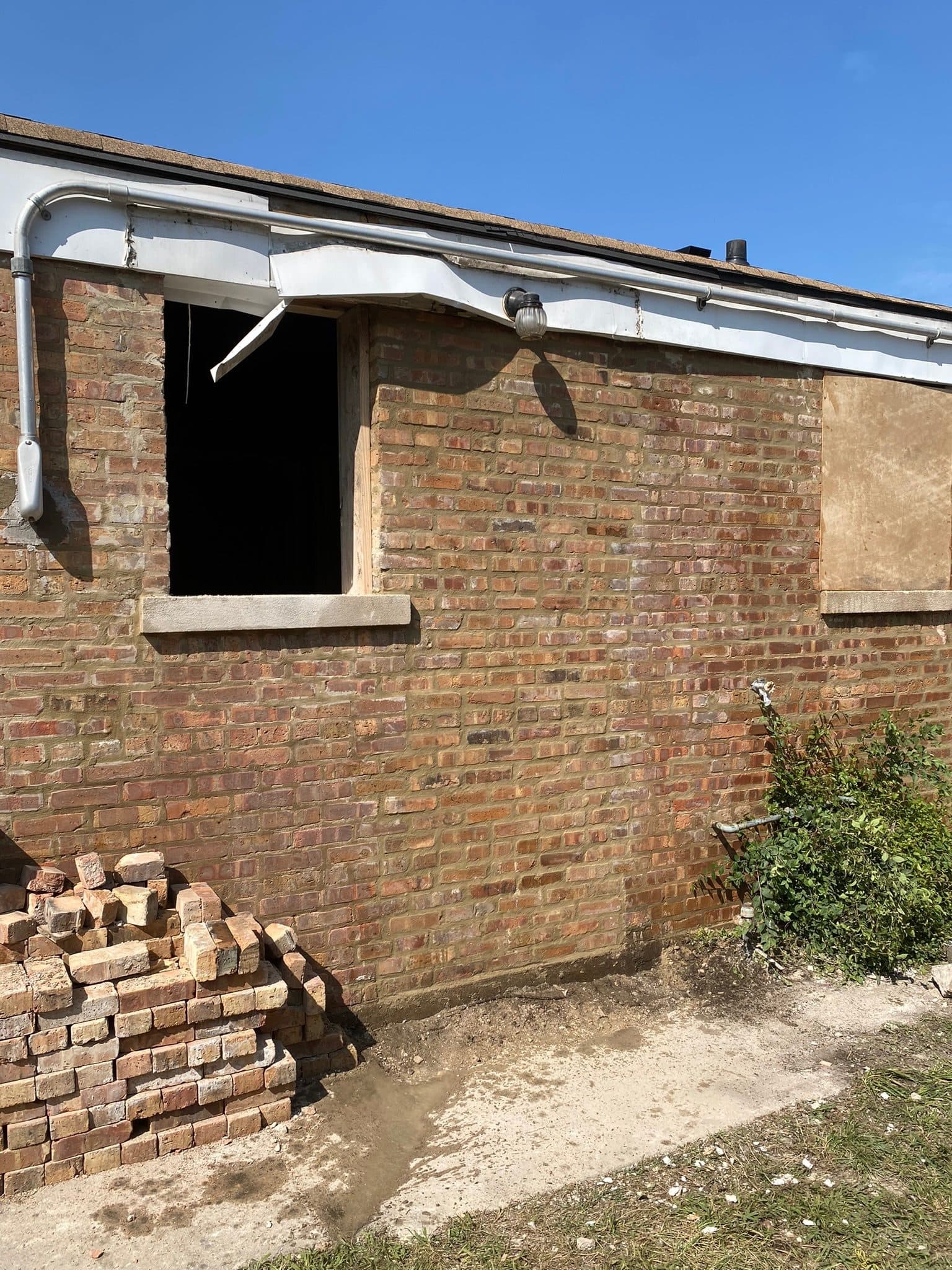
Lintel Replacement in Mokena, IL
Lintel replacement in Mokena, IL turns on a question most advice on this subject ignores entirely: how wide is the opening? Paul Lally's Masonry Inc. replaces steel lintels over windows, doors and wide garage openings throughout Mokena and the southwest suburbs. Family-owned since 1988, insured, free on-site estimates. Call (708) 448-8866.
The steel over a bedroom window and the steel over a three-car garage are not the same thing in any respect that matters.
What a Lintel Is, and Why You've Never Seen Yours
Every opening in a masonry wall has the same problem: there is a wall above it and nothing underneath holding that wall up. A lintel solves it — a beam spanning the opening, carrying the masonry above and delivering that load into the wall on either side. On nearly every Mokena home built since the 1980s, that beam is a steel angle tucked behind the brick, invisible from the street.
Which is why nobody notices a lintel until it starts doing damage. You do not see the lintel fail. You see what the failing lintel does to your brick.
Span Changes Everything
Here is the part that no generic advice page will tell you, and it is the reason a single "average price" for lintel work is meaningless.
Walk your own house and you likely have windows spanning three to six feet, a service door around three, a single garage opening at eight or nine, and a double or triple garage opening at sixteen feet or more.
Those are not variations on one job. As a span lengthens, the load the beam carries rises and its tendency to bend under that load rises considerably faster. A member perfectly adequate over a window would visibly sag over a garage opening.
That drives four separate things:
- The size of steel required — depth, thickness and section.
- Bearing length — how far the steel sits onto solid masonry at each end. Most often shorted, and inadequate bearing concentrates the whole load onto a few inches of brick.
- Shoring — a long opening needs temporary support while the old steel comes out.
- How much masonry comes down and goes back up above the opening.
Ask any contractor what span they are pricing and how much bearing the new steel will get. If the answer is vague, keep looking.
Why Steel Inside a Wall Gets Wet
Your brick veneer wall is supposed to let some water through — it is a rain screen, not a seal. Water getting past the brick should run down the back of it, land on through-wall flashing above the lintel, and exit through weep holes in the course above the opening. Where that flashing was omitted, cut short or lapped the wrong way — and on many homes of this era it was — the water lands on the steel and stays there.
Mild steel that stays wet corrodes, and corrosion is not simply loss of material: rust occupies several times the volume of the steel it came from. So a corroding lintel expands inside a wall with no room to give, and lifts the masonry above it. That is rust jacking, and it is behind essentially every cracked opening we are called to here.
Signs Your Lintel Is Failing
In roughly the order they appear:
- Orange rust staining streaking down the brick below an opening — the earliest sign, often years ahead of anything else
- A horizontal crack line in the mortar joint directly above the opening
- Stepped diagonal cracking running up and out from the corners
- Cracked or displaced brick immediately above the header
- Brickwork visibly sagging across a wide opening
- A garage door binding or no longer sealing at the top
- Loose or dropped brick above the opening — treat this as urgent
- Visible rusted, scaled or flaking steel where the lintel edge is exposed
If you have rust stains and nothing else yet, that is the moment to act. It is the cheapest this repair will ever be.
Risks of Waiting
Rust does not pause. The mechanism keeps running every day the steel stays wet, expanding it a little further and lifting the masonry a little more.
The escalation is predictable: staining, then a hairline joint crack, then cracked brick, then displaced brick, then a sagging header, then units coming loose above a garage door people park under. Meanwhile the same water path corroding the steel is getting into the wall behind it.
And the repair grows with it. Replacing steel with sound brick above it is contained. Replacing steel after the masonry above has cracked and lost bond means rebuilding a much larger area of wall.
Our Lintel Replacement Process
- Measure the span and assess every opening on the house — they were built the same way on the same day.
- Determine coat or replace honestly. Surface corrosion on sound steel is a different job than steel that has scaled, thinned or begun to deflect.
- Trace the water. If the source stays, the new steel starts corroding on day one.
- Shore the opening so the wall above is supported before anything comes out.
- Take down the masonry above the lintel, salvaging brick worth reusing.
- Remove the old steel and inspect the bearing pockets at each end.
- Install through-wall flashing with end dams, so water reaching this level goes back out rather than onto the steel.
- Set correctly sized replacement steel, galvanized or properly coated, with adequate bearing at both ends.
- Rebuild the masonry in matched brick and mortar, holding the original coursing and bond.
- Open weep holes above the opening, repoint the surrounding joints, clean down and walk it with you.
Materials
Steel is sized to the span and the load, galvanized or properly coated — a bare painted angle is what got you here, and paint is not a permanent corrosion solution inside a wall. Flashing is durable membrane or metal with end dams, which is what stops water simply running off the sides. Mortar is matched for hardness, colour and texture, and always softer than the brick it sits against, because a joint can be replaced and a brick face cannot.
Related work often runs alongside: brick repair, brick replacement, tuckpointing, caulking at the opening perimeter, and waterproofing.
Mokena Specifics
Mokena grew fast. The village's build-out through the 1990s and 2000s produced street after street of substantial brick-veneer homes on generous lots and, characteristically for that era, large attached garages — very often two or three bays wide, with correspondingly wide openings spanned by painted mild-steel angles.
Thirty-odd Chicagoland winters later, with flashing that was frequently an afterthought, that steel is exactly where you would expect it to be. It is why the garage opening, not the windows, is the first place we look on a Mokena house.
What Drives the Cost
- Span, first and above everything else
- How many openings are affected — they usually come in groups
- Coating versus full replacement, and shoring on a wide opening
- How much masonry comes down and goes back up
- Whether flashing has to be installed where none existed
- Brick matching difficulty, height and access
We will not put a number on a lintel over the phone, because we do not yet know the span. The look is free and the estimate written.
Serving Mokena and the Southwest Suburbs
Paul Lally's Masonry Inc. is a family-owned, insured masonry contractor serving Chicago and the Chicagoland suburbs since 1988 — tuckpointing, brick repair and replacement, chimney repair and rebuilds, lintel replacement, masonry restoration, and waterproofing for residential and commercial properties. Built on Craftsmanship. Backed by Experience. Free on-site estimates — call (708) 448-8866.
We work throughout Mokena and neighbouring New Lenox, Frankfort, Tinley Park and Orland Park.
Get a Free Mokena Lintel Assessment
If there is rust running down the brick above your garage door, have it measured now — while it is still steel and flashing rather than steel, flashing and a rebuilt wall. Call (708) 448-8866 or request a free estimate.
Lintel Repair & Replacement in Mokena, IL — Frequently Asked Questions
How much does lintel replacement cost in Mokena, IL?
Beware any number quoted before someone knows the span. A three-foot window lintel and a sixteen-foot garage header are different structural members carrying different loads, needing different steel, different shoring and different amounts of masonry taken down and rebuilt. Paul Lally's Masonry Inc. measures it on site and puts the estimate in writing — call (708) 448-8866.
What is a lintel and where is it on my house?
It is the beam that carries the wall above an opening — on nearly every Mokena home built since the 1980s it is a steel angle hidden behind the brick above each window, door and garage opening. You usually cannot see it, which is why the first sign of trouble is what it does to the brick.
Why is the brick above my garage door cracked in a straight line?
That is almost always the lintel. Steel that stays wet corrodes, and rust occupies several times the volume of the steel it came from, so it expands and lifts everything above it — a mechanism called rust jacking. The crack follows the top of the steel, which is why it runs horizontally.
What do the orange stains running down my brick mean?
Corroding steel. Rust washing out of the lintel and staining the brick below it is the earliest visible warning, and it often shows up years before the brick actually cracks. If you are seeing it now, that is the good news — it is far cheaper to address at this stage.
Can a rusted lintel just be cleaned and painted instead of replaced?
Sometimes, if the corrosion is surface-level and the steel has not lost section. Once it has scaled, thinned or begun deflecting, coating it does not restore what has already been lost. We tell you honestly which situation you have rather than defaulting to the bigger job.
Why do lintels rust in the first place if they are inside the wall?
Because water gets into the wall — that is normal for brick veneer — and it is supposed to land on flashing above the lintel and drain out through weep holes. Where that flashing was omitted or installed poorly, and on many homes it was, the water sits directly on the steel instead.
Do you replace garage lintels in Mokena and the surrounding Will County suburbs?
Yes, windows, doors and wide garage openings alike. Paul Lally's Masonry Inc. has been doing this work throughout Mokena and the surrounding southwest suburbs since 1988, and our name is on every job. Free on-site estimates — call (708) 448-8866.
Lintel Repair & Replacement in Nearby Areas
Other Masonry Services in Mokena, IL
Learn more about our lintel repair & replacement services across Chicagoland, or view all service areas.
Free on-site estimates across Chicagoland.