
Lintel Repair & Replacement · Burbank, IL
Lintel Replacement in Burbank, IL — Bungalow Window Heads and Garage Openings
Burbank is a village of brick. Bungalows, Georgians, and ranches built within a couple of decades of each other — which means their lintels are all reaching the same point at the same time.
Quick Answer
Lintel replacement in Burbank, IL removes corroded steel angle iron above windows, doors, and garage openings and installs new protected steel with flashing, shoring and relaying the brick above. Rusting steel expands and lifts the masonry it carries. Paul Lally's Masonry has replaced Chicagoland lintels since 1988 — family-owned, insured, free estimates, (708) 448-8866.
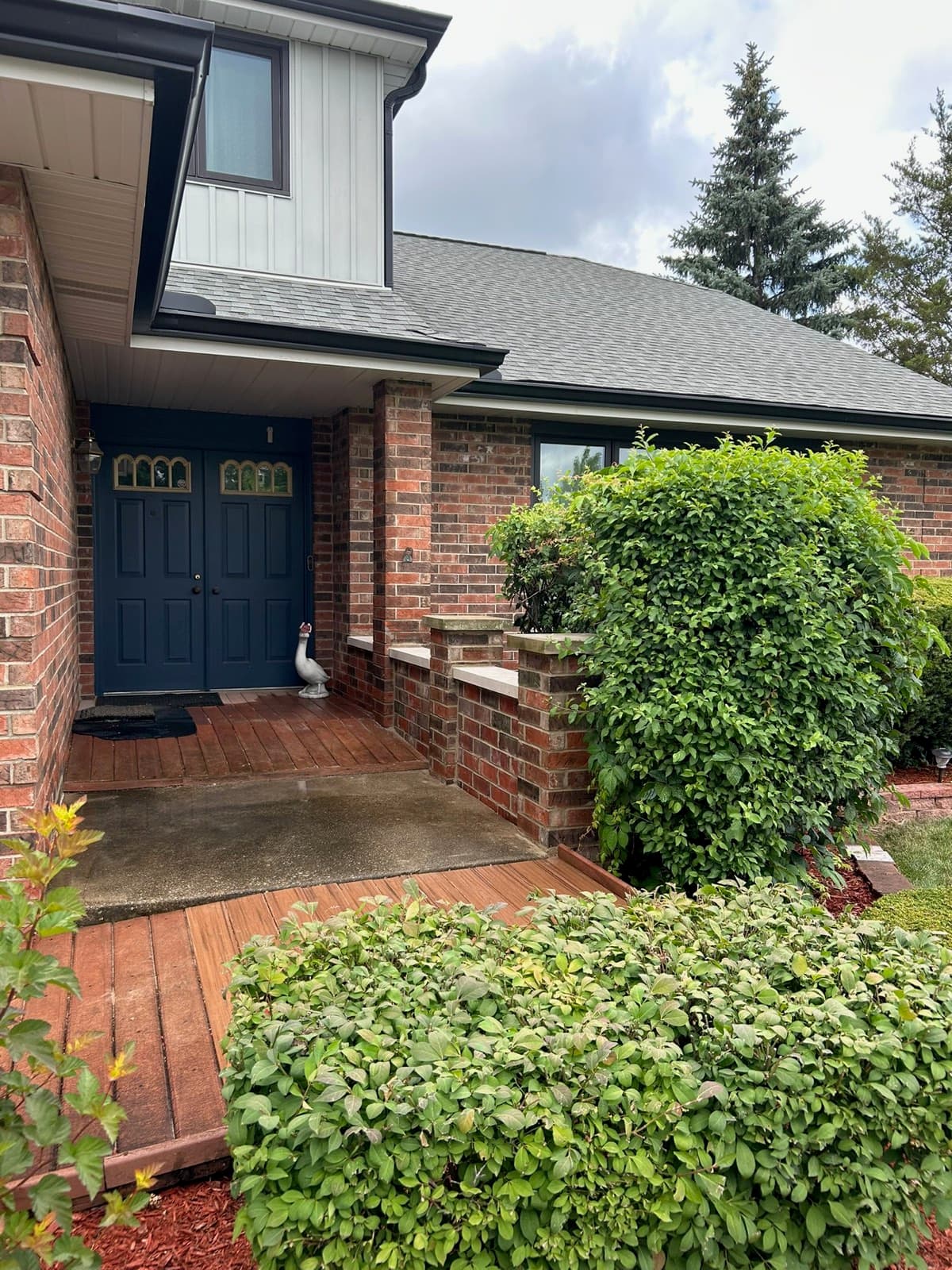
Drive any street in Burbank and count the brick. Nearly all of it, on nearly every house — bungalows, Georgians, ranches, and one-and-a-half-story brick homes, built within a fairly narrow band of years by the same building boom.
That uniformity is what makes lintel replacement in Burbank, IL such a recurring conversation here. When a whole neighborhood goes up with the same detailing at the same time, the steel above every window in it reaches the end of its service life at roughly the same time too.
Paul Lally's Masonry Inc. is a family-owned, insured masonry contractor serving Chicago and the Chicagoland suburbs since 1988 — tuckpointing, brick repair and replacement, chimney repair and rebuilds, lintel replacement, masonry restoration, and waterproofing for residential and commercial properties. Built on Craftsmanship. Backed by Experience. Free on-site estimates — (708) 448-8866.
Rust does not shrink. It grows.
This is the whole mechanism, and it surprises most homeowners.
Steel that corrodes does not simply get thinner and weaker. It converts to iron oxide, which occupies several times the volume of the steel it came from. Put a piece of angle iron above a window, load it with a few hundred pounds of brick, and let water reach it for seventy years. As it swells it cannot push down — the window frame is there — so it pushes up, lifting the masonry it was installed to carry.
The trade calls it rust jacking, and it leaves a very legible set of symptoms.
What to look for
- A straight horizontal crack in the mortar joint directly above a window, door, or garage opening
- Rust staining bleeding down the brick beneath that joint
- The course above the opening lifted out of plane with the wall
- Cracked or displaced brick at the corners of the opening, sometimes stepping diagonally
- A visible steel edge at the window head that is flaking or delaminating in layers
- On a garage, a sag or bow across the span
- Windows or doors gone out of square at the head
Why lintels fail in the first place
Older lintels went in with essentially no protection: minimal galvanizing, no flashing above, no drip edge. Water reached the steel through the mortar joints, off the window head, and out of a gutter that overflows at the same corner every autumn. Seven decades later, that steel has been wet far more often than it has been dry.
Which is why replacing the steel without addressing the water is only half a repair. The new lintel starts corroding on exactly the same clock as the old one.
Burbank, specifically
Burbank incorporated in 1970, but its housing stock is considerably older than the village — much of it built out through the forties, fifties, and sixties as the southwest side pushed outward along Cicero Avenue, 79th, and 87th Street.
Three local patterns:
Chicago-style brick bungalows and their suburban cousins. Solid masonry, wide front windows, and a low-slung profile that puts the front picture window right in the weather. These lintels are frequently the first structural steel on the house to go.
Attached garages on the postwar stock. Wide single and double openings with long spans, often on the elevation that takes the worst gutter overflow. Garage lintels here are a common call.
Tight lot lines. Burbank is a densely platted village, and side yards are narrow. That affects access and staging on second-story openings more than people expect, and it is worth knowing before scheduling.
Add the standard Chicagoland freeze-thaw punishment — dozens of freeze and thaw cycles a season working on wet steel — and Burbank has close to ideal conditions for lintel corrosion.
Why it should not wait
A lintel is a structural member. Once the steel has lost section, the masonry above the opening is being carried by something that is no longer what it was designed to be.
Waiting also grows the job. A lintel caught early is a lintel, some shoring, and a handful of courses. A lintel left for another five winters is frequently a lintel plus a substantially larger section of rebuilt wall — and on a garage or an entry door, loose brick over an opening people walk under is a safety matter, not an aesthetic one.
How the work is done
- Assess the opening and the elevation. Whether the steel is salvageable, how far corrosion has gone, and what else on that wall is at the same stage.
- Shore the masonry above the opening before anything is removed.
- Take down the brick above the lintel carefully, salvaging units for reuse.
- Cut out and remove the corroded steel.
- Set new protected steel, sized for the span and properly bedded at both bearing ends.
- Install flashing and a drip edge above the opening where the detail allows.
- Relay the brick, reusing salvaged units and blending any replacements for color, size, and texture.
- Repoint with matched mortar and clean down.
Materials
Correctly sized, protected steel. Mortar matched in type — Type N or Type S as the wall calls for — and in color and joint profile, so a repaired head does not read as a patch. Salvaged brick reused wherever possible, because nothing blends with a seventy-year-old wall like the brick already in it. Flashing and drip detailing, because the water that killed the last lintel has not gone anywhere.
What drives the cost
Span width. Number of openings. Height and access, which on Burbank's narrow lots can matter more than the work itself. How much masonry has to be shored and relaid. Whether brick can be matched or must be sourced. Whether stone sills or other elements are involved alongside the steel.
No honest number exists before someone looks at the opening. Free on-site estimate, in writing — call (708) 448-8866.
Serving Burbank and the surrounding southwest suburbs
We work throughout Burbank and the communities around it — Bridgeview, Hickory Hills, Oak Lawn, Chicago Ridge, Evergreen Park, and the Chicago city limits just east. Related services: lintel repair and replacement, brick repair, tuckpointing and repointing, and limestone and sill repair.
For the full picture of what happens above and below an opening, read masonry around windows and openings.
Check the rest of the wall while you are at it
If one window head is cracked, the others on that elevation are worth a look. Family-owned since 1988, insured, and straight with you about what needs doing now versus what can wait.
Get a free on-site estimate — or call (708) 448-8866. Built on Craftsmanship. Backed by Experience.
Lintel Repair & Replacement in Burbank, IL — Frequently Asked Questions
What is the straight crack above my window?
A rusting steel lintel beneath it. Corroding steel expands to several times its original thickness, and since it cannot push down through the window frame it pushes up, lifting the brick. That horizontal crack running the width of the opening is the signature of rust jacking.
Why do several of my windows have the same crack?
Because the lintels went in the same year, from the same unprotected steel, in the same exposure. They corrode on the same schedule. On a Burbank house it is common to find every opening on one elevation at a similar stage.
Do garage openings fail differently?
They fail more visibly, because the span is far wider. A sixteen-foot garage lintel carries much more masonry than a bedroom window head, so when it loses section the sag and the cracking show up sooner and get worse faster.
What is shoring and why does it belong in the scope?
Shoring is the temporary support placed under the masonry above an opening before the old steel is removed. It is what holds the wall up during the swap, and any lintel scope that does not describe supporting the brick should raise a serious question.
Does flashing go in with the new lintel?
It should wherever the detail allows. The old steel rusted because water reached it, so a proper replacement addresses the water path with flashing and a drip edge above the opening rather than only swapping the metal.
Can the rust be treated instead of replacing the lintel?
Sometimes. Surface rust on steel that still has its full section can be cleaned back, treated, protected, and the masonry repointed. Once the steel has lost real thickness or has already lifted a course, treating it only postpones the same repair.
How much does lintel replacement cost in Burbank, IL?
It depends on the span, the number of openings, height and access, how much brick must be shored and relaid, and whether the brick can be matched. Paul Lally's Masonry provides a free on-site estimate in writing.
How long does the work take?
A single ground-floor opening is generally a one-day job once the crew is set — shore, remove, install, relay, point. Multiple openings or a wide garage span run longer, and mortar needs workable temperatures to cure properly.
Lintel Repair & Replacement in Nearby Areas
Other Masonry Services in Burbank, IL
Learn more about our lintel repair & replacement services across Chicagoland, or view all service areas.
Free on-site estimates across Chicagoland.