
Lintel Repair & Replacement · Chicago, IL
Lintel Replacement in Chicago, IL — The Steel Behind Every Cracked Window Head
Lintels almost never fail one at a time. They were installed the same year, in the same exposure, and they corrode on the same schedule — which is why the crack you noticed is usually the first of several.
Quick Answer
Lintel replacement in Chicago, IL is the removal of a corroded steel angle-iron lintel above a window, door, or storefront opening and installation of a new protected lintel, with the brick above shored and relaid. Rusting steel expands and cracks the masonry it carries. Paul Lally's Masonry has replaced Chicagoland lintels since 1988 — (708) 448-8866.
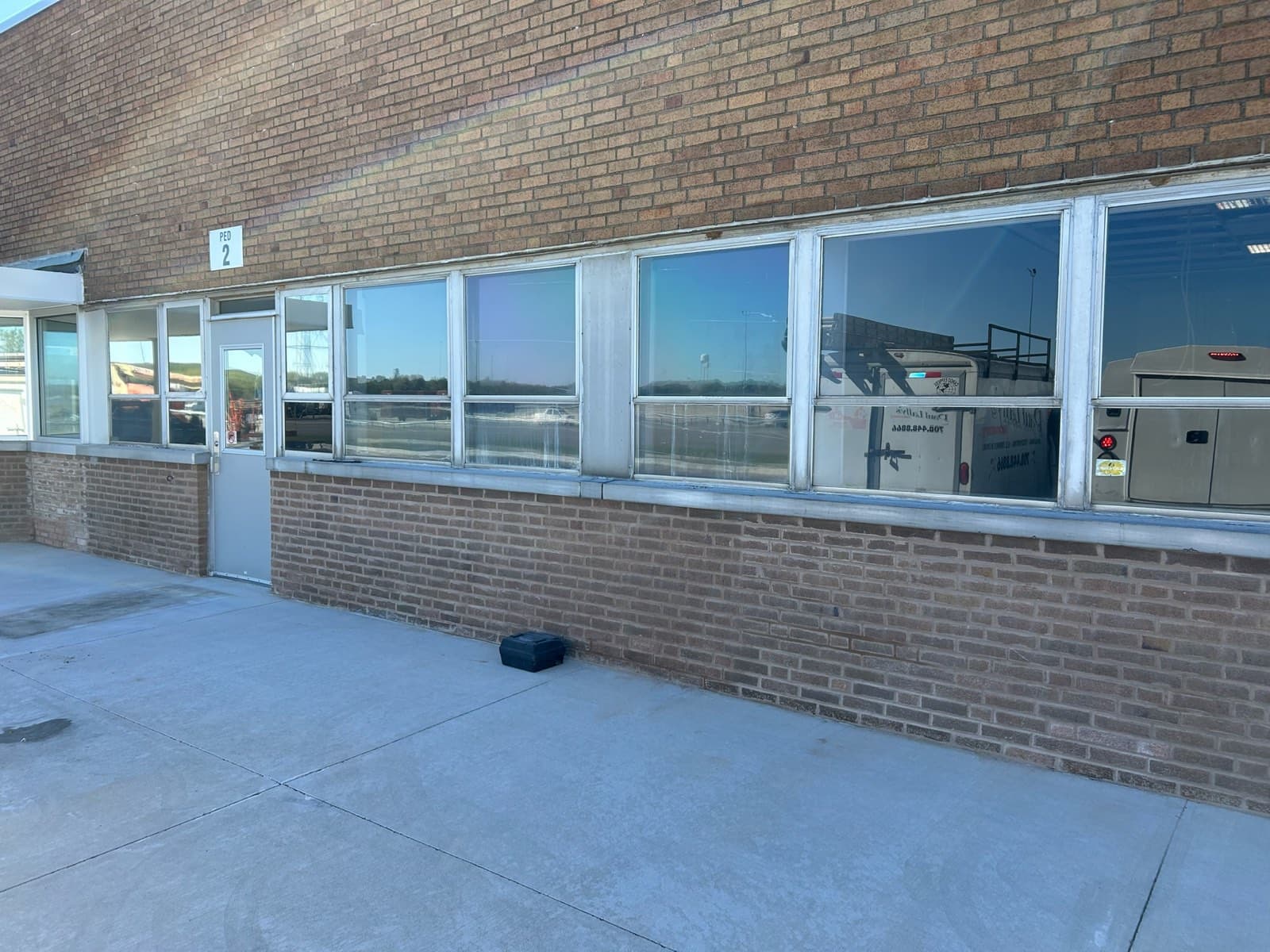
Rust occupies several times the volume of the steel it came from. That single physical fact explains nearly every cracked window head in Chicago.
Put a piece of steel angle iron above an opening, load it with a few hundred pounds of brick, and let water reach it for eighty or a hundred years. As it corrodes it swells — and it can't push down through the window frame, so it pushes up, lifting the masonry it was installed to carry. Lintel replacement in Chicago, IL is the fix, and Paul Lally's Masonry has been doing it across the city since 1988.
Here's the part most homeowners don't hear until we're already on site: it's rarely just one.
What a lintel is
Brick can't span an opening on its own. Every window, door, storefront, and garage opening in a masonry wall needs something beneath the brick to carry that load across the gap. That's the lintel — on most Chicago buildings, a piece of painted structural steel angle iron set into the wall so only a thin dark edge shows above the frame. On greystones and older masonry, you may have stone lintels instead.
It's a simple, reliable component with exactly one enemy: water.
Rust jacking, step by step
- Water reaches the steel — through failed mortar joints above the opening, gapped sealant at the window head, missing or failed flashing, or a leaking gutter.
- The steel corrodes.
- Rust expands to several times the volume of the original steel.
- That expansion has nowhere to go but up, lifting the brick course sitting on the lintel.
- The mortar joint above opens into a horizontal crack. Bricks crack, step cracks radiate from the opening's top corners, and the gaps admit more water.
- More water, more rust, more expansion. It compounds.
This is why filling the crack accomplishes nothing. The crack isn't the problem — it's the visible result of steel that's still swelling behind it. Caulk it and it reopens, usually within a season, often right beside the patch.
Lintels fail in batches — check the whole elevation
This is the thing worth knowing before you get a quote.
The lintels on a given wall were installed the same year, from the same unprotected steel, in the same exposure. They've been taking the same wind-driven rain off the lake and the same freeze-thaw cycling for the same number of decades. So they corrode on roughly the same schedule.
When a homeowner calls about one cracked window head, we walk the elevation — and more often than not, two or three others are at some stage of the same process, just not far enough along to have cracked yet.
That's not an upsell; it's a planning fact. It's usually cheaper to address several openings in one mobilization than to bring staging back three times over five years. It also means an estimate for a single lintel on a building that clearly has more is an incomplete estimate.
Signs of a failing lintel
- A horizontal crack in the mortar joint directly above a window, door, or storefront opening
- Step cracks running diagonally up from the top corners of an opening
- Cracked or displaced brick in the course immediately above
- Rust staining — orange-brown streaks bleeding down the brick below the lintel line
- A visibly bowed, sagging, or lifted brick course above the opening
- Flaking, layered rust on the exposed steel edge
- Loose brick above an opening you can rock by hand
- A window gone out of square, or one that sticks and binds
- Water stains on plaster or drywall above a window head
Treat, or replace? An honest framework
Not every corroded lintel needs to come out, and a contractor who says otherwise without looking closely isn't diagnosing.
| Condition | Usually | |---|---| | Light surface rust, full section, no lifting | Clean, treat, protect + repoint above; monitor | | Moderate rust, section intact, slight joint opening | Treat and repoint, address the water path, reassess | | Delaminating layered rust, measurable section loss | Replace | | Brick course already lifted or displaced | Replace | | Cracked or dropped brick above the opening | Replace, relay the masonry | | Window out of square from the movement | Replace, and expect additional masonry |
Treating buys time when the steel still has its section. It is not a permanent answer on badly corroded steel — that just defers the same job while the brick above keeps taking damage.
What waiting costs
Rust jacking never plateaus. The steel keeps losing section while it keeps expanding — you're simultaneously losing structural capacity and gaining destructive force, which is the worst possible combination in a load-bearing element.
The scope grows with it: replacing steel with a few courses of brick above is routine work. Wait, and the brick above the opening loses bearing, more units crack, the window head goes out of square, and now you're rebuilding masonry, sourcing matching brick, and possibly dealing with a window that no longer fits its own opening.
A lintel is one of the few masonry items where waiting is genuinely, measurably expensive.
How Paul Lally's Masonry replaces a lintel
- Inspect the opening and the whole elevation — determining whether the steel is salvageable or spent, and how many other openings are on the same clock.
- Shore the masonry above. Before any steel moves, the brick above the opening is temporarily supported. This step separates a proper lintel job from a dangerous one.
- Carefully remove the brick courses sitting on the lintel, salvaging sound units — reused original brick is always the best match, and on Chicago common brick it matters.
- Cut out and remove the corroded steel.
- Set the new lintel — properly sized for the span and load, with correct bearing at each end, and protected against corrosion.
- Address the water path. Flashing and a drip edge above the opening where the detail allows, plus the joints and sealant at the head. The steel didn't rust for no reason.
- Relay the brick on the new lintel, matching coursing and keeping the wall plane true.
- Repoint with matched mortar — color, sand, type, and joint profile matched to the existing wall.
- Remove shoring, clean up, and walk the work with you.
Materials
New lintels are structural steel sized for the span and load, with corrosion protection appropriate to the exposure. Brick salvaged from the opening wherever possible, supplemented with matched units where originals cracked. Mortar matched for type, color, sand, and joint profile — soft, lime-rich mixes on pre-1930s Chicago common brick, standard Type N on later work, Type S only where structure and exposure genuinely call for it.
For stone lintels, the approach changes entirely: limestone fails by cracking, spalling, and delaminating along its bedding planes rather than rust-jacking. Depending on the damage it may be patched with matched stone repair mortar, repaired with a Dutchman — cutting out only the failed portion and letting in a matching piece of new stone — or replaced. And where steel is hidden behind or beneath the stone, that gets assessed too.
The detail that decides how long any new lintel lasts isn't the steel grade. It's keeping water out of the wall above it. That's why lintel work, flashing, and tuckpointing get scoped together.
What drives the cost
- Width of the opening — a storefront span is a different piece of steel than a bathroom window
- Number of lintels in scope (see above — they fail in batches)
- Height and access — ground floor versus upper stories, and staging in a dense city lot with tight gangways or alley-only access
- How much brick must be removed, shored, and relaid
- Brick matching difficulty where original units cracked
- Flashing and water-path work above the opening
- Related repointing on the surrounding masonry
- Stone lintel work, where matching and fabrication add lead time
No honest mason prices a lintel from the sidewalk or over the phone, and you should be cautious of any per-foot figure quoted before someone has seen your openings. Paul Lally's Masonry gives a free on-site estimate in writing.
Local context: why Chicago has so much of this work
Two distinct populations of failing lintels across the city, and they need different hands.
Pre-1930s masonry — the bungalow belt, greystones, two-flats and three-flats, and the neighborhood storefronts. Bare, ungalvanized steel angle iron above windows and doors, now ninety to a hundred and thirty years into service. On the commercial buildings, wide storefront openings mean long spans carrying serious load. On greystones you'll also find stone lintels, which fail by delamination instead.
Postwar and later — infill housing, veneer construction, and rehabs. Newer steel, but wide picture windows and garage openings, and now thirty to seventy years old.
Both sit in the same climate. Chicago's contribution is wind-driven rain off the lake, which pushes water horizontally at wall faces and into the joints directly above openings — precisely where it reaches the steel. Add repeated hard freeze-thaw cycling and the corrosion clock runs faster here than in most of the country.
The failures concentrate on north and west elevations and above the widest openings. If you're seeing that horizontal crack above one window, look at the rest of that wall.
Related masonry services in Chicago
Lintel work is almost always scoped alongside tuckpointing and repointing above the opening, brick repair and brick replacement for cracked units, limestone and sill repair on greystones and older stock, caulking and joint sealant at window heads, and masonry waterproofing once the wall is sound. Where several openings and elevations are involved, see residential or commercial masonry restoration; on period buildings, historic masonry restoration.
Worth reading: failing lintels and cracked brick above windows, step cracks in brick walls, and the masonry terms glossary.
Nearby: brick repair in Chicago, tuckpointing in Chicago, masonry restoration in Chicago, lintel replacement in Orland Park, and lintel replacement in Lemont.
Get the steel looked at before the brick decides for you
Paul Lally's Masonry Inc. is a family-owned, insured masonry contractor serving Chicago and the Chicagoland suburbs since 1988 — tuckpointing, brick repair and replacement, chimney repair and rebuilds, lintel replacement, masonry restoration, and waterproofing for residential and commercial properties. Built on Craftsmanship. Backed by Experience.
If your lintel can be cleaned, treated, and saved, we'll say so. If it's spent, we'll show you the steel. And we'll tell you honestly how many others on that wall are heading the same way. Our family name is on every job.
Free on-site estimates — call (708) 448-8866 or request an estimate online.
Lintel Repair & Replacement in Chicago, IL — Frequently Asked Questions
Why is the brick above my window cracking in a straight line?
Because the steel lintel beneath it is rusting. Corroding steel expands to several times its original thickness, and since the brick above has nowhere to go, the wall cracks and lifts. That horizontal crack running the width of an opening — often with rust staining bleeding below it — is the signature of rust jacking.
Can a rusted lintel be treated instead of replaced?
Sometimes, and it's worth asking. Surface rust on steel that still has its full section can be cleaned back, treated, protected, and the masonry above repointed. Once the steel has lost real thickness, is delaminating in layers, or has already lifted the brick course, treating it only postpones the same repair — and we'll tell you which one you have.
How many lintels usually need doing at once?
More than one, more often than not. Lintels on a given elevation were installed the same year, in the same exposure, from the same unprotected steel — so they corrode on the same schedule. If one window head is cracked, check the others on that wall before assuming it's isolated.
How much does lintel replacement cost in Chicago, IL?
There's no per-foot figure that means anything across different buildings. Cost is driven by the width of the opening, how many lintels are involved, height and access in a dense city lot, how much brick must be shored and relaid, and whether the brick can be matched. Paul Lally's Masonry provides a free on-site estimate in writing.
What is shoring and why does it matter?
Shoring is the temporary support placed under the masonry above an opening before the old steel comes out. It's what keeps the wall up while the lintel is removed, and its presence is the clearest difference between a proper lintel job and a dangerous one. Any scope that doesn't describe supporting the brick should raise a question.
Does new flashing go in with a new lintel?
It should wherever the detail allows. The lintel didn't rust for no reason — water reached it — so a proper replacement addresses the water path with flashing and a drip edge above the opening, not just the steel itself. Skipping that step means the new lintel starts corroding on the same clock as the old one.
My building has stone lintels, not steel. Do those fail too?
They do, differently. Limestone lintels crack, spall, and delaminate along their bedding planes rather than rust-jacking, which is common on Chicago greystones and older masonry. Depending on the damage a stone lintel may be patched, repaired with a Dutchman, or replaced — and where steel is hidden behind or beneath it, that gets assessed too.
How long does a lintel replacement take?
A single ground-floor opening is typically a one-day job once the crew is set up — shore, remove, install, relay, point. Multiple openings, upper-floor work needing staging, or a wide storefront span take longer, and mortar needs workable temperatures to cure. We give a realistic window at the estimate.
Lintel Repair & Replacement in Nearby Areas
Other Masonry Services in Chicago, IL
Learn more about our lintel repair & replacement services across Chicagoland, or view all service areas.
Free on-site estimates across Chicagoland.