
Tuckpointing & Repointing · Darien, IL
Tuckpointing in Darien, IL — Renew Mid-Century Mortar
Darien's brick homes went up mostly in the 1960s through '80s, and that mid-century mortar is now reaching the age where joints fail. Paul Lally's Masonry Inc. grinds those joints out and repoints with matched mortar so the repair lasts.
Quick Answer
Paul Lally's Masonry Inc. provides tuckpointing in Darien, IL — grinding out failed mortar joints and repointing with color- and type-matched mortar on the town's mid-century brick veneer and ranch chimneys. Family-owned and serving Chicagoland since 1988, insured. Free on-site estimates — call (708) 448-8866.
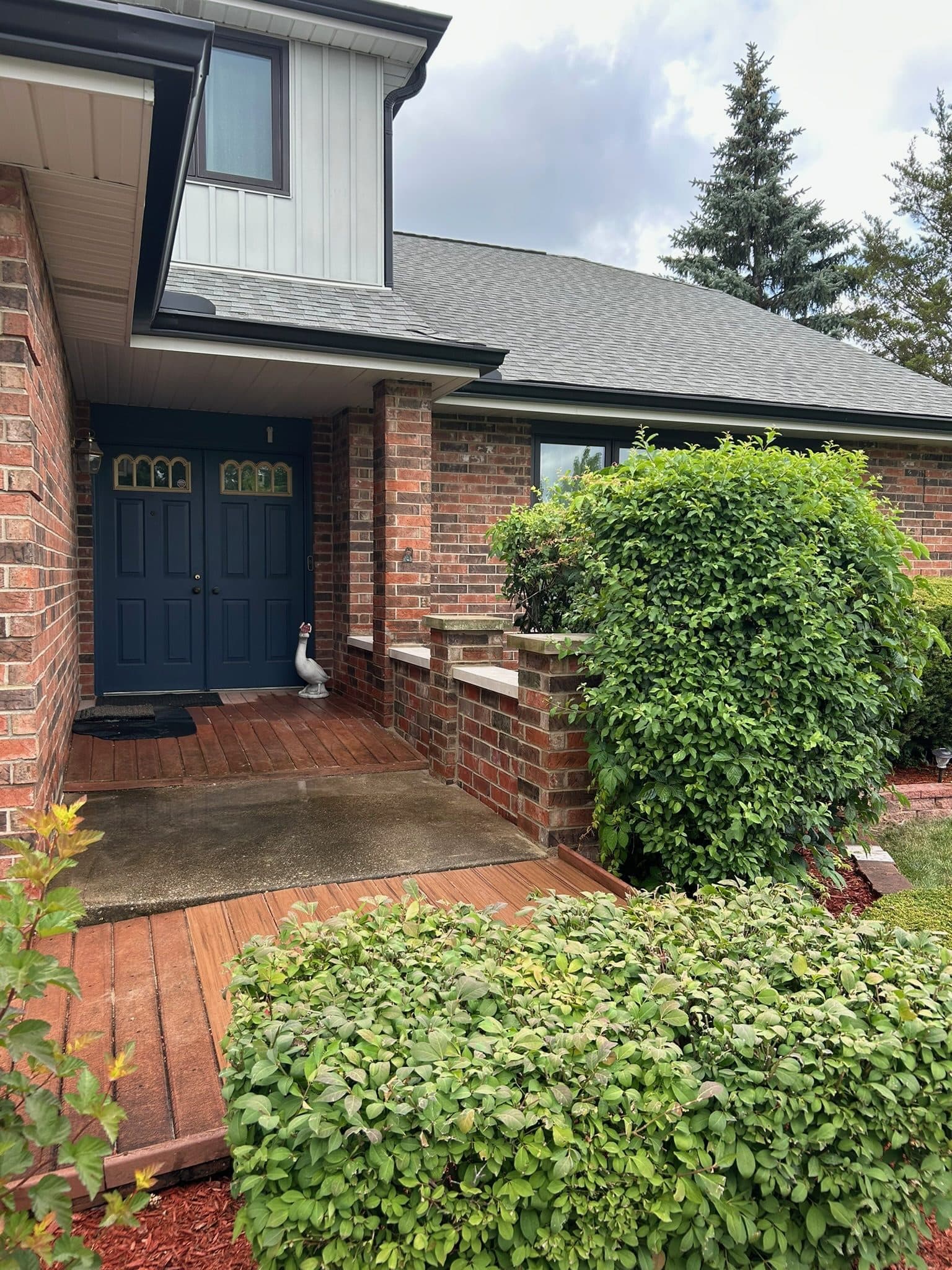
Take a walk around a Darien block built in the 1970s and you will see the same houses over and over: brick-and-frame ranches, split-levels, and Georgians with a proud brick front and frame sides. Those brick fronts and veneer walls have quietly protected the house for four, five, even six decades — and the mortar holding them together has finally reached the age where it starts to give up. If you can rake sand out of the joints with a house key, that is your signal.
Paul Lally's Masonry Inc. provides tuckpointing in Darien, IL — grinding out failed mortar joints to depth and repointing with color- and type-matched mortar so your brick sheds water for decades more. We are family-owned and have served Chicagoland since 1988. For a free on-site estimate, call (708) 448-8866.
Why Darien mortar is failing right on schedule
Darien is a younger suburb than the bungalow belt closer to the city. Most of its housing stock went up during the postwar boom — roughly the 1960s through the 1980s — which means the original mortar on a typical Darien home is now 40 to 60 years old. That is exactly the window when mid-century mortar stops doing its job.
Mortar is the sacrificial part of any brick wall. It is designed to wear before the brick does, absorbing decades of weather so the brick stays sound. But nothing lasts forever, and once a joint cracks or recedes, DuPage County's winters take over. Water works into the opening, freezes, expands, and levers the joint apart a little more with every cycle — and there are dozens of those cycles each winter. The timing you are seeing across Darien right now is not neglect; it is mid-century mortar reaching the end of its natural service life all at once.
Signs your Darien home needs tuckpointing
Most homeowners can spot failing mortar from the ground once they know the tells:
- Mortar you can scratch out with a key, screwdriver, or fingernail
- Receding joints that sit noticeably below the face of the brick
- Sandy mortar dust collecting on sills, ledges, or the ground below the wall
- Hairline cracks running along the mortar lines
- White, chalky efflorescence on the brick, a sign water is moving through the wall
- Crumbling chimney joints on an attached ranch chimney
On Darien's brick veneer and partial brick fronts, the weather-facing south and west elevations almost always fail first, along with the chimney — those surfaces take the most sun, wind-driven rain, and freeze-thaw punishment.
Veneer and partial brick fronts need the same care
A lot of Darien homes are frame houses dressed with a brick veneer or a brick front rather than solid masonry walls. Some homeowners assume veneer is just decorative and doesn't need upkeep. It does. That single wythe of brick is what keeps wind-driven rain off the sheathing behind it, and it relies entirely on sound mortar joints to shed water. When the joints open up, water gets behind the veneer, and now you have a moisture problem in the wall framing on top of the masonry itself.
We repoint veneer with the same process we use on full masonry: grind to depth, match the mortar, pack and tool the joints. Cutting corners on veneer just because it is thin is how small problems become framing problems.
How we tuckpoint — the right way, not the fast way
This is where a quality repair and a cut-rate skim job part ways. A cheap quote often means smearing fresh mortar over the face of old joints without removing anything — it looks clean for a season, then sheds in the first hard DuPage winter. Here is how we do it properly:
- Grind and rake the joints to depth. We cut the failed mortar out to roughly twice the joint's width, reaching sound mortar so the new material has something to bond to.
- Clean the joints. Dust and loose grit are brushed and blown out so fresh mortar bonds to brick, not debris.
- Mix matched mortar. We match color, sand, and texture — and just as important, the correct mortar type for your brick.
- Pack and tool the joints. Mortar is packed in tight in layers and tooled to your existing profile so the repair disappears into the wall.
- Cure and clean down. The mortar cures properly and the brick face is cleaned, leaving a wall that sheds water and looks original.
Matching mortar to mid-century brick
Mortar matching is about more than color. Its strength matters even more:
- Type N mortar is a medium-strength, more flexible mix — the right choice for most mid-century Darien brick because it is softer than the brick and absorbs movement.
- Type S mortar is harder and stronger, reserved for structural or below-grade conditions.
The rule that protects your house: the mortar should be softer than the brick. Pack a too-hard modern mortar against your original brick and the brick, not the joint, takes the stress and spalls. Matching the right mortar is exactly the kind of detail a quality estimate accounts for and a quick quote ignores.
What drives the cost of tuckpointing in Darien
Every wall is different, so we never quote a flat per-foot rate sight unseen. The factors that move a Darien estimate are:
- Extent of failure — a few feet of spot repointing versus a whole elevation
- Height and access — ground-floor veneer is straightforward; two-story walls and chimneys need scaffolding, which adds setup
- Mortar matching difficulty — a precise match on a visible front elevation takes more care than a side wall
- Brick condition — brick that has already spalled has to be replaced as part of the work
- Chimney and detail work — chimneys, sills, and decorative coursing run slower than flat field walls
We walk you through every one of these on-site, and the estimate is free. For the number on your home, call (708) 448-8866.
Tuckpointing in the bigger picture
Tuckpointing rarely lives alone. If your brick has already begun to flake, you will also want brick repair. If the joints on an attached chimney are open, our chimney repair and rebuilds covers crown, cap, and flashing along with the mortar. The core service — process, materials, and scope — is detailed on our tuckpointing and repointing page, and neighboring homeowners can see our approach on our tuckpointing in Westmont work as well.
Paul Lally's Masonry Inc. is a family-owned, insured masonry contractor serving Chicago and the Chicagoland suburbs since 1988 — tuckpointing, brick repair and replacement, chimney repair and rebuilds, lintel replacement, masonry restoration, and waterproofing for residential and commercial properties. Built on Craftsmanship. Backed by Experience. Free on-site estimates — call (708) 448-8866.
Why Darien homeowners call Paul Lally's Masonry Inc.
We have tuckpointed Chicagoland brick since 1988, and the family name is on every job. That means no upsell, no skim work, and no disappearing after the deposit. We walk your home with you, show you what is failing and why, and give you an honest written estimate. When we grind a joint, we grind it to depth; when we match mortar, we match it so you cannot tell where the repair ends. Built on Craftsmanship. Backed by Experience.
If the mortar on your Darien home is crumbling, don't wait for the brick to follow it. Request a free on-site estimate or call (708) 448-8866 — and protect the brick you already own before water takes it.
Tuckpointing & Repointing in Darien, IL — Frequently Asked Questions
How much does tuckpointing cost in Darien, IL?
There is no flat rate. The cost depends on how much mortar has failed, the height and access of the wall, and how closely the mortar must be matched to your brick. A ground-level ranch veneer is far simpler than a two-story wall or a chimney. The only accurate figure is a free on-site estimate from Paul Lally's Masonry Inc.
Why is the mortar on my 1970s Darien home failing now?
Mid-century mortar has a working life, and much of Darien's brick went up in the 1960s through 1980s — so joints that were fine for decades are now reaching the age where they crack, recede, and let water in. Forty to sixty DuPage winters of freeze-thaw cycling finish the job. It is normal timing, not neglect.
Do you tuckpoint brick veneer and partial brick fronts?
Yes. Many Darien homes are frame with a brick veneer or a partial brick front rather than full masonry walls, and that veneer still needs sound mortar joints to shed water. We repoint veneer the same careful way we do solid masonry — grinding to depth and matching the mortar so the wall stays weather-tight.
What is the difference between tuckpointing and repointing?
Repointing is the act of grinding out failed mortar and packing in fresh mortar to restore the joint. Traditional tuckpointing adds a fine contrasting line for a crisp finish. Around Darien the two terms are used interchangeably for the same repair — renewing the mortar so the wall sheds water again.
How do I know if my Darien home needs tuckpointing?
Look for mortar you can scratch out with a key, joints that have receded below the brick face, sandy dust at the base of the wall, and white efflorescence on the brick. On Darien ranches and split-levels the south and west walls and the chimney usually show it first.
Will the new mortar match my existing brick?
It should — matching is what separates a quality job from an obvious patch. We match mortar color, sand texture, and joint profile to your original wall and use the correct mortar type for your brick. On mid-century Darien brick that usually means a medium-strength Type N mix, not hard modern cement.
What happens if I put off tuckpointing?
Open joints let water into the wall, and DuPage County's freeze-thaw winters expand that water until the brick face flakes off — that is spalling. Once brick spalls you are into brick replacement instead of the far simpler mortar repair, so catching it early is the cheapest path.
Do you offer free estimates in Darien?
Yes. Paul Lally's Masonry Inc. provides free on-site estimates throughout Darien and the surrounding DuPage County suburbs. We look at the actual wall, explain what is failing and why, and give you a written estimate — call (708) 448-8866.
Tuckpointing & Repointing in Nearby Areas
Other Masonry Services in Darien, IL
Learn more about our tuckpointing & repointing services across Chicagoland, or view all service areas.
Free on-site estimates across Chicagoland.