
Homeowner Education · Chicagoland, IL
The Attached Garage: The Masonry Nobody Maintains
It has the widest opening on the house, the least insulation behind it, road salt tracked onto its slab all winter and a wall shared with the living space. And nobody ever looks at it.
2026-09-29
Quick Answer
An attached garage carries the widest masonry opening on most houses, takes road salt on its slab all winter, and shares a wall with living space — yet it is rarely inspected. The common failures are a rust-jacked lintel over the door, spalling at grade from salt, and joints on an unheated elevation. Paul Lally's Masonry, insured, Chicagoland since 1988 — (708) 448-8866.
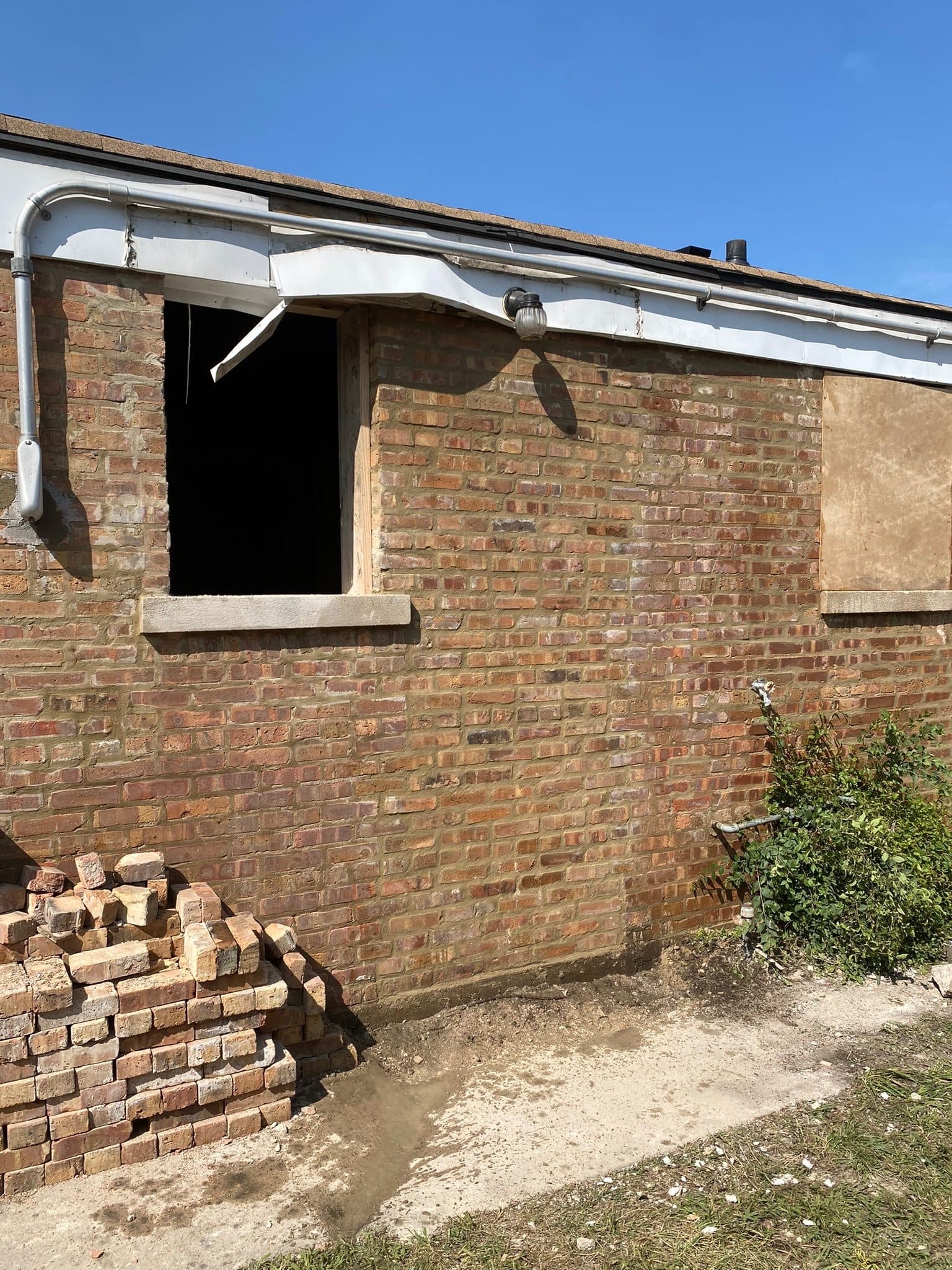
Every house has one wall that gets systematically ignored, and on most Chicagoland homes built after about 1955 it is the attached garage.
Consider what that structure actually does. It carries the widest masonry opening on the property — frequently sixteen feet or more. It is unheated, so its walls swing through the full range of a January day on both faces. Its slab receives road salt all winter, tracked in on a vehicle and splashed against the lower courses. And it usually shares a wall with living space, which means anything going wrong in it eventually becomes a problem inside the house.
Nobody looks at it. Homeowners walk through it twice a day and see storage.
Paul Lally's Masonry Inc. is a family-owned, insured masonry contractor serving Chicago and the Chicagoland suburbs since 1988 — tuckpointing, brick repair and replacement, chimney repair and rebuilds, lintel replacement, masonry restoration, and waterproofing for residential and commercial properties. Built on Craftsmanship. Backed by Experience. Free on-site estimates — call (708) 448-8866.
The garage door lintel: the big one
A lintel is the structural member carrying the masonry above an opening. Cut a sixteen-foot hole in a brick wall and something has to hold up the brick that would otherwise be in it. On almost every attached garage built in the post-war decades, that something is a steel angle iron bedded in the wall.
Why it fails
Steel corrodes wherever water and oxygen reach it, and inside a brick wall water reaches it constantly. As it corrodes it converts to iron oxide, which occupies several times the volume of the original metal. It cannot push down — the door frame and the header are there — so it pushes up.
The trade calls it rust jacking, and on a garage it is worse than on a window for three reasons:
The span is enormous. A sixteen-foot lintel carries vastly more masonry than a three-foot window head. When it loses section, the consequences arrive faster and larger.
The exposure is worse. The garage elevation usually faces the drive, takes the full weather, and frequently sits under a gutter run that discharges at one corner.
Older garage lintels often went in with no protection. No galvanising worth the name, no flashing above, no drip edge. Seventy years of being wet more often than dry.
What it looks like
- A straight horizontal crack in the mortar joint directly above the door opening
- Rust staining bleeding down the brick beneath that joint
- The course above the opening lifted out of plane with the wall
- Cracked or displaced brick at the upper corners of the opening
- A visible sag or bow across the span
- A visible steel edge flaking or delaminating in layers
- The door binding, or its tracks going out of alignment
Our guide to failing lintels and cracked brick above windows covers the mechanism; on a garage, read every symptom as more urgent.
Salt at the bottom of the wall
The second failure, and the one that is purely a garage problem.
De-icing salt comes off the road on a vehicle, drips onto the slab, and gets splashed and tracked against the lower courses of the wall — inside and out. Salt is aggressive on masonry in two ways: it attacks the material directly, and salts that crystallise inside the pores of a brick expand and push the face off from within.
Add freeze-thaw — a Chicago winter thaws and refreezes dozens of times a season — and the bottom three courses of a garage wall take more punishment than any masonry on the property except the chimney.
What you see:
- Spalling and flaking faces on the lower courses, worst near the door
- Eroded joints at grade
- Efflorescence — white bloom — on the interior face
- Crumbling at the slab edge where the wall meets the floor
- On block garages, face loss on the bottom units
Our post on road salt and de-icer damage covers the wider winter problem.
The shared wall
On an attached garage, one wall is common with the house — and that changes what a masonry failure means.
A wall between an unheated garage and conditioned living space carries a temperature differential all winter. Moisture moves toward the cold side; air moves through open joints. So masonry deterioration in that wall does not stay in the garage. It shows up as damp or musty conditions in the room on the other side, in a closet backing onto the garage, or as staining on an interior wall nobody associates with the garage at all.
If you have a persistent musty smell in a room that shares a wall with the garage, the garage masonry is worth looking at before anything else.
The rest of the list
Joints on an unheated elevation. A garage wall has no warm interior behind it, so it moves more and dries differently than the house walls. Its joints frequently need attention sooner.
Impact damage. Corners near the door opening take a knock eventually — a vehicle, a trailer, a wheelbarrow. Displaced or fractured brick at a corner is worth repairing before water gets in behind it.
The slab-to-wall junction. Where the concrete floor meets the masonry, on the inside. Water pooling at that line, salt and freeze-thaw all work on it.
Service door openings. A second, smaller lintel that gets even less attention than the main one.
Foundation at grade outside. Splash, salt, and grade that has risen over decades of landscaping.
Gutters and downspouts. A garage roof is small but it collects real volume, and a downspout discharging at the corner of the wall causes concentrated damage.
How the repairs are done
Lintel replacement
- Assess the opening and the elevation — and check the service door head while you are there.
- Shore the masonry above the opening before anything is removed. This is what holds the wall up during the swap, and on a span this wide it is not optional. Any scope that does not describe supporting the brick deserves a direct question.
- Take down the brick above the lintel, salvaging units for reuse.
- Cut out and remove the corroded steel.
- Set new protected steel, sized for the span and properly bedded at both bearing ends.
- Install flashing and a drip edge with end dams, so water leaving the wall goes out rather than back onto the new steel.
- Relay the masonry, blending replacements for size, colour and texture.
- Repoint with matched mortar and clean down.
Salt and grade-level repair
- Identify the water and salt path — splash, slab drainage, downspout, grade.
- Replace failed units at the base with matched brick or block.
- Repoint the lower courses.
- Correct drainage where the apron or grade sends water back at the wall.
- Consider a breathable penetrating sealer on the sound, repaired lower courses — never a film-forming coating on a wall that already struggles to dry.
Materials
Correctly sized, protected steel for the lintel. Mortar matched in type, colour and joint profile — and softer than the brick around it, because mortar harder than the unit drives stress into the unit and spalls its face. On most residential garage work that means Type N rather than Type S. Salvaged brick reused where sound; replacements matched on size first, because a unit of the wrong height throws the coursing off permanently. Flashing detailed continuous with end dams.
Why homeowners should not do this one
Brick repair at ground level is the most approachable-looking masonry work there is, and a garage wall invites a homeowner to have a go at the bottom courses.
The lintel is a different matter entirely. It is a structural member carrying several tons of masonry over an opening people drive through, and replacing it requires shoring, sequencing and correctly sized steel. The failure mode is not a cosmetic disappointment.
Block garages, and why they behave differently
A good share of Chicagoland attached garages are concrete block rather than brick — sometimes block throughout, sometimes block with a brick face on the elevation that shows.
Three differences matter.
Block is far more porous than fired brick, and split-face block more porous still, because splitting the unit exposes its open aggregate structure to weather. On a garage that already gets salt splashed against it, that porosity is the whole problem at grade.
Block shrinks as it cures while brick expands slightly over its life, which is why block walls are built with control joints — deliberate vertical breaks that let the wall move without cracking wherever it chooses. Where the sealant in a control joint has let go, that joint becomes a full-height water path.
Block is often load-bearing on a garage rather than a veneer, which raises the stakes on anything that looks like movement rather than surface deterioration.
Practically: on a block garage, check the control joints and the bottom two courses, and be wary of anyone proposing to paint the wall. A film-forming coating on porous block traps moisture behind it, and blistering paint on a garage wall is a symptom rather than a paint problem.
Detached garages have the same problems and worse odds
Everything above applies to a detached garage too, with two aggravating factors: it usually sits at the back of the lot where nobody looks, and it has no shared wall with the house to make a problem obvious indoors.
The result is that detached garages are routinely allowed to run ten or fifteen years past the point where a repair would have been small. By the time somebody calls, the lintel has dropped, the bottom courses have gone, and the honest answer is a larger rebuild rather than a repair. Our post on detached garage masonry repair covers that structure specifically.
If your property has both, look at them on the same afternoon. They are the same age, built by the same crew, in the same exposure.
Chicagoland context
Post-war housing stock. The ranches, split-levels and Georgians built across the southwest and western suburbs from the 1950s onward almost universally have attached garages with wide masonry openings and unprotected steel. Those lintels are now seventy years into the climate.
Salt use. Illinois roads get treated heavily, and every vehicle brings it home to the same slab.
Freeze-thaw. Dozens of thaw-and-refreeze cycles a season, acting on a wall that is unheated on both sides.
Lintels fail as a cohort. The steel over your garage went in the same year, from the same stock, as the steel over your windows. If the garage head is cracked, the rest of that elevation is worth a look — and doing them in one mobilisation costs meaningfully less than one at a time.
What drives the cost
Span width and how much masonry must be shored and relaid. Whether brick can be matched or must be sourced. Height and access. How many openings on the elevation are involved. Extent of grade-level replacement. Whether flashing is being installed. Weather windows, since mortar needs workable temperatures to cure.
We publish no figures, because a number that means anything requires seeing the opening. Free on-site estimate, in writing — call (708) 448-8866.
Two things to check this weekend
Stand in the driveway and look at the joint directly above the garage door. Straight crack? Rust staining? Course lifted?
Walk inside and look at the bottom three courses, especially near the door. Flaking faces? White bloom? Mortar you can rake with a key?
Those two checks take ninety seconds and cover the two failures that actually matter on this structure.
Paul Lally's Masonry Inc. is family-owned, insured, and has been repairing Chicagoland garages since 1988. Our name is on every job. Related services: lintel repair and replacement, brick repair, brick replacement, tuckpointing and repointing, and masonry sealing and waterproofing.
Built on Craftsmanship. Backed by Experience. Get a free on-site estimate or call (708) 448-8866.
Frequently Asked Questions
Why is the brick above my garage door cracked?
Almost always a corroding steel lintel. Rust occupies several times the volume of the steel it came from, and because it cannot push down through the door frame it pushes up and lifts the masonry — a straight horizontal crack across the opening, often with rust staining below it.
Is a sagging garage opening dangerous?
It should be treated seriously. A garage lintel spans far more than a window and carries a great deal more masonry, and that masonry sits directly above a route people and vehicles use every day. Visible sag means the steel has lost real section.
Why does the brick at the bottom of my garage wall keep flaking?
Road salt and freeze-thaw. Salt is tracked onto the slab and splashed against the lower courses all winter, and once the hard fired face of the brick is lost the softer interior absorbs water freely and deteriorates fast.
Do attached garages need different masonry attention than the house?
Yes, because the conditions differ. A garage is unheated, so its walls go through the full temperature swing on both faces, and the elevation takes salt, impact and water in ways the rest of the house does not.
Can a garage lintel be replaced without taking the door out?
Usually, yes. The masonry above the opening is shored, the brick is taken down, the old steel is cut out and new protected steel set with flashing, then the brick is relaid. The door generally stays, though access around it is planned in advance.
How much does garage lintel replacement cost?
It depends on the span, how much masonry must be shored and relaid, whether the brick can be matched, height and access, and whether flashing is installed. Paul Lally's Masonry provides a free on-site estimate in writing.
My garage and house share a wall. Does that change anything?
It changes the stakes on water. A wall shared between an unheated garage and living space carries moisture and air between the two, so masonry failures there show up as damp or musty conditions inside the house rather than staying in the garage.
Should the garage wall be sealed?
Only after the joints are sound and the source of water is addressed, and only with a breathable penetrating sealer. A film-forming coating on a wall that already struggles to dry traps moisture and causes the spalling it was meant to prevent.
How often should I look at the garage masonry?
Once a year, at the same time you look at the rest of the house. The two things to check are the joint directly above the door opening and the bottom three courses on the inside and outside.