
Homeowner Education · Chicagoland, IL
Masonry Repair on a Rental or Investment Property: What Chicagoland Owners Should Know
Masonry on an income property is a different calculation than on the house you live in. Deferred maintenance compounds, tenants are underneath the wall, and the repair you skip becomes the repair a buyer's inspector finds.
2026-09-08
Quick Answer
Masonry repair on a Chicagoland rental or investment property should be planned as a capital item rather than deferred as a repair, because overhead masonry sits above tenants and the public, water infiltration reaches occupied units, and deferred work reappears at sale. Paul Lally's Masonry works residential and commercial property across Chicagoland, family-owned and insured since 1988 — (708) 448-8866.
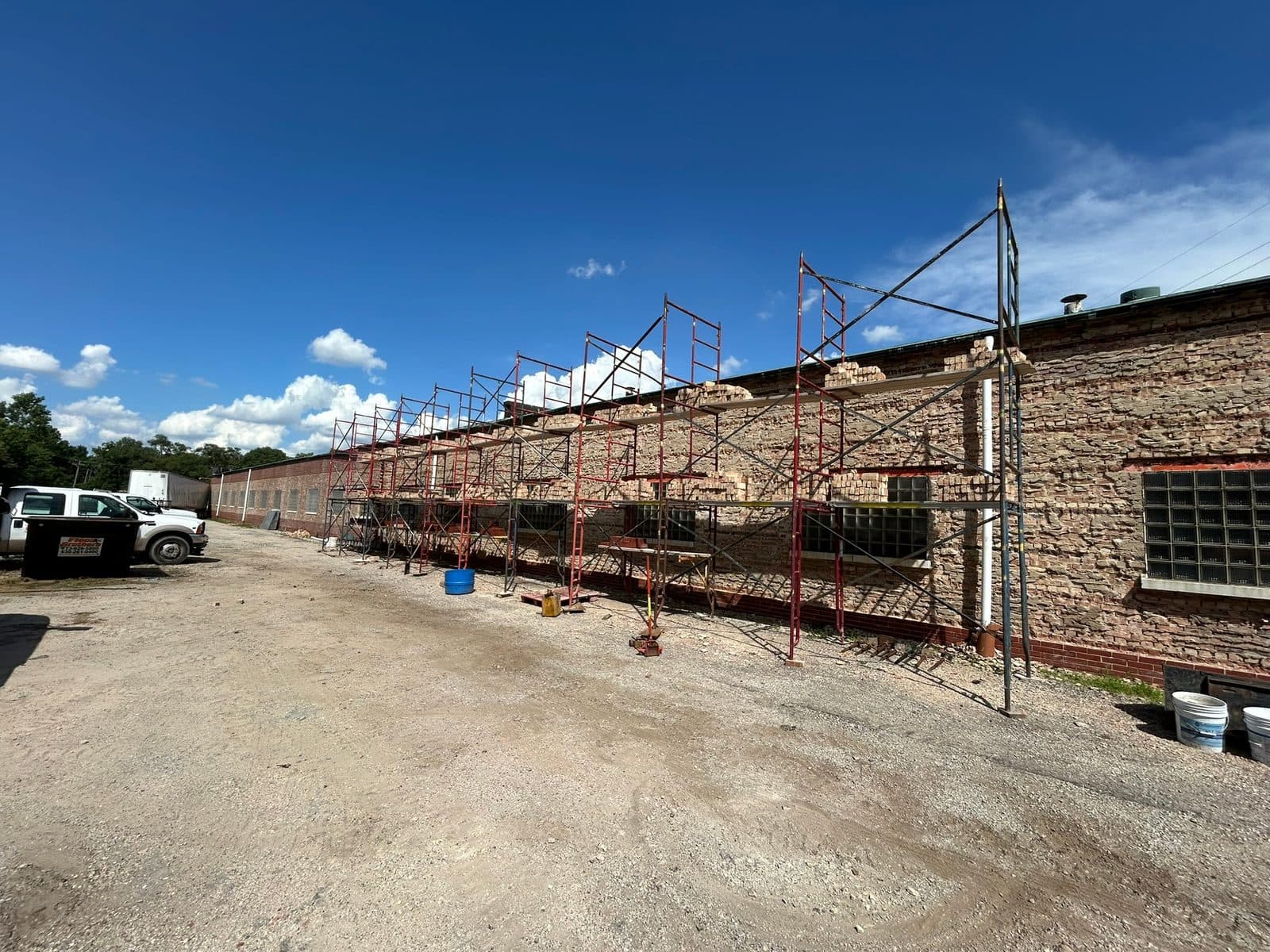
Masonry on a building you live in is a homeowner decision. Masonry on a building you rent out is a business decision, and the arithmetic is genuinely different.
The wall is above tenants and above a public sidewalk. Water that gets into it reaches somebody else's living room and becomes a complaint, a repair, and possibly a rent credit. And the work you defer this year does not simply sit there — it grows, and then it reappears as a line item in a buyer's inspection report.
Masonry repair on a rental or investment property in Chicagoland deserves to be planned as a capital item on a schedule, not reacted to when something falls off. Here is how to think about it.
Paul Lally's Masonry Inc. is a family-owned, insured masonry contractor serving Chicago and the Chicagoland suburbs since 1988 — tuckpointing, brick repair and replacement, chimney repair and rebuilds, lintel replacement, masonry restoration, and waterproofing for residential and commercial properties. Built on Craftsmanship. Backed by Experience. Free on-site estimates — (708) 448-8866.
Why deferral costs more here than almost anywhere
Deferred maintenance on most building systems is linear. A furnace at the end of its life costs about the same to replace this year or next.
Masonry is not linear, because the thing that caused the damage keeps operating. A cracked chimney crown does not pause. An open joint on a west elevation admits water through every rain and every freeze-thaw cycle for as long as it is open.
So the progression runs:
- Open joints — a repointing job
- Water reaches the units → spalling brick — repointing plus unit replacement
- Water reaches the core → saturated wall, efflorescence, interior damage — masonry plus interior repair
- Structure affected → rebuilding
Each step is several times the last. And on an income property, step three is where a tenant calls.
Where the money and the risk actually sit
Overhead masonry — the first priority, always
Parapets on flat-roofed buildings are the most weathered masonry on the property, exposed on three surfaces with no roof over them and no heated space behind them. They also sit directly above sidewalks, entries, and parking.
Lintels above entries, storefronts, and garage openings. Corroding steel expands and lifts the brick it carries, and displaced brick over a doorway people use daily is not a maintenance item.
Cornices, coping, and decorative units at the top of older Chicago buildings, particularly terra cotta and cast stone held by internal anchors that corrode invisibly.
If a building's budget covers one thing this year, it should cover whatever is overhead. Appearance work at street level can wait. Material above a sidewalk cannot.
Water reaching occupied units
The second priority, because it is where tenant relations and repair costs collide. The usual paths: failed chimney crowns, open joints on the weather elevation, deteriorated sills, failed perimeter sealant, and — on newer veneer buildings — plugged weep holes and failed flashing.
Our guide to how water gets through a brick wall walks the whole path.
Deterioration and appearance
Real, but genuinely deferrable in a way the first two categories are not.
The Chicago two-flat and small multi-unit
Worth its own section, because it is the archetypal Chicagoland investment property and it has a characteristic set of masonry issues.
Tall chimney stacks. Two-flats and three-flats carry chimneys standing well above the roof, exposed on all four sides, often serving flues that no longer do what they were built for. They are among the most weathered masonry in the city and among the most likely to lean.
Common brick side and rear elevations. Soft, absorbent Chicago common brick on the sides and back, with pressed face brick reserved for the street elevation. The common brick spalls readily and is intolerant of hard mortar and aggressive cleaning.
Rear porches and their masonry. Where the porch structure meets the wall is a chronic water and attachment detail.
Party walls. On row buildings and closely spaced two-flats, the wall may be shared, which makes the repair a conversation with a neighbour before it is a conversation with a contractor. We covered that in party walls and shared masonry.
Foundation at grade. Splash, salt, and decades of raised grade working on the bottom courses.
Our fuller treatment is in two-flat and apartment building masonry repair.
The newer suburban rental — a different clock
Not every Chicagoland investment property is a century-old city building. A growing share are 1990s and 2000s townhomes, duplexes, and single-family rentals in the outer suburbs, and those need a different maintenance schedule entirely.
These are brick and stone veneer over frame — a drained cavity wall rather than a solid one. The assembly is designed to let water in and drain it back out through weep holes at the base, behind a flashing that directs it outward. That changes what fails and when.
Repointing is rarely the first need. The mortar on a thirty-year-old veneer wall is usually still sound.
Sealant is. Perimeter beads at windows and doors, expansion joints, and the transitions where brick meets siding or stone meets brick all reach the end of their service life somewhere around the twenty-five to thirty-five year mark — which is exactly where a lot of these buildings now sit.
Weep holes get closed. Painted shut, mortar-plugged during a prior repair, or buried by landscaping and raised grade. A veneer wall whose weeps are blocked is holding water it was designed to release, and nothing on the face of the wall will fix that.
Flashing and lintel details at openings show their first problems in the same window.
The practical point for an owner with a mixed portfolio: the city buildings and the suburban ones do not belong on the same maintenance schedule, and applying the older building's assumptions to the newer one usually means looking at the wrong things.
What a good scope document should tell you
On income property especially, the estimate is a management document, not just a price. A useful one separates:
- What is urgent — overhead, structural, actively admitting water
- What is deteriorating — real, but able to wait a defined period
- What is cosmetic — appearance only
- What is excluded — and explicitly so, rather than by omission
- What access is assumed — lift, scaffolding, roof staging, sidewalk protection
- How weather affects the schedule
If a contractor will not break work into those categories, you cannot budget from it and you cannot phase it. Asking for that separation is also a reasonable test of whether you are being sold a scope or given a plan.
Running work on an occupied building
This is where a contractor's experience with income property shows, and it has little to do with mortar.
Walk it with the owner or manager first. Where staging or a lift can set, which entrances and parking must stay clear, where material can be stored, what hours work can make noise, what has to be protected.
Protection where work is overhead. Non-negotiable on any building with people walking underneath.
Notice to residents. A note explaining what is happening, for how long, and what to expect prevents most of the friction. Tenants tolerate scaffolding considerably better when they know why it appeared.
Proof of insurance on file before work begins. Ask for it every time on an income property. Paul Lally's Masonry is insured and provides a certificate on request.
A realistic schedule. Masonry needs workable temperatures for mortar to cure, and weather moves dates. An honest window beats an optimistic one you have to walk back to twelve tenants.
Planning it as a capital item
The most useful thing an owner can have is not a quote. It is a prioritized, phased plan — what is urgent, what is deteriorating, what is cosmetic, and what a two- or three-year sequence looks like.
Two practical rules make phasing work:
Group by access, not by category. The expensive part of upper-elevation work is getting up there. If the parapet needs repointing and two third-floor lintels need replacing, doing both while staging is up costs meaningfully less than doing them in different years.
Phase by priority, not by convenience. Overhead and water-entry first. If the plan defers the urgent items because the cosmetic ones are easier to explain to a board or a partner, it is not a plan.
For the general framework, see masonry repair priorities on a limited budget.
Buying: five things to look at before you close
Masonry surprises are among the larger unbudgeted costs in small multi-unit acquisition. Five checks catch most of them:
- The parapet and roof edge, ideally from the roof rather than the sidewalk
- Lintels above every opening, including rear and garage
- Mortar condition on the south and west elevations, which will be years ahead of the north
- The chimney — plumb, crown, cap, flashing
- The foundation at grade, inside and out
Our post on buying a brick house in Chicago and what to check goes through the residential version in detail, and most of it transfers directly.
Selling: deferred masonry shows up twice
Once in the inspection report, where it becomes a specific negotiating number, and once in the impression the building makes before anyone opens a report. Spalled brick and a visibly failing parapet tell a buyer that the roof and the mechanicals were probably managed the same way — fairly or not.
Unpermitted structural masonry work is its own complication at closing, which is worth knowing before commissioning any. See do I need a permit for masonry work.
Our post on masonry repair before selling covers what is worth doing ahead of a listing and what genuinely is not.
Timing the work in an Illinois year
Masonry has a season, and on income property that interacts with leases and turnover.
Mortar needs workable temperatures to cure properly, which in practice means the bulk of exterior masonry in Chicagoland happens from spring through late fall. Work pushed into marginal weather either waits or gets protected, and protection costs money.
That has two consequences for an owner. First, the good crews book up through the middle of the season, so a repair identified in July is often scheduled rather than started. Second, if a building has turnover windows when units are empty or parking is free, saying so early tends to improve the schedule you get rather than the one you are given.
The mistake is discovering an overhead problem in November and needing it resolved immediately, because that is when options and pricing are both at their worst.
What drives the cost
Building height and access — the single biggest variable on multi-unit work, since it determines lifts, staging, and pedestrian protection. Linear and square footage. The ratio of repointing to rebuilding. Parapet, lintel, and chimney scope. Whether brick can be matched. Whether work must happen around tenant schedules. Weather windows.
We publish no rates, because scopes on income property are not comparable building to building. Free on-site estimate, in writing, with the scope broken out so it can be budgeted, phased, or taken to a board — call (708) 448-8866.
The owner's version of the short answer
Look overhead first. Fix the water, not the stain. Group work by access and phase it by priority. Get proof of insurance on file. And treat masonry as a scheduled capital item rather than an emergency, because in this climate it is the one building system that genuinely punishes waiting.
Paul Lally's Masonry Inc. is family-owned, insured, and has worked residential and commercial property across Chicagoland since 1988. Our name is on every job. Related services: residential masonry restoration, commercial masonry restoration, parapet wall repair, lintel repair and replacement, tuckpointing and repointing, and chimney repair and rebuilds.
Built on Craftsmanship. Backed by Experience. Get a free on-site estimate or call (708) 448-8866.
Frequently Asked Questions
What masonry work should an income property owner prioritize?
Anything overhead first — parapets, loose brick above entries and sidewalks, deteriorating lintels — because that is where the liability sits. Then active water entry reaching occupied units, then general deterioration, then appearance.
Can masonry work be done with tenants in the building?
Yes, and that is the normal condition. What it requires is planning: staging and access mapped around entrances and parking, protection where work is overhead, notice to residents, and a realistic schedule rather than an optimistic one.
Should I ask a masonry contractor for a certificate of insurance?
Always, on any income property. Ask for proof of coverage before work begins and keep it on file. Paul Lally's Masonry is insured and provides a certificate on request — and any contractor who hesitates at that question has answered it.
Is deferring masonry repair on a rental actually cheaper?
Rarely, and it is the most expensive kind of deferral in the trade. Masonry damage compounds because the failure that starts it keeps admitting water, so a joint problem becomes a unit problem, then a wall problem, then a rebuild.
How does masonry affect selling an investment property?
It shows up twice — in the inspection and in the price. Visible deferred masonry gives a buyer a concrete number to negotiate against, and unpermitted structural work can complicate a closing outright.
How much does masonry repair cost on a multi-unit building in Chicago?
It depends on scope, height and access, the ratio of repointing to rebuilding, parapet and lintel work, and whether brick must be matched. Paul Lally's Masonry provides a free on-site estimate in writing with the scope broken out so it can be budgeted or phased.
What should I look at before buying a brick income property?
The parapet and roof edge, the lintels above every opening, the condition of the mortar on the weather elevations, the chimney, and the foundation at grade. Those five carry most of the money in a masonry surprise.
Can masonry work be phased across budget years?
Yes, and on income property it is often the right approach — provided the phasing follows priority rather than convenience. Urgent and overhead items first; appearance work is what defers.
Who is responsible for masonry on a condo building?
On most condo buildings the exterior masonry is common element, which means the association controls and funds the work rather than individual owners. Check the declaration before commissioning anything.