
Masonry Restoration · Chicagoland, IL
Can't Do It All This Year? How to Prioritize Masonry Repairs
Almost nobody does their whole building at once. The question isn't whether to phase the work — it's which items genuinely can't wait, and which ones get cheaper by waiting. Here's the order that actually saves money.
2026-08-11
Quick Answer
When phasing masonry repairs, the order is: anything that could fall, then active water entry, then the top of the building — chimney, parapet, and coping — then rusting lintels, then weather elevations, then preventive work like sealing. Deferring the top of the building is the most expensive mistake, because everything below it stays wet. Paul Lally's Masonry has served Chicagoland since 1988 — (708) 448-8866.
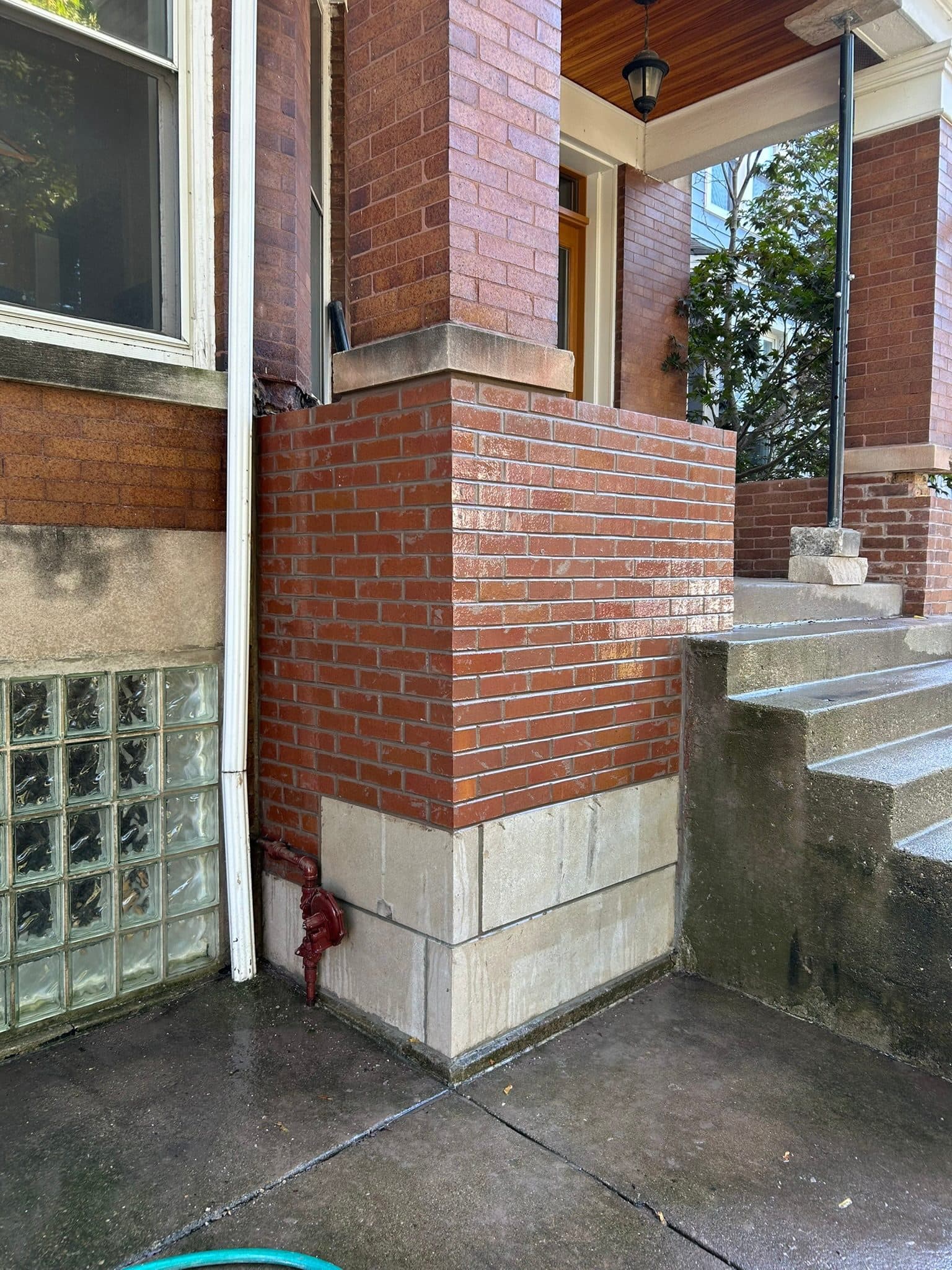
Almost nobody does their whole building in one go. Between what the walls need and what the year allows, most masonry work happens in stages.
That's fine. Phasing masonry is normal and often sensible. What isn't fine is phasing it in the wrong order — which is how homeowners end up paying for the same wall twice, or spending on a beautifully repointed elevation that's still being soaked from above.
Paul Lally's Masonry has been writing phased scopes across Chicagoland since 1988. Here's the order that actually saves money.
The priority ladder
| Stage | What | Why it's here |
|---|---|---|
| 1 | Anything that could fall on someone | Safety. Outranks everything. |
| 2 | Active water entry reaching the interior | Interior damage compounds fastest |
| 3 | The top of the building — chimney, crown, cap, parapet, coping | Everything below stays wet until this is fixed |
| 4 | Rusting lintels with cracked brick | Loses capacity and gains destructive force |
| 5 | Weather elevations — repointing, spalled brick | Real deterioration, not yet emergency |
| 6 | Sheltered elevations, cosmetic work | Genuinely can wait |
| 7 | Sealing and waterproofing | Last, always — protects finished work |
If you take one thing: stage 3 before stage 5. Repointing a wall while the chimney or parapet above it keeps pouring water down inside is the most common expensive mistake in phased masonry.
Stage 1 — Anything that could fall
Loose brick or coping above a walkway, entrance, sidewalk, driveway, or parking area. A wall that's bowing, leaning, or displaced. A leaning chimney.
This isn't a maintenance item and it doesn't get budgeted across quarters. It also doesn't necessarily mean the full repair happens now — loose material can be removed and a condition stabilised while the proper rebuild waits for workable weather. Making it safe and making it finished are two different jobs, and only the first is urgent.
If a wall is moving rather than deteriorating, that's a licensed structural engineer before any masonry. See mason or structural engineer and a brick fell off my house.
Stage 2 — Water actively reaching the interior
Ceiling stains, damp or musty interior walls, water in a tenant's unit.
Interior damage compounds faster than masonry damage and costs more per season. On a rental building it also costs you tenant goodwill, which doesn't show up on a masonry invoice at all.
Stage 3 — The top of the building
This is the stage people defer and shouldn't.
The chimney, its crown and cap, and — on any flat-roofed building — the parapet and its coping. This masonry is the most exposed on the property: weathered on all sides, above the roofline, and invisible from the ground.
Why it outranks the walls: water runs downhill. A cracked crown, an uncapped flue, or open coping joints deliver water into the wall below them. Repoint that wall first and you've repointed masonry that will keep getting wet from above.
It's also the stage most likely to be missed entirely, because nobody can assess it without getting up there. See parapet wall repair and chimney crowns, caps, and flashing.
Stage 4 — Rusting lintels
A horizontal crack above a window, door, or garage opening, often with rust staining bleeding below it.
High priority for a specific reason: corroding steel loses structural section while expanding. You're simultaneously losing capacity and gaining destructive force — the worst combination in a load-bearing element.
The scope also escalates unusually fast. Replacing steel with a few courses above is routine; wait and the brick above loses bearing, more units crack, and the opening goes out of square. This is one of the few items where the arithmetic of waiting is genuinely bad. See failing lintels.
Stage 5 — Weather elevations
Repointing and brick replacement, starting with the walls that actually failed.
Not all four sides at once. Mortar fails by exposure, so the north and west elevations — taking wind-driven rain and drying slowest — typically go years ahead of the sheltered sides. The bottom three courses and the area around and under sills go first within any elevation.
A mason should be willing to tell you which walls can wait. If a quote covers all four elevations uniformly, ask whether they all actually need it.
Stage 6 — Sheltered elevations and cosmetic work
The south and east walls, the gangway side that nobody sees, appearance-driven repairs. These genuinely can wait a season or two if the joints still pass the key test.
Stage 7 — Sealing, last
Sealing is never a stopgap. It's the finish line.
Applying a sealer to a wall with failing joints coats the leak path instead of closing it, and slows the wall's ability to dry. In a freeze-thaw climate that accelerates the spalling you were trying to prevent — and a film-forming product does it faster still.
If someone offers to "seal it now and repair it later," that's the sequence exactly backwards. See is masonry waterproofing worth it.
What to bundle when you do go
Phasing by risk is right. Phasing by access is how you save money inside that.
Staging and mobilization are a real share of any masonry job. So when a stage requires getting a crew up on a roof or a wall, look at what else is up there:
- Doing the chimney? Look at the flashing and any nearby roofline masonry.
- Staging an elevation for repointing? Do the spalled brick, the sills, and the lintels on that wall in the same visit.
- On the roof for the parapet? Do the coping and the chimney together.
- Digging or working at grade? Handle the base course, parging, and the stoop while you're there.
One setup covering three items beats three setups covering one each, and it's the single easiest saving in a phased plan.
The free stage — water management
While you're waiting for stage 5, do the things that cost nothing and genuinely slow deterioration:
- Clear the gutters and get downspouts discharging well away from the foundation
- Keep grade sloping away; don't let soil or mulch build against the brick
- Stop piling shoveled snow against walls, steps, and the garage
- Keep de-icing salt off the masonry — sand or grit for traction where you can, and sweep up residue
- Cut vegetation back off the walls so they can dry
- Cap any open flue — cheap, and it stops rain going straight down the chimney
- Don't seal anything
Genuinely: on a wall that's waiting a year, better water management does more for it than most of what you could spend a small budget on. See protecting masonry through winter and the masonry maintenance checklist.
Which items get worse fastest
Not everything deteriorates at the same rate, and that shapes what to defer:
Fast: rusting lintels (compounding in two directions), open parapet coping (soaking a whole wall), a cracked chimney crown, anything already letting water inside.
Steady: spalled brick — it won't hold still, because a lost fired face means more absorption every year, but it rarely doubles in a season.
Slow: receding mortar on a sheltered elevation, cosmetic staining, minor efflorescence with the source addressed.
Not on a clock at all: a dormant step crack that's flush, unchanged for years, and shows no displacement. Those are commonly the item people worry about most and the one that can wait longest — see step cracks in brick walls.
Timing across seasons
Phased work interacts with the calendar.
Mortar needs workable temperatures to cure. Water in curing mortar that freezes disrupts the cure permanently, so late-season work depends on the forecast and a reputable mason will reschedule rather than install mortar into a hard freeze.
Practical consequence: book earlier than feels necessary, and if a stage slips past the season, use the winter for the free stage — water management — and put the masonry at the front of spring. Urgent safety conditions can usually be stabilised in the off-season even when the full repair waits. See the best time of year for masonry repair in Chicago.
For rental and commercial owners
The ladder holds, with two additions.
Anything above where tenants and the public walk moves up. On a two-flat, three-flat, or storefront, the exposure is people using the building daily.
Interior damage carries a second cost — tenant relations, unit downtime, turnover — that doesn't appear on a masonry invoice but is real money. Which pushes stage 2 higher than it sits for an owner-occupier.
See the two-flat and small apartment building guide.
How to ask for a phased scope
Ask for it explicitly, at the estimate, before any number is discussed:
"Can you scope this in stages — what's a safety item, what's letting water in now, and what can honestly wait a season or two?"
A mason who separates those cleanly is giving you a plan. One who returns a single figure for everything hasn't prioritized, and you'll have to do it yourself.
You should end up with something you can budget against across seasons or years — and ideally with the stages grouped so that anything sharing access happens together. See what actually happens during a free masonry estimate.
Related services
Phased work draws on tuckpointing and repointing, brick repair, brick replacement, chimney repair and rebuilds, lintel repair and replacement, parapet wall repair, limestone and sill repair, foundation masonry repair, caulking and joint sealant, masonry waterproofing, and residential or commercial masonry restoration.
The bottom line
Falling first. Water inside second. The top of the building third. Lintels fourth. Weather walls fifth. Sealing last, always.
The mistake that costs the most isn't deferring work — it's deferring the top of the building while spending on the walls beneath it, or sealing a wall as a stopgap. Both feel like progress and neither is.
And while you wait: clear the gutters, move the snow, keep the salt off. That part is free.
Paul Lally's Masonry Inc. is a family-owned, insured masonry contractor serving Chicago and the Chicagoland suburbs since 1988 — tuckpointing, brick repair and replacement, chimney repair and rebuilds, lintel replacement, masonry restoration, and waterproofing for residential and commercial properties. Built on Craftsmanship. Backed by Experience.
Tell us the budget and we'll tell you honestly what it should buy first — and what can wait a season without costing you more. Our family name is on every job.
Free on-site estimates — call (708) 448-8866 or request an estimate online.
Frequently Asked Questions
What masonry repair should I do first if I can only do one thing?
Anything that could fall on someone — loose brick or coping above a walkway, entrance, or sidewalk, and any wall that's bowing or leaning. That's a safety item rather than a maintenance one, and it outranks everything else regardless of how the rest of the building looks.
Is it cheaper to do masonry all at once or in phases?
One mobilization is usually cheaper per unit of work — one setup, one set of staging, one crew visit. But phasing correctly is far cheaper than doing everything at once badly or going into debt for it, so the real answer is: phase by risk, and bundle whatever shares access.
Why does the top of the building come before the walls?
Because water runs downhill. A cracked chimney crown or open parapet coping pours water into the wall below it, so repointing that wall first means repointing wet masonry that keeps getting wet. Fixing the top first is the single biggest sequencing lever there is.
Can I just seal the brick now and repair it later?
That's the most common expensive mistake. Sealing over failing joints coats the leak path rather than closing it, traps moisture in the wall, and in a freeze-thaw climate accelerates the spalling you're trying to prevent. Sealing is genuinely the last step, not a stopgap.
Which elevation should I do first if I can't do all four?
The weather elevations, typically north and west, which take wind-driven rain and dry slowest. Then whichever wall shows active water entry. The sheltered south and east sides can usually wait a season or two — and a mason should be willing to tell you that rather than quote all four.
How urgent is a rusting lintel?
High, and higher than most homeowners assume. Corroding steel simultaneously loses structural section and expands, so the damage compounds in two directions at once — and the repair grows from replacing steel to rebuilding the masonry above the opening. It's one of the few items where waiting is measurably expensive.
Can spalled brick wait a year?
Usually yes, if it's scattered and the wall is otherwise sound — but understand it won't hold still. A spalled brick has permanently lost its weather-resistant face, so it absorbs more water each year and the damage spreads into neighboring units and joints. It's a real deterioration item, not a cosmetic one.
What can I do for free while I'm waiting?
Manage the water. Clear the gutters, extend downspouts well away from the foundation, keep grade sloping off, stop piling shoveled snow against the walls, keep de-icing salt off the masonry, and cut vegetation back. That costs nothing and genuinely slows deterioration.
How do I get a phased plan rather than one big number?
Ask for it explicitly at the estimate. A good scope separates safety, active water entry, and preventive work into stages you can budget against across seasons or years. Paul Lally's Masonry provides free on-site estimates in writing and will phase them — call (708) 448-8866.