
Masonry Restoration · Chicagoland, IL
Masonry Repair for Chicago Two-Flats and Small Apartment Buildings: An Owner's Guide
A two-flat isn't just a bigger house. Parapets, shared walls, tenant access, back porches, and a roofline nobody looks at change what masonry repair involves and what it costs to defer. Here's how to read the condition of a small Chicago apartment building and prioritize the work.
2026-07-30
Quick Answer
Masonry repair on a Chicago two-flat, three-flat, or small apartment building centers on the parapet and roofline, the chimney, lintels over openings, and the rear porch and stair masonry — the areas that fail first and cause the most tenant-facing damage. Paul Lally's Masonry has repaired Chicagoland two-flats and small apartment buildings since 1988, residential and commercial. Free on-site estimates at (708) 448-8866.
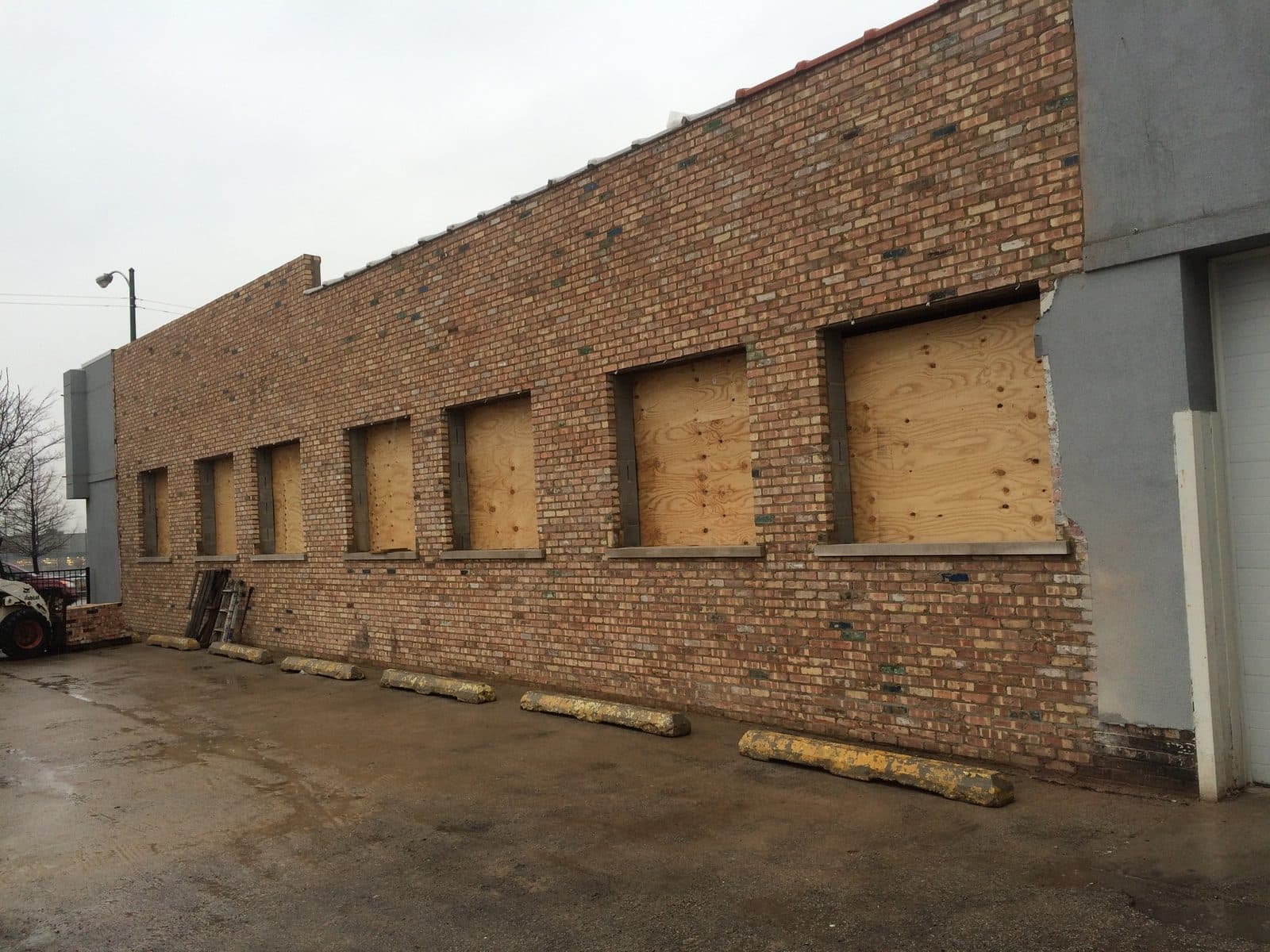
If you own a two-flat, a three-flat, or a small apartment building in Chicago, you own something the rest of the country mostly doesn't: a load-bearing masonry building, usually a century old, with a flat roof, a parapet, a rear porch hanging off the back, and people living in it.
That last part changes everything. On a single-family house, deferred masonry costs you money later. On a multi-unit building, deferred masonry costs you money later and produces tenant-facing damage now — ceiling stains, musty units, complaints, turnover, and in the worst case a loose brick over a walkway that residents use every day.
Paul Lally's Masonry has been working on Chicagoland two-flats, three-flats, courtyard buildings, and small apartment buildings since 1988. Here's how to read your building, what fails first, and how to sequence the work sensibly.
Why a two-flat is not just a bigger house
Four structural realities separate a small apartment building from a bungalow:
1. It has a parapet. Flat roof means the exterior wall continues above the roof deck. That wall is exposed to weather on both faces — outside and roof side — plus the top. Every other wall on your building is protected on one side by the interior of the structure. The parapet isn't. It gets freeze-thaw cycling from all directions and stays wet longer, which is why the top four courses above your roofline are almost always the worst masonry on the property.
2. It's usually solid, load-bearing masonry. Pre-1930s Chicago multi-unit buildings are typically two or three wythes of brick doing the structural work — no frame behind it. The mortar joints are the only water barrier the wall has. That makes repointing structural maintenance, not cosmetics.
3. It has a rear porch bearing on masonry. The back of a Chicago two-flat is where the maintenance lives: porch piers, a masonry stair enclosure, foundation walls at grade, all taking snowpack, splashback, and de-icing salt every winter — directly under the path your tenants walk.
4. It may share a party wall. Attached buildings share masonry, which means shared conditions and, sometimes, shared responsibility. Water coming through a party wall is a conversation with a neighbor as much as a repair.
The failure order: what goes first, second, and third on a Chicago two-flat
After nearly four decades of these buildings, the pattern is remarkably consistent.
First: the parapet and coping
The coping — the clay tile, limestone, precast, or metal cap on top of the parapet — has one job: shed water off the top of the wall. When its joints open, water stops running off the wall and starts running down inside it.
That's the single most common source of "the roof is leaking" calls that turn out to have nothing to do with the roof. A new roof membrane doesn't touch the parapet. If your ceiling stains survived a roof replacement, look up at the wall above the roof, not at the roof.
Signs: loose or cracked coping, missing pieces, open joints at the caps, mortar sand and brick chips collecting on the roof, top-floor ceiling stains, efflorescence high on the exterior wall. See our parapet wall repair in Chicago page for how that work is done.
Second: the chimney
Same reason as the parapet — masonry standing above the roof, exposed on four sides, with a crown on top that cracks. On most two-flats the chimney was built for a boiler or furnace flue and hasn't been looked at in decades. Cracked crown, missing cap, spalled brick at the shoulders, soft joints. Our guide to chimney crowns, caps, and flashing covers the details.
Third: lintels over openings
Every window and door in a masonry wall sits on something. On these buildings it's usually steel angle iron, now eighty to a hundred and twenty years into service. Steel rusts, rust occupies several times the volume of the steel it came from, and the expansion lifts the brick above the opening. That's rust jacking, and it produces the classic horizontal crack running along the joint just above a window, often with step cracks radiating from the top corners.
Multi-unit buildings have a lot of openings, and lintels installed the same year in the same exposure tend to fail on the same schedule — so it's rarely just one. See failing lintels and cracked brick above windows.
Fourth: the rear porch and stair masonry
Grade-level masonry taking water, snow, salt, and daily foot traffic. Spalled brick at the base, soft joints in piers, deteriorated stair enclosures, cracked stoops. This is the area most likely to become a safety issue rather than a maintenance one.
Fifth: the general wall field
The broad expanse of brick on your elevations. It fails too, but slower — and typically the weather-facing north and west elevations run years ahead of the south and east.
Reading your building: a walkaround you can do yourself
Do this twice a year, spring and fall, and after any hard freeze-thaw stretch.
From the roof (the part owners skip, and the part that matters most):
- Coping caps — cracked, shifted, open joints, missing pieces?
- Parapet brick — spalling, soft joints, anything loose to the touch?
- Is the parapet plumb, or does it lean?
- Debris at the base of the parapet — mortar sand, brick chips, coping fragments?
- Chimney — crown cracked, cap present, brick sound?
From the ground, all four sides:
- Mortar joints you can dig out with a key
- Spalling — brick faces flaking, powdering, or popped
- Step cracks climbing through the joints
- Horizontal cracks above windows and doors, with rust staining below
- Any wall bulging or out of plane
- Efflorescence — white chalky salt deposits
- Brick debris on the ground below
Rear and grade:
- Porch piers and stair masonry
- Base course condition where snow piles and salt sits
- Grade sloping toward the building
- Downspouts discharging at the foundation
Inside:
- Top-floor ceiling stains, especially near exterior walls
- Damp or musty exterior-wall rooms in any unit
- Stains above window heads
- Tenant complaints about cold spots or drafts on exterior walls
Every one of those items has a masonry explanation, and most of them get cheaper the earlier you catch them.
How to prioritize when you can't do everything at once
Most owners are working within a budget year. Sequence by risk, not by visibility:
| Priority | What | Why |
|---|---|---|
| 1 — Immediate | Loose brick or coping above any walkway, porch, or sidewalk; any bowing or leaning wall | Falling masonry is a safety issue, not a maintenance item |
| 2 — This season | Active water entry reaching a unit; failed parapet coping; cracked chimney crown | Interior damage compounds and reaches tenants |
| 3 — This season if possible | Rust-jacked lintels with cracked brick | Actively destroying the masonry above the opening |
| 4 — Next phase | Repointing the weather elevations; spalled brick replacement | Real deterioration, not yet emergency |
| 5 — Preventive | Remaining elevations, waterproofing, caulking, sealing | Protects the work already done |
The one thing that doesn't work is deferring category 1 and 2 while doing category 5. Sealing a wall while the parapet above it pours water down the inside is a common and expensive sequencing mistake.
What good repair work looks like on these buildings
Mortar matched to century-old brick. This is the most important technical decision on a pre-1930s Chicago building and the one most often gotten wrong. The original brick is soft, locally-fired common brick, and the original mortar was lime-based and softer still. Mortar is supposed to be the sacrificial element — softer than the brick, so it absorbs thermal and moisture movement, and cheap to replace when it wears.
Pack a hard modern Portland-rich mix into that wall and you reverse the physics. The joint becomes harder than the brick, so the brick face becomes the sacrificial element instead and starts spalling at the joint edges. A "stronger" repair actively destroys the wall. On older multi-unit buildings we use softer, lime-rich or low-Portland mixes, standard Type N where appropriate, and Type S only where structure and exposure genuinely call for it. See mortar matching for tuckpointing and historic masonry restoration and lime mortar.
Joints cut to real depth. Roughly two to two and a half times the joint width, back to sound mortar. Skim pointing over failing joints looks great for two seasons and then sheets off, with the original problem untouched underneath.
The roofline treated as the priority it is. Parapet rebuilt or repointed, coping reset or replaced, joints sealed, flashing condition addressed rather than buried.
Original brick salvaged. On a greystone or common-brick building, reused original brick is always the best match. Modern brick in an old wall reads as a patch forever.
Repair scoped to what failed. Parapets are rarely uniformly bad — corners and weather faces go first. Rebuilding sound sections is wasted money, and we'll tell you which is which.
The math of deferring
Owners often frame masonry as a cost to postpone. It's worth being precise about what postponing actually buys.
Masonry deterioration is not linear — it accelerates. Once a joint opens, water enters the wall instead of running off it. Once water is inside, every freeze cycle does more damage than the last. Once brick spalls, its weather-resistant fired face is gone permanently and it absorbs water faster forever.
So the scope grows on its own:
- Repointing failing joints and resetting sound coping → becomes → rebuilding the top courses, new coping, replacement brick.
- Cleaning and protecting a lintel with surface rust → becomes → replacing the steel and rebuilding the masonry above the opening.
- Replacing a dozen spalled bricks → becomes → rebuilding a section.
And on a rental building there's a second ledger the single-family owner doesn't have: interior damage, tenant complaints, unit downtime, and turnover. The masonry invoice is frequently not the expensive part of waiting. The plaster, paint, flooring, and vacancy are.
Working around tenants
Practical realities worth planning for:
- Units stay occupied. This is exterior work throughout.
- Give notice. Tenants should know about staging, noise, and window-closing requests before the crew arrives, not the morning of.
- Noise is real. Angle grinders on masonry, during working hours. The grinding phase is the loud phase and it's the majority of the schedule.
- Dust is managed with wet methods, shrouds, and vacuums, and crews work in respirators and eye protection — silica dust is a genuine safety matter, not a nuisance.
- Access below staging gets restricted, which on a two-flat often means the rear porch route or a gangway.
- Parking. Mixing area, material staging, and the drop zone below the work.
- Weather moves schedules. Mortar needs workable temperatures to cure and can't be installed into a hard freeze. Build that into what you tell tenants. See the best time of year for masonry repair in Chicago.
What drives cost on a small apartment building
- Number of elevations in scope, and whether the rear and gangway sides are included
- Height and access — staging on a three-story building is a significant portion of the job
- Parapet and coping scope — repointing versus taking down and rebuilding courses
- Chimney condition — repoint, crown repair, or rebuild
- Number of failing lintels and how much brick has to be shored and relaid at each
- Extent of brick replacement and how hard the original brick is to match
- Rear porch and grade-level masonry condition
- Site constraints — alley access, tight gangways, parking, tenant coordination
We don't price multi-unit masonry from the sidewalk, and neither should anyone else. A real estimate includes getting on the roof. Our page on what a masonry estimate should include sets out what to expect in writing.
Related services
Work on two-flats, three-flats, and small apartment buildings typically involves tuckpointing and repointing, parapet wall repair, chimney repair and rebuilds, lintel repair and replacement, brick repair and brick replacement, limestone and sill repair, foundation masonry repair, caulking and joint sealant, masonry waterproofing, and — for full-building scopes — commercial masonry restoration or historic masonry restoration.
The bottom line
On a Chicago two-flat or small apartment building, the roofline is the whole ballgame. The parapet, its coping, and the chimney fail first and cause the interior damage your tenants actually experience — and they're the parts nobody looks at, because you have to get on the roof to see them. Lintels come next, then the rear porch masonry at grade, then the general wall field.
Prioritize anything that can fall, then anything actively letting water into a unit, then the weather elevations. Use mortar softer than the century-old brick. Cut the joints to real depth. And get someone on the roof before anyone gives you a number.
Paul Lally's Masonry Inc. is a family-owned, insured masonry contractor serving Chicago and the Chicagoland suburbs since 1988 — tuckpointing, brick repair and replacement, chimney repair and rebuilds, lintel replacement, parapet wall repair, masonry restoration, and waterproofing for residential and commercial properties. Built on Craftsmanship. Backed by Experience.
We'll walk the building including the roof, tell you what's urgent and what can be phased, and put a scope in writing. Our family name is on every job we do.
Free on-site estimates — call (708) 448-8866 or request an estimate online.
Frequently Asked Questions
What masonry fails first on a Chicago two-flat?
The parapet and the coping on top of it, almost every time. That wall stands above the roof exposed to weather on both faces, so it deteriorates decades ahead of the rest of the building, and once the coping joints open, water runs down inside the wall and shows up as top-floor ceiling stains. The chimney above the roofline is a close second for the same reason.
How do I know if my apartment building's masonry is urgent or can wait?
Anything that can fall is urgent — loose brick or coping above a sidewalk, walkway, or porch, and any wall that is bowing or leaning. Active water entry reaching a tenant unit is next, because interior damage compounds fast. Soft mortar joints with sound, plumb brick and no leaks can usually be scheduled rather than rushed.
Does masonry work disrupt my tenants?
Tuckpointing and facade work are exterior, so units stay occupied. Tenants should expect grinder noise during work hours, staging along the building, dust control measures, a request to keep windows closed on the elevation being worked, and restricted access below the work area. We coordinate the schedule so you can give tenants proper notice.
Why do the rear porches and stairs need masonry attention?
Because on most Chicago two-flats and three-flats the rear porch structure bears on masonry piers, foundation walls, or a brick stair enclosure that sits at grade and takes constant water, snowpack, and de-icing salt. That masonry deteriorates faster than anything on the front of the building and it is directly under the path tenants use every day, which makes it both a maintenance and a safety item.
How much does masonry repair cost on a small apartment building in Chicago?
There is no per-unit or per-building rate. Cost is driven by how many elevations are involved, building height and how the crew reaches the work, the amount of parapet and coping work, how many lintels are failing, the extent of brick replacement, and staging requirements. Paul Lally's Masonry provides a free on-site estimate in writing after inspecting the building, including the roof.
Do I need a facade inspection for my building?
Chicago's facade ordinance requires periodic critical examinations of exterior walls on taller buildings, and most two-flats and three-flats fall below those thresholds — but the requirements depend on the building's height and construction, so verify your specific building. If you have already received an inspection report or a violation citing deteriorated masonry, bring it to the estimate and we will scope the work it describes.
Can masonry repair be phased across seasons or budget years?
Yes, and on multi-unit buildings it usually should be. We sequence by risk: anything that can fall or is actively letting water into a unit goes first, then the roofline and chimney, then the weather elevations, then cosmetic and preventive work. Phasing is only a problem when the deferred items are the ones causing active damage.
Why is water showing up on my top floor when the roof was just replaced?
Because on a flat-roofed Chicago building the leak is frequently not the roof membrane at all — it is the parapet wall above it. Water enters through open coping joints and failed mortar at the roofline, travels down inside the masonry, and appears well away from where it got in. A new roof does not address a parapet, which is why the leak survives the roof job.
Should I tuckpoint the whole building or just the bad side?
It depends on condition, not symmetry. The weather elevations, usually north and west, and the roofline typically fail years ahead of the rest, so repointing only what has failed is often the right call. Where the whole building is uniformly soft, doing it in one mobilization is usually more efficient than returning for each elevation.
Who does masonry work on small apartment buildings in the Chicago area?
Paul Lally's Masonry Inc. is a family-owned, insured masonry contractor serving Chicago and the Chicagoland suburbs since 1988, working on both residential and commercial property — including two-flats, three-flats, courtyard buildings, and small apartment buildings. Tuckpointing, parapet rebuilds, chimney repair, lintel replacement, brick replacement, restoration, and waterproofing. Free estimates at (708) 448-8866.