
Masonry Restoration · Chicagoland, IL
Masonry Repair Before Selling Your Chicago Home: What Inspectors Flag and What's Worth Fixing
Masonry is one of the first things a home inspector writes up and one of the most effective things a buyer negotiates against. Here's what gets flagged on Chicagoland brick homes, what's genuinely worth repairing before listing, and what you can leave alone.
2026-07-31
Quick Answer
Before selling a Chicago-area brick home, the masonry items most worth repairing are the ones inspectors reliably flag and buyers negotiate hardest against: a deteriorated chimney, cracked brick above windows from rusting lintels, spalling brick, failing mortar joints, and water entry at grade. Paul Lally's Masonry has prepared Chicagoland homes for sale since 1988 — free on-site estimates at (708) 448-8866.
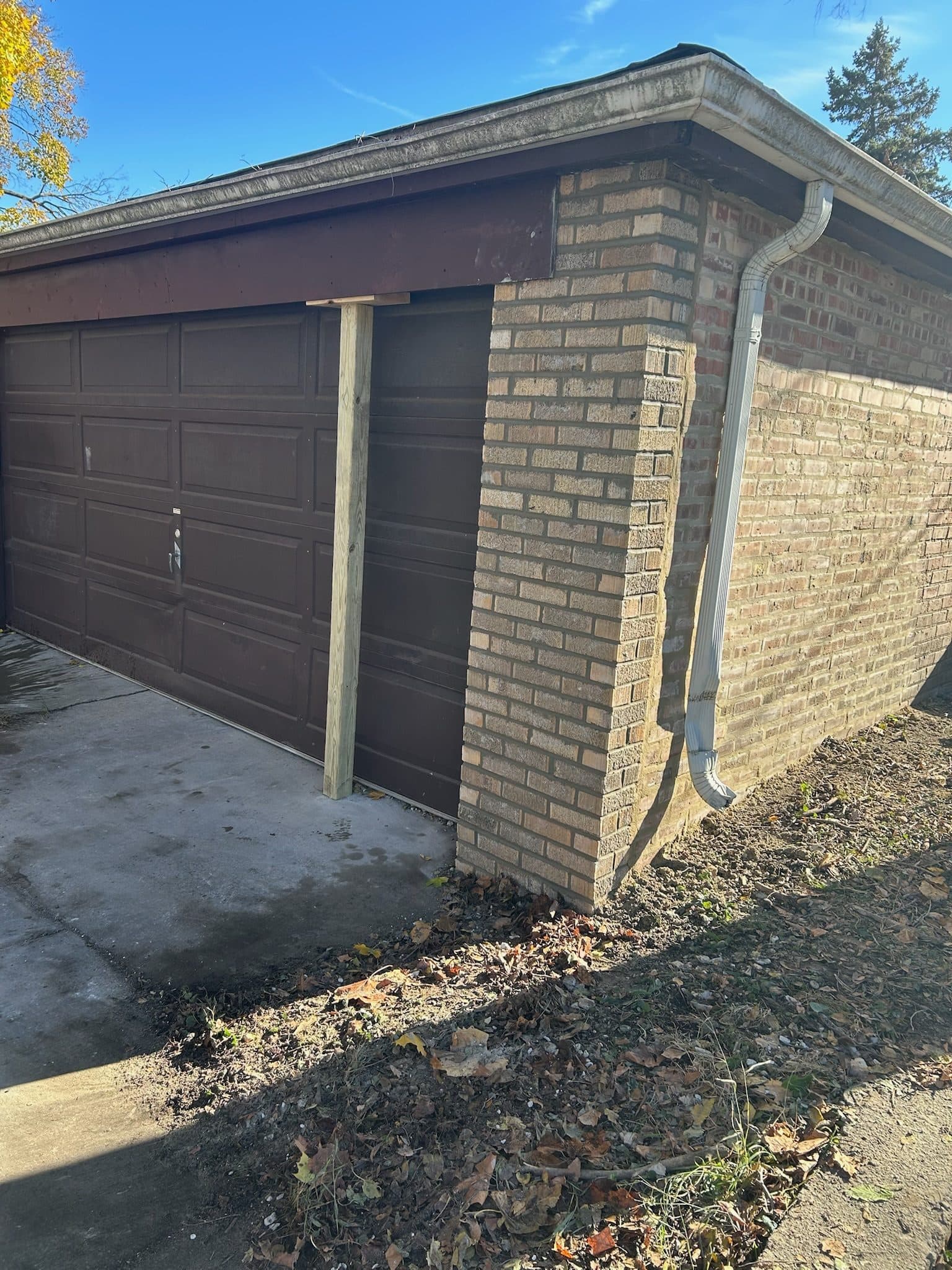
You're getting ready to list. The kitchen is staged, the carpets are cleaned, and somebody has finally dealt with the garage. Then the inspection comes back and there are four paragraphs about the chimney, a note about "stepped cracking at the northwest elevation," and a photo of the brick above the front window.
Suddenly masonry is the thing standing between you and a clean close.
On a Chicagoland brick home, masonry is one of the first items an inspector writes up and one of the most effective things a buyer negotiates against — because it looks structural, it's expensive-sounding, and most buyers have no framework for telling a cosmetic issue from a serious one. Paul Lally's Masonry has been preparing Chicago-area homes for sale since 1988. Here's what actually gets flagged, what's worth fixing before you list, and what you can reasonably leave alone.
Why masonry carries disproportionate weight in a sale
Three things make brick a negotiation lever out of proportion to its actual repair cost.
It reads as structural. Buyers see a crack in brick and think foundation, whether or not the crack has anything to do with the foundation. Uncertainty gets priced pessimistically.
Inspectors describe, they don't diagnose. A general home inspector's job is to document observable conditions and recommend evaluation by a specialist. So a report says "stepped cracking observed; recommend evaluation by a qualified masonry contractor" — which is entirely appropriate and also reads, to a nervous buyer, like a warning. The report can't tell them whether the crack is dormant settlement from 1975 or a lintel actively pushing the wall apart.
It's the first thing anyone sees. The chimney and the front elevation are in every listing photo. Masonry that reads as neglected sets an expectation about the rest of the house before anyone walks through the door.
The practical consequence: an undiagnosed masonry item usually costs more in negotiation than the repair would have cost. Buyers don't discount by the true repair figure; they discount by their worst-case guess, and then add a cushion.
What inspectors flag on Chicagoland brick homes
These are the items that show up over and over in this market.
The chimney
The most-flagged masonry item on Chicago-area homes, and for good reason — it's the most exposed masonry on the building, taking weather from four sides above the roofline with a crown on top that cracks. Inspectors note soft or missing mortar joints, spalled brick, a cracked crown, a missing cap, deteriorated flashing, and any lean.
It's also highly visible from the street and in photos, which makes it double-duty: a condition item and a curb-appeal item.
Cracked or displaced brick above windows and doors
A horizontal crack running along the joint just above an opening, often with orange-brown rust staining bleeding down the brick below it, and sometimes step cracks radiating from the top corners.
That's rust jacking — the steel lintel carrying the brick above the opening is corroding, and rust occupies several times the volume of the steel it came from. With nowhere to go, the expansion lifts the masonry. It's extremely common on Chicagoland homes from the 1950s through the 1980s, where wide picture windows and two-car garage openings sit on long spans of steel that was never galvanized.
Inspectors flag it consistently. See failing lintels and cracked brick above windows.
Spalling brick
Faces flaking, powdering, or popped off, leaving a rough sandy surface. Water absorbed into the brick froze, expanded roughly nine percent, and pushed the hard fired face off. Once that face is gone the brick drinks water faster, so it accelerates.
Concentrated where you'd expect: north and west elevations, the bottom three courses where snowpack and splashback sit, around sills, and at chimney shoulders. See spalling brick in Chicago.
Deteriorated mortar joints
Joints that have receded, gone soft and sandy, or opened up. Inspectors often test them by hand — if a joint can be dug out with a key or a screwdriver, it goes in the report.
Step cracks
Cracks climbing diagonally through the mortar joints in a stair-step pattern. These get flagged nearly every time and cause the most buyer anxiety, because they look like foundation trouble.
Sometimes they are. Often they're dormant settlement that finished decades ago, or a rusting lintel, or a downspout that soaked one corner. The width matters less than whether it's still moving and whether the wall is displaced. Our guide to step cracks in brick walls covers how to read them.
Efflorescence
White chalky deposits on the brick — mineral salts carried to the surface as water moves through the masonry and evaporates. Not damage in itself, but evidence that water is moving through the wall, which is why it gets noted. See efflorescence on brick.
Masonry at grade
Crumbling foundation block or brick, failing parging, deterioration beside the driveway and front walk where de-icing salt does its work. Often paired in the report with a note about grade sloping toward the house or downspouts discharging at the foundation.
On flat-roofed buildings: the parapet and coping
For two-flats, three-flats, and any flat-roofed property, the wall above the roofline and its coping caps. This is the most under-inspected and most consequential item on those buildings — and the usual source of top-floor ceiling stains that survived a roof replacement. See parapet wall repair in Chicago.
What's worth fixing before you list
Not everything is. Here's how we'd triage it.
| Priority | Item | Why |
|---|---|---|
| Fix it | Anything loose that could fall — brick, coping, chimney material above a walkway | Safety, and it will stop a deal cold |
| Fix it | Active water entry reaching the interior | Compounds fast, and buyers assume the worst about water |
| Fix it | Chimney deterioration | Highly visible, always flagged, sets the tone for the whole property |
| Fix it | Rust-jacked lintels with cracked brick | Actively worsening, and looks structural to buyers |
| Usually worth it | Failing mortar on the front and street-facing elevations | Curb appeal plus removing an obvious objection |
| Judgment call | Full-house repointing when only some elevations have failed | Real value, but scope it honestly against your timeline |
| Often better as a credit | Broad cosmetic work started close to closing | You won't recover the full spend, and you'll be rushed |
| Get it diagnosed first | Step cracks, bowing walls, anything suggesting movement | The diagnosis is what you actually need — it may be far less than it looks |
The pattern: repair the things that are unsafe, actively getting worse, or highly visible. Get a written diagnosis for the things that look alarming. Consider a credit for broad cosmetic scope you can't complete comfortably before listing.
The single highest-value move: get it diagnosed
If you do nothing else, have a mason look at the masonry before the buyer's inspector does.
An inspection report says "stepped cracking observed at the northwest elevation; recommend evaluation by a qualified masonry contractor." That sentence is a blank cheque in a buyer's mind. It could mean a dormant crack that wants repointing, or a wall that needs rebuilding, and nothing in the report distinguishes them.
A masonry assessment converts that open question into a defined scope and a number. That's worth having whether you decide to do the work, offer a credit, or explain to the buyer why the item is minor — and it puts you in the conversation with information rather than reacting to someone else's.
It also occasionally works the other way. We've walked homes where the inspection barely mentioned something that turned out to matter — an unnoticed lintel well into failure, or a parapet quietly feeding a stain the seller had been repainting for years. Better to know.
Repair or credit? How to think about it
Repair when: the item is a safety issue; water is actively getting in; it's highly visible; it's worsening quickly; or the fix is well-defined and you have time before listing.
Credit when: the scope is broad and cosmetic; you're close to closing; weather won't cooperate; or the buyer has a specific preference about how it's done.
The underlying economics: buyers discount by their worst-case estimate, not by the real number. A defined, quoted repair is nearly always cheaper than an undefined concern — which is why the written scope matters even when you choose the credit.
Timing: start earlier than feels necessary
Masonry does not compress well into the weeks before photos.
- Mortar needs workable temperatures to cure. Late-season work depends on the forecast, and we won't install mortar into a hard freeze just to hold a schedule — it will fail in its first winter.
- Rain stops work. A wet Chicagoland spring routinely adds days.
- Matching brick takes lead time. A discontinued or unusual brick has to be sourced.
- Scope grows once joints are open. What's found when the wall is opened is the honest variable on any masonry job.
Practical guidance: for anything beyond a small repair, plan on several weeks minimum, and book in the season before you list. Our post on how long tuckpointing takes gives realistic ranges, and the best time of year for masonry repair in Chicago covers the seasonal picture.
What drives the cost of pre-sale masonry work
- Scope — which elevations, and how much of each
- Height and access — a ranch off ladders versus a two-story needing staging
- Ratio of repointing to brick replacement
- Chimney condition — repoint, crown work, or an above-roofline rebuild
- Lintels — how many, and how much brick must be shored and relaid
- Brick and mortar matching difficulty, including sourcing lead time
- What's found once the joints are open
We don't quote masonry from a photo or over the phone, and a seller should be wary of anyone who does. Paul Lally's Masonry gives a free on-site estimate in writing — the kind of document that's actually useful in a negotiation.
Do it right, not just fast
A word of caution specific to pre-sale work: the temptation to take the fastest, cheapest bid is strongest when you're weeks from listing and just want the item closed out. That's exactly when skim pointing gets sold — a thin smear of fresh mortar over failing joints that photographs beautifully and sheets off within a season or two.
It may get you through the sale. It also means the buyer's inspector may catch it, that it's visible to anyone who knows what to look for, and that you're passing on a problem you paid to conceal rather than fix. The same goes for hard modern mortar packed against soft century-old brick, which permanently damages the wall.
Our post on why masonry repairs fail covers what to watch for, and how to hire a masonry contractor in Chicago covers the questions to ask.
Chicagoland context: why this comes up so often here
Our housing stock and our climate combine to make masonry a standard feature of local transactions.
The city's pre-1930s stock — bungalows, greystones, two-flats, three-flats, brick storefronts — is soft, locally-fired common brick with lime-based mortar, now a century or more into service. The postwar suburbs — Oak Lawn, Evergreen Park, Orland Park, Tinley Park, Homer Glen, Palos Heights, Mokena, New Lenox, Naperville, Downers Grove — are brick and brick veneer from the 1950s through the 1980s, which puts original mortar and original ungalvanized lintels right at the end of their service lives.
Then there's the weather: repeated hard freeze-thaw cycling, wet springs, lake-influenced moisture, and de-icing salt at grade. Water gets into masonry, freezes, expands, and pries it apart, one winter at a time.
Which means: if you own a brick home in this market, masonry will come up. The only question is whether it comes up as a defined scope you brought to the table or an open-ended worry the buyer brought instead.
Related services
Pre-listing masonry work typically involves tuckpointing and repointing, brick repair, brick replacement, chimney repair and rebuilds, lintel repair and replacement, limestone and sill repair, foundation masonry repair, caulking and joint sealant, parapet wall repair, masonry waterproofing, and residential masonry restoration.
Landlords selling a multi-unit building should also read our owner's guide to two-flats and small apartment buildings.
The bottom line
Fix what's unsafe, what's actively letting water in, and what's highly visible — starting with the chimney and any rust-jacked lintels. Get a written diagnosis for anything that looks structural. Consider a credit for broad cosmetic scope you can't finish comfortably before listing. And start earlier than you think you need to, because mortar cures on the weather's schedule, not yours.
The goal isn't a perfect house. It's walking into the negotiation with the masonry defined instead of open-ended.
Paul Lally's Masonry Inc. is a family-owned, insured masonry contractor serving Chicago and the Chicagoland suburbs since 1988 — tuckpointing, brick repair and replacement, chimney repair and rebuilds, lintel replacement, masonry restoration, and waterproofing for residential and commercial properties. Built on Craftsmanship. Backed by Experience.
We'll walk the house, tell you plainly which items are worth doing before you list and which aren't, and put it in writing so you have something to work with. Our family name is on every job.
Free on-site estimates — call (708) 448-8866 or request an estimate online.
Frequently Asked Questions
Do I need to fix masonry before selling my Chicago home?
You don't have to, but the items inspectors reliably flag — a deteriorated chimney, cracked brick above windows, active water entry — tend to cost more in negotiation than in repair. Buyers price unknown masonry risk pessimistically, and a written scope from a mason usually lands better than an unexplained crack in an inspection report.
What masonry problems do home inspectors flag most often on Chicagoland brick homes?
The consistent ones are chimney deterioration above the roofline, cracked or displaced brick over windows and garage openings from rusting lintels, spalling brick faces, mortar joints that have receded or gone soft, step cracks, efflorescence, and deteriorated masonry at grade. Inspectors flag conditions rather than diagnosing causes, which is why a mason's assessment often reframes the report considerably.
Is it better to repair the masonry or offer the buyer a credit?
It depends on the item and your timeline. Safety and active-water-entry items are usually worth repairing, because buyers discount unknown risk more steeply than the actual repair costs. Broad cosmetic work close to closing is often better handled as a credit, since you won't recover the full spend. A written estimate gives you the option of either.
Will tuckpointing increase my home's sale price?
Think of it as protecting the price rather than raising it. Sound, well-matched joints remove an objection and improve how the exterior reads in photos and at a showing, while visibly failing mortar invites a much larger deduction than the repair would have cost. It's defensive value more than added value.
Should I fix the chimney before listing?
It's usually one of the highest-return items. A chimney is the most exposed masonry on the house, it's visible in listing photos and from the street, inspectors nearly always comment on it, and a crumbling one reads to buyers as deferred maintenance across the whole property. A cracked crown or missing cap is also an active water entry point.
How long before listing should I schedule masonry work?
Give yourself more time than you think — several weeks at minimum for anything beyond a small repair. Masonry needs workable temperatures for mortar to cure, weather delays are routine in Chicagoland, and matching brick can add sourcing lead time. Booking in the season before you list is far easier than compressing it into the weeks before photos.
What if the inspection already happened and masonry came up?
Get a mason to look at what was written up before you negotiate. Inspection reports describe conditions without diagnosing them, so an item that reads alarmingly may be a dormant crack needing repointing, while something described mildly may be a rusting lintel that genuinely needs work. A written scope turns an open-ended concern into a defined number.
Do I have to disclose masonry problems to buyers in Illinois?
Illinois requires sellers to complete a residential real property disclosure covering known material defects, and how it applies to a specific condition on your home is a question for your attorney or agent rather than your mason. What we can provide is a clear written assessment and scope, which is what most sellers and their agents want in hand either way.
Is efflorescence a red flag for buyers?
It's a signal rather than damage in itself — the white chalky deposit is mineral salt left behind as water moves through masonry and evaporates. Inspectors note it because it's evidence of water movement, so it's worth understanding the source before listing rather than simply washing it off and hoping it doesn't return.
Who does pre-sale masonry work in the Chicago area?
Paul Lally's Masonry Inc. is a family-owned, insured masonry contractor serving Chicago and the Chicagoland suburbs since 1988, working with homeowners, agents, and landlords on pre-listing masonry — tuckpointing, brick repair and replacement, chimney repair, lintel replacement, and restoration, with written scopes suitable for negotiation. Free estimates at (708) 448-8866.