
Brick Repair · Chicagoland, IL
Should You Paint Your Brick? What Paint Actually Does to Chicagoland Masonry
Painted brick photographs beautifully and is close to permanent. Before you commit, here's the building science of what a coating does to a wall in a freeze-thaw climate — and the honest cases where it's defensible.
2026-08-05
Quick Answer
Painting brick traps moisture inside masonry that needs to breathe, and in Chicagoland's freeze-thaw climate that trapped water expands and pushes the face off the brick. It is also effectively permanent — removing paint from brick usually damages it. Paul Lally's Masonry has repaired painted and spalling Chicagoland brick since 1988. Free estimates at (708) 448-8866.
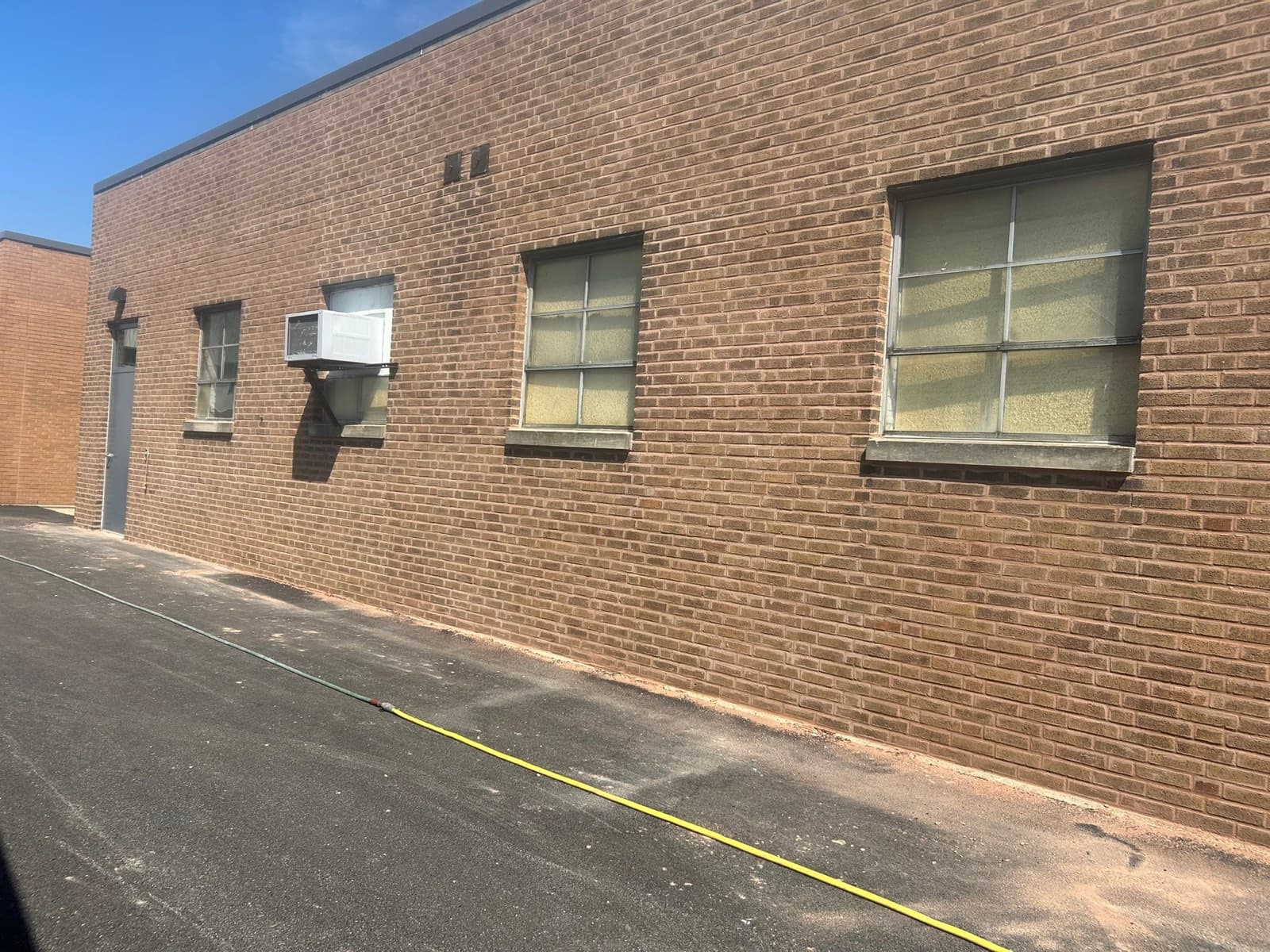
Painted brick looks fantastic in photographs. It's also one of the very few decisions you can make about a masonry house that is close to irreversible — and in a Chicagoland winter, one of the few that can actively destroy the wall.
That's a strong claim, so here's the building science behind it, the honest exceptions, and what to do instead. Paul Lally's Masonry has been repairing Chicagoland brick — painted and unpainted — since 1988.
The one thing to understand: masonry has to breathe
A brick wall is not waterproof and was never meant to be. It's porous by design.
Brick and mortar absorb some moisture — from rain, from snowmelt, from humidity, from inside the house, from the ground. That's normal and it's fine, because the wall then releases that moisture as vapor and dries out. Absorb, release, absorb, release. The system works as long as the drying half keeps happening.
Most exterior paint forms a film. That's what makes it paint — a continuous plastic layer sitting on the surface. And a continuous film blocks the release half of the cycle.
So the moisture goes in — through the back of the wall, through the joints, through any gap in the coating — and then it can't get out.
Then winter arrives
Water expands roughly nine percent when it freezes, with enormous force.
Trapped inside a brick with a film coating over its face, that expanding ice has one place to go: outward, taking the brick's hard fired face with it.
That's spalling, and it's permanent. Fired brick has a durable outer skin and a much softer interior — once the skin is gone, the exposed core absorbs water far faster, so every subsequent winter does more damage than the last.
In Chicagoland this isn't a theoretical risk. We get repeated hard freeze-thaw cycles — sometimes several in a single week — plus wind-driven rain off the lake pushing water at walls horizontally. Our climate is close to a worst case for any coating that traps moisture in masonry.
You've seen the result: painted brick with paint peeling in sheets, and underneath, brick faces coming away with it.
Why "it's peeling" is a symptom, not a paint failure
Homeowners with painted brick almost always describe the same problem: the paint keeps peeling, blistering, or bubbling, and repainting doesn't fix it for long.
That's rarely a bad paint job. It's vapor drive — moisture inside the wall pushing outward, and the film is in its way. The paint is being pushed off from behind.
Which means repainting over it addresses the wrong thing entirely. The moisture is the problem; the finish is just where you can see it.
The other half: it's effectively permanent
Even setting aside moisture, painting brick is a decision you largely can't take back.
Removing paint from masonry:
- Sandblasting strips paint by stripping the brick's fired face along with it. What's left is porous, absorbent brick that deteriorates dramatically faster. On historic masonry this is genuinely destructive, and it erases tooling detail on stone permanently.
- High-pressure washing does a milder version of the same damage, and rarely removes paint fully anyway.
- Chemical stripping systems designed for masonry are the least damaging route — and they are slow, expensive, messy, often incomplete, and require careful containment.
So the realistic options once brick is painted are: keep painting it, switch to a breathable coating over it, or accept it. That's a maintenance obligation you've attached to the house permanently, and it transfers to whoever buys it.
Where we'd argue hardest against it
Soft pre-1930s Chicago common brick. The bungalow belt, the two-flats, the three-flats, the storefronts. This brick is porous and soft by design, laid in lime mortar that's softer still. It depends entirely on being able to breathe. A film coating on this masonry is the single worst combination on this page.
Greystone limestone. Sills, lintels, water tables, steps, carved trim. Limestone is porous and bedded, splitting along its natural layers when trapped moisture or salt crystals expand inside it. Painting historic limestone is both a preservation loss and a durability one.
Any wall with failing mortar joints. Coating over open joints seals water into the wall rather than out of it. And once the wall is painted, assessing and repointing those joints properly becomes considerably harder.
Any wall already showing spalling or efflorescence. Both mean water is actively moving through the masonry. Adding a film is exactly the wrong response.
Where painting is genuinely defensible
We'd rather be useful than absolutist, so:
- Brick that's already painted. The decision is made. The question now is what to use next — and a breathable mineral coating is usually a better answer than another film.
- Modern, hard, dense brick in sheltered conditions — later construction, less porous units, protected elevations.
- Where a vapor-permeable coating is used on sound masonry with sound joints (see below).
- Where the brick is genuinely mismatched — a badly patched wall, an unfortunate addition, a mix of eras that no amount of cleaning will reconcile.
- Interior brick, where freeze-thaw isn't a factor at all.
The breathable alternatives
If you want a lighter or more uniform look, these change the appearance without sealing the wall:
| Option | Breathable? | What it is |
|---|---|---|
| Limewash | Yes | Slaked lime wash; bonds chemically with masonry, weathers softly, renewable |
| Mineral silicate paint | Yes | Bonds chemically into the masonry rather than filming over it; very durable |
| Mortar wash / "German schmear" | Yes | Thinned mortar applied over brick; heavy textured look |
| Masonry stain | Mostly | Penetrates and colors rather than coating |
| Standard latex / acrylic house paint | No | Forms a film — the problem case |
| Elastomeric coating | No | Thick flexible film — worst offender for vapor trapping |
Limewash and mineral silicate coatings are the honest answer for someone who wants painted-brick aesthetics without the moisture penalty. They still change the look permanently and need periodic renewal, but they let the wall breathe.
What we'd suggest instead
Before committing, consider that most brick people want to paint is brick they've stopped liking the look of — and a great deal of that is fixable without a coating:
- Clean it gently. Soft washing and appropriate masonry cleaners remove decades of atmospheric grime, efflorescence, and biological growth. The difference is often dramatic, and people are frequently surprised what's under there. Never sandblast, never high-pressure wash.
- Repoint with matched mortar. A wall's visual character comes largely from the joints. Fresh, correctly matched, properly tooled joints transform how a facade reads — and they're the repair the wall actually needs. See what is tuckpointing.
- Replace the badly spalled units. A dozen matched replacements can do more for appearance than a coat of paint, and it's a repair rather than a cover-up. See why your brick repair doesn't match.
- Fix the stains at their source. Efflorescence, algae, and rust streaks all have causes worth tracing rather than concealing. See stains on brick.
- Then decide. Plenty of homeowners who planned to paint don't, once the wall is clean and repointed.
If you're painting anyway — do this first
- Repoint every failing joint. Non-negotiable. Coating over open joints seals water in.
- Replace spalled brick. Don't paint over failed units.
- Fix the water sources — gutters, downspout discharge, grade, splashback, the chimney crown, coping on a flat roof.
- Let the masonry dry thoroughly. Coating damp brick guarantees early failure.
- Use a vapor-permeable product — limewash or mineral silicate, not a film-forming latex or elastomeric.
- Accept the maintenance cycle. You now own a finish that needs renewing, and the wall underneath is harder to inspect.
Chicagoland context
Three things make this decision higher-stakes here than in most of the country.
Freeze-thaw intensity. Repeated hard cycles across every winter, each one an opportunity for trapped moisture to expand.
The housing stock. The bungalow belt, greystones, two-flats, and brick storefronts were built roughly 1890–1930 from soft, locally-fired common brick and lime-based mortar. This is precisely the masonry that most depends on breathing and is most damaged by film coatings. It's also the masonry with the most architectural value to lose.
Salt and moisture at grade. De-icing salt, plowed snowpack against walls, and splashback keep the lower courses saturated — and painted brick near grade fails first and hardest.
One more Chicago-specific note: we see a lot of painted brick on the city's older two-flats and bungalows applied decades ago, often to hide a previous bad repair or mismatched patching. The paint solved a cosmetic problem and created a structural one. Those buildings are now where a lot of our spalling repair work comes from.
Related services
Whether you paint or don't, the underlying work is the same: tuckpointing and repointing, brick repair, brick replacement, limestone and sill repair, chimney repair and rebuilds, parapet wall repair, caulking and joint sealant, masonry waterproofing with breathable products only, and residential or historic masonry restoration.
Worth reading alongside: is masonry waterproofing worth it — the same vapor-permeability principle governs sealers — and why masonry repairs fail.
The bottom line
Brick needs to breathe. Most paint stops it. In a freeze-thaw climate, trapped moisture spalls the face off the brick — and that's permanent. So is the decision itself, because removing paint from masonry generally damages it.
If you want the look, limewash or a mineral silicate coating gets you most of the way there while letting the wall breathe. If what you actually want is for your brick to look better, clean it and repoint it first — a remarkable number of homeowners stop wanting to paint once they see what's underneath.
Paul Lally's Masonry Inc. is a family-owned, insured masonry contractor serving Chicago and the Chicagoland suburbs since 1988 — tuckpointing, brick repair and replacement, chimney repair and rebuilds, lintel replacement, masonry restoration, and waterproofing for residential and commercial properties. Built on Craftsmanship. Backed by Experience.
We'll tell you honestly what your brick would look like cleaned and repointed before you commit to a coating — and if your masonry is already painted, we'll assess what's happening underneath it. Our family name is on every job.
Free on-site estimates — call (708) 448-8866 or request an estimate online.
Frequently Asked Questions
Is painting brick a bad idea?
In a freeze-thaw climate like Chicagoland, usually yes. Brick and mortar need to release absorbed moisture as vapor, and most exterior paints form a film that blocks that — so water gets trapped, freezes, and pushes the face off the brick. It's also effectively permanent, because removing paint from brick generally damages the brick.
Can you remove paint from brick once it's on?
Sometimes, never easily, and rarely without cost. Chemical stripping systems designed for masonry are the least damaging route and are slow and expensive; sandblasting and high-pressure washing remove paint by removing the brick's hard fired face, which leaves porous masonry that deteriorates much faster afterward. Assume painting is a one-way decision.
Why does paint peel off brick?
Because moisture inside the wall is pushing outward and the paint film is in its way. Peeling, blistering, and bubbling paint on masonry is almost always a vapor-drive problem rather than a bad paint job, which is why repainting over it fails again. The moisture has to be addressed, not the finish.
What about limewash or mineral paint — are those different?
Meaningfully, yes. Limewash and mineral silicate coatings are vapor-permeable and bond chemically with masonry rather than forming a plastic film, so the wall can still breathe. They're the defensible option if you want a lighter or uniform appearance, though they still change the look permanently and need periodic renewal.
Does painting brick cause spalling?
It can, and in this climate it frequently does. Brick always carries some moisture; a film coating locks it in, and when that water freezes it expands about nine percent with nowhere to go, popping the hard fired face off the brick. That damage is permanent and no amount of repainting reverses it.
Is it ever okay to paint brick?
There are defensible cases — brick that's already been painted, non-historic modern brick in sheltered conditions, or where a breathable mineral coating is used on sound masonry. The cases where we'd argue hardest against it are soft pre-1930s Chicago common brick, greystone limestone, and any wall with failing mortar joints.
Do I need to tuckpoint before painting brick?
If the joints are failing, absolutely — and if they're failing badly enough, that's a reason to reconsider painting entirely. Coating over open joints seals water into the wall rather than out of it, and once painted, the joints are far harder to assess and repair properly later.
What are the alternatives to painting brick?
Cleaning the masonry gently, repointing with matched mortar, and replacing badly spalled units usually transforms how a wall looks without changing what it is. For appearance changes specifically, limewash, mineral coatings, and mortar washes are all vapor-permeable options, and stains penetrate rather than film over.
Will painting my brick lower my home's value?
It depends heavily on the buyer and the house. On a historic Chicago bungalow or greystone many buyers see painted masonry as a defect and a future expense, while on a modern home it's often treated as a style choice. The more relevant risk is the maintenance obligation you've created, which follows the house permanently.
My brick is already painted. What now?
Keep the water management excellent — gutters clear, downspouts discharging away, grade sloping off — and watch for peeling, blistering, and spalling under the film, which signal trapped moisture. When it needs refinishing, a vapor-permeable mineral coating over the existing paint is usually a better path than another film, and we'll assess the masonry underneath.