
Brick Repair · Chicagoland, IL
What's That Stain on Your Brick? Efflorescence, Algae, Mold, and Mortar Smear Told Apart
White, green, black, orange, or a chalky haze — the color and pattern of a stain on brick tells you what it is and, more usefully, whether it's a cosmetic nuisance or a warning that water is moving through your wall.
2026-08-02
Quick Answer
Stains on brick are identified by color and pattern: white powdery efflorescence means water is moving through the masonry, green or black growth means a surface stays damp, orange streaks mean corroding steel, and a dull haze is usually mortar smear. Efflorescence and rust staining signal problems inside the wall; growth and smear are mostly surface issues. Paul Lally's Masonry has diagnosed Chicagoland brick since 1988 — (708) 448-8866.
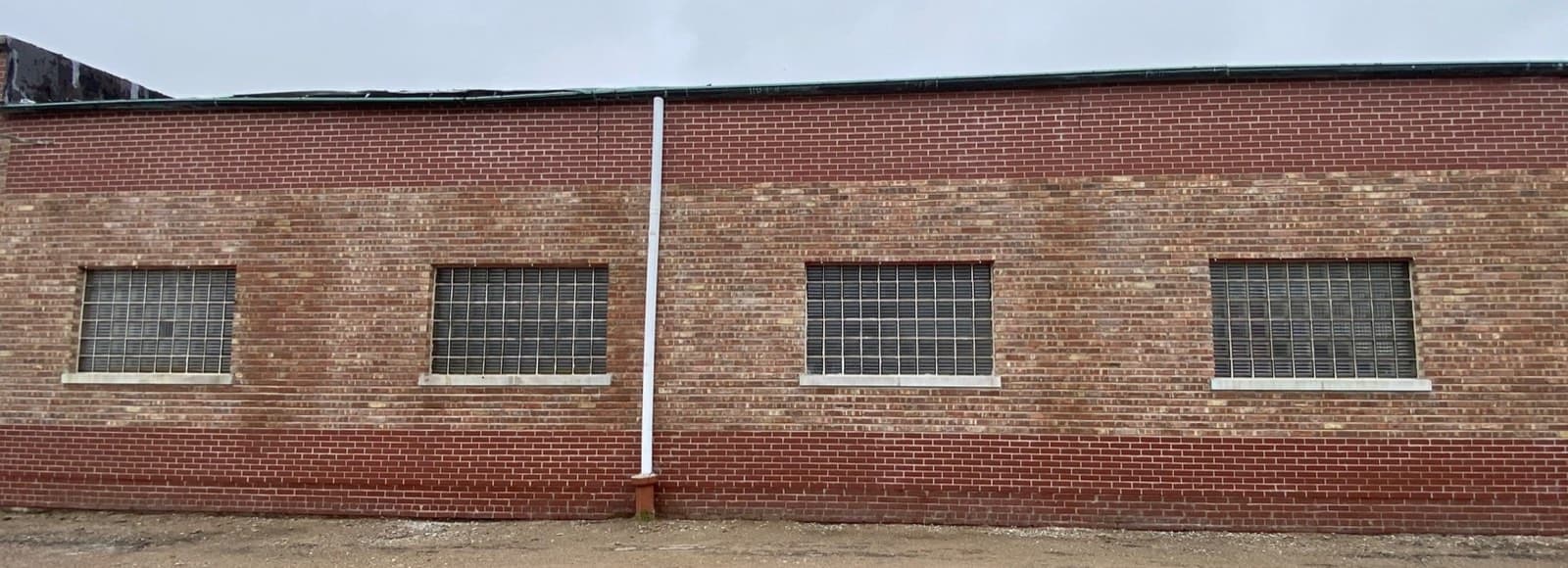
A stain appears on your brick and the instinct is to clean it. Sometimes that's right. Sometimes the stain is the only warning you're going to get that water is moving through the wall, and scrubbing it off just removes the evidence.
The good news is that brick stains are unusually easy to identify by color, texture, and pattern — and once you know what you're looking at, you know whether it's a cosmetic nuisance or a symptom to trace. Paul Lally's Masonry has been reading Chicagoland brick since 1988. Here's the field guide.
Quick identification table
| What you see | Almost certainly | Serious? |
|---|---|---|
| White, powdery or crystalline, brushes off, dissolves when wet | Efflorescence — mineral salts | The deposit no; what it indicates, yes |
| Green, fuzzy or slimy, on shaded damp areas | Algae | Mostly cosmetic; fix the moisture |
| Black or very dark grey, patchy, on damp surfaces | Mold or mildew | Mostly cosmetic; fix the moisture |
| Crusty, grey-green, flat circular patches | Lichen | Slow-growing, mostly cosmetic |
| Orange-brown streaks running downward | Rust from corroding steel | Often yes — see below |
| Dull grey or white haze, uniform, won't brush off | Mortar smear | Cosmetic |
| Dark saturation patches that never dry | Persistent water entry | Yes — trace the source |
| White, on an interior basement wall | Efflorescence from below-grade moisture | Trace it |
The white one: efflorescence
What it is: as water moves through brick and mortar it dissolves naturally occurring mineral salts. When that water reaches the surface and evaporates, the salt is left behind as a white powdery or crystalline bloom.
The key insight: efflorescence is not damage. It's a receipt. It proves water travelled through your masonry and came out the other side. The deposit brushes off easily and often dissolves when you wet it — that's the simplest field test to separate it from growth.
Why it matters in Chicagoland: the water making that salt is the same water that freezes in winter, expands roughly nine percent, and pushes the hard fired face off your brick. That's spalling, and it's permanent. Efflorescence is an early warning of the conditions that cause it.
Common sources: failed or receding mortar joints, a leaking gutter or downspout, splashback where soil or pavement sits too high against the wall, a cracked chimney crown, failed coping on a flat-roofed building, grade sloping toward the house, or below-grade moisture on a foundation wall.
What to do: don't just clean it — find where the water is getting in. Cleaning without tracing the source means it returns, usually in the same place. Our deep dive on what causes efflorescence and how a mason removes it covers the removal side in detail.
The green and black ones: algae, mold, and lichen
What they are: living growth, not mineral deposit. Algae is green, often slimy or fuzzy. Mold and mildew read black or very dark grey in patches. Lichen forms crusty, flat, grey-green circular patches and grows extremely slowly.
How to tell them from efflorescence: wet a finger and touch it. Efflorescence tends to dissolve or smear away as powder. Growth stays put, and it feels slimy or fuzzy rather than chalky. Growth also concentrates in shade and damp; efflorescence follows water paths through the wall, which produces different patterns.
Where they show up: north elevations that get little winter sun, walls under overhanging trees, near grade where splashback keeps brick wet, beside downspouts, behind shrubs planted tight to the house, and in shaded gangways between buildings.
Are they serious? Generally not structurally — this is a surface issue and a moisture-management one. But persistent growth is telling you a surface stays wet, and constantly damp masonry deteriorates faster in freeze-thaw. Treat the growth as a prompt to improve drainage, trim vegetation back off the wall, and check that gutters aren't overshooting.
Cleaning: gentle methods and appropriate cleaners. Not a pressure washer at concrete settings — see the warning below.
The orange one: rust staining
This is the stain to take most seriously.
Orange-brown streaks running downward on brick mean steel is corroding somewhere above. The usual culprits:
- A steel lintel above a window, door, or garage opening — by far the most common
- Wall ties in a brick-veneer wall
- Anchors, shelf angles, or embedded fixtures
- A metal railing, sign bracket, or fastener
Why it's different from the others: the corrosion producing the stain is simultaneously destroying the masonry. Rust occupies several times the volume of the steel it came from, so as a lintel corrodes it expands and lifts the brick sitting on it. That's rust jacking, and its signature is a horizontal crack running along the joint just above an opening, frequently with step cracks radiating from the top corners — and rust streaks bleeding down below.
If you see rust staining paired with a horizontal crack above a window or garage door, that's not a cleaning question. See failing lintels and cracked brick above windows.
In brick veneer, rust staining without a crack above an opening can indicate corroded wall ties — the metal anchors holding the veneer flat against the structure behind it. That's worth investigating, because failed ties are what allow a veneer wall to bow outward. Our guide to brick veneer vs. solid masonry explains the difference.
The hazy one: mortar smear
What it is: a dull grey or white film left on the brick face when mortar residue wasn't properly cleaned during original construction or a later repair. Unlike efflorescence it's uniform rather than following water paths, and it doesn't brush off.
Is it serious? No — it's cosmetic. But it's worth naming because it's frequently mistaken for efflorescence, and the two want completely different responses. Efflorescence means investigate. Smear means clean, carefully, when you feel like it.
One caveat: heavy smear on a recent repair is a workmanship signal. Mortar riding up onto brick faces is also a hallmark of skim pointing — smearing new mortar over failed joints instead of cutting them out. If the haze arrived with a tuckpointing job that finished suspiciously fast, look closer. See why masonry repairs fail.
The dark patches that never dry
Not really a stain — a saturation pattern. Areas of brick that stay visibly darker than the surrounding wall for days after rain, or never fully dry at all.
This means water is entering and staying. Look directly above the patch: a failed joint, a cracked sill, a gapped sealant line at a window head, a downspout discharging onto the wall, a chimney or parapet issue overhead. Persistent saturation is the shortest path to spalling.
The warning: how NOT to clean brick
Every one of these stains tempts people toward the pressure washer, and this is where real, permanent damage gets done.
Fired brick has a hard outer face and a much softer interior. That face is the brick's weather protection, and it is thin. High-pressure washing at the settings people use on concrete and driveways strips it off along with the stain. What's left is porous, absorbent material that drinks far more water than it did before — so it effloresces more, spalls faster, and deteriorates on a much shorter clock.
Sandblasting is worse, and on historic Chicago common brick, greystone, or carved limestone it's genuinely destructive — it erases tooling detail permanently and dooms the material.
The rule: use the gentlest method that actually works. Soft washing, appropriate cleaners matched to the stain and the substrate, dwell time and rinsing rather than brute force. On century-old masonry, gentler still.
And a related trap: don't seal to hide a stain. A film-forming coating over efflorescing brick traps the moisture that's causing it, and the next freeze pushes the face off. Only breathable penetrating sealers belong on Chicagoland masonry, and only after the joints are sound. See is masonry waterproofing worth it.
How a mason diagnoses a stained wall
- Identify the deposit by color, texture, pattern, and how it responds to water.
- Look above it. Water runs downhill. The source of a stain is essentially always higher than the stain — often several feet higher, and sometimes on a different part of the building entirely.
- Check the usual entry points: mortar joints, sills, lintels, window heads and sealant, the chimney crown and cap, coping on flat roofs, and flashing.
- Check the water management: gutters, downspout discharge, grade, splashback, snow storage, and vegetation against the wall.
- Assess the brick itself — is it already spalling, or still sound?
- Distinguish surface from structural. Growth and smear are surface. Efflorescence and rust point inward.
- Sequence the fix: stop the water first, repair the masonry, clean last, seal only if warranted.
Chicagoland context
Our climate produces staining unusually reliably, and for interlocking reasons.
Freeze-thaw cycling — repeated hard cycles, sometimes several in a week — drives water into masonry and then expands it. Wet springs and lake-influenced moisture keep walls damp long enough for growth to establish. Wind-driven rain pushes water at walls horizontally, finding joints that a vertical rain never would. And de-icing salt at grade adds its own crystallization damage, which is why the bottom courses beside driveways and walks look worse than anything above them.
The housing stock matters too. The pre-1930s city stock — bungalows, greystones, two-flats, brick storefronts — is soft, locally-fired common brick with lime-based mortar, more porous and more prone to efflorescence than modern units, and far more easily ruined by aggressive cleaning. The postwar suburban stock is largely brick veneer, where staining patterns can point to blocked weep holes, failed flashing, or corroding ties rather than the brick face itself.
Maintenance that prevents most staining
- Keep gutters clear and downspouts discharging well away from the foundation
- Maintain grade sloping away; don't let soil or mulch pile against the brick
- Trim vegetation back off the walls, especially on north elevations
- Don't pile snow against foundation walls
- Repoint failing joints before they recede deeply — the cheap moment
- Check the chimney crown and cap, and coping on flat-roofed buildings
- Look at the wall each spring, after the freeze-thaw season
Our masonry maintenance checklist for Chicago sets out a full cadence.
Related services
Depending on what your stain turns out to be: tuckpointing and repointing, brick repair, brick replacement, lintel repair and replacement, chimney repair and rebuilds, parapet wall repair, limestone and sill repair, caulking and joint sealant, foundation masonry repair, masonry waterproofing, or residential masonry restoration.
The bottom line
White and powdery means water is moving through your wall — trace it. Orange streaks mean steel is corroding — take that one seriously, especially above a window. Green and black mean a surface stays damp — fix the drainage and the shade. A dull uniform haze is mortar smear and is merely cosmetic.
And whatever the stain, resist the pressure washer. Removing the stain is easy; putting the brick's face back is impossible.
Paul Lally's Masonry Inc. is a family-owned, insured masonry contractor serving Chicago and the Chicagoland suburbs since 1988 — tuckpointing, brick repair and replacement, chimney repair and rebuilds, lintel replacement, masonry restoration, and waterproofing for residential and commercial properties. Built on Craftsmanship. Backed by Experience.
Send us a photo or have us walk the wall — we'll tell you what you're looking at and whether it points to something inside the wall. Our family name is on every job.
Free on-site estimates — call (708) 448-8866 or request an estimate online.
Frequently Asked Questions
What is the white chalky powder on my brick?
That's efflorescence — mineral salts carried to the surface as water moves through the masonry and evaporates, leaving the salt behind. The deposit itself is harmless and brushes off, but it's proof water is traveling through your wall, which is the part worth paying attention to.
Is efflorescence dangerous?
The deposit isn't, but what it indicates can be. Water moving through brick is the same water that freezes in a Chicagoland winter, expands, and spalls the face off the brick. Treat efflorescence as a symptom to trace rather than a stain to scrub.
What's the difference between efflorescence and mold on brick?
Efflorescence is white or greyish, powdery or crystalline, sits on the surface, and often dissolves when you wet it. Mold and algae are green, black, or dark grey, feel slimy or fuzzy rather than powdery, tend to grow where a surface stays shaded and damp, and don't dissolve in water. A simple wet-finger test separates them most of the time.
Why is my north-facing brick wall green or black?
Because it stays damp and shaded. North elevations get little direct sun in a Chicago winter, so moisture lingers long enough for algae, mold, and lichen to establish — especially near grade, under overhanging trees, beside downspouts, or anywhere splashback keeps the brick wet. It's usually a moisture-management issue rather than a masonry failure.
What causes orange or brown streaks running down my brick?
Almost always corroding steel — most commonly a lintel above a window or door, but sometimes wall ties, anchors, or a metal fixture. Rust staining is the one stain on this list that frequently signals active structural deterioration, because the same corrosion producing the stain is expanding and cracking the masonry above the opening.
Can I power wash stains off my brick?
Not at the pressures most people use. Fired brick has a hard outer face and a much softer interior, and high pressure strips that protective face off — leaving porous brick that absorbs far more water and spalls faster afterward. Sandblasting is worse. Masonry should be cleaned with the gentlest method that works, not the fastest.
Will sealing my brick stop the staining?
Only if the joints are sound first and the sealer is a breathable penetrating type. Sealing over failing mortar traps water inside the wall and can make efflorescence and spalling worse, and a film-forming coating does the same. Repair the water path, then seal — never the other way around.
What is mortar smear and can it be removed?
Mortar smear is a dull grey or white haze left on the brick face when mortar residue wasn't cleaned off properly during construction or a repair. It's cosmetic rather than structural, and it can usually be removed with appropriate masonry cleaners and technique — though it needs care, because aggressive cleaning does more harm than the haze ever would.
Does staining mean I need tuckpointing?
Sometimes. Efflorescence and rust staining both point to water getting into the wall, and failed mortar joints are the most common route in — so those two stains often do lead to repointing. Surface growth and mortar smear usually don't. The stain tells you where to look; an inspection tells you what it needs.
Who diagnoses brick staining in the Chicago area?
Paul Lally's Masonry Inc. is a family-owned, insured masonry contractor serving Chicago and the Chicagoland suburbs since 1988 — tuckpointing, brick repair and replacement, chimney repair, lintel replacement, restoration, and waterproofing. We'll identify what's staining your brick and whether it points to something inside the wall. Free estimates at (708) 448-8866.