
Homeowner Education · Chicagoland, IL
Terra Cotta, Cast Stone, and Sandstone: Chicago's Other Masonry Materials — and How Each One Fails
Not every decorative element on a Chicago building is limestone, and treating them all the same is how good stonework gets ruined. Here is how to identify terra cotta, cast stone, sandstone, and common brick — and what each one needs.
2026-08-31
Quick Answer
Chicago buildings use four decorative masonry materials that look similar and behave very differently: limestone, sandstone, cast stone, and architectural terra cotta. Each fails in its own way and each needs a different repair and a compatible mortar. Paul Lally's Masonry has restored Chicagoland masonry since 1988 — family-owned, insured, free on-site estimates, (708) 448-8866.
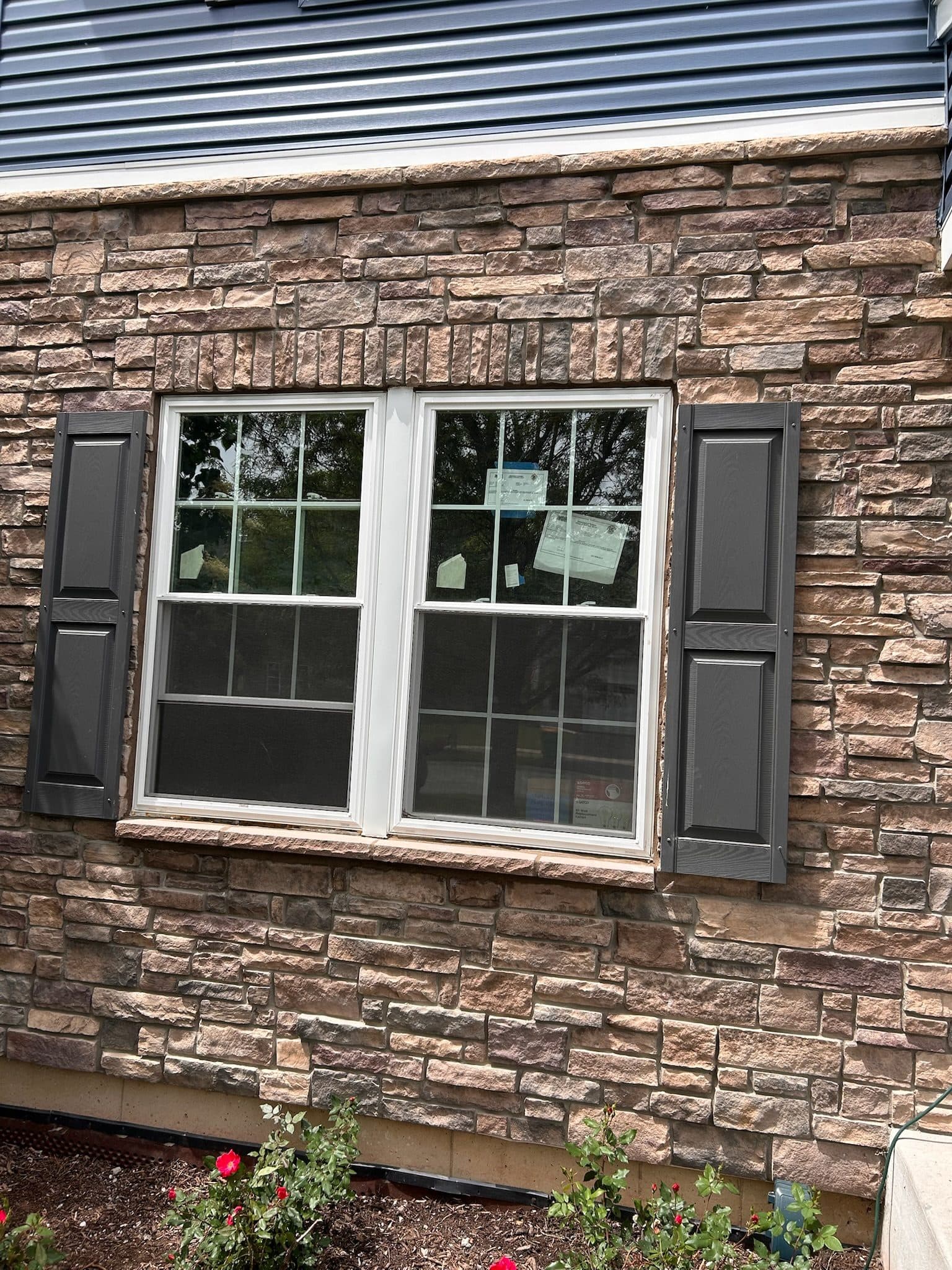
Somebody hands you a photo of a cracked decorative element above a Chicago storefront and asks what it is. Four different answers are plausible, they look nearly identical from the sidewalk, and choosing the wrong one leads to a repair that damages the building.
Terra cotta, cast stone, sandstone, and limestone are all over Chicagoland masonry — on greystones, bungalows, two-flats, storefronts, apartment blocks, schools, and churches. They were used for the same purpose: sills, lintels, water tables, cornices, entry surrounds, banding, and ornament. They fail for different reasons, in different patterns, and they need different repairs and different mortars.
Getting the identification right is the whole job. Everything else follows from it.
Paul Lally's Masonry Inc. is a family-owned, insured masonry contractor serving Chicago and the Chicagoland suburbs since 1988 — tuckpointing, brick repair and replacement, chimney repair and rebuilds, lintel replacement, masonry restoration, and waterproofing for residential and commercial properties. Built on Craftsmanship. Backed by Experience. Free on-site estimates — (708) 448-8866.
The one rule that governs all of it
Before the materials, the principle that decides whether a repair helps or hurts:
The mortar must always be softer than the units it surrounds.
Mortar is the sacrificial element in a masonry wall. It is meant to take the movement, absorb the weathering, and be replaced periodically — that is what repointing is. The brick, stone, or terra cotta is meant to last.
Reverse that relationship and the wall destroys itself. Put hard Portland-heavy mortar around soft sandstone or century-old brick, and when the wall moves, the stress has to go somewhere. It cannot go into the mortar, because the mortar is now the strongest thing there. So it goes into the units, and the faces spall off.
This is the single most common way that well-intentioned masonry repairs ruin old Chicago buildings, and it is why identifying the material comes first.
Limestone
The default assumption, and often correct. Indiana limestone in particular built an enormous amount of Chicagoland.
How to identify it. Uniform cream, buff, or grey. Same material all the way through — a chip reveals more limestone, not a different substance underneath. Often shows fine fossil inclusions if you look closely. Tooled surfaces on older work.
How it fails.
- Delamination along the bedding planes, lifting in sheets
- Spalling where water has sat, especially on horizontal surfaces
- Sugaring — a granular, crumbling surface from long weathering and acid exposure
- Cracking through the section, often mid-span on longer sills and lintels
- Loss of slope and drip edge on sills, so the stone stops shedding water
How it is repaired. Repointing where joints are the failure. Compatible stone patching for shallow damage. A Dutchman repair — cutting out the failed portion and letting in a matched piece — where a section has gone but the unit is otherwise sound. Full replacement when the stone has cracked through.
Our page on limestone and sill repair covers the residential version of this work in detail.
Sandstone
Less common than limestone in Chicago but present on many nineteenth-century and early-twentieth-century buildings, and it behaves worse.
How to identify it. Visibly granular texture — you can often see the individual sand grains. Warmer colors than limestone: buff, tan, pink, brown, sometimes a distinct red. Frequently shows visible bedding layers on the face.
How it fails. Sandstone is more porous than limestone and more openly bedded, so it takes water readily and splits along its layers aggressively.
- Severe delamination, often shedding in thick flakes
- Contour scaling — the surface peeling away in a pattern that follows the shape of the unit
- Rapid deterioration where a unit was face-bedded — set with its bedding planes vertical rather than horizontal, which exposes the layers directly to weather. This is a manufacturing-era mistake that shows up dramatically a century later, with some units nearly intact and the one beside them falling apart.
- Salt damage from de-icing chemicals at grade level
How it is repaired. Gently. Sandstone punishes aggressive cleaning and hard mortar more than any other material here. Compatible patching, Dutchman inserts, and replacement with matched stone. Soft, lime-rich mortars where the original assembly calls for them.
Cast stone
Manufactured concrete cast in molds to imitate quarried stone. Enormously common in Chicago from the early twentieth century onward, because it delivered the look of cut limestone at a fraction of the cost. A great deal of what people confidently call "the limestone trim" on a bungalow is cast stone.
How to identify it.
- Too uniform. Natural stone varies unit to unit; cast stone is identical piece to piece.
- Repeating molded detail — the same ornament appearing over and over with no variation
- Visible aggregate in a damaged area, sometimes small stones or sand in a cement matrix
- A mold seam or a flat cast back face
- Spalling that exposes reinforcement — a giveaway no natural stone can produce
How it fails. Like concrete, because it is concrete.
- Spalling and face loss, often in patches
- Rust jacking from internal reinforcement, where units contained steel that is now corroding and expanding — the same mechanism that destroys lintels
- Crazing and map cracking across the surface
- Efflorescence, since cast stone is cement-based and full of soluble salts
- Freeze-thaw damage at the top surfaces of copings, caps, and sills
How it is repaired. Cementitious repair mortars tinted and textured to match, which works well because the substrate is compatible. Dutchman repairs. Replacement units, which can sometimes be custom cast to match the original profile — a real advantage cast stone has over quarried material, since the shape can be reproduced.
Architectural terra cotta
Fired clay, molded and glazed, and the most sophisticated of the four. Chicago is one of the great terra cotta cities in the world, and there is far more of it on ordinary buildings than most people realize — storefront surrounds, cornices, banding, window heads, and entire glazed facades.
How to identify it.
- A glaze. A slightly glassy, ceramic surface, sometimes glossy, sometimes matte, often faintly crazed with a fine network of cracks.
- Colors stone does not do — deep cream, green, blue, ochre, mottled effects
- Hollow back. Architectural terra cotta is generally a hollow unit with internal webs, not a solid block. A damaged piece reveals the void.
- Crisp, repeated ornament that would be extraordinarily expensive to carve
How it fails. Terra cotta's failures start on the inside, which is what makes it different.
- Glaze crazing, which is normal on old units but becomes a problem once it lets water into the clay body
- Spalling of the glaze and face where trapped water freezes behind the glazed skin
- Anchor corrosion. This is the important one. Terra cotta units are held by internal metal anchors, and when those corrode they expand and crack the unit from within. A terra cotta piece can look sound and be held by nothing.
- Water accumulating inside the hollow units, since a unit that fills with water and freezes will break itself apart
- Displacement — a unit visibly out of plane with its neighbors, which is the most urgent signal here
How it is repaired. Sound units are patched with compatible materials and repointed. Failing units are replaced, either with salvaged matching pieces or new units made to the original profile. Where anchors have corroded, the anchorage has to be addressed — and on any overhead terra cotta, displacement or looseness is an immediate safety matter, not a maintenance item.
Chicago common brick — the fifth material
Worth naming because it drives so many Chicagoland repairs.
Chicago common brick was made from local clay, fired unevenly, and used for side and rear elevations while pressed face brick went on the front. It is soft, absorbent, and highly variable in color — the salmon, buff, and pink walls on the sides of countless bungalows and two-flats.
It fails by spalling when it gets wet and freezes, and it fails much faster when someone points it with hard mortar, coats it with a film-forming sealer, or cleans it aggressively. Our guide to dating Chicago masonry by brick and mortar goes further into what the material tells you about the building.
The comparison, at a glance
| Material | Identify by | Signature failure | Typical repair |
|---|---|---|---|
| Limestone | Uniform cream/buff, same through | Delamination, spalling, sugaring | Patch, Dutchman, replace |
| Sandstone | Granular, warm colors, visible beds | Severe delamination, contour scaling | Gentle patch, Dutchman, replace |
| Cast stone | Too uniform, repeating molds, aggregate | Spalling, rust jacking, crazing | Cementitious patch, recast unit |
| Terra cotta | Glaze, crazing, hollow back | Glaze spall, anchor corrosion, displacement | Patch, replace unit, address anchors |
| Common brick | Soft, variable salmon/buff | Spalling, especially after hard pointing | Replace units, soft mortar |
What damages all four
Some things are bad for every material on this list, and they come up constantly.
Sandblasting. Removes the hard fired or weathered outer skin and exposes soft, porous material underneath. The damage is permanent and it accelerates everything else. Never do it, and be wary of anyone who offers.
High-pressure washing. A milder version of the same problem, and still capable of eroding joints and driving water deep into the wall. Our post on power washing and sandblasting brick covers what actually works instead.
Hard mortar. Covered above, and worth repeating: harder than the unit means the unit takes the damage.
Film-forming sealers and masonry paint. Trap moisture inside the material where it freezes. Especially destructive on terra cotta, whose glaze already restricts drying on one face.
Ignoring the water source. Every failure on this page is ultimately a water failure. A cracked coping, a failed sill, a leaking gutter, an open joint above — until that is fixed, the repair below it is on a clock.
Why identification is the job
Here is the practical version of everything above: the repair is chosen by the material, and the material is not always what it looks like.
Patch cast stone with a limestone repair mortar and it fails at the bond line. Point terra cotta with hard Portland mortar and the glazed units spall. Treat a face-bedded sandstone sill like limestone and it comes apart again in five years. Replace a terra cotta unit without addressing the corroded anchor behind it and the new unit fails the same way the old one did.
A competent mason on a Chicago building starts by figuring out what is actually in front of them. That is what separates restoration from patching.
What drives the cost
Number and size of units. Whether the repair is repointing, patching, a Dutchman, or replacement. Whether replacements can be sourced, salvaged, or must be custom made. Height and access, which on a cornice or an upper-floor facade is substantial. Whether anchors or embedded steel are involved. Scaffolding and protection requirements.
There is no rate that means anything across these materials, and we do not publish one. Paul Lally's Masonry provides a free on-site estimate in writing — call (708) 448-8866.
Getting an honest read on your building
If you have decorative masonry that is cracking, flaking, spalling, or — most urgently — sitting out of plane above a sidewalk or entry, the first thing worth having is a correct identification and an honest assessment of whether the units are still anchored.
Paul Lally's Masonry Inc. has been working Chicagoland brick, block, and stone since 1988. Family-owned, insured, and our name is on every job. Related work: masonry restoration, limestone and sill repair, brick repair, tuckpointing and repointing, and commercial masonry restoration.
For the historic-mortar side of this subject, see our guide to historic masonry restoration and lime mortar in Chicago.
Built on Craftsmanship. Backed by Experience. Get a free on-site estimate or call (708) 448-8866.
Frequently Asked Questions
How do I tell terra cotta from stone?
Terra cotta is fired clay, usually hollow-backed, and it almost always has a glaze — a slightly glassy surface that may be crazed with fine cracks. Look at a broken or damaged unit: terra cotta shows a clay body behind a thin colored glaze, while stone is the same material all the way through.
What is cast stone?
A manufactured concrete product cast in molds to imitate cut stone, common on Chicago buildings from roughly the 1900s onward. It is far cheaper than quarried stone and can be very convincing, but it is concrete — so it spalls, exposes reinforcement when it has any, and repairs differently than natural stone.
Why is my stone trim flaking off in layers?
That is delamination, and it points to a sedimentary stone — sandstone or limestone — splitting along its natural bedding planes. Water gets between the layers, freezes, and lifts them apart. It is often made worse when a unit was set with its bedding planes running the wrong way.
Can damaged terra cotta be repaired, or does it have to be replaced?
Both, depending. Sound units with glaze crazing or minor spalling can often be repaired in place with compatible patching and repointing. Units that have lost structural section, or whose internal anchors have corroded, need replacement — and anchor corrosion is the failure that matters most.
What mortar should be used on historic stone and terra cotta?
Something softer than the units it surrounds. The governing rule in masonry restoration is that mortar must be the sacrificial element — softer than the surrounding material so it takes the movement and weathering. Portland-heavy mortar on soft historic masonry transfers stress into the units and destroys them.
Is sandblasting a good way to clean old brick or stone?
No. Sandblasting removes the hard, weather-resistant outer skin of brick, terra cotta, and stone, exposing a soft porous interior that then absorbs water and deteriorates rapidly. It is one of the most damaging things done to Chicago masonry, and the damage is permanent.
How much does terra cotta or cast stone repair cost in Chicago?
It depends on the number and size of units, whether the repair is patching, a Dutchman insert, or full replacement, whether replacements can be matched or must be custom made, and height and access. Paul Lally's Masonry provides a free on-site estimate in writing.
What is a Dutchman repair?
Cutting out the failed portion of a stone or cast unit and setting a matched piece into the void so the repair reads as part of the original. It saves a mostly-sound unit and is far less invasive than replacing the whole element.
Why does the new patch on my stone look different?
Because matching stone is genuinely difficult — natural stone varies by quarry, bed, and weathering, and a hundred years of Chicago air has changed the original. A good patch is tinted and textured on site to blend, and it will still be slightly visible up close while disappearing at normal viewing distance.
Do I need a specialist, or will any mason do?
Any competent mason can repoint a brick wall. Terra cotta, sandstone, and decorative cast stone need someone who can identify the material, choose a compatible mortar, and know when a unit is anchored rather than simply set — get that wrong and the repair damages the building.