
Brick Repair · Chicagoland, IL
Everything Around a Window: Why Masonry Fails at Openings First
Lintel, head joint, jambs, sill, drip edge, flashing, weeps — a window opening is six or seven masonry details stacked together, and a failure in any one of them shows up looking like the others. Here's how to read the whole assembly.
2026-08-15
Quick Answer
Masonry fails at window and door openings before anywhere else because an opening stacks six or seven details together — lintel, head joint, jambs, sill, drip edge, flashing, and weeps — and a failure in any one shows up as water at the same place. Diagnosing which detail failed is what decides the repair. Paul Lally's Masonry has served Chicagoland since 1988 — (708) 448-8866.
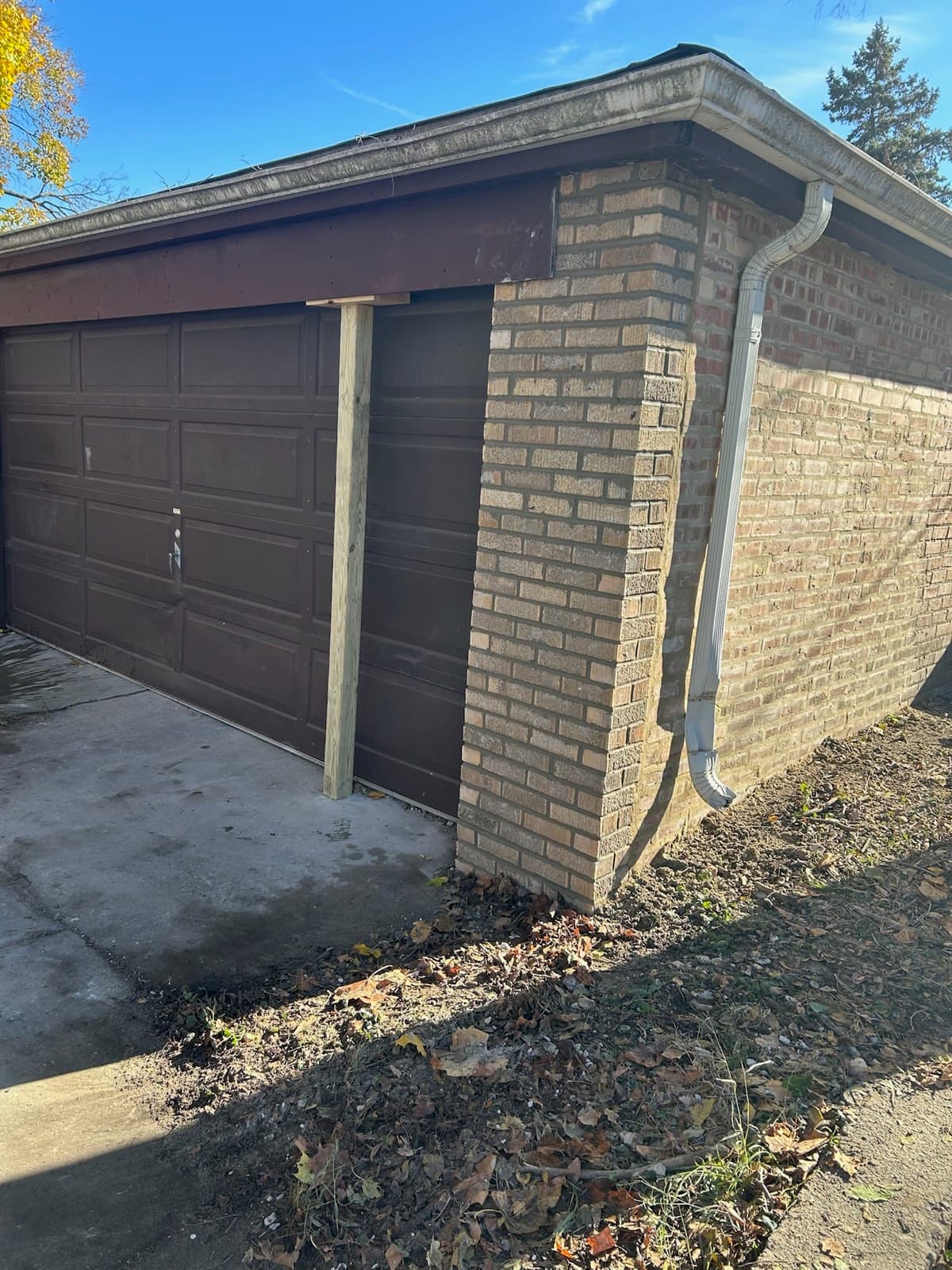
Walk any Chicagoland brick building and map where the masonry is worst. It won't be spread evenly across the walls. It'll be clustered around the openings — above the windows, under the sills, at the corners of the garage door.
That's not coincidence. A window opening isn't one detail; it's six or seven stacked together within a couple of feet — and a failure in any one of them shows up looking almost exactly like a failure in the others.
Paul Lally's Masonry has been diagnosing openings since 1988. Here's how to read the whole assembly.
The anatomy of an opening
From the top down:
1. The lintel. The horizontal member carrying the masonry above the opening. On most Chicagoland buildings, a steel angle iron; on greystones and older stock, sometimes a stone lintel.
2. Head flashing. On a brick-veneer wall, flashing sits above the lintel to catch water in the cavity and direct it back out.
3. Weep holes above the lintel. The openings that let that water actually escape. Frequently missing, frequently blocked. See weep holes explained.
4. The head joint and courses above. Mortar joints directly over the opening, taking water that runs down the wall face.
5. The jambs. The vertical sides of the opening, and the perimeter joint where the frame meets masonry.
6. The sill. The projecting piece beneath the window that catches water shedding off the glass and throws it clear.
7. The drip edge. The groove cut into the sill's underside that makes water fall rather than track back onto the brick below.
Seven details. One place. Any of them can leak.
Why openings concentrate failure
They interrupt the wall. A continuous brick wall sheds water fairly predictably. An opening breaks that — introducing edges, projections, joints between dissimilar materials, and a structural member spanning a gap.
They introduce steel. The lintel is usually the only steel in a residential wall, and steel plus water equals expansion. See below.
They concentrate water. A window is a large impermeable surface that collects rain and delivers it all to one horizontal ledge — the sill.
They join dissimilar materials. Brick, steel, stone, wood or vinyl frame, glass, sealant. All moving at different rates.
And on a replacement-window house, they've been disturbed. Frames removed and reset, flashing potentially compromised, perimeters resealed by whoever was handiest.
The failures, and how to tell them apart
Rust jacking — the loudest one
What you see: a horizontal crack running the width of the opening in the joint just above it, often with orange-brown rust staining bleeding down, sometimes step cracks radiating from the top corners, and a visibly lifted or sagging brick course.
What's happening: the steel lintel is corroding. Rust occupies several times the volume of the steel it came from, and with brick above and nowhere to go, it pushes up.
Why patching fails: the crack isn't the problem, it's the symptom. Caulk it and it reopens as the steel keeps swelling.
The fix: lintel replacement, brick shored and relaid, and the water path addressed. See failing lintels.
Failed head joints and courses above
What you see: soft, receding mortar directly above the opening. Water appearing at the window head inside with no crack present.
What's happening: water running down the wall face is entering through the joints immediately above the opening — and landing on the lintel, which is how rust jacking starts.
The fix: repointing above the opening, and often flashing where the detail allows.
Missing or failed flashing and weeps
What you see: persistent water at a window head on a veneer wall with sound-looking mortar and sound-looking caulk. No weep holes visible in the course above the opening.
What's happening: water in the cavity has nowhere to exit at that level, so it sits on the lintel or runs further down inside the wall.
The fix: address the flashing and reopen or install weeps — and it's why this detail gets attention during any lintel replacement.
An eroded sill and lost drip edge
What you see: a sill that's sugary, eroded, or delaminating; the underside groove worn away; spalling brick and efflorescence directly beneath the window.
What's happening: the sill is no longer throwing water clear. Without the drip edge, surface tension pulls water back against the brick below, so one worn sill damages the whole wall beneath it.
The fix: patch, Dutchman repair, or replace the sill — and re-cut the drip edge. See limestone and sill repair.
A failed perimeter seal
What you see: cracked, split, or missing sealant at the frame-to-masonry joint; gaps at the corners; drafts in winter; daylight visible from inside.
What's happening: the joint between frame and masonry is a movement joint — the two materials expand at different rates — and the sealant has failed, often because it went in without backer rod.
The fix: proper resealing with backer rod at correct bead depth. See caulking vs. tuckpointing.
Movement showing at the corners
What you see: step cracks running diagonally from the top or bottom corners of an opening, sometimes with displacement.
What's happening: openings are the weak points in a wall, so building movement expresses itself there first. May be a lintel, may be genuine settlement.
The fix: diagnose which. If the crack is displaced — one side proud of the other — that's a structural question. See mason or structural engineer.
Reading it: symptom to likely cause
| What you see | Most likely | Check next |
|---|---|---|
| Horizontal crack above opening + rust stain | Rusting lintel | Other openings on the same wall |
| Water at window head, no crack | Head joints or flashing | Weeps above the opening |
| Spalling brick under the sill | Lost drip edge | Sill pitch and underside |
| Efflorescence below the sill | Sill shedding water onto the wall | Drip edge, sill condition |
| Drafts, daylight at the frame | Failed perimeter seal | Backer rod present? |
| Step cracks from corners, flush | Movement or lintel | Displacement test |
| Step cracks from corners, displaced | Structural | Engineer |
| Sill delaminating in sheets | Stone failure | Whole-sill assessment |
The rule that sorts most of it: look up
Water runs downhill. The source of any water problem at an opening is essentially always higher than where it shows.
So when you see water at a window, don't start at the window. Start above it:
- The joints and courses directly above
- The lintel and any flashing
- The sill of the window above, if there is one
- The gutter on that elevation
- The chimney or parapet if the opening is on a top floor
We're regularly called about a window and find the answer three storeys up. See what actually happens during a free masonry estimate.
Openings fail in batches
Worth knowing before you get a quote for one window.
The openings on a given elevation were built the same year, detailed the same way, with the same steel, in the same exposure. They age on the same schedule.
So if one window head is cracked, walk the elevation. More often than not, two or three others are at some earlier stage of the same process — not yet cracked, but heading there.
That's a planning fact rather than an upsell: it's cheaper to address several openings in one mobilization than to bring staging back repeatedly. See height and access.
Materials
Mortar matched for type, colour, sand, and joint profile — soft lime-rich mixes on pre-1930s brick, Type N on later work, Type S only where genuinely warranted. Salvaged brick relaid above a replaced lintel, because reused original units are the best match. New lintels sized for the span with proper bearing and corrosion protection. Matched limestone and stone repair mortars for sills, with the drip edge re-cut. Sealants specified per substrate with backer rod setting bead depth — and non-staining formulations on stone sills.
What drives the cost
- Which detail actually failed — repointing a head joint versus replacing a lintel are very different scopes
- Width of the opening — a garage span is a different piece of steel than a bathroom window
- Number of openings in scope (they fail in batches)
- Height and access — ground floor versus upper storeys needing staging
- How much brick must be shored and relaid
- Stone involvement — patching, Dutchman, or replacement, plus fabrication lead time
- Flashing work where the detail allows
- Matching difficulty on brick and stone
Paul Lally's Masonry gives a free on-site estimate in writing after diagnosing which detail failed.
Chicagoland context
The failure pattern splits by era, and the split is clean.
Pre-1930s city stock — bungalows, greystones, two-flats, storefronts. Solid masonry, no cavity and no weeps, so the joints above an opening are the only barrier. Bare ungalvanized steel lintels now ninety to a hundred and thirty years in service, and limestone sills with drip edges worn away by a century of weather. Wide storefront openings carry the most load and fail loudest.
Postwar and later suburbs — Oak Lawn, Orland Park, Tinley Park, Homer Glen, Mokena, Frankfort, Naperville. Brick veneer with a drainage cavity, so flashing and weeps above openings matter as much as the mortar. Wide picture windows and two- and three-car garage openings on long spans of ungalvanized steel, now thirty to sixty years old. And an enormous amount of replacement-window work that disturbed these details.
What acts on both: repeated hard freeze-thaw cycling, and wind-driven rain that pushes water horizontally into the joints directly above openings — precisely where it reaches the steel.
Maintenance
- Look above every window each spring, after freeze-thaw season, for horizontal cracks and rust staining
- Check sill undersides for a surviving drip edge
- Watch for spalling directly beneath sills — that's the drip edge talking
- Keep gutters clear on the elevation above
- Check perimeter sealant at frames, especially south and west
- On veneer walls, confirm weeps above openings are open
- After any window replacement, have the masonry side looked at
See the masonry maintenance checklist.
Related services
Opening work draws on lintel repair and replacement, limestone and sill repair, tuckpointing and repointing, brick repair, brick replacement, caulking and joint sealant, masonry waterproofing, and residential or historic masonry restoration.
The bottom line
An opening is seven details in one place, and they all fail into the same visible symptom. A horizontal crack with rust staining is the lintel. Spalling under the sill is a lost drip edge. Water at the head with no crack is joints or flashing. Drafts at the frame are the perimeter seal.
Two rules sort nearly all of it: look above the symptom, because water runs downhill — and walk the whole elevation, because openings fail in batches.
Paul Lally's Masonry Inc. is a family-owned, insured masonry contractor serving Chicago and the Chicagoland suburbs since 1988 — tuckpointing, brick repair and replacement, chimney repair and rebuilds, lintel replacement, masonry restoration, and waterproofing for residential and commercial properties. Built on Craftsmanship. Backed by Experience.
We'll tell you which of the seven details actually failed before we quote the repair — and check the rest of that wall while we're there. Our family name is on every job.
Free on-site estimates — call (708) 448-8866 or request an estimate online.
Frequently Asked Questions
Why do masonry problems concentrate around windows?
Because an opening interrupts the wall and stacks six or seven details in one place — a lintel carrying the load, joints at the head and jambs, a sill shedding water, a drip edge, flashing, and on veneer walls weep holes. Every one is a potential water path, and they're all within a couple of feet of each other.
There's a horizontal crack above my window. What is that?
Almost certainly the steel lintel rusting. Corroding steel expands to several times its original thickness, and since the brick above has nowhere to go, the wall cracks and lifts. Step cracks radiating from the top corners and rust staining bleeding down below are the confirming signs.
Water is coming in at my window but the caulk looks fine. Why?
Because water entering above the opening travels down and emerges at the first interruption, which is the window. The actual source is frequently a failed head joint, missing or failed flashing, a rusting lintel, or an eroded sill above — the caulk is just where it shows up.
What is a drip edge on a sill and why does losing it matter?
It's the groove cut into the underside of a sill that makes water fall clear of the wall instead of tracking back against the brick below. Once it erodes away, every rainfall pulls water onto the masonry beneath the window — so one worn sill quietly becomes a problem for the whole wall under it.
Should my window perimeter be caulked or mortared?
Caulked. The perimeter where a frame meets masonry is a movement joint — the two materials expand at different rates — so it needs flexible sealant with backer rod behind it, not mortar. The bed and head joints between the bricks themselves are static and want mortar.
My replacement windows caused leaks. Is that common?
It's one of the most common calls we get. A new frame set into an existing masonry opening creates a fresh perimeter joint, and if the head flashing was disturbed or the perimeter was sealed without backer rod, water gets in. The masonry side of a window replacement is handled very unevenly.
What are the weep holes above my window for?
On a brick-veneer wall there should be flashing above the lintel with weep holes in the course above it, draining water out of the cavity at that level rather than letting it run further down. If they're missing or blocked, water sits on the lintel — which is one route to the rust jacking that cracks the brick.
How much does it cost to fix masonry around a window?
It depends entirely on which detail failed. Repointing a head joint is a different job from replacing a lintel with the brick above shored and relaid, or from a Dutchman repair on an eroded limestone sill. Paul Lally's Masonry provides a free on-site estimate in writing after diagnosing which one it is.
Should I fix the sill or the lintel first?
The one that's higher, generally — water runs downhill, so a failing lintel or head detail is feeding everything below it. If both are failing on the same opening, they're usually done in one visit anyway, since the access and setup are already there.