
Lintel Repair & Replacement · Oak Forest, IL
Lintel Replacement in Oak Forest, IL — The Steel Over Your Picture Window Is Sixty Years Old
Oak Forest is a village of post-war ranches and split-levels, and nearly every one of them has a wide front picture window carried on a bare steel angle. Those angles are now around sixty years old, and the long spans go first.
Quick Answer
Paul Lally's Masonry Inc. provides steel lintel repair and replacement in Oak Forest, IL — replacing rusted and rust-jacked lintels over picture windows, garage doors and openings, shoring the masonry above, and installing proper flashing and weep holes. Family-owned since 1988, insured. Free on-site estimates — call (708) 448-8866.
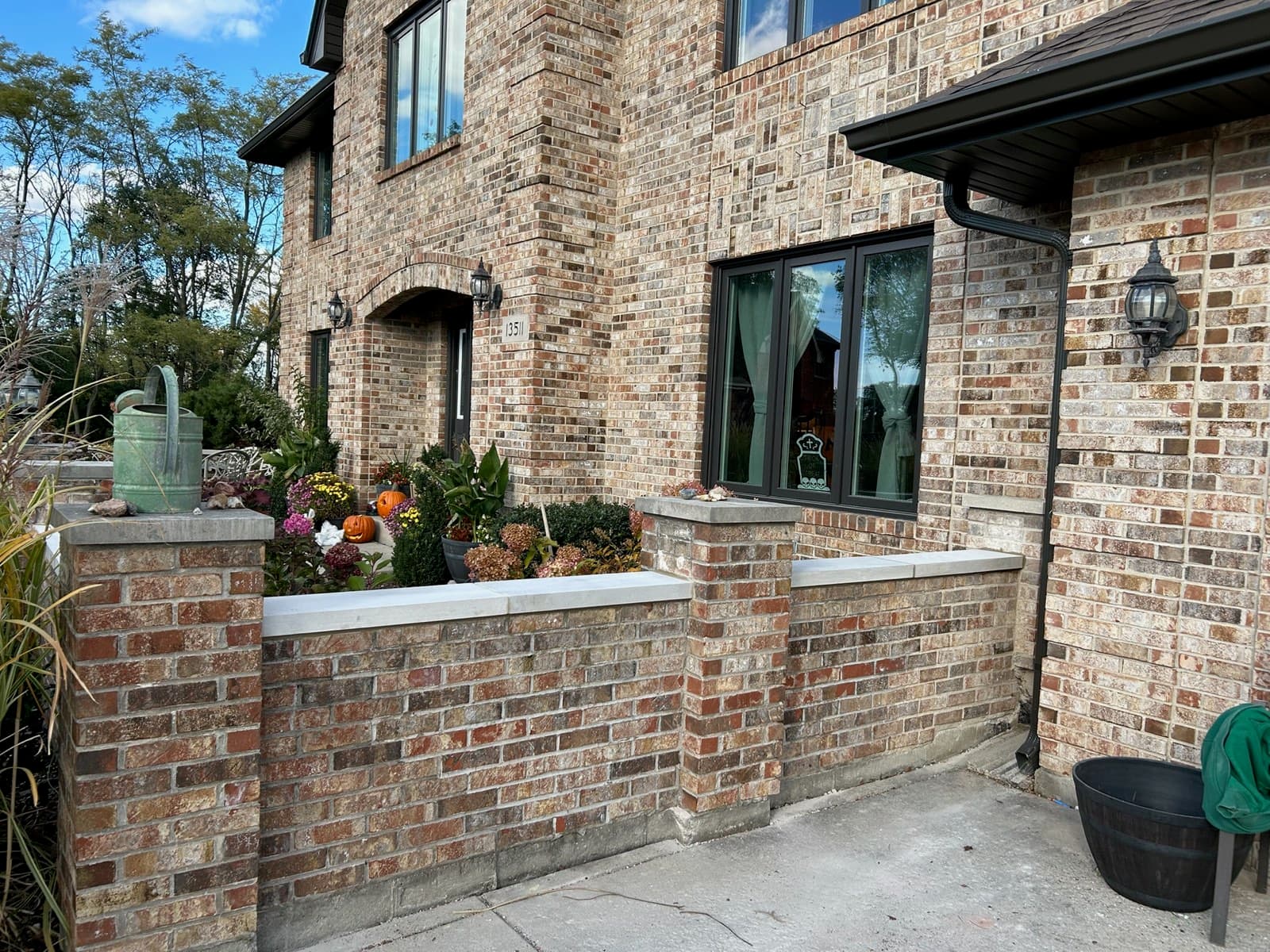
Lintel Replacement in Oak Forest, IL
Paul Lally's Masonry Inc. replaces and repairs steel lintels in Oak Forest, IL — the angle iron carrying brick over your windows, doors and garage openings. Family-owned and insured, serving Chicagoland since 1988. Free on-site estimates: (708) 448-8866.
Drive any Oak Forest street built between the mid-1950s and the early 1970s and you will see the same house repeated with variations: a brick ranch or split-level, low roof, attached or detached garage, and a wide front picture window — often eight, ten, twelve feet across — sitting in the middle of the front elevation.
That window is the architectural signature of the era. It is also the single most vulnerable structural detail on the house, because the brick above it is carried by a bare steel angle that has been sitting in a wet wall since Kennedy was in office.
What a lintel is, and why span is the whole story
A lintel is the horizontal member spanning an opening in a masonry wall and carrying the weight of the masonry above it. In houses of this vintage it is almost always a steel angle — an L-shaped piece of mild steel, one leg turned up behind the brick, the other leg supporting the outer course.
Here is the part that almost nobody explains, and it is the reason nobody can honestly quote your job over the phone: span governs everything.
The steel over a three-foot bathroom window and the steel over a fourteen-foot picture window are not the same job, the same part, or the same price — not by a little. Longer spans carry dramatically more load, need a heavier steel section to resist deflection, need more bearing at each end where the steel sits on solid masonry, need real shoring to hold the wall up while the old steel comes out, and require far more brick to be taken down and rebuilt above.
That is why long spans fail first in Oak Forest. The picture windows and the two-car garage openings are the first to go, and the small windows on the same wall may still have years left.
| Opening | Typical span | What the job usually involves | | --- | --- | --- | | Bathroom or kitchen window | 2–4 ft | Light shoring, short steel, modest brick rebuild | | Standard bedroom window | 4–6 ft | Straightforward replacement, flashing added | | Front picture window | 8–14 ft | Heavier section, substantial shoring, significant masonry rebuild | | Single garage door | 8–9 ft | Heavy section, shoring, full rebuild of courses above | | Double garage door | 16–18 ft | Largest span on the house; heaviest steel and most masonry |
Rust jacking: why the crack over your window is not settling
Homeowners tell us all the time that the house "settled." Almost always, it did not. What happened is rust jacking.
Steel corrodes into iron oxide, and iron oxide takes up several times the volume of the steel it came from. Trapped inside a wall with masonry above it and an opening below, that expansion has exactly one direction to go: out and up. It lifts the courses sitting on it and pushes the outer face of the brick forward.
The signs, in the order they usually appear:
- Rust staining — orange-brown streaks weeping down the brick from the joint above the opening. This is the earliest warning and often precedes cracking by years.
- A horizontal crack or open joint along the course directly above the opening.
- Stepped cracks running up and out from the top corners of the opening.
- Visible sag or bow in the brick at the middle of a long span.
- Displaced brick — the outer course pushed proudly forward of the wall plane.
- Windows and doors that stick or will not latch.
If you have rust staining and nothing else yet, you are early — and early is much cheaper than late.
Why it rusts: the missing flashing
The question we get most is why steel buried inside a wall gets wet at all. The answer is that the wall was never dry.
Brick and mortar absorb water, and wind-driven rain pushes moisture past the face. In a properly detailed wall, through-wall flashing sits over the lintel to catch that water, and weep holes in the joint above let it back out. Water in, water out, steel stays dry.
On a great many Oak Forest houses of this era there is no flashing over the openings whatsoever. Water runs down the back of the brick and lands directly on unprotected mild steel, and it does that every rain for six decades. Painted steel buys time; it does not change the mechanism.
That is why replacing the steel without installing flashing and weeps is only buying you another cycle. When we replace a lintel, the flashing and the drainage path go in with it — otherwise we would just be scheduling the same job again.
Our process
- Measure every opening on the elevation and record the spans — that is the scope, and it is the price.
- Assess the steel: surface rust with sound section, or real section loss and delamination.
- Shore the masonry above the opening properly before anything is removed. On a long span this is the safety-critical step and it is not optional.
- Carefully remove the brick courses above the lintel, salvaging sound units for reuse where the brick is hard to match.
- Cut out and remove the failed steel, and clean and prepare the bearing at each end.
- Set the new lintel — properly sized for the span, with adequate bearing on solid masonry at both ends, primed and coated.
- Install through-wall flashing over the steel, lapped correctly, with weep holes in the joint above.
- Rebuild the masonry with salvaged and matched brick, matched mortar, matched joint profile.
- Repoint the surrounding area where the jacking opened joints, and cure and protect the fresh work.
Treat or replace — an honest framework
- Coat it when the steel has surface rust only, retains its full section, has not moved the wall, and the flashing problem can be addressed above it. Clean back, prime, coat, repoint.
- Replace it when the steel has lost measurable thickness, is delaminating in rusted layers, has already jacked the courses above, is visibly deflecting, or spans a wide opening where failure has real consequences.
Coating steel that should be replaced is the most common shortcut in this trade. It looks like a repair for about two years.
What drives the cost
Span, first and by a wide margin. Then the number of openings — doing four on one elevation while staged is far more efficient than four separate visits. Then how much masonry has to come down and go back, how difficult the brick is to match, access and staging (a front elevation off a driveway versus a second-story rear opening), and what is found once the wall is opened. We publish no figures for this work, because a single average would badly misprice both a bathroom window and a garage header on the same house. We measure your openings and put it in writing, free.
Trust signals
Paul Lally's Masonry Inc. is a family-owned, insured masonry contractor serving Chicago and the Chicagoland suburbs since 1988 — tuckpointing, brick repair and replacement, chimney repair and rebuilds, lintel replacement, masonry restoration, and waterproofing for residential and commercial properties. Built on Craftsmanship. Backed by Experience. Free on-site estimates — call (708) 448-8866.
Related services
- Brick replacement — matched units for the courses rebuilt above the steel
- Tuckpointing and repointing — joints opened by rust jacking
- Limestone and sill repair — the sill below the same opening
- Masonry sealing and waterproofing — after the flashing and drainage path are corrected
- Brick repair — spalled and displaced units around the opening
Get a free on-site estimate in Oak Forest
If you have orange staining running down the brick above a window, a crack along the course over your picture window, or a garage opening that has started to sag, have the spans measured before the wall moves further. Paul Lally's Masonry Inc. — (708) 448-8866 — or request an estimate online.
Lintel Repair & Replacement in Oak Forest, IL — Frequently Asked Questions
How much does lintel replacement cost in Oak Forest, IL?
The single biggest variable is the span. The steel over a three-foot bathroom window and the steel over a fourteen-foot picture window or a double garage opening are different structural members carrying different loads, needing different shoring and a different amount of masonry taken down and rebuilt. Access, brick matching and the number of openings also move it. Paul Lally's Masonry Inc. measures the openings and puts it in writing — call (708) 448-8866.
How do I know if my lintel is failing?
Look above your windows and garage door. Rust staining running down the brick, a horizontal crack or open joint along the course directly above the opening, stepped cracks angling up from the corners of the opening, brick that has visibly sagged or bowed at the middle of a long span, or a window that has become hard to operate.
What is rust jacking?
Steel expands as it corrodes — rust occupies several times the volume of the metal it came from. Trapped between the masonry and the opening below, that expansion has nowhere to go but out, so it lifts the courses above and pushes the brick face forward. The crack over your window is the wall being physically jacked apart by rust.
Can a rusted lintel be cleaned and painted instead of replaced?
Sometimes, and we will tell you honestly which case you are in. Surface rust on steel with sound section can be cleaned back, primed and coated, with the masonry above repointed. Steel that has lost real thickness, is delaminating in layers, or has already jacked the wall has to come out — coating it only hides the problem.
Why does my lintel rust in the first place if it is inside the wall?
Because the wall is not dry. Water passes through brick and mortar and runs down the cavity. It is supposed to be caught by flashing over the lintel and sent back out through weep holes. On most homes of this era there is no flashing over the openings at all, so the water sits directly on bare steel year after year.
Do all my lintels need doing at once?
Not necessarily, but they usually fail in batches, because every opening on the same elevation is the same age, the same steel and the same exposure. If the front picture window has gone, it is worth looking hard at the rest of that wall. We prioritize by span and by how far along each one is.
How long does the work take?
A single straightforward opening is often a day or two. Multiple openings, a long garage span, or an elevation needing extensive brick rebuilt above the steel takes longer. Shoring, curing time for fresh mortar and weather all factor in.
Do you serve Oak Forest and the surrounding suburbs?
Yes — Oak Forest, 60452, and the surrounding southwest Cook County communities including Tinley Park, Midlothian, Crestwood, Country Club Hills, Orland Park and Palos Heights. Paul Lally's Masonry Inc. has been doing this work since 1988. Free on-site estimates — call (708) 448-8866.
Lintel Repair & Replacement in Nearby Areas
Other Masonry Services in Oak Forest, IL
Learn more about our lintel repair & replacement services across Chicagoland, or view all service areas.
Free on-site estimates across Chicagoland.