
Commercial Masonry Restoration · Oak Forest, IL
Commercial Masonry Restoration in Oak Forest, IL — Know Your Building, Then Fix It in the Right Order
Oak Forest's commercial buildings come in a handful of types, and each one fails in its own predictable place. Here's how to tell which you own, what goes first on it, and what to fix before anything else.
Quick Answer
Paul Lally's Masonry provides commercial masonry restoration in Oak Forest, IL: tuckpointing, brick and block replacement, storefront lintel and parapet repair, sealant and coating correction on retail, office, medical and light-industrial buildings along Cicero Avenue and 159th Street. Family-owned, insured and serving Chicagoland since 1988. Free on-site estimates: (708) 448-8866.
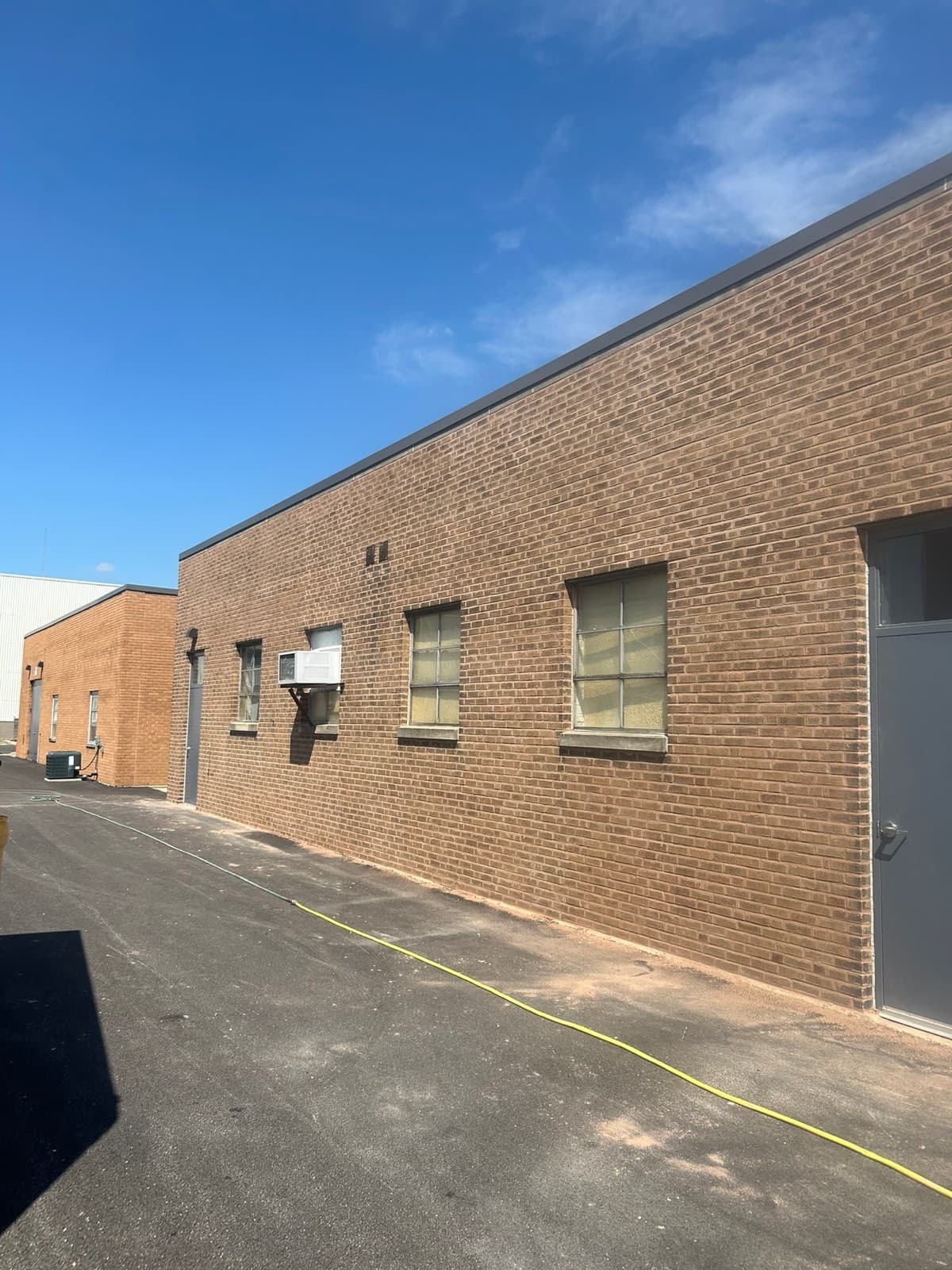
Commercial Masonry Restoration in Oak Forest, IL
Paul Lally's Masonry provides commercial masonry restoration in Oak Forest, IL: tuckpointing, brick and block replacement, storefront lintel and parapet repair, and correcting failed sealants and coatings on retail, office, medical and light-industrial buildings. We're family-owned, insured and have served Chicagoland since 1988, from a home base just up Harlem Avenue in Palos Heights. For a free on-site estimate, call (708) 448-8866.
Most commercial building owners in Oak Forest aren't property-management companies with a capital plan. They own one building, or two, along Cicero Avenue, 159th Street or a side street off them, and they find out about the masonry when something leaks, peels or falls onto the sidewalk. This page is for them: how to tell what kind of building you have, where that type fails, and what order to fix it in.
On a commercial building, the right order matters more than the right price. Fix what can fall first, what lets water in second, and what looks bad last.
What kind of commercial building do you own in Oak Forest?
Most of Oak Forest's commercial stock went up in the decades after the village incorporated, and it falls into a few types. Each type has its own weak points:
| Building type | Typical construction | Where it usually fails first | |---|---|---| | Strip retail on Cicero or 159th | Brick front, concrete block sides and rear, flat roof with a front parapet | Parapet and coping, the steel lintel over the storefront glass, the sign band | | Freestanding outlot (bank, restaurant, auto service) | Brick veneer or face brick on block, often with stone or precast trim | Sealant joints at trim and windows, drive-thru and canopy openings, brick at grade from salt | | Small office or medical building | Brick veneer on a frame, ribbon or punched windows | Window perimeter sealant, lintels, cracking at corners without control joints | | Light-industrial or flex building | Painted or split-face concrete block | Peeling paint, failed control joints, impact damage at overhead doors, block parapets under metal coping | | Older mixed-use or two-storey | Solid brick, sometimes with apartments above | Mortar joints, chimney stacks, parapets and rear-wall lintels |
Knowing your type tells you where to look before you spend anything. The weak points rarely sit in the middle of a flat wall.
Signs your Oak Forest building needs commercial masonry restoration
- Loose or cracked coping, or brick fragments on the roof or sidewalk below the parapet.
- Rust staining and a crack fanning up from the corners of the storefront or overhead-door opening, a sign the steel lintel is corroding.
- Peeling, blistering or bubbling paint on block walls, usually worst near the top of the wall and at grade.
- Sealant that's cracked, pulled away or missing around windows, trim and vertical joints.
- Stair-step cracks in block walls, or vertical cracks at corners and long runs.
- Efflorescence (white salt staining) or dark damp areas that stay after rain.
- Leaks along the front wall inside the unit that roofing repairs haven't fixed.
- Spalled or crumbling brick at the base of walls next to salted walks and parking lots.
The order we fix things in, and why
- Overhead hazards. Loose parapet brick, cracked coping and badly corroded lintels over doors and walkways come first. On a retail building that's where customers walk.
- Active water entry. Water coming in through the coping, open joints, failed sealant or missing flashing. Water left alone turns a repair into a rebuild.
- Deterioration. Worn mortar, spalled units and cracking that isn't letting water in yet.
- Appearance. Staining, mismatched patches and old paint. These can usually wait for the next budget year.
Most owners are surprised that the street-facing look is the most deferrable item. We'll tell you which category each item falls into and put it in writing, so you can decide what to do now and what can wait.
Painted and coated masonry: the Oak Forest problem nobody talks about
A large share of Oak Forest's block and brick commercial buildings have been painted, some of them several times. Paint makes a tired building look clean, but a film-forming paint on a masonry wall that's taking on water traps that water. It can't dry outward, so it blisters the paint off and freezes in the face of the block or brick every winter.
Repainting a peeling wall without fixing why it's wet buys a season or two. The lasting sequence is:
- Find and stop the water source: coping, parapet, joints, cracks or failed control joints.
- Remove loose and failing coating.
- Make the masonry repairs: repointing, unit replacement, sealant.
- Let the wall dry, then apply a breathable masonry coating or water repellent made for block or brick.
Our commercial restoration process in Oak Forest
- Walk every elevation, the roof and the parapet, and photograph each condition by location.
- Sort the work into the four categories above and flag anything that needs an engineer's eye.
- Plan access and protection: lift or scaffold by elevation, overhead protection at entrances, and parking and drive-lane staging.
- Lintels and parapets: shore the masonry above, replace corroded steel with galvanized or primed and painted steel, install flashing with end dams, and rebuild or reset coping with flashing beneath.
- Repointing and unit replacement with mortar and brick or block matched to the building.
- Sealant and coatings last, once the masonry around them is sound.
- Walk the finished work with you. We stand behind our work, because our name is on every job.
Materials we use
Face brick and concrete block matched to the existing building, including split-face where needed; Type N or Type S mortar chosen for the wall; galvanized or primed and painted steel lintels; through-wall flashing with end dams and drip edges; stone, precast or metal coping; commercial-grade sealant with backer rod; and breathable coatings and water repellents for block. We don't put a film-forming paint over a wet wall.
What drives the cost of commercial masonry restoration
We don't publish prices, because no two buildings are scoped alike. What changes the number:
- Building height and access: ladder, lift or scaffold.
- Square footage of repointing and the number of brick or block units to replace.
- Lintels and openings: how many, how long and how corroded.
- Parapet and coping: repoint, reset or rebuild.
- Coating removal and recoating on painted buildings.
- Protection and phasing around open businesses and tenants.
Call (708) 448-8866 for a free on-site estimate and an itemized written scope by elevation.
Commercial masonry restoration across Oak Forest and the southwest suburbs
Oak Forest's commercial corridors are wide and open. Cicero Avenue and 159th Street carry heavy traffic, plow spray and road salt, which shows up first as spalled brick and block at the base of walls. The flat-roofed retail along them takes rain on the parapet from three sides. The village sits between Tinley Park, Midlothian and Crestwood, and the same building types run on along Cicero in both directions.
We also handle commercial masonry restoration in Tinley Park and Orland Park. In Oak Forest itself, we do lintel replacement, caulking and tuckpointing. For block buildings, read our guide to warehouse and industrial building masonry repair. For the bigger picture, see the commercial masonry restoration guide for Chicagoland.
Why Oak Forest building owners call Paul Lally's Masonry
Paul Lally's Masonry Inc. is a family-owned, insured masonry contractor serving Chicago and the Chicagoland suburbs since 1988. We handle tuckpointing, brick repair and replacement, lintel replacement, parapet repair, caulking, masonry restoration and waterproofing for commercial and residential properties. Built on Craftsmanship. Backed by Experience. Free on-site estimates. Call (708) 448-8866.
- Since 1988, on commercial and residential buildings across Chicagoland.
- Local: based in Palos Heights, minutes from Oak Forest.
- Insured, with a certificate of insurance before work starts.
- Written priorities, so you know what to do now and what can wait.
- Family-owned: we stand behind our work.
Related services: commercial masonry restoration, lintel repair and replacement, parapet wall repair, tuckpointing, masonry waterproofing and caulking and joint sealant.
Get your Oak Forest building assessed
Request a free on-site estimate or call (708) 448-8866. Built on Craftsmanship. Backed by Experience.
Commercial Masonry Restoration in Oak Forest, IL — Frequently Asked Questions
Who does commercial masonry restoration in Oak Forest, IL?
Paul Lally's Masonry, a family-owned, insured masonry contractor based in nearby Palos Heights and serving Chicagoland since 1988, restores brick and block on retail, office, medical and light-industrial buildings in Oak Forest. Call (708) 448-8866 for a free on-site estimate.
What should we fix first on an older commercial building?
Anything that can fall on people comes first: loose parapet brick, cracked coping and rusted lintels over entrances. Next is active water getting into the building, then slow deterioration, and appearance last. A good scope puts that order in writing.
Our block building was painted years ago and now it's peeling. What's going on?
Most often the paint is trapping moisture that's getting in through failed joints, cracks or the top of the wall. The water can't dry out through the paint, so it pushes it off and freeze-thaw damages the block behind it. Repainting alone won't stop it; the water source has to be fixed first.
Can you work on our building while the business stays open?
Yes. We phase the work by elevation, protect entrances and walkways, keep parking and drive lanes usable, and schedule the loudest grinding around your busiest hours.
Do we need an engineer for our masonry repairs?
Most commercial repointing, brick replacement and lintel work doesn't. If a wall is bowing, a crack runs through several courses and keeps growing, or a large opening is sagging, we'll recommend a structural engineer before the masonry is scoped.
How much does commercial masonry restoration cost in Oak Forest?
It depends on building height and access, square footage of repointing, the number of brick or block units and lintels to replace, parapet and coping work, coating removal, and phasing around tenants. We don't publish prices; you get an itemized written scope after a free on-site estimate.
Can you give us a plan we can spread over several years?
Yes. We rank the work by risk and lay it out by elevation and by year, so the safety and water items get done first and the rest can be budgeted.
Is Paul Lally's Masonry insured?
Yes. We're family-owned and insured, and we provide a certificate of insurance before work starts. We stand behind our work, because our name is on every job.
Commercial Masonry Restoration in Nearby Areas
Other Masonry Services in Oak Forest, IL
Learn more about our commercial masonry restoration services across Chicagoland, or view all service areas.
Free on-site estimates across Chicagoland.