
Lintel Repair & Replacement · Orland Park, IL
Lintel Replacement in Orland Park, IL — Fixing the Rusted Steel Above Your Windows
That crack running along the brick above your window isn't the brick's fault. It's the steel lintel underneath it, rusting and swelling. Paul Lally's Masonry has replaced lintels across Orland Park since 1988.
Quick Answer
Lintel replacement in Orland Park, IL is the removal of a rusted steel angle-iron lintel above a window, door, or garage opening and installation of a new coated lintel with the brick above rebuilt. Rusting steel expands and cracks the masonry it carries. Paul Lally's Masonry has replaced Chicagoland lintels since 1988 — free on-site estimates at (708) 448-8866.
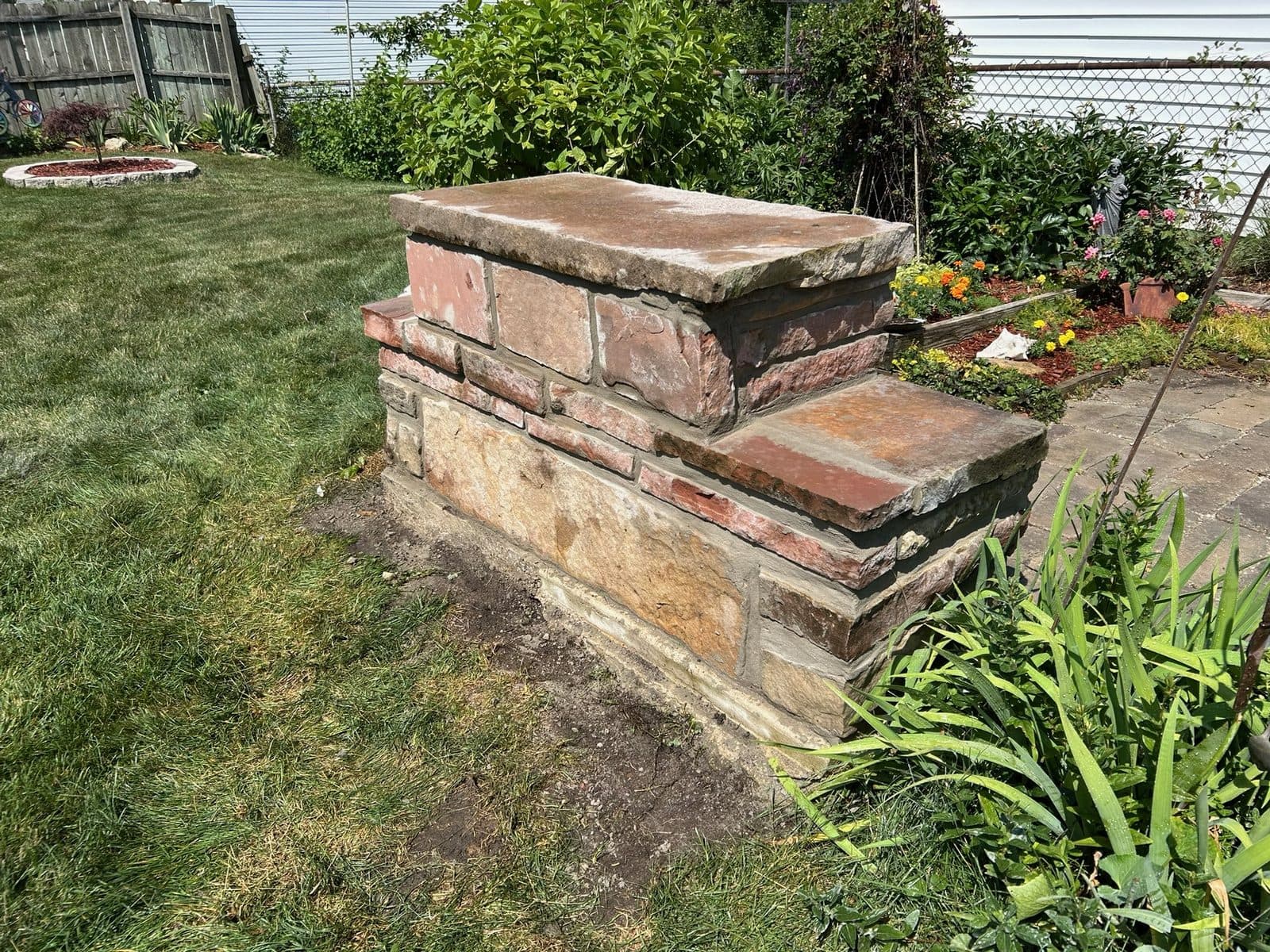
There's a crack in the brick above your front window. It runs horizontally, roughly the width of the opening, and if you look closely the course of brick just above the window looks slightly lifted, like something pushed it up from underneath. Something did. Lintel replacement in Orland Park, IL is the fix for exactly that condition — pulling out the corroded steel angle iron carrying the brick above an opening and setting in a new one before the wall above it comes apart. Paul Lally's Masonry has been doing this work across Orland Park and the southwest suburbs since 1988.
What a lintel is, and why it's the part of your house you've never thought about
Brick can't span an opening on its own. Every window, door, garage opening, and picture window in a masonry or brick-veneer wall needs something underneath the brick to carry that load across the gap. That something is the lintel — on the overwhelming majority of Orland Park homes, a piece of painted structural steel angle iron, tucked into the wall so only a thin dark edge shows above the window frame.
It's a simple, reliable piece of the building. It has one enemy: water.
Rust jacking — the reason your brick is cracking
Here's the mechanism, and it's worth understanding because it explains everything you're seeing:
- Water gets to the steel — through failed mortar joints above the opening, gapped caulking at the window head, a leaking gutter, or missing flashing.
- The steel corrodes.
- Rust occupies several times the volume of the steel it came from.
- That expansion has to go somewhere. It can't go down through the window frame, so it goes up — lifting the brick course sitting on it.
- The mortar joint above the lintel opens into a horizontal crack. Bricks crack, step cracks radiate from the corners of the opening, and the joint gaps let in more water.
- More water, more rust, more expansion. It compounds.
This is why patching the crack does nothing. The crack isn't the problem; it's the symptom of steel that's still swelling behind it. Fill it with caulk and it reopens, usually in the same season, often right beside the patch.
Signs of a failing lintel on an Orland Park home
- A horizontal crack in the mortar joint directly above a window, door, or garage opening
- Step cracks running diagonally up and away from the top corners of an opening
- Cracked or displaced brick in the course immediately above the opening
- Rust staining — orange-brown streaks bleeding down the brick below the lintel line
- A visibly bowed, sagging, or lifted brick course above the opening
- Flaking, layered rust visible on the exposed steel edge
- Loose brick above a window you can rock by hand
- A window that has gone out of square, or that sticks and binds
- Water inside — stains on the drywall or plaster above a window head
Garage door openings deserve special attention. They're the widest openings on most Orland Park homes, so the lintel there carries the most load and has the least tolerance for section loss.
What happens if you wait
Rust jacking never plateaus. The steel keeps taking on section loss while it keeps expanding, so you're simultaneously losing structural capacity and gaining destructive force — the worst possible combination in a load-bearing element.
The repair scope grows with it. Replacing steel with a few courses of brick above it is routine work. Wait, and the brick above the opening loses its bearing, more units crack, the window head goes out of square, and now you're rebuilding masonry, replacing brick, and potentially dealing with a window that no longer fits its own opening. A lintel is one of the few masonry items where the cost of waiting is genuinely steep.
How Paul Lally's Masonry replaces a lintel
- Inspect the opening and the wall above it. We determine whether the steel is salvageable or spent, and how far the damage runs into the surrounding brick.
- Shore the masonry above. Before any steel moves, the brick above the opening is temporarily supported. This is the step that separates a proper lintel job from a dangerous one.
- Carefully remove the brick courses sitting on the lintel, salvaging sound units for reuse — reused original brick is always the best match.
- Cut out and remove the corroded steel.
- Set the new lintel — properly sized for the span and the load, with correct bearing at each end, and protected against corrosion.
- Address the water path. Because the lintel didn't rust for no reason, we look at the joints, the flashing condition, and the caulking at the head that let water in.
- Relay the brick on the new steel, matching the coursing and keeping the wall plane true.
- Repoint with matched mortar — color, sand, type, and joint profile matched to the existing wall.
- Remove shoring, clean up, and walk the work with you.
Materials
New lintels are structural steel sized for the span and the load above it, with corrosion protection appropriate to the exposure. Brick is salvaged from the opening wherever possible, supplemented with matched units where the originals cracked. Mortar is matched for type, color, sand, and joint profile — standard Type N on most residential work, Type S only where structure and exposure genuinely call for it, and softer mixes on older, softer brick.
The detail that decides how long the new lintel lasts isn't the steel grade. It's keeping water out of the wall above it. That's why lintel work and tuckpointing so often get scoped together.
What drives the cost of lintel replacement
- Width of the opening — a garage door span is a different piece of steel than a bathroom window
- Number of lintels failing (they usually fail in batches, same age, same exposure)
- Height and access — ground floor versus second story with staging
- How much brick has to be removed, shored, and relaid
- Brick matching difficulty if original units cracked and can't be reused
- Related repairs — repointing above the opening, caulking at the window head, gutter and drainage issues feeding the wall
No honest mason prices a lintel from the driveway or over the phone. Paul Lally's Masonry gives a free on-site estimate in writing after inspecting the openings.
Local context: why Orland Park sees so many lintel failures right now
Orland Park's growth ran hard from the 1960s through the 1990s and beyond — brick ranches and split-levels in the older sections, then large stretches of brick-and-frame subdivisions with brick veneer fronts, wide picture windows, and two- and three-car garage openings.
That's the profile that produces lintel work today. The steel above those openings is now thirty to sixty years into service. Wide openings, veneer construction, and decades of Chicagoland freeze-thaw and lake-driven moisture are precisely the conditions rust jacking needs. The failures show up first on the elevations that take weather — typically north and west — and above the widest openings, which is why the garage and the big front window are usually first.
If you're seeing that horizontal crack above one window, look at the others on the same elevation. Lintels installed the same year, in the same exposure, tend to fail on the same schedule.
Related masonry services in Orland Park
Lintel work is almost always scoped alongside tuckpointing and repointing above the opening, brick repair and brick replacement for the units that cracked, caulking and joint sealant at the window heads, and masonry waterproofing once the wall is sound again. Where several openings and elevations are involved, see residential masonry restoration.
We do the same work throughout the area — see brick repair in Orland Park, masonry restoration in Orland Park, and lintel replacement in New Lenox.
Get the steel looked at before the brick decides for you
Paul Lally's Masonry Inc. is a family-owned, insured masonry contractor serving Chicago and the Chicagoland suburbs since 1988 — tuckpointing, brick repair and replacement, chimney repair and rebuilds, lintel replacement, masonry restoration, and waterproofing for residential and commercial properties. Built on Craftsmanship. Backed by Experience.
If your lintel can be cleaned, treated, and saved, we'll say so. If it's spent, we'll show you the steel. Either way you get a straight answer and a written number.
Free on-site estimates — call (708) 448-8866 or request an estimate online.
Lintel Repair & Replacement in Orland Park, IL — Frequently Asked Questions
What is a lintel and where is it on my house?
A lintel is the horizontal structural member that carries the weight of the brick above an opening — your windows, doors, garage door, and any large picture window. On most Orland Park homes it's a painted steel angle iron, and you can usually see its edge as a thin dark line tucked just above the window frame.
Why is the brick above my window cracking?
Almost always because the steel lintel beneath it is rusting. Steel expands to several times its original thickness as it corrodes, and since the brick above it has nowhere to go, the wall cracks and lifts. That's called rust jacking, and it's the most common cause of a straight horizontal crack running along the brick just above an opening.
Can a rusted lintel be repaired instead of replaced?
Sometimes. Surface rust on structurally sound steel can be cleaned back, treated, and protected, with the brick above repointed. But once the steel has lost real section thickness, is flaking in layers, or has already lifted the brick course, it has to come out and be replaced — treating badly corroded steel just delays the same repair.
How much does lintel replacement cost in Orland Park, IL?
It depends on the width of the opening, how many lintels are failing, the height and access to the work, how much brick has to be shored and rebuilt above the steel, and how easy the brick is to match. A single ground-floor window is a different job than four second-story openings. Paul Lally's Masonry provides a free on-site estimate in writing.
What happens if I ignore a rusted lintel?
The steel keeps expanding, the crack keeps widening, and the brick above the opening loses its support. Eventually bricks come loose or drop, the window frame can be pushed out of square, and water pours into the wall through the open crack. What starts as one lintel replacement turns into rebuilding the masonry above the opening.
How long does it take to replace a lintel?
A single opening is typically a one-day job once the crew is set up — the brick above gets shored, the old steel comes out, the new lintel goes in, and the brick is relaid and pointed. Multiple openings or second-story work with staging take longer. Mortar also needs workable temperatures to cure, which affects scheduling.
Do you have to remove the brick to replace a lintel?
Yes — the courses of brick sitting on the lintel are carefully removed and set aside so the steel can come out, then relaid on the new lintel. That's why brick matching and mortar matching matter as much on a lintel job as the steel itself. Done properly, you shouldn't be able to see where the work happened.
Will a new lintel rust too?
Eventually all steel corrodes, but a properly specified new lintel is protected against it, and the detailing around it is what really decides its lifespan. Keeping water out of the wall above the opening — sound mortar joints, working gutters, proper caulking at the window head — is what buys a lintel decades instead of years.
Lintel Repair & Replacement in Nearby Areas
Other Masonry Services in Orland Park, IL
Learn more about our lintel repair & replacement services across Chicagoland, or view all service areas.
Free on-site estimates across Chicagoland.