
Residential Masonry Restoration · Tinley Park, IL
Residential Masonry Restoration in Tinley Park, IL — Doing It in the Right Order
When a whole house needs masonry work, the order matters more than the list. Fix the brick before the water that ruined it, and you have bought yourself the same repair twice — which is why we hand you a sequence, not a shopping list.
Quick Answer
Paul Lally's Masonry Inc. provides residential masonry restoration in Tinley Park, IL — tuckpointing, brick repair and replacement, chimney work, lintels, sills and sealant on whole homes, sequenced so water sources and corroding steel are handled before cosmetic work. Family-owned since 1988, insured. Free on-site estimates — call (708) 448-8866.
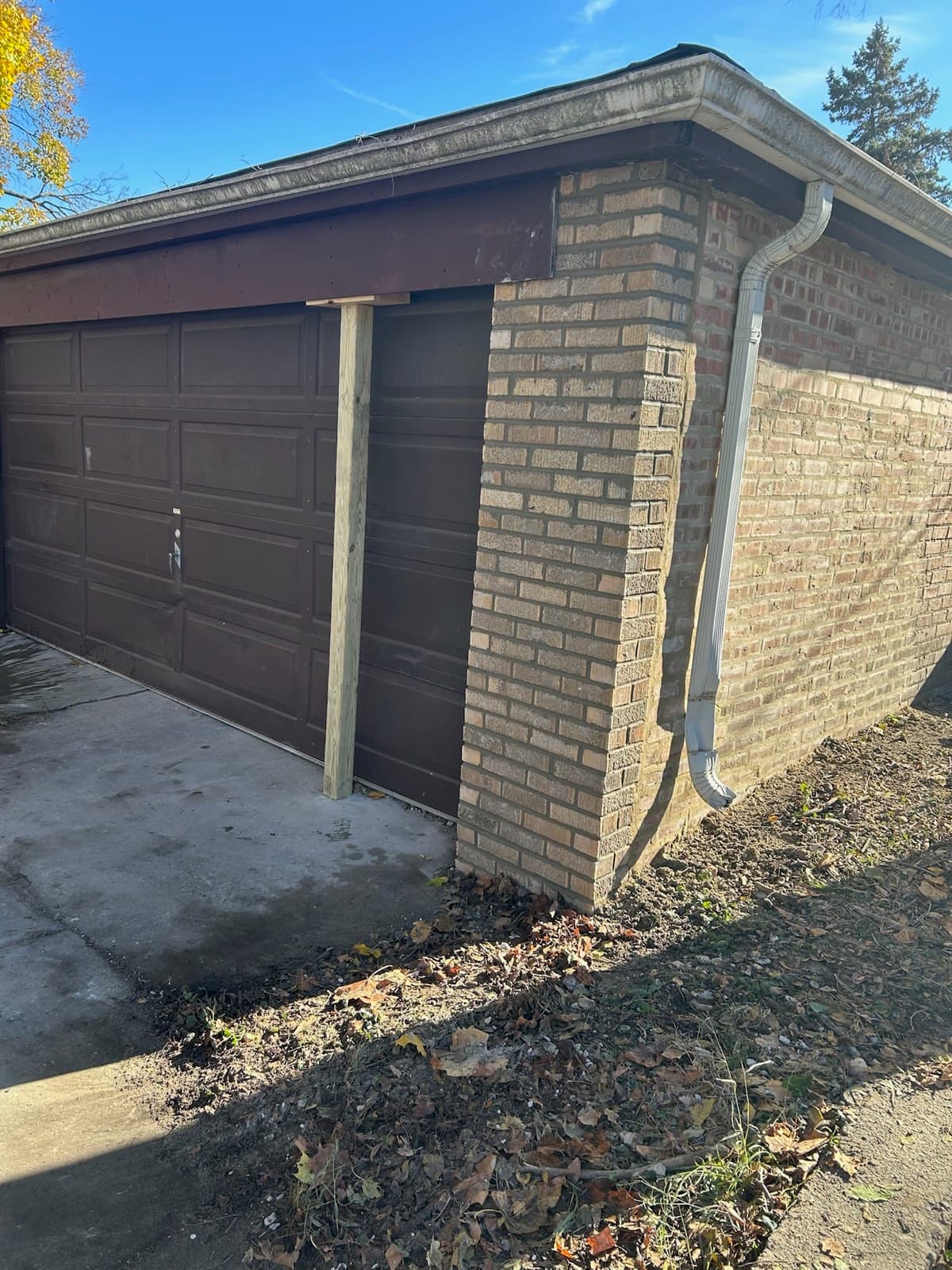
Residential Masonry Restoration in Tinley Park, IL
Residential masonry restoration in Tinley Park, IL is not one repair — it is four or five, and the order you do them in decides whether any of them last. Paul Lally's Masonry Inc. restores whole homes throughout Tinley Park and the southwest suburbs. Family-owned since 1988, insured, free on-site estimates. Call (708) 448-8866.
Most homeowners who call us about restoration have already been handed a list. Repoint this, replace that, rebuild the chimney. What almost nobody has been handed is a sequence — and that is the part that actually protects the money.
Why Order Beats List
Here is the scenario we walk into constantly.
A wall's bottom courses have spalled and the joints have eroded, because a downspout has been dumping there for years. A contractor repoints the joints, swaps the bad brick, cleans it down. It looks excellent.
The downspout is still dumping there.
Everything that caused the failure is still running, and now the fresh mortar is the material soaking it up. A handful of winters later the joints open again, and the homeowner concludes the mason did poor work.
The mason did the work he was asked to do. Nobody fixed the water.
The Sequence We Use
- Stop the water. Gutters, downspouts and extensions, grade and mulch against the wall, window wells, chimney crown, flashing, roof edge. Most of this is not even masonry work, and it is the highest-value item on the list.
- Address corroding steel. Lintels over windows and garage doors, shelf angles, anchors. Rust expands to several times the volume of the steel it came from, so it keeps cracking masonry from behind regardless of what you do to the face. See lintel replacement.
- Repair what the water and steel damaged. Tuckpointing, brick repair and brick replacement, limestone and sill repair, chimney repair.
- Protect what is now sound. Caulking and joint sealant, and waterproofing only where it is genuinely appropriate.
- Cosmetic last. Cleaning and appearance items, once the wall is dry and stable.
Doing step three before step one is the most common and most expensive mistake in residential masonry. It is also the easiest one to avoid.
What Tinley Park Houses Actually Need
Tinley Park is really two towns stacked together, and the restoration scope differs sharply between them.
The older core around Oak Park Avenue and the Metra station — the village's nineteenth-century commercial buildings and the older homes around them — is softer brick laid in lime-rich mortar. It needs soft mortar and a gentle hand, and it spalls badly if someone repoints it with a hard modern mix or cleans it aggressively.
The subdivision build-out from the 1960s through the 2000s, spreading west toward 80th Avenue and south past the Convention Center, is dense machine-made brick veneer. That stock rarely fails from age. It fails in specific, predictable places:
- The bottom two or three courses, from splash-back off drives and walks plus winter salt
- Under sills, where all the runoff from a window lands on one joint
- The chimney or chase, exposed on every side with nothing over it
- Above garage door and window openings, where lintel steel corrodes
- The weather elevation — generally north and west
- Sealant everywhere, which on a thirty-year-old house is simply past its life
On most Tinley Park homes, a good restoration scope is a short, specific list — not every elevation, every joint. A quote for a whole-house repoint on a 1980s veneer home without walking every elevation is selling volume.
Signs Your Home Needs Restoration
- Mortar you can rake out with a screwdriver, or grit collecting on the sills and walks below
- Brick faces flaking, sheeting or crumbling, especially near grade
- A horizontal crack line with rust staining above a window or garage door
- Efflorescence, the white bloom that proves water is moving through the wall
- A chimney with a cracked crown, open joints, or spalled top courses
- Sealant hardened, split, or pulled away around windows and doors
- Stepped diagonal cracking, which means movement rather than weather
- Damp interior walls, or staining on a top-floor ceiling near the chimney
Risks of Waiting
Masonry damage compounds. A spalled brick has lost its hardest layer, so it takes water faster and the next winter does more damage than the last, spreading through the units around it. Rusting lintel steel does not pause. Water reaching the cavity and the wall ties keeps working on both.
The practical curve is steep: scattered repair becomes section rebuilding, section rebuilding becomes wall rebuilding, and a rebuild on an upper elevation brings staging costs that dwarf the masonry.
Our Process
- Walk every elevation, plus the roof and chimney, and photograph what we find.
- Trace the water before scoping any masonry.
- Sound the walls — tapping finds units that have lost bond behind faces that still look fine.
- Rank the findings into stop-the-water, structural and steel, damage repair, protection, and cosmetic.
- Write the scope in that order, split into phases if you want it split.
- Protect the site — windows, landscaping, walks, and the neighbour's property.
- Do the work: cut joints back to sound mortar and repoint in lifts with matched mortar tooled to the original profile; cut out and replace failed brick, blended through the field; rebuild chimney sections down to sound masonry; replace corroded steel; repair sills; rebuild sealant joints.
- Clean down and walk the finished house with you.
Materials
Mortar has to be softer than the brick it sits against. Mortar is the sacrificial part — it is meant to fail first, because a joint can be replaced and a brick face cannot. Type N is typical for Tinley Park's veneer and post-war brick; softer, lime-rich mixes belong on the older stock near the village core; Type S has narrow, specific uses and is a poor default.
Mortar colour is matched against cured mortar, not the wet mix, because it lightens as it dries — and the tooled joint profile is matched to the surrounding field, since profile is most of what makes a repair read as original.
What Drives the Cost
- How much of the house genuinely needs work — the biggest variable, and why the walk-through matters
- Number of elevations in scope
- Height, access and staging
- Chimney work, which is roof access and prices separately
- Brick and stone matching difficulty
- Steel replacement where lintels have corroded
- Whether water correction is part of the job
- Phasing, which changes mobilization
We do not quote restoration over the phone or from photos. The look is free, and the written scope is yours to keep whether you hire us or not.
Serving Tinley Park and the Southwest Suburbs
Paul Lally's Masonry Inc. is a family-owned, insured masonry contractor serving Chicago and the Chicagoland suburbs since 1988 — tuckpointing, brick repair and replacement, chimney repair and rebuilds, lintel replacement, masonry restoration, and waterproofing for residential and commercial properties. Built on Craftsmanship. Backed by Experience. Free on-site estimates — call (708) 448-8866.
We work throughout Tinley Park and neighbouring Orland Park, Oak Forest, Mokena and Frankfort.
Get a Free Tinley Park Restoration Assessment
If your house needs several things and you are trying to work out where to start, that is exactly the conversation to have on site. Call (708) 448-8866 or request a free estimate.
Residential Masonry Restoration in Tinley Park, IL — Frequently Asked Questions
How much does residential masonry restoration cost in Tinley Park, IL?
A whole-house scope is priced by what is actually on it — how many elevations need repointing, how much brick is replaced, chimney and lintel condition, height and staging, and whether water sources have to be corrected. That is why we walk the whole house before saying anything. Paul Lally's Masonry Inc. gives free on-site estimates in Tinley Park — call (708) 448-8866.
Can I do masonry restoration in stages instead of all at once?
Yes, and for most homeowners that is the sensible route. What matters is doing it in the right order rather than the cheapest-first order — water sources, then corroding steel, then the damage they caused, then protection, then cosmetic. We write the scope so it can be split across years without leaving something worse behind.
What order should masonry repairs be done in?
Stop the water first — gutters, downspouts, grade, flashing, chimney crown. Then address corroding lintels and steel, because rust keeps expanding no matter what else you do. Then repair the brick and mortar that got damaged, then protect it, and leave appearance items for last.
My house is only from the 1970s. Does it really need restoration?
Often yes, though usually targeted rather than wholesale. Fifty Chicagoland winters is plenty to open joints at the sills, the bottom courses and the chimney, corrode a lintel over a garage door, and take the sealant well past its life — even while most of the wall is still sound.
Do you replace brick to match, or does the repair always show?
We match as closely as the material allows and blend replacements through the surrounding field rather than concentrating them in one patch, and we match the mortar colour and the tooled joint profile. An honest answer is that new brick has not weathered yet, so a repair blends in over time rather than disappearing on day one.
Will I need to be home while the work is done?
Not usually. Masonry restoration is exterior work, staged elevation by elevation, and interior access is rarely needed. We will tell you up front which days affect driveway or walkway access.
Do you work on homes throughout Tinley Park?
Yes. Paul Lally's Masonry Inc. has worked on residential masonry throughout Tinley Park and the surrounding southwest suburbs since 1988, and our family name is on every job. Free on-site estimates — call (708) 448-8866.
Residential Masonry Restoration in Nearby Areas
Other Masonry Services in Tinley Park, IL
Learn more about our residential masonry restoration services across Chicagoland, or view all service areas.
Free on-site estimates across Chicagoland.