
Residential Masonry Restoration · Downers Grove, IL
Residential Masonry Restoration in Downers Grove, IL — Three Eras of House, One Order of Operations
Downers Grove holds three distinct building eras, sometimes on the same block. Each one fails differently, and a plan that treats them the same produces surprises.
Quick Answer
Residential masonry restoration in Downers Grove, IL is whole-house exterior masonry work — tuckpointing, brick repair and replacement, chimney work, lintel and sill repair, and sealing — assessed as one system and sequenced by priority rather than sold piecemeal. Paul Lally's Masonry has served Chicagoland since 1988 — free on-site estimates, (708) 448-8866.
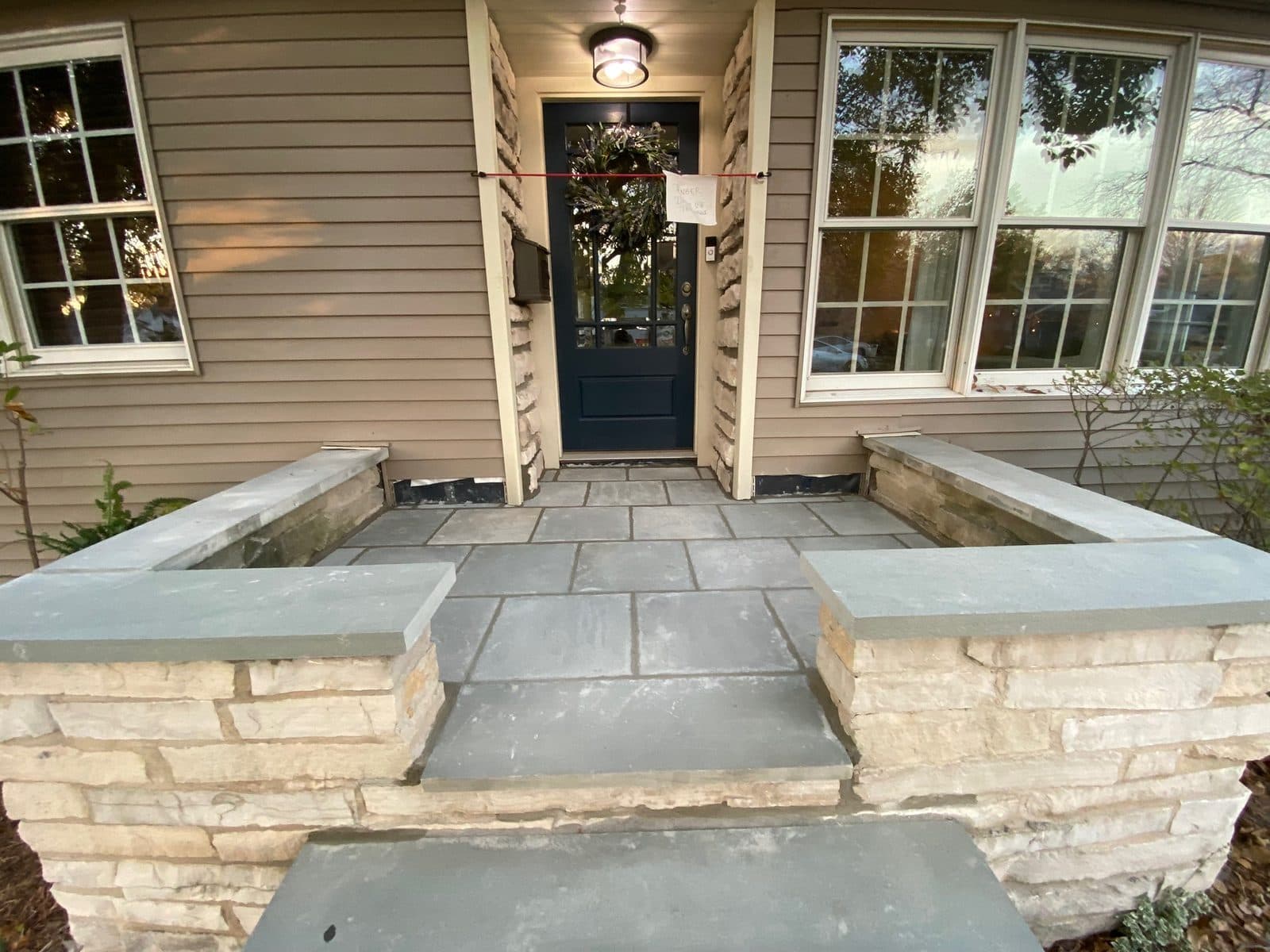
Drive from the streets near the Main Street station out to the subdivisions off 75th and you pass through three different masonry problems without leaving the village.
Residential masonry restoration in Downers Grove, IL has to account for that, because a pre-war solid masonry house, a 1958 ranch and a 1998 veneer-clad teardown replacement fail in genuinely different ways — and a scope that treats them the same is a scope that produces surprises.
Paul Lally's Masonry Inc. is a family-owned, insured masonry contractor serving Chicago and the Chicagoland suburbs since 1988 — tuckpointing, brick repair and replacement, chimney repair and rebuilds, lintel replacement, masonry restoration, and waterproofing for residential and commercial properties. Built on Craftsmanship. Backed by Experience. Free on-site estimates — call (708) 448-8866.
The order of operations, before anything else
The most useful thing a mason can hand a homeowner is not a price. It is a sequence.
Masonry damage almost always has a source, and the source is almost always above the damage. Repair spalled brick beneath a window and leave the cracked sill above it, and the brick spalls again. Repoint a chimney and leave the cracked crown, and the new joints wash out in three seasons.
So the order runs:
- Structural and overhead first — lintels, loose brick above a walkway, a leaning chimney, a wall that has moved.
- Active water entry second — crowns, sills, flashing, failed sealant, open joints on the weather elevations.
- Deterioration third — repointing and unit replacement on walls losing material but not yet leaking.
- Appearance last — cleaning, blending, sealing sound masonry.
An estimate that does not distinguish those four is a list, not a plan.
Downers Grove's three eras
Pre-war, near downtown and the BNSF line. Solid masonry — two or three wythes of brick, header courses tying them, and a mortar collar joint between them. Soft original mortar now at the end of its first long service life, older unprotected steel lintels, and stone sills. The governing rule on this stock is that mortar must stay softer than the brick around it, because mortar harder than the unit drives stress into the unit and takes its face off.
The post-war expansion. Ranches, split-levels and Georgians through the 1950s, 60s and 70s. Wide front picture windows on long spans, attached garage openings, cast stone trim that people mistake for limestone, and steel lintels now seventy years into an Illinois climate. This is the largest share of the housing and the largest share of the lintel and sill work.
The teardown replacements and later construction. Brick and stone veneer over frame — a drained cavity assembly, not a solid wall. At twenty-five to thirty-five years old these houses rarely need wholesale repointing. What they need is sealant renewal at the many material transitions, weep holes confirmed open rather than painted shut or buried by regrading, and attention to flashing and shelf angles. The brick can look perfect while the drainage has quietly stopped working.
Three eras, three vocabularies — sometimes on the same block, occasionally on the same house where an addition meets original work.
What a whole-house assessment covers
- Mortar joints on all four elevations, noted separately, because they will not be in the same condition
- Brick and stone units — spalling, cracking, loose or displaced material
- Lintels above every opening, including the garage
- Sills, water tables and porch caps — pitch, drip edge, end joints
- The chimney, inside and out, including crown, cap and flashing
- Foundation masonry at grade, where splash and road salt do their work
- Sealant, expansion joints and weep holes on veneer construction
- Water management — downspouts, grade, splash blocks, window wells
That last item is not masonry, and we look at it anyway, because it determines how long the masonry work lasts.
Local conditions
Downers Grove's mature tree canopy is the thing homeowners underestimate. A shaded north or east elevation stays damp for days after rain while the south side dries in hours, and masonry damage is a function of how long the material stays wet, not just how often it gets wet. That is why those walls are frequently a decade ahead of the sunny ones in deterioration.
Add DuPage freeze-thaw — dozens of thaw-and-refreeze events a season — and any wall that cannot dry properly loses material fast.
Materials and matching
Mortar matched to the wall, not to convenience. Type and hardness first, then colour, sand and joint profile, so a repointed section reads as part of the wall.
Brick and stone matched in size, colour and texture, with salvaged units reused wherever sound. Size matters more than colour — a unit of the wrong height forces the joints around it to thicken or thin, and that break in the coursing is permanent. Where matching is genuinely difficult, we say so and discuss taking replacement units from a less visible elevation rather than pretending a mismatch will not show.
Sealant where sealant belongs, mortar where mortar belongs, and never the reverse.
What drives the cost
Number of elevations. The ratio of repointing to rebuilding. Chimney, lintel and sill scope. Height and access. Whether brick or stone must be matched or sourced. Whether the work is phased or done in one season. Weather windows, since mortar needs workable temperatures to cure.
There is no square-foot figure that survives contact with an actual house, and we do not publish one. Free on-site estimate, in writing, separated into urgent, deteriorating and cosmetic — call (708) 448-8866.
What we will tell you plainly
That some of it can wait. That the north wall matters this year and the front does not. That a repair somebody else quoted is treating a symptom rather than the cause. And where the honest answer is that a wall needs a structural engineer before it needs a mason, we will say that instead of quoting around it.
Serving Downers Grove and the surrounding DuPage suburbs
We work throughout Downers Grove and the communities around it — Westmont, Lisle, Woodridge, Clarendon Hills, Hinsdale and Darien. Related services: residential masonry restoration, tuckpointing and repointing, brick repair, chimney repair and rebuilds, and limestone and sill repair.
If budget is the constraint this year, our guide to masonry repair priorities on a limited budget lays out the sequence, and inside your brick wall explains the solid-versus-veneer difference in detail.
Start with a plan, not a price
Family-owned since 1988, insured, and more interested in your house lasting than in your invoice being large.
Get a free on-site estimate — or call (708) 448-8866. Built on Craftsmanship. Backed by Experience.
Residential Masonry Restoration in Downers Grove, IL — Frequently Asked Questions
How much does residential masonry restoration cost in Downers Grove, IL?
It depends on how many elevations are involved, the ratio of repointing to rebuilding, chimney and sill scope, height and access, and whether brick can be matched. Paul Lally's Masonry provides a free on-site estimate in writing, separated into urgent, deteriorating and cosmetic.
Does my whole house need tuckpointing at once?
Usually not. Elevations weather at very different rates — the south and west faces are typically years ahead of the north on the same house — so a sensible plan often addresses one or two elevations now and the rest on a later cycle.
In what order should masonry repairs be done?
Anything structural or overhead first, then whatever is actively letting water in, then general deterioration, then appearance. Done in that order each repair holds; done in reverse you pay twice for the same wall.
My house is a 1990s teardown replacement. Does it need different work?
Yes. Brick veneer over frame is a drained cavity assembly, so the issues at that age are sealant renewal, blocked weep holes, flashing and shelf angles rather than wholesale repointing. The brick can be in excellent shape while every perimeter bead has failed.
Why is my north wall so much worse than the front?
Because it dries slowest. Under mature canopy a shaded elevation stays damp for days after rain, and masonry still wet when the temperature drops goes through freeze-thaw with water inside it.
Can the work be phased across a couple of years?
Yes, and for many homeowners it is the right call. What matters is that the phasing follows the priority order rather than the budget order, so the urgent items are not the ones deferred.
Will repointed sections match my existing mortar?
That is the goal and it takes deliberate work — matching type, colour, sand and joint profile. A fresh joint reads newer than an eighty-year-old one for a while, but a properly matched repoint blends as it weathers rather than standing out as a stripe.
What if a wall has actually moved?
Then it needs a structural engineer before it needs a mason, and we will say so rather than quoting around it. Bowing, bulging, courses out of line or cracks that keep widening are movement, not deterioration.
Residential Masonry Restoration in Nearby Areas
Other Masonry Services in Downers Grove, IL
Learn more about our residential masonry restoration services across Chicagoland, or view all service areas.
Free on-site estimates across Chicagoland.