
Commercial Masonry Restoration · Tinley Park, IL
Commercial Masonry Restoration in Tinley Park, IL — Phased Around Your Tenants
Restoring a working building is a scheduling problem as much as a masonry problem. Paul Lally's Masonry Inc. restores Tinley Park storefronts, retail, industrial, and multi-tenant masonry in risk-ranked phases that keep tenants open and sidewalks safe.
Quick Answer
Paul Lally's Masonry Inc. provides commercial masonry restoration in Tinley Park, IL — tuckpointing, brick and lintel repair, parapet rebuilds, sealant joints, and waterproofing on storefronts, retail, industrial, and multi-tenant buildings, phased so tenants stay open. Family-owned since 1988, insured. Free on-site estimates — call (708) 448-8866.
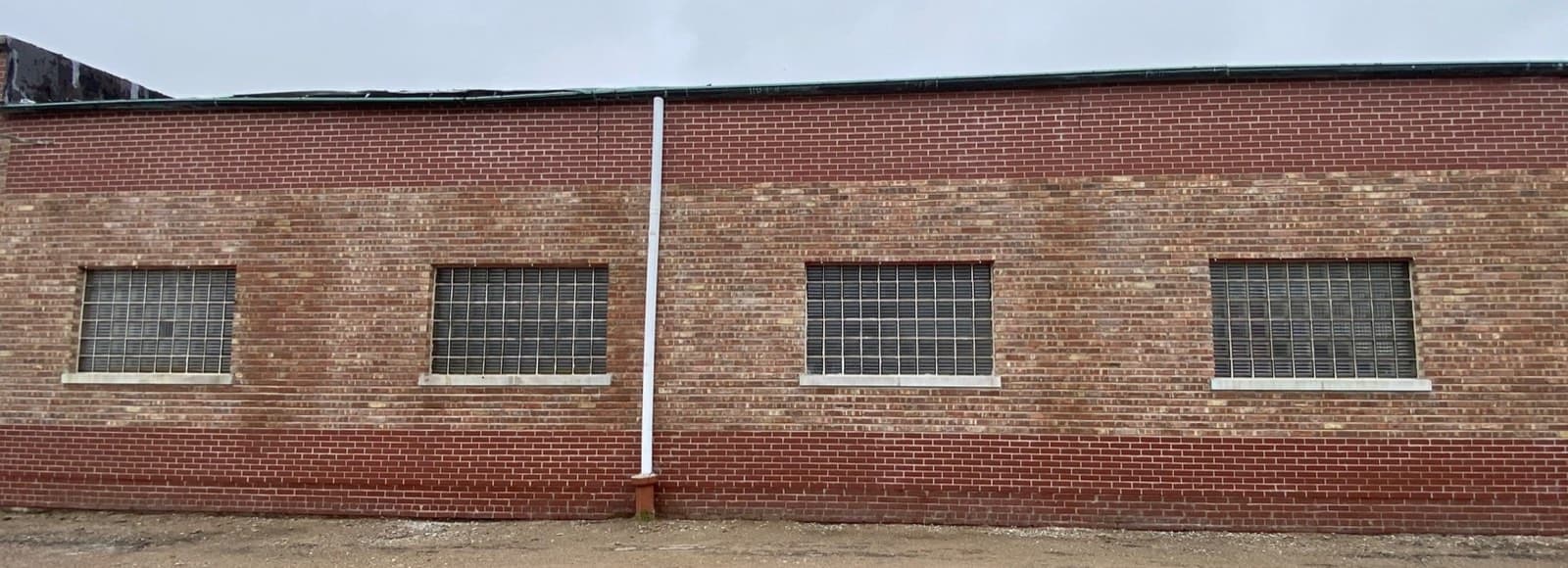
Restoring masonry on an occupied commercial building is only half a masonry problem. The other half is logistics: keeping tenants trading, keeping a public sidewalk safe under the work, staging around a parking field that has to stay usable, and spending an owner's budget in the order that actually reduces risk.
Paul Lally's Masonry Inc. provides commercial masonry restoration in Tinley Park, IL — tuckpointing, brick and lintel repair, parapet rebuilds, sealant joints, and waterproofing on storefronts, retail centers, industrial buildings, and multi-tenant properties, phased so your tenants stay open. Family-owned, serving Chicagoland since 1988, insured. Free on-site estimate: (708) 448-8866.
Suburban commercial is not high-rise restoration
Most restoration firms that turn up in a search are set up for downtown Chicago high-rise facades — swing stages, engineering teams, and a scale that does not fit a Tinley Park building. What Tinley Park actually has is different:
- Downtown storefronts near Oak Park Avenue and the Metra line — late-1800s and early-1900s brick commercial buildings, party walls, and decorative parapets
- Strip retail and multi-tenant centers along 159th Street, Harlem Avenue, and LaGrange Road
- Industrial and flex buildings toward the I-80 corridor — block and brick walls, dock openings, and truck-traffic damage
- Apartment and condominium buildings, many of them brick veneer from the 1970s onward
- Institutional and municipal masonry — schools, churches, and village buildings
Those need a mason who works at building scale, not tower scale: lifts and pipe staging rather than swing stages, phasing around tenants rather than around a building engineer, and a scope an owner or association can fund in stages.
We rank the work by risk, then phase it
An honest commercial scope tells you what has to happen now and what can wait. Ours is ranked:
| Priority | What it covers | Why it comes first | |---|---|---| | 1 — Public safety | Loose or displaced brick, unstable parapet or coping, failing lintels over entrances | Anything over a sidewalk, entrance, or parking stall is the first dollar spent | | 2 — Active water entry | Open joints, failed through-wall flashing, failed sealant, cracked sills | Water reaching tenant space becomes a tenant claim, not just a masonry repair | | 3 — Advancing deterioration | Spalling brick, eroded joints, corroding steel not yet lifting | Costs multiply once brick starts going | | 4 — Preventive | Sealant renewal, breathable water repellent, drainage corrections | Protects everything above it | | 5 — Appearance | Cleaning, staining, blending | Do it once the envelope is sound |
Most owners phase a full building across two or three seasons. That is a completely reasonable plan — provided nothing in Priority 1 is left standing while you do it.
Parapets: the element that drives most commercial scopes
On Tinley Park's older flat-roofed commercial buildings, the parapet wall is almost always the worst masonry on the property, and it is not close.
A parapet is exposed on both faces and the top, it gets no heat from the building behind it, and it takes the full weather load. Coping joints open. Through-wall flashing under the coping fails. Water gets into the wall from above and works down. And unlike a wall at grade, a deteriorating parapet is directly above the sidewalk and the entrance.
The decision on any given parapet is repair or rebuild, and it turns on how far down the deterioration runs. Repointing a parapet whose top courses have lost their bond is money spent on a wall that needs to come down and go back up. We tell you which one you have, and why. Related: parapet wall repair.
Keeping tenants open while we work
This is what separates a commercial job that goes well from one that generates complaints:
- Phase by elevation. One face under staging at a time. The other three keep operating normally.
- Overhead protection. Covered walkways and protected entrances wherever work is above a path of travel.
- Access planning. Staging laid out so parking, drive aisles, dock doors, and ADA access stay usable.
- Advance notice. Tenants and residents told what is happening, where, and for how long — before the trucks show up, not after.
- Off-hours where it helps. Restaurants and retail often want the noisy phases outside business hours; some of it can move, and we are straight about what cannot.
- Daily cleanup. A jobsite that looks under control is one tenants tolerate.
Our restoration scope
- Survey all elevations, the parapet, and the roof edge. Joints, brick, lintels, sills, coping, flashing, sealant, weeps, and any signs of movement.
- Sound and probe. Drummy brick and hollow areas do not show up in photographs.
- Rank and phase. A written scope by priority, so you can fund it in a sensible order.
- Protect and stage. Overhead protection, containment, and access planning before any cutting starts.
- Repoint and rebuild. Joints ground to sound depth and repointed in mortar matched for color, texture, and hardness; failed brick cut out and replaced with matched units; parapets rebuilt where the deterioration has gone through.
- Lintels, sills, and openings. Corroded steel replaced and flashed, sills repaired to shed water again.
- Sealant joints. Proper backer rod, correct sealant for each substrate, right bead geometry.
- Waterproof last. A breathable penetrating repellent on exposed elevations, after mortar has cured.
What drives the cost
- Elevation area and the percentage of joints and brick that have genuinely failed
- Parapet condition — repointing versus rebuilding, and how far down it runs
- Access method — lift versus pipe staging versus a tight urban setback
- Overhead protection required over sidewalks and entrances
- Lintel count and how many openings are affected
- Off-hours or phased scheduling
- Occupancy constraints — tenant coordination, resident notice, parking staging
- Season and curing conditions
We walk all of it with you, and the estimate is free. Call (708) 448-8866.
Paul Lally's Masonry Inc. is a family-owned, insured masonry contractor serving Chicago and the Chicagoland suburbs since 1988 — tuckpointing, brick repair and replacement, chimney repair and rebuilds, lintel replacement, masonry restoration, and waterproofing for residential and commercial properties. Built on Craftsmanship. Backed by Experience. Free on-site estimates — call (708) 448-8866.
Serving Tinley Park and the surrounding commercial corridors
We restore commercial masonry throughout Tinley Park's 60477 and 60487 — the downtown blocks near the Metra stations, the retail corridors along 159th and Harlem, the flex and industrial buildings toward I-80, and the apartment and condominium properties in between — plus the neighboring towns. Depending on the survey, a building's scope may center on tuckpointing in Tinley Park, parapet wall repair in Tinley Park, lintel replacement in Tinley Park, or masonry waterproofing in Tinley Park. We do the same work in Orland Park, Oak Forest, Mokena, and Frankfort.
Why Tinley Park property owners call Paul Lally's Masonry Inc.
We give you a ranked scope instead of a lump sum, we phase the work so your building keeps earning, and we tell you when something can wait — and when it genuinely cannot. We have restored Chicagoland commercial masonry since 1988, we are insured, and the family name is on every job. Built on Craftsmanship. Backed by Experience.
Need a straight assessment of your Tinley Park building's masonry, ranked and phased? Request a free on-site estimate or call (708) 448-8866.
Commercial Masonry Restoration in Tinley Park, IL — Frequently Asked Questions
How much does commercial masonry restoration cost in Tinley Park, IL?
Commercial work is priced by scope, not by a rate, and the drivers are elevation area, how much of the joint and brick has actually failed, parapet and lintel condition, staging or lift access, overhead protection over sidewalks and entrances, and whether the work has to happen off-hours. Paul Lally's Masonry Inc. gives free on-site estimates in Tinley Park — call (708) 448-8866.
Can my tenants stay open during masonry restoration?
In almost every case, yes. We phase by elevation so only one face of the building is under staging at a time, protect entrances with overhead cover, keep the walkway and parking access clear, and schedule the loudest work around your tenants' business hours where the schedule allows.
How do you decide what gets repaired first?
We rank by risk. Anything that could shed masonry over a sidewalk, entrance, or parking area comes first, then active water entry, then advancing deterioration, then preventive work. That order lets an owner phase a large scope across budget years without leaving a hazard standing.
Do you repair parapet walls on flat-roofed commercial buildings?
Yes, and on Tinley Park's older commercial stock the parapet is usually the worst masonry on the building. It is freestanding above the roofline, weathered on both faces, and directly above the sidewalk, so it is both the most deteriorated and the highest-consequence element.
Do you work on occupied apartment and condo buildings?
Yes. Multi-unit work needs more communication than technical difference — residents need notice, balconies and patios need clearing, and parking has to be staged. We coordinate with the association or property manager so residents know what is happening and when.
How long does commercial restoration take?
It depends on the elevation area, access method, and how many phases you choose. Weather and mortar curing set as much of the pace as labor does in this climate, so we give you a realistic phase-by-phase schedule with the estimate rather than a best-case number.
Can you do the work after hours or on weekends?
Often, yes, and for retail and restaurant tenants it is frequently the right call. Some work is weather- and daylight-dependent, so we will tell you honestly which portions can move to off-hours and which cannot.
Do you handle industrial buildings and loading docks?
Yes — block and brick walls, dock openings, overhead door jambs, bollard and corner damage, and the impact damage that comes with truck traffic. Dock-area masonry takes physical abuse on top of weather, so it usually needs a different repair approach than a storefront.
Commercial Masonry Restoration in Nearby Areas
Other Masonry Services in Tinley Park, IL
Learn more about our commercial masonry restoration services across Chicagoland, or view all service areas.
Free on-site estimates across Chicagoland.