
Masonry Sealing & Waterproofing · Worth, IL
Masonry Waterproofing in Worth, IL — Sealing a Wall That Sits Low and Stays Wet
Worth sits low, close to the Cal-Sag Channel, on ground that holds water. That makes sealing tempting — and makes the wrong sealer more damaging here than almost anywhere. A film-forming coating on a wet wall traps the water inside it.
Quick Answer
Paul Lally's Masonry Inc. provides masonry waterproofing and brick sealing in Worth, IL — repairing joints, sills and flashing first, then applying breathable penetrating sealers that repel water while letting the wall dry outward. Family-owned since 1988, insured. Free on-site estimates — call (708) 448-8866.
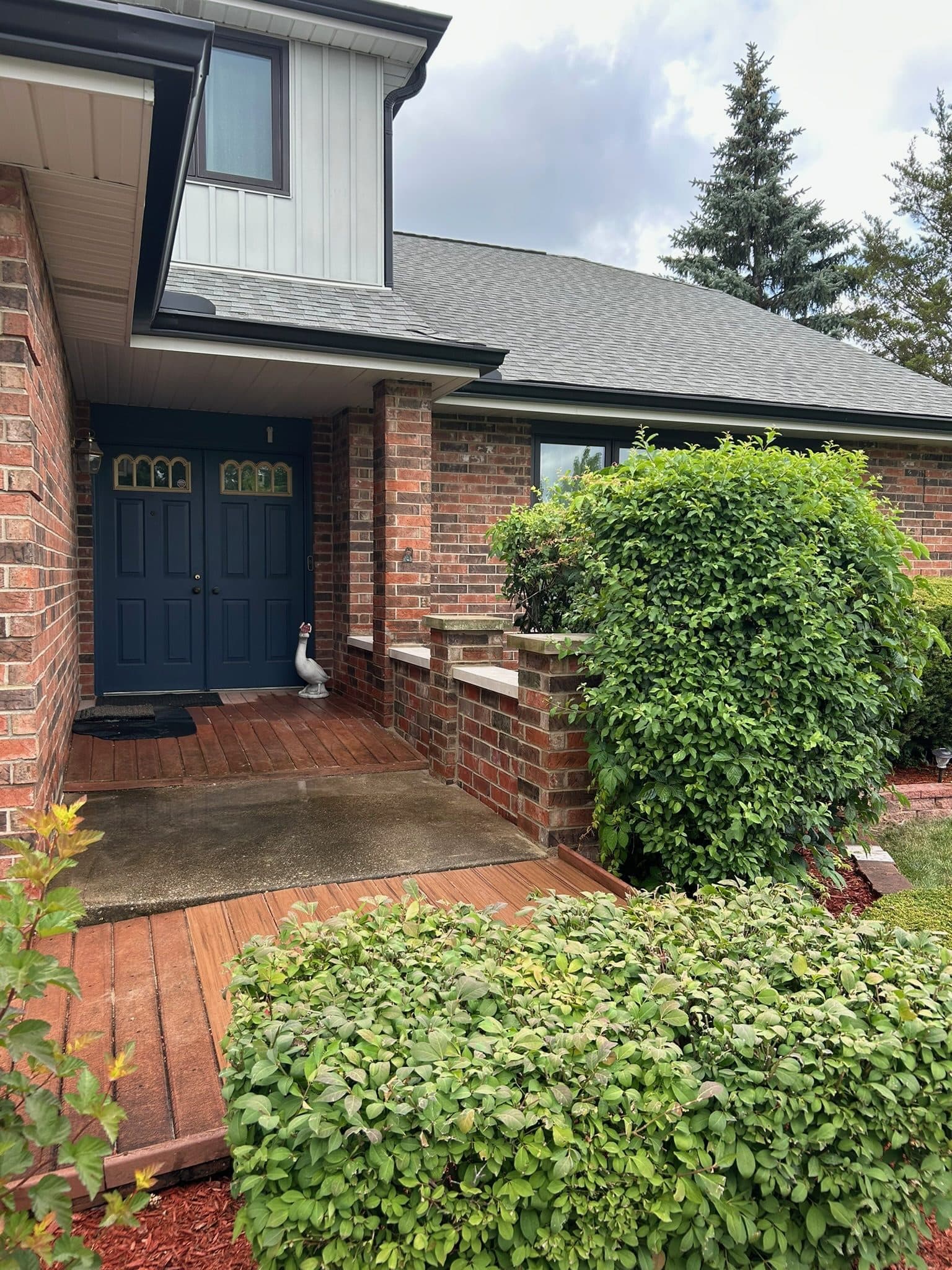
Masonry Waterproofing in Worth, IL
Paul Lally's Masonry Inc. provides masonry waterproofing and brick sealing in Worth, IL — repairing the joints, sills, lintels and flashing first, then applying breathable penetrating sealers that keep water out while letting the wall dry. Family-owned and insured, serving Chicagoland since 1988. Free on-site estimates: (708) 448-8866.
Worth is a low village. It sits in the Cal-Sag corridor with the channel along its southern edge, forest preserve and wetland nearby, and a good deal of its housing built out through the 1950s and 1960s on flat ground with heavy clay soils that hold water rather than shed it. Ask around and you will hear the same three complaints: damp basements, efflorescence blooming on brick, and mortar at the base of the wall that has gone soft and grainy.
That is exactly the condition where a homeowner starts searching for a sealer. It is also the condition where the wrong sealer does the most damage.
The rule that matters most: the wall has to be able to dry
A brick wall gets wet. Always has, always will. What keeps it healthy is not staying dry — it is drying out again between wettings.
Masonry breathes. Moisture that gets in — through the face, from a leaking sill, from splash-back at grade, or wicking up from wet soil — moves through the pore structure and evaporates outward. That outward path is the whole safety system.
Film-forming coatings block it. Acrylic and elastomeric "waterproofing" paints, and any product that leaves a visible skin on the brick, close the outward path. In Worth, where a lot of walls are getting wet from behind — from wet ground, high moisture at the base course, or a basement wall in constant contact with saturated clay — that trapped water has nowhere to go. It sits in the brick through the winter, freezes, expands, and pops the faces off. Then the coating blisters and peels because water is pushing it off from the inside, and now you have a failed coating on damaged brick.
We use penetrating sealers instead. Silane and siloxane products soak into the masonry and line the pore structure so liquid water beads and runs off, while water vapor still passes freely outward. The wall repels rain and still dries. The look of the brick does not change.
- Silanes have the smallest molecule and penetrate dense, tight substrates well.
- Siloxanes suit more porous brick, block and stone.
- Most quality products are a blend, and the right one depends on what your wall actually is — which is why we look at it rather than guess.
Sealing is the last step, not the first
This is the part most sealer marketing leaves out. A sealer will not fix a leak.
If mortar joints have receded, a sill has lost its pitch, a lintel is rusting, flashing has failed, or the coping on a garden wall is open, water is entering through a hole, and no surface treatment on the brick closes a hole. Sealing over that condition changes nothing except that the water now has a harder time getting back out.
The correct sequence on a Worth house is:
- Find the water source. Roof drainage, downspout discharge, grade at the wall, sills, lintels, window and door sealant, chimney, splash line.
- Correct it. Downspouts extended away from the foundation, soil pulled back below the base course, weep holes cleared where the wall is veneer.
- Repair the masonry. Repointing failed joints, replacing spalled units, resetting or repairing sills, addressing corroded steel.
- Let it cure. Fresh mortar needs time before anything is applied over it.
- Clean the wall gently. No sandblasting, no high-pressure washing — both open the brick face and make it more absorbent, which is the opposite of the goal.
- Then seal. Applied wet-on-wet to saturation on a dry, sound wall, in appropriate weather.
Done in that order, sealing is genuinely worth it. Done as a shortcut, it makes the wall worse.
The Worth conditions we actually see
The splash line. A flat lot with a downspout dumping at the foundation produces a hard horizontal band of damage in the lowest two or three courses — spalled faces, soft mortar, efflorescence above it. That band is rain bouncing off the ground and back into the wall, thousands of times a season.
Grade built up over the years. Decades of mulch, regrading and landscaping raise soil above the base course. On a veneer wall that buries the weep holes; on any wall it puts brick in permanent contact with wet clay.
Efflorescence. The white bloom on the brick is mineral salt carried out of the wall by moving water. It tells you water is moving through the masonry. Wipe it off and it returns; seal over it and the salts crystallize under the surface and push the brick face off from within. It has to be cleaned and the source corrected before anything is applied.
Shaded elevations that never dry. North walls and gangway walls in the older parts of the village get very little solar drying, stay damp days longer after rain, and grow the green film that tells you so.
Salt. Road and sidewalk de-icing salt on driveway-side walls, garage bases and steps drives the same freeze-thaw damage harder and faster.
What drives the cost
Square footage of wall, how much repair has to happen before anything gets sealed, the product suited to your substrate, the number of elevations, and access — a two-story rear elevation needs staging that a garage wall does not. On most jobs the sealing itself is the smaller line and the repointing ahead of it is the larger one. We will tell you plainly if your wall does not need sealing at all. Free on-site estimate, in writing.
Trust signals
Paul Lally's Masonry Inc. is a family-owned, insured masonry contractor serving Chicago and the Chicagoland suburbs since 1988 — tuckpointing, brick repair and replacement, chimney repair and rebuilds, lintel replacement, masonry restoration, and waterproofing for residential and commercial properties. Built on Craftsmanship. Backed by Experience. Free on-site estimates — call (708) 448-8866.
Related services
- Tuckpointing and repointing — what usually has to happen before sealing
- Brick repair — spalled and flaking units at the splash line
- Foundation masonry repair — where the wet band is at the foundation itself
- Caulking and joint sealant — perimeter joints at windows and doors
- Limestone and sill repair — sills that have lost their pitch and drip edge
Get a free on-site estimate in Worth
If you have white bloom on the brick, a soft grainy band at the bottom of the wall, or a basement that smells damp after every heavy rain, have someone look at the outside of the house before buying a product. Paul Lally's Masonry Inc. — (708) 448-8866 — or request an estimate online.
Masonry Sealing & Waterproofing in Worth, IL — Frequently Asked Questions
How much does masonry waterproofing cost in Worth, IL?
It depends on the square footage of wall, how much repair has to happen before sealing, the product chosen for your substrate, and the access. Sealing is usually the least expensive part of the job and the repointing ahead of it is the larger share. Paul Lally's Masonry Inc. gives free on-site estimates in writing — call (708) 448-8866.
Should I seal my brick house?
Only after the masonry is sound, and only with a breathable penetrating sealer. Sealing an already-failing wall locks moisture inside it, and a film-forming coating on a wall that gets wet from behind will blister, trap water and accelerate spalling. Sealer is the last step in a repair, never a substitute for one.
What kind of sealer do you use?
Penetrating silane and siloxane-based products that soak into the masonry and repel water from within the pore structure while still letting vapor pass outward. Silanes have the smaller molecule and suit dense substrates; siloxanes suit more porous brick and stone. What we do not use is anything that forms a film on the face of the wall.
Why is my wall wet in Worth when my neighbors' walls seem fine?
Grade and drainage vary a lot street to street here. Worth sits low and close to the Cal-Sag corridor, and a wall with soil built up above the base course, a downspout discharging at the foundation, or a shaded elevation that never dries will stay wet while an identical wall two doors down does not.
How long does masonry sealer last?
A quality penetrating sealer properly applied to sound, clean masonry generally performs for several years before it needs renewal, and exposure drives that more than the label does. A south and west elevation taking wind-driven rain and full sun will need it sooner than a protected wall.
What is the white powder on my brick?
Efflorescence — mineral salts carried to the surface by water moving through the masonry and left behind when it evaporates. It is a symptom, not the disease. Brushing it off without finding the water source means it comes right back, and sealing over it traps the salts inside where they crystallize and push the brick face off.
Can you waterproof a basement wall from the inside?
Interior coatings on a wall being pushed from the outside are a temporary measure at best. The durable answer is on the exterior — correcting grade, drainage and discharge, and repairing the masonry itself. We will tell you honestly which one your wall needs.
Do you serve Worth and the nearby suburbs?
Yes — Worth, 60482, and the surrounding southwest Cook County suburbs including Palos Heights, Chicago Ridge, Oak Lawn, Palos Hills, Alsip and Crestwood. Paul Lally's Masonry Inc. has been doing this work since 1988. Free on-site estimates — call (708) 448-8866.
Masonry Sealing & Waterproofing in Nearby Areas
Other Masonry Services in Worth, IL
Learn more about our masonry sealing & waterproofing services across Chicagoland, or view all service areas.
Free on-site estimates across Chicagoland.